Learning Japanese from K-Camping, Bunny Content, and Going Back to Basics

Since starting this language journey over a year, my learning style has changed a lot and I feel like I’m falling into a rhythm that is helping me retain what I’m learning instead of feeling overwhelmed. Let’s get into it!

When I started learning in 2023 I decided to go “by the book” I thought and bought the books, used college textbooks to be exact, and dictionaries, thinking it would help me tackle this with ease. What I learned as the process went on is that I don’t have a lot of experience learning languages like I thought. I got distracted by the process I set out for myself – working through the textbook, and in turn, procrastinated like a champ.

What helped me get my motivation back was diving into the language itself and leaving the grammar rules of the textbook behind, like diving into hiragana, katakana, kanji, and some vocabulary. I made hiragana flashcards and katakana flashcards. I began learning kanji from an account called the Joy of Kanji on Instagram, as well as started learning vocabulary from Hamasuke’s Japanese Learning channel on YouTube. This was a great way to start learning words and putting the sounds and the alphabet of syllables together in my mind. I would watch Hamasuke’s channel when I rode the exercise bike to try to keep me motivated and it was fun.

Getting Advice From A Native Japanese Speaker

Online I follow several Japanese language teachers as well as many Japanese creators, one of these creators shared advice on an ‘Ask Me a Question’ story post after a follower asked for Japanese learning tips. He said to memorize hiragana and katakana, learn vocabulary and kanji, and immerse yourself in listening to people speak Japanese and worry about grammar and sentence structure later on. Starting in 2024, that’s what I’ve been doing. It’s been back to basics and it’s working.

Kinda obvious actually, I mean that’s how we learn our first language, but I think when we are learning as adults or learning a second language, we overcomplicate. I was doing that! I’m so glad that this person shared this advice because it’s taken the pressure off and given me a clear path to follow. It’s been game-changing!

My new learning plan has been to copy down hiragana, katakana, and the kanji I started learning on an app so it’s in front of me and in my notebook. I take my flashcards of hiragana and katakana and I write them down. I go through each stack. Sometimes I go through the stack again, and again depending on how focused I am that day. As long as I keep to schedule and do this several times a week, I see progress. When I skip, I notice I don’t make progress and that is motivating to be consistent. This has been better practice for my own retention of the language than reviewing the flashcards on their own.

Recently, I’ve been marking which ones I can guess and which ones I have guessed wrong to begin tracking my own memorization. That has helped me track my progress and I would recommend after you’ve given yourself enough to practice and learn. Where I’ve seen the most growth is in the next thing I’ve added to my learning – immersion in listening to native speakers.

Forget Anime, I’m a Kei Camper and Bunny Girl

It’s been interesting to find that there are a lot of rabbit channels based in Japan on YouTube. Technically I should clarify – they are usagi channels, the word for rabbit in Japanese. I follow several channels – Pocket Usagi, Kogarana’s Bunny Popo Channel, and Hana-chan no Usagi Channel. I’ve been watching Pokke and Milk of Pocket Usagi and Bunny Popo since 2022 and Hana-chan I found this year. They all include subtitles, which I’ve had some trouble following even when I was learning in 2023, the only word I could pick out quickly from the subtitles was Popo-chan. Since following the new learning strategy, I’ve been able to quickly recognize syllables and pick them in the subtitles as well as words like Hana-chan, Usagi, and some kanji that stand out to me like the one for rest.

Where I have felt the most growth has been since watching Coupy Camper Channel over the last few weeks because he has closed captions, and Japanese subtitles to the side, and he also speaks on camera, which the other channels do not. His channel lets me experience the cadence of speech which is different from my English comfort zone and Korean which I hear watching K-dramas. It’s been such an interesting way to either just listen and see what the words mean in my native language or listen and follow the subtitles to see what the Japanese syllables I’m learning sound like and how it all get put together in conversations. It has also shown me how Japanese is written and how to navigate the lines of characters in their vertical structure. Through recognizing the sounds and characters I learned that it is read vertically right to left. It’s helping me understand pronunciation, which is huge!

Coupy Channel is giving me a taste of Japanese culture too from seeing the country from the perspective of a resident, exploring the countryside through his trips, learning about the cuisine from how he cooks, and seeing how it is not that different from life here. I feel common ground and that is helping put the pieces together. I am incredibly grateful for his content because I am not a big anime fan. I’ve tried watching anime and while I love the style, I’ve struggled to find the right ones to pull me in. I will eventually try again. Until then Coupy Channel will be my guide.

LALALALA and ACNH

The R sound in Japanese has been confusing me from the start but unexpectedly, a song has helped me remember the pronunciation to keep me focused on learning the sound when I am practicing. That sound is ‘LALALALA’ from Stray Kids’ ‘樂-STAR’ album. The song is a wordplay of rock in English and ‘rak’ in Korean, the Chinese character means delight and pleasure but rock is the first part of ‘rock n roll’. It’s quite clever. I’ve used this to help me remember to not read the Japanese syllable as ‘ra’ but remember to pronounce it with the softer ‘la’ r-sound.

Animal Crossing New Horizons’ I’ve learned from watching Coupy Channel and the Rabbit channels, features a lot of little details from Japanese culture which is such a cool way to immerse even if it is being played in English. For example, the Firefly squid came to the game in April and I later watched Coupy Channel prepare while camping. In this, I learned the Japanese name for it hotaru-ika. I’ve learned about festivals in Japanese culture and traditions, it’s been a fun primer.

In conclusion, I’m optimistic that I will make some real progress in 2024. Hopefully, the next update will be an exciting one!

Japanese Update: Overcoming Distractions for 2024

I began learning Japanese in January 2023, and I have to say when I started this journey I bought four college textbooks thinking I would be through most of the lessons by the end of the year, and that statement did not come true. In fact, I haven’t finished the first unit book.

Now is this because I’m saying Japanese is so difficult that I couldn’t do it? No, I managed my time poorly and put my language learning sessions as a third or fourth priority in my day which made it easier to procrastinate and not do it all. I made choices that took my attention away from language learning. Now some of these choices were really good choices!

Like I chose to start writing on this blog which has been a huge blessing creatively! It required discipline to keep going and make writing a habit. I also decided I wanted to become a more skilled knitter this year and chose to tackle several sweater projects this year. That stretched my patience and time management skills to get those projects completed quickly to use them in the colder months. As well as sewing my new summer wardrobe, a new coat, and new pajamas.

These were a good distraction, one that taught me about tailoring and fit. I became a better pattern drafter through this practice and learned how to duplicate designs. This was a great use of my time! But it wasn’t language learning, and so in my head I am wrestling with the fact that I didn’t complete my goal yet I achieved many goals that I had. I became a better student and more prepared to learn Japanese through the ways I spent my time this year, ironically not learning Japanese.

I think coming to terms with the fact that we as humans cannot be perfect, is a tough pill to swallow no matter how mature we are or how “laissez faire” we approach our time and therefore when we feel like we need to tick every box off our list and smash every challenge set before us in rider to feel like you did your best, it is hard to show yourself grace that you came short. I hope I did the best I could this year and I hope I gave Japanese my all! I made flashcards to help myself practice hiragana and katakana and tried to immerse myself in culture, grammar, conversational practice, vocabulary, etc.

I have a lot of respect for the language since trying to learn it, more than I did going in. I was intimidated going into the first day of learning but now I am more in awe of the way Japanese as a language works and has worked for 1300+ years. I learned that the first written example of Japanese dates back to the 8th century. I’m amazed by the way Japanese has multiple writing systems and blends its own language with the Han characters of traditional Chinese.

My own native language is a blend of Germanic, French, Latin, and Greek origin words. I understand the blend but I am amazed by the unique way Japanese did it compared to how English did. Dipping my toes into the study of Kanji has made the process of Japanese feel like a full circle, maybe it is just the fact that Kanji seems less scary since my mind is training itself to recognize a new writing system or maybe this is progress, although small, towards understanding Japanese.

Being ready to commit my time to learning next year is a top priority.

It’s bigger than a New Year’s resolution, it’s a plan for my time next year. It is that time of year when we reflect, take stock, and dream for tomorrow. So, what are you planning for? I hope whatever it is dear reader, that it goes well and you have the confidence to chase your dream.

Domo arigato gozaimasu for spending time with me today!

#38- Kanji, Milkshakes, and Tokyo Highway

It’s been a while since I did a proper catch-up blog post, months actually. I should probably stick to a content calendar, anyhoo, hello! How have you been? I’ve been busy, but it has been a good busy. I made a big push to get most of my winter and fall wardrobe sewing for Kyle and myself completed in September and October. I have made headway in my knitting projects, having the basic items I needed either ready to wear or near ready to wear. I’ve been sketching and planning out artistic endeavors for the rest of the year, and where I would like to go next year. I see myself painting on canvas on the horizon.

This flurry of activity has been a good thing for my social life. I’ve been spending time with my mom, like I used to, which is insanely good for both of us. When our relationship is out of whack, our mental health plummets. I don’t feel a dark cloud over me which I am incredibly grateful for. It’s an answer to prayer.

Because we’ve been hanging out in person, she’s been taking me to places back near my hometown that I’ve missed. Including The Milkshake Factory which sells dairy-free milkshakes! This is not the usual thing where I live. Since I discovered I could not consume dairy or beef anymore, going out with family and friends has been tricky. I don’t have the same capacity anymore to eat wherever and explore new restaurants. I didn’t realize how much of a toll this would take on my mom and I’s relationship until I couldn’t go out and eat anywhere or drink anything. Constantly needing to know the ingredients and the possibility of cross-contamination takes the fun right out of trying new dishes. For a few years, our relationship was pretty mundane and we were at a loss of how to spend time with each other because the way we bonded had to change. Going to The Milkshake Factory brought a piece of that puzzle back to our relationship, and it was wicked tasty. Seriously, I began to question if it would make me sick it was so good.

But, my mom has learned to adjust and be willing to explore things that I can do. Like going with Kyle and I to Hobby Express because Kyle and I wanted to look at car models and board games. I was really proud of her for going with us and actually getting into the store. She loves puzzles and trains and has a joyful appreciation for clever hobbies. After a while, she was exploring the store on her own and getting into it. It was a great trip with some new board games and models to show for it. I found two new board games on sale – Ticket to Ride Poland and Tokyo Highway which is a game I’d never heard of before but have absolutely grown to love it.

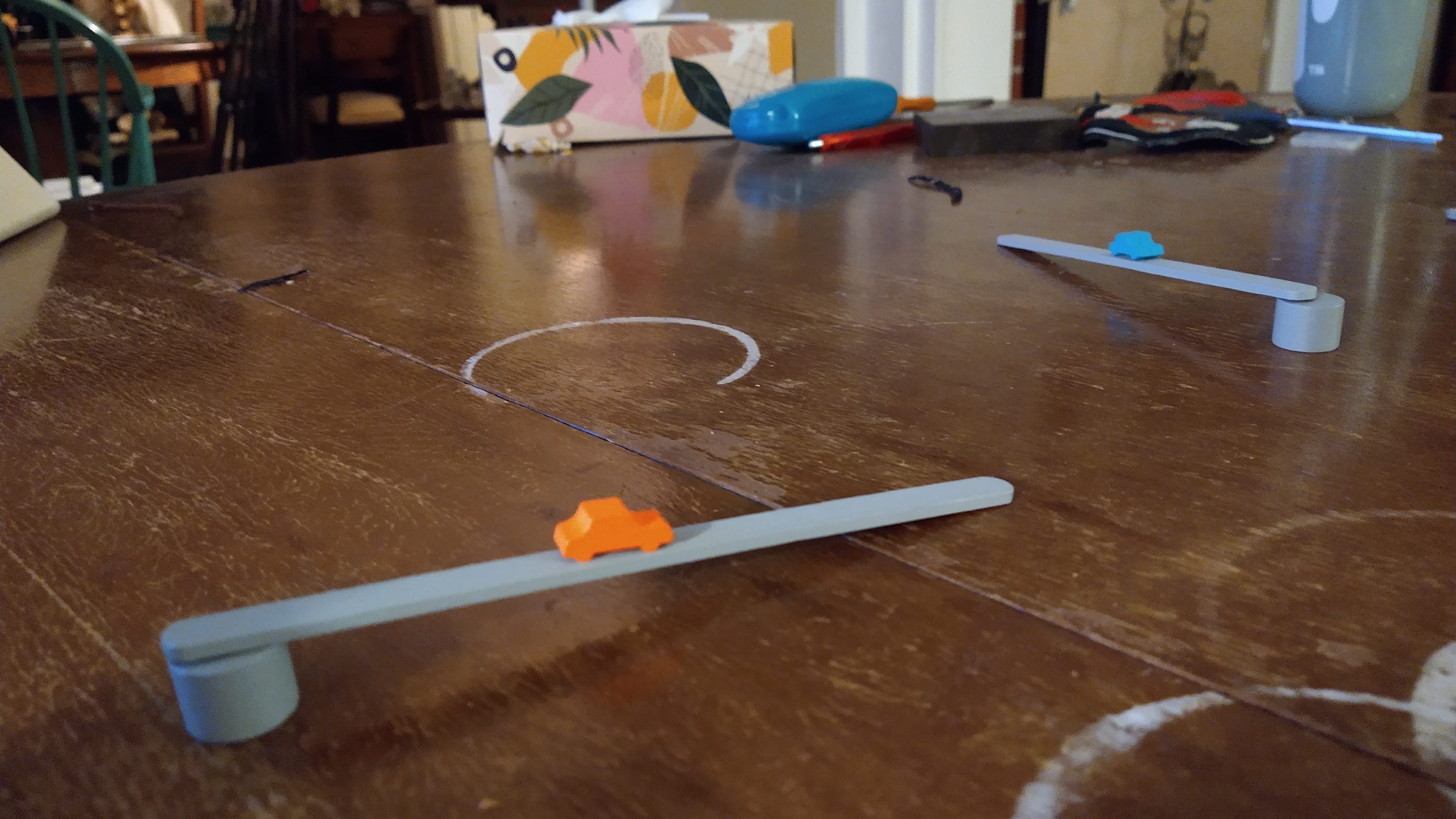
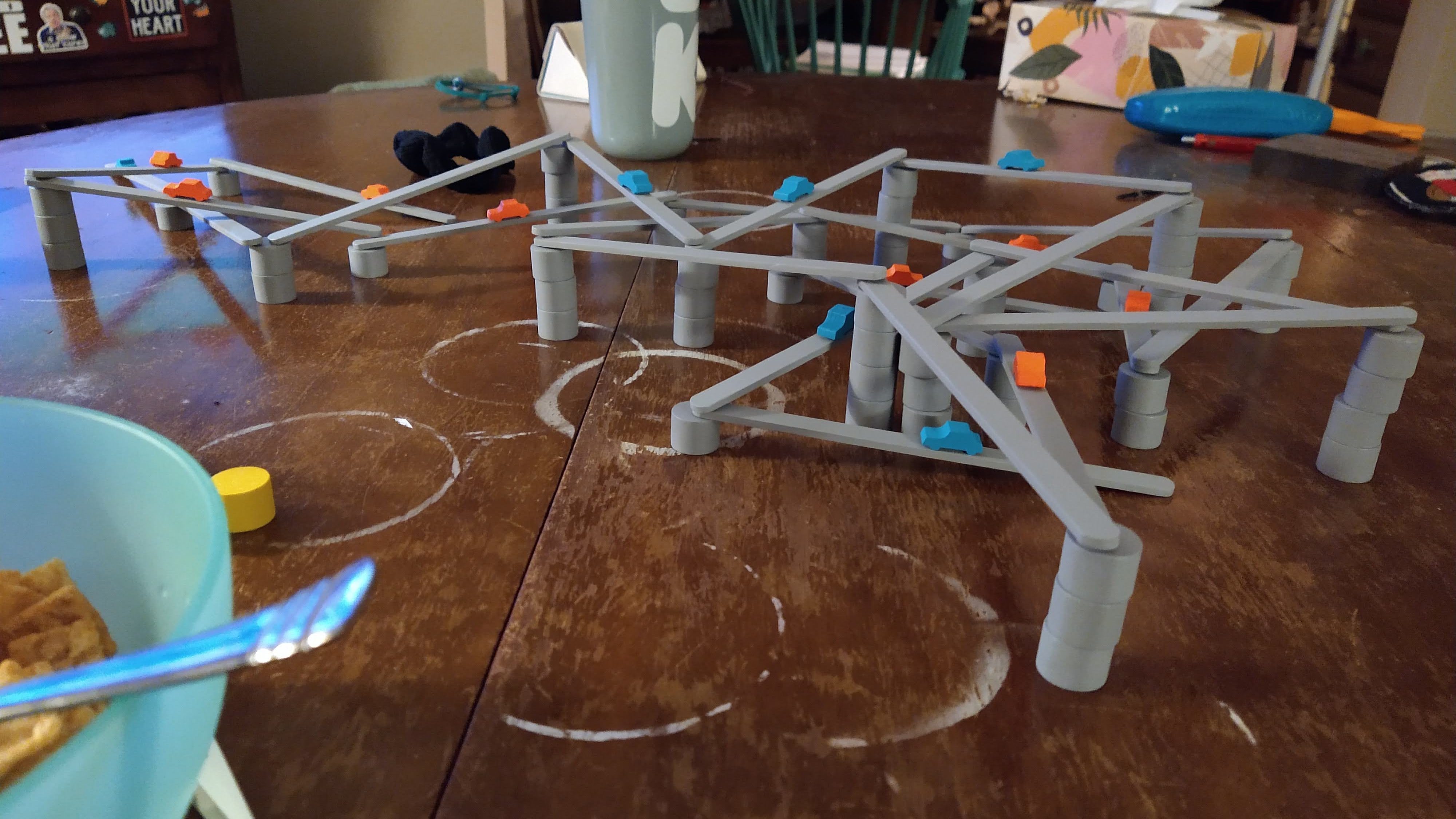
It’s a straightforward game, you build highways with sticks and columns, and for every road that crosses your opponents’, you get to place a car. Each turn you either go up a level or down. With a 3-4 player you add buildings as obstacles to the board and the game is different each time you play like Carcassonne and Settlers of Catan. The part that truly endeared me though is the tweezers that come with the game, they are ESSENTIAL as the game progresses. If you knock over your opponent’s road, you must fix it and surrender the amount of materials you knocked over from your stock to your opponent as a penalty. I highly recommend it if you like tabletop games. The best part is that it was created by a Japanese company and a Japanese game designer. My history nerd heart skipped a beat when there was a history of the Tokyo Highway system included with the game instructions. Now only if you received a Kei car if you win, that would be the dream.

Speaking of Japanese, I’ve been slacking on my lessons and seriously need to get them in gear if I want to finish my first lesson book by the end of 2023. To get back in the swing of things, I’ve made Katakana and Hiragana flashcards to make myself practice. I also started learning Kanji yesterday and wow, I love it. The pictorial nature has me sold on how amazing it is. I’d so much rather write longer sentences with Hiragana, Katakana, and Kanji than this Roman character alphabet. Japanese just flows compared to my culture’s writing system. I get hand cramps while taking notes in my lesson book because of how much more effort writing in English takes compared to the sections where I practice writing in Japanese. Have you had this experience of learning a new language? I didn’t expect to prefer Japanese to English, but I do.

I hope wherever you are that you are having a wonderful day and that you will remember that you are special, and deserving of love, and I appreciate you. Until next time ❤

Learning Japanese: 6-Month Update

A goal I’ve had in mind, well really, a dream I’ve had since I was a teenager was to be able to speak, read and write the Japanese language with fluency. This is a big goal, I know. But my desire to do so has grown and grown, even though I know this will be one of the most difficult things I have attempted. Six months in, I am seeing why it is a daunting task. Has my passion diminished?

Why Do I Want to Learn Japanese?

My interest was first piqued watching season three of America’s Next Top Model, as the top six were flown to Tokyo and were given tasks like shopping in the Harajuku and Shibuya neighborhoods, ad reading commercials in Japanese, and going on go-sees within the city. I was amazed by the beautiful land and culture that was so different from my own, yet felt incredibly intriguing. I guess I felt fernweh for the first time in my life.

My next crossroads with Japanese culture was G4’s broadcasting of the original Japanese Ninja Warrior. This is where my desire to learn the language of Japanese hit full throttle. Although there were cut scenes at the end of segments with a narrator speaking in English, the rest was completely in Japanese from the commentators to the contestant interviews. I fell in love with the cadence of it, in awe of the way it rose and fell. I wanted to understand what they were saying and how they were saying the words. I wanted to be able to read the syllables written in beautiful calligraphy.

Moving forward to high school, my best friend introduced me to Naruto, my first anime. I dove deeper into Japanese aesthetics as my love for fashion design blossomed. Another friend went on a missions trip to Japan, she brought back pocky and fascinating pictures of the city she lived in during her time in Japan, including the kei cars which made me smile just looking at them. Fast forward to college where I watched Departures’ travels through Japan, watched more anime like Fruits Basket and Vash the Stampede, and researched Japanese aesthetics for fashion history projects.

In my twenties, I discovered Studio Ghibli, James May Our Man in Japan, Ivan Orkin’s episode of Chefs Table, the fashion of Nana, and the ability to dip my toes into the language through Duolingo. Duolingo wasn’t cutting it though. Hiragana and Katakana were hard to grasp because I was not learning to write them out. The gamification nature of the app distracted me from learning and retaining the language, instead, I just focused on not losing hearts. So I needed a real shot at this.

Going Back to Books (and Some Technology)

In January 2023, I made a big purchase. I went on Thriftbooks and bought Japanese Language textbooks, Hiragana instructional books, a dictionary, and a grammar book. All of these resources were cheaper than paying for language learning subscriptions from Duolingo, Babbel, Rosetta Stone, and Lingodeer by the way! I grabbed a notebook and a pen. It was time to sit down with my lesson book.

This is when the real challenge began – motivating myself to be a good student without a teacher there to keep me on track. Yes, I realize I probably should have signed up for a class, but I made the investment in the books and had a burning passion to accomplish my new goal – to visit Japan with fluency in Japanese so that I could be fully immersed in the culture. That was the goal.

How is it going so far? Well, the books have been a fantastic resource. I retain far more information by doing than by just visual or auditory resources. The lessons have enabled me to take notes and begin committing the things I am learning to memory such as basic greetings, sentence structure, pronunciation, and speech patterns. I have also begun memorizing Hiragana and Katakana.

This has single-handedly been the most difficult part of learning for me. I have been the tortoise, not the hare when it comes to writing and reading Katakana and Hiragana. I’ve been memorizing them for months now and I still have yet to remember each one perfectly. One of the reasons my lesson progress has slowed down is because I switched my focus purely to acquiring the written form of the language, and once I grasp this I still have Kanji to learn – yikes!

It’s overwhelming but not impossible! To set myself up for success, I downloaded a calligraphy app that instructs users on how to properly draw each syllable. The way I approached my Hiragana attempts before using the app is dramatically different from how I should be drawing them. I am so grateful for the ability to learn the correct form through something as accessible as an app. You can literally practice anywhere. I spent a solid two months solely focusing on how to correctly draw the syllables, remembering their meaning, and pronunciation.

My friend also sent me a video from “The Joy of Kanji” series on Youtube and Instagram, in which the teacher draws the word, the historical Kanji form, and modern Kanji to illustrate the word’s meaning. This has helped me tremendously grasp what Kanji is first of all, and how to begin thinking in Japanese. As someone with an artistic background, I actually prefer the way the Japanese language uses pictures in its communication compared to English. My brain is beginning to click with it and with proper understanding, I feel less overwhelmed and more encouraged to keep learning.

There were some concepts I was still not grasping – like the pronunciation of the “R” sounds. This really confused me. To help me grasp pronunciation and work on my listening comprehension, I turned to a Youtube channel called “Learn Japanese with Tanaka-san” which is a fantastic resource. She creates such thoughtful lessons that have boosted my learning and comprehension within a few videos. There are listening practice videos, conversation crafting videos, and videos that feature a listening and speaking style of a batch of phrases. Tanaka-san, otsukaresama deshita!

Goals for the Next 6 Months

  • Do more lessons in the book! I have only completed four in the first unit and I am not pleased with my slow progress because I have been procrastinating with the lesson book specifically.
  • Have a solid foundation with Hiragana and Katakana that allows me to read without looking at my notes
  • To begin committing phrases to memory
  • Correctly pronounce “R” sounds

Create a website or blog at WordPress.com

Up ↑