For those unfamiliar with him, Jeremy Clarkson is a well-known British TV presenter most famous for his work in the automotive journalist industry. His role as co-creator and host of the Top Gear reboot from 2002 to 2015 relaunched the show and made it a global hit. In 2015, he was fired from the show, and together with co-hosts Richard Hammond and James May, he launched The Grand Tour on Amazon Prime, which debuted in 2016. That series ran for six series before concluding in 2024.
In the background of his career as a TV presenter, Clarkson owned a 1,000-acre working farm in the Cotswolds that he purchased in 2008. Until 2019, he had a contract Farmer running the farm, but that changed when the farmer retired, which led to Clarkson taking over the farm and launching Clarkson’s Farm, also on Amazon Prime, in 2021. Four seasons of the show have aired thus far, with the most recent debuting in May 2025. A fifth series has been ordered, with filming likely done by this time in preparation for a May 2026 premiere.
Lessons Learned From Clarkson’s Farm
When Clarkson’s Farm premiered in June 2021, which covered the 2019-2020 farming season, Jeremy had zero farming experience. Previously, he lived in the farmhouse on the estate and allowed a farm manager to handle everything on the farm. He had to buy equipment, hire farmhands, and learn to operate everything. While it is a loosely-scripted TV series, it is non-fiction and filmed in a documentary style. Plus, because of Jeremy’s honesty, which he’s always been known for, you know you’re getting the truth. He isn’t trying to sugarcoat anything. Due to that, his ambitions, successes, and failures, of which there are plenty, teach you the viewer a lot as Jeremy learns.
Everything Is Farmable
In season 3, Jeremy has the idea of making money from the non-arable portions of his farm. This means turning to the areas that don’t have fields in them and aren’t used for animals. He begins harvesting the blackberries that naturally grow on the property and he buys piglets that can live in the woods on terrain that is too steep to plant in. It’s a reminder that you don’t need the perfectly groomed and idyllic land to grow things. Plants will grow in less-than-perfect soil, and some of the sweetest fruit grows naturally and in the harshest conditions, if you’re willing to go after it.
Farming Struggles
Season 1 starts a trend that has continued in every season: Farming is really hard, and there’s a lot that’s out of farmers’ hands. Weather plays a major role in their livelihood and can dictate a farm’s survival if there are consecutive years of poor weather. At different points, Jeremy has to do with record-breaking floods and historical droughts. Extended cool periods restrict plant growth, while lengthy warm periods scorch them.
Aside from weather, there are the emotions that come with becoming attached to animals that have to be butchered or die from natural causes. You always think about how the meat industry is a business, but if you have a heart, like many farmers do, it crushes them each time animals have to be delivered to the abattoir.
Additionally, equipment breaks and needs to be fixed or replaced, prices fluctuate due to global events (natural or political), and governments make decisions that affect your ability to purchase and sell products. It’s not an easy business, but most farmers stick with it because they’re passionate about it.
Gardening this year showed us just a hint of how difficult growing your own food can be. Some of our plants never grew because of the wet spring we had. Then, the summer brought extended periods of drought that stripped the soil of its moisture. It was hard to keep up with everything while also managing life. I can’t imagine how difficult it must be for farmers on a much larger scale.
Sacrificing Production for Long-Term Viability
In seasons 1 and 3, Jeremy makes two decisions that result in a short-term sacrifice with the goal of establishing long-term viability and success. Season 1 consisted of him planting native wildflowers in portions of his arable land to attract pollinators. He also let these areas go unmaintained to allow animals to establish habitats.
In season 3, he brought in well-known musician-turned-farmer Andy Cato who has established a business built on regenerative farming that replenishes soil nutrients while also producing a sellable crop. Much to the disbelief of Jeremy’s farm manager, Kaleb Cooper, Jeremy stuck with this plan, sacrificing that year’s profit potential in order to rebuild the soil that had been stripped of its nutrients following years of commercial farming practices.
Both decisions represented the importance of exchanging short-term opportunities for long-term potential. By dedicating a portion of his land to native growth and flowers, he willingly gave up the possibility of planting a grain that could be sold. It’s similar to season 3. While he still grew a sellable crop, it wasn’t as lucrative as selling a commonly-grown crop, such as rapeseed, wheat, or barley. However, the benefit of reestablishing nutrients in the soil was more important to Jeremy.
Learning New Skills Can Be Difficult
I believe Jeremy was 60 when Clarkson’s Farm debuted. He had spent the majority of his life behind the wheel of cars. He had no idea how to operate tractors, reverse trailers, raise and lower plows, or fill a spreader with seed. There was a major learning curve, especially for someone who has been very successful in his previous endeavors. Thankfully, he surrounded himself with people who do know what they are doing and taught him, albeit with a bit of sarcasm and attitude. He also humbled himself, which was a new path for someone who was famous for his smug face on Top Gear. Eventually, by the end of season 4, Jeremy actually had an idea of what he was doing. He could generally attach a trailer to a tractor by himself and knew what was happening on his farm.
It’s a reminder that regardless of how much experience you have in a field, it’s always difficult to learn a new skill or hobby. In our garden this year, I learned a lot even though I had gardened in the past. We planted vegetables we hadn’t grown before, experienced insects that we hadn’t encountered, and in-ground gardening brought with it new struggles not found with container gardening.
Impact of Clarkson’s Farm
Bringing Attention to the Farmer’s Struggle
With this show, Jeremy has used his massive platform to draw attention to how badly farmers struggle to make it. I think a lot of people believe that farmers have an idealistic agrarian lifestyle that consists of planting in the spring, harvesting in the fall, a bit of fertilizing in between, and being around animals. But that’s not the case. With so many aspects of their lives out of their hands, they are left at the mercy of the weather, economy, governments, and even global pandemics. One bad decision can lead to them losing their farm. They often can’t take risks because the potential to lose everything is too great. A disease can spread throughout their herd of animals and wipe out an entire year’s worth of income. Yes, there is insurance for these kinds of events, but they aren’t guaranteed to pay full value and can take a long time to pay out.
The Importance of Our Food System & How Fragile it Is
By watching Clarkson’s Farm, you realize how delicate our food system is. We have a great system of trade and infrastructure that allows countries to obtain raw materials grown on the other side of the world. But it’s also a system that can easily become imbalanced. One year of bad weather can result in a nation needing to import wheat for flour rather than growing it domestically. An idiot’s war in Ukraine can upset the world’s food security and lead to scarcity in developing nations.
Thus, it’s important to be able to grow stuff domestically when we can while also accepting that we live in a global society now where nations are dependent upon each other. As much as certain people like to complain about how much we import in the United States, we also export a lot of raw materials and goods. A drought in California or the temperature staying below freezing in Florida can upset the world’s agricultural market. It’s extra important to consider what we as individuals and families can grow. It also reflects the importance of having our own gardens when possible. And remember that when a natural disaster occurs or a weather pattern changes, it’s not the farmer’s fault that the prices fluctuate. Most of that is out of their control, and they certainly aren’t seeing an increase in their income.
Governments Set Farmers up to Fail
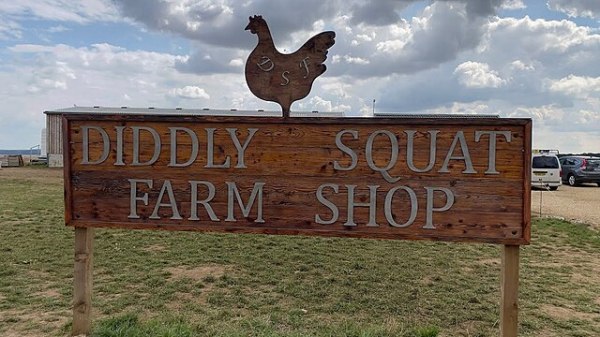
An unexpected part of the show is Jeremy, Kaleb, and Charlie Ireland’s encounters with the local and federal governments in the United Kingdom. Most of the show so far has featured Jeremy getting told “no” by the local council for everything plan he tries to implement. Restaurant? No. Farm shop? No. Pub? No. It’s like the council doesn’t want to generate revenue for the local community and district. On the federal level, they have to deal with the fallout of Brexit and the UK needing to develop domestic sources of food or pay more than they were before to import the food. The government promised subsidies to British farmers, but that money went away in 2024.
In the United States, the story is the same. The typical farmer has long struggled for survival. Dairy farmers barely make any money for their milk, and it leads to many converting to beef farming. They’re forced to plant corn for ethanol production rather than feed for their animals. Trump’s idiotic “leadership” has led to an increase in the cost of fertilizer and other farm chemicals because many of them are produced outside the U.S. Then, he doubled down on it by cutting or reducing most government aid programs.
Oh, and it gets better because of his decision to round up and deport immigrants who have been peacefully living in the U.S. for years. Those immigrants are often ones that farmers need as hands to operate their farms because Americans are usually too good for that kind of work. Those immigrants are the ones that we were told would be safe because they’re peaceful. It was just another lie that has resulted in Americans being victimized. Tariffs were supposed to result in other countries buying the vegetables we grow here, especially soybeans, but recent articles I’ve read have said that also hasn’t come to fruition. In fact, it’s worse than it was last year. Trump’s tariffs have led to retaliatory tariffs by China, resulting in them no longer buying our soybeans. Those farmers grew a crop that is no longer selling. At every turn, governments are making decisions that hurt their farmers. Leaders may say that they’re trying to help the farmers, but look at their actions. They speak much louder than words.
Clarkson’s Farm Has Been a Roaring Success
In the years since the show debuted, Jeremy has been honored numerous times by the British Farming Society. He has won awards for his work to bring attention to British farmers and the environment they find themselves in. It’s clear that he’s having an impact on the people who matter: the farmers themselves. He’s quick to point out that he is lucky to have other revenue streams, including the show itself, as well as the amount he earned from previous work. Most farmers have that opportunity or savings to fall back on. At the end of season 1, he gave the honest assessment that the farm couldn’t have continued without those other income sources.
A lot of people hate Jeremy Clarkson due to his brashness and how opinionated he is. But he has always been honest, even if you don’t like his delivery. That transparency is really refreshing in a society where things are masked and people make content just to generate clicks and views. Jeremy has become the voice of the farmer in the United Kingdom, and here in the United States, I think we should adopt him as ours as well. He speaks the truth and his dedication to finding innovative ways to farm is inspiration. I know that after watching the show, I wanted to do everything I could to be more agrarian. Gardening isn’t farming, but it’s at least related to it. They’re cousins. If you haven’t watched Clarkson’s Farm, I urge you to give it a go. It’s not a glamorous portrayal by any means, but it’s honest. And that’s what we need right now.






 One Rabbit Riot