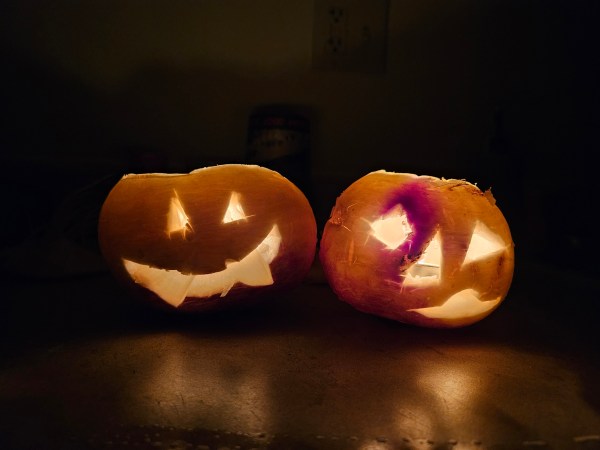
As a kid I carved pumpkins, as I mentioned in my jack-o-lantern pants posts, many moons ago. But as an adult, who has spent many years diving into history, the specifically Irish history of my ancestors, I have found myself switching to a new tradition. Turnips.
The turnip was the orignal carving vegetable for the original halloween, samhain in gaelic. Irish culture gave the traditions of halloween to the British colonizers and Irish immigrants took the traditions with them to America. Trick or treating, costumes, jack-o-lanterns carved pumpkins are all adopted from this key festival of ancient Ireland.
Samhain was a two day celebration. A bit like new year, a bit like day of the dead, and a time when the division between the spirit realm and earthly realm became thin. Fires lit the dark night, masks were worn and turnips carved to warn off evil spirits. The dead could return for a visit and it was unsettling. The world could end, if the gods were not placated.
Of course all this uncertainty is part of the human life and how we make sense of the changing seasons and our unpredictable world. I think its fascinating how they processed these uncertainties in a feast day, abd found ways to distract themselves in the darkness of short days and impending winter. Along with the othet traditions mentioned there was divination and superstitions, like predicting future outcomes with cabbages, or just games of chance, such as finding a small trinket in your slice of pie.
How does the macabre play role in Samhain and why do we have such traditions as graveyards and ghosts? It was a part of the ancient Samhain traditons to visit burial places, make offerings to the dead, and even eat in silence. Of course, while leaving a place at the table for a lost loved one or other spirits that may roam.
There is also a darkness to this festival, and layers to how far things are taken due to beliefs. This is where I stop feeling comfortable, when it gets into the druid roots. It could be quite a sinister feeling ritual, and the druids, well I had to pause my Udal Cuain research because this druid pagan chapter of culture is too dark for me. Any religion that practice human sacrifices is a no for me dawg.
But if you would like to learn more about the lighter and in my opinion, more fascinating parts of Samhain I highly recommend checking out the Ulster Folk Museum’s website.
I’m currently watching the newest season of The Great British Bake Off, and it is bringing back wonderful memories from my childhood, thanks to one special contestant – Iain Ross. Iain is from Belfast, Northern Ireland, and his Irish charm reminds me of my trip to Ireland as a kid. He reminds me of the people I met, including my family members who live in County Antrim. He reminds me of my grandma, Florence, and my Gormley family tree. But I also remember the wonder of exploring this place called Ireland (and Northern Ireland) as an 8-year-old kid, who heard the legends of the places we saw, and found the stories truly magical.
Now, for political reasons, I wasn’t able to see Belfast due to some tensions around Orangemen’s Day. But there were lots of other cities and sites were got to see. There were stories of Dunluce Castle’s kitchen falling into the sea during a party. That was probably true. There are the ruins of tall towers, made to hide in safety from Viking raids, and also historical. But then there were the stories that lean into the fantastical, like the story of Finn MacCool and the Giant’s Causeway.
I had forgotten about the magical origin story of Giant’s Causeway until Iain turned the story into a pastry sculpture for the showstopper round. Finn MacCool, also known as Fionn ma Cumhaill in Gaelic, led a band of mythical warriors called the Fianna. Now, a giant Finn was in a rivalry with another giant in Scotland called Benandonner. To reach him, Finn created the causeway on the coast of County Antrim, which faces Scotland’s coast across the Irish Sea. When Finn saw how big Benandonner, standing in the distance across the sea, Finn decided this might not be a wise idea. Instead, Finn fled to his house, where he hatched a clever plan. He asked his wife Oonagh, to help him hide himself under a blanket, to disguise himself as a baby. Benandonner passed across the sea on the causeway, determined to settle the fight with Finn. He knocked on the door, but instead of Finn, he was greeted by Oonagh and a rather large sleeping baby, which Oonagh introduced as her son, Oisin. This terrified Benandonner. What could his father look like if this were the size of the baby? Benandonner fled back to Scotland, thwarted by the cleverness of Finn MacCool. In his haste, Benandonner ripped up the Causeway so that remnants only remain on the coast of Antrim, at the Giant’s Causeway site, and on the Scottish island of Staffa at the Fingal’s Cave site.
We know now that the hexagonal basalt rocks are evidence of volcanic eruptions that formed the Causeway in Ireland, but isn’t the creativity of my ancestors better? This story is one of my favorites. I may have been able to see through Santa Claus, but this filled me with the possibilities of a land where giants and magic roamed, and it filled me with a sense of wonder to exist in this place of extraordinary things. That’s what I began to explore in Udal Cuain and what continues to bring me back to Halloween every year – Samhain. The original celebration from Ireland.
Have you ever been to Giant’s Causeway? Did you know about the myth, and what do you think of it?
I’ve been thinking, to be honest since I put the Udal Cuain project on a permanent hiatus in 2019, should I attempt to finish it or revise it in some way that would be less dark and depressing? It’s the truth, the story went off the rails into a very dark place that I no longer enjoyed working on. But could I potentially unweave the threads of plots that took the story in an unsatisfying direction? That is something I’d like to ponder. And hopefully, this project is not doomed by its subject material! I think this is applicable to all creative processes because as you make something there is that tightrope feeling that you are balancing between success and utter crap. At least that’s been my experience.
Well, I think the only way to sort through this is to look at the things I think the story should keep and what was an utter disaster. I’m going to give each storytelling technique a grade for a bit of structure. Let’s jump in!
Religion
Udal Cuain is set in the Early Medieval period aka the Viking Age aka the dark ages, which is not as well known as other historical periods. Especially when it comes to Irish history as it was known as Hibernia at the time to the Western world. The Romans were tired of dealing with the Celts and so they built Hadrian’s Wall and left them be. The only group to venture closer were Christian missionaries, including St Patrick, St Brendan, and St Brigid in the 5th century AD. As Udal Cuain was set in the west of Ireland in the 8th century AD, with most of Ireland converting to Christianity and leaving Druidism, the choice to include a druid-influenced calendar and have open belief in the Druid Irish gods was a wise decision. It feels like a plot hole to the historical evidence we do have available. For this reason, I give this religious storytelling choice an F for disregarding history.
I wasn’t as committed to my faith at the time of writing and so I was not interested in bringing Christianity into this world, although I chose the setting to be in the era of a well-established church for the sake of being in the Viking raiding age. That was a bit of a faff and something I would definitely change today if I was re-writing this story. I would either set the story back before the 5th century and nix the Viking Age plot in order to explore the Druid era for continuity’s sake or would remove the Druid part and have a more nuanced approach to these cultural legends in the framework of the 8th century where the High Kings were part of the church and monasteries were a key part of the societal structure. I would probably choose the second option because the Druid world is so incredibly dark and evil – not exaggerating, human sacrifice was prominent – so I would prefer to research something a bit more light-hearted.
Villains
A goal I had for this story was to make a cunning and diabolical villain out of Tearlag, I wanted her to be so good at being bad that the reader could almost respect her but also be waiting for her demise. When we meet her in the story she is a widow who exiled her son and grandkids by force out of her kingdom. She is hypercritical of her children and conniving in her marriages. Her husband Conn was beloved by all but Tearlag has a Machiavellian streak to her. I wanted her to be untrustworthy and truly good at executing evil plans against her enemies, including her family members. As the Dowager Chieftainness I wanted her to have a legacy that she couldn’t quite nail down, but she would use to exact every last drop from her allies.
Tearlag became one of my favorite characters to write, she had so much sass and pure nerve to accomplish what she wanted without giving a hoot what people thought. In the end, it made me sad to know she would have to be defeated. I would say for Tearlag’s character I would give her a B+ because she accomplished all I wanted her to, but now I think I could make her character even more polished. I would develop her character even more to see the layers of how she became this way and search to find if there is any good in her or if she was always born to the villain of her life.
My secondary villain was Tearlag’s son Riordan, who was a chaotic character and a bit of a brat. I didn’t want him to be likable, I wanted his character to wear his misguided decisions like a badge as the selfish person I created his character to be. His flaws drove the plot, and his mistakes bred characterization for other key players in the story. His depression for a lost love that should have never been, all while being married to another woman displayed his inability to handle responsibility that would inevitably inspire his exile. I would give Riordan’s character a solid A because his character did not waiver into plot holes, it was a disagreeable anchor to the story. I would let his story sit in the plot and flush out his failings a bit more so that his exile is more clear to the reader. I may consider if he is redeemable or if a story arc would add anything to his character.
Protagonist
I’m going to start off by being brutally honest that I don’t care for either of my protagonists anymore and would have to re-write them. Both Kinvara and Saoirse fall into the trope of “not like other girls” and I don’t like that. It was such a common storytelling trope at the time of writing that I didn’t see I was falling into it when actually I was trying to make them outsiders in their respective worlds. For this reason, I give them each the grade of D because they’re not hopeless characters but they need some revisions.
Kinvara was the opening protagonist of the book, she is shy yet observant and doesn’t like the current place she finds herself, as an exile on Searbh because of her parents’ loyalty to Riordan and his wife Saoirse. Kinvara is intelligent but a bit judgmental, and has great dislike for her sister Aoibheann as being a frivolous girl for chasing after boys, yet Kinvara effortlessly gets along with the boys, making her a bit of a pick me girl too. Not what I intended! My revisions for Kinvara would be to eliminate with tension with her and her sister, making Kinvara more likeable. I’d also like to make her a bit braver and more willing to seek after the connection to the faeries, in doing so going on her quest without a guy to help her. I’d love to see her face down with Tearlag in a David and Goliath kind of scenario, completely humbling Riordan in the process for fighting this battle for him.
Saoirse was just too dang whiny. Like, if Riordan made her life that miserable I’m not sure why I kept them together? Through the process of the handfastening marriage they had a year to figure out if they wanted to be married, Saoirse could have left after a year since Riordan never stopped his relationship with Caoimhe. I’d like to keep Saoirse’s inner struggle with managing her emotions and feelings of rejection. Her addiction I think brought a depth to her character as self-hatred was a demon she was wrestling with. A relatable thing. Her mentorship with Cheiftain Conn was a plot line I didn’t explore enough, as well as the friendship with Brigid. Saoirse fell into the trap of being defined by her relationship which was not the kind of female lead I intended to create. Defintely a lack of experience in character development on my part.
Faeries
I absolutely loved developing out the idea of faeries in the story based on Ireland’s legendary origin story of a mythical people who founded Ireland called the Tuatha de Danaan and the Formorians. It’s where the legend of the banshee, Finn McCool, and the Children of Lir come from. The imagination of Irish storytelling is incredible and I wanted to incorporate that possibility back into the land of Ireland itself through the character of the faeries who communicated with the sensitive in society – Kinvara and Chieftainn Conn.
This provided a space to dabble into fantasy with magical portals to another dimension and unexplainable powers that would be channeled through the land itself, particularly the sea. Sometimes it would be channeled through specific characters in the story like Caoimhe being endowed with the powers of the raven, essentially a morrigan or banshee. Kinvara could sense would the faeries wanted and could feel the lack of peace within the land itself for the evils being carried out by the Viking raids and Tearlag. For how much imagination and possibility this storyline gave to the story of Udal Cuain, truly a driving force for the adventures and conflicts that awaited the characters I would give it an A+ grade. This was the best part of the story and made it feel unique.
Combat
As a sensitive person I didn’t expect to enjoy writing fight scenes but it was a lot of fun to write moments of struggle and strategic movements. It was something that grew in scope as the story evolved to a point where the characters were sometimes even fighting the environment around them. This added a spooky element to the battle scenes as the enemy was not clear. Would it be a human opponent? A human opponent with a pull over nature itself because of their connection to the faeries? Would the enemy be almost supernatural in strength like the Raven? Or would they just be a dang good fighter? These were ingredients for the pacing and intrigue for the story as it was a battle of kingdoms and ideas. I would give the combat scenes a B for their solid plot movement, but I’m holding back from giving it an A because I could have created more dimension in the story if I had been willing to lean into these battles more and move the story forward instead of being wishy-washy on characters dying.
Final Thoughts
I recommend taking a look at your writing in this rating type of analysis because as I wrote this I felt such clarity on what I liked and didn’t like. I think if I had done this while I was still working on the project I may have been able to revise and carry on instead of getting overwhelmed and burn out from the stress of my day job. Thanks, dear reader, for going on this little retrospective journey with me.
An important part of the world I desired to create in my novel Udal Cuain was a sense of place. Since I chose to set my story in Early Medieval Ireland, also known as Viking Age Ireland, I strove to create a world that didn’t feel like our modern age but instead steeped in a culture unlike the modern North American one I know as familiar. A simple way I found to create this complete world was to research and incorporate the Ancient Irish calendar of months. The structure of this calendar looked a little something like this:
With Samhain celebrated the night between the last day of fall and winter, signifiying a new year. Later on in Nollaig the Winter Solstice was celebrated.
Earrach (Spring)
Feabhra (February), Marta (March), Aibrean (April)
With the festival of Imbolc, for fertility and planting, celebrated at the start of Feabhra. The Spring Equinox was recognized in Marta.
Samhradh (Summer)
Bealtaine (May), Meitheamh (June), Iuil (July)
With the festival of May Day being celebrated on the first day of Bealtaine. Summer Solstice recognized during Meitheamh at New Grange
Fomhar (Fall/Harvest)
Lunasa (August), Mean Fomhair (September), Deireadh Fomhair (October)
The Lunasa festival being celebrated at the start of the harvest. At the end of Deireadh Fomhair, Samhain night signified the end of the year.
Already this calendar has a different rhythm than our own, with the months with each season divided one month earlier than we do now. It is a calendar that reflects the agricultural tempo of the ancient Irish society and helped the Viking Age world I was writing about feeling like it had structure. These months are unique, based on a lunar structure with names that correspond to what’s going on within the season compared to the Gregorian calendar, our modern system, which is mathematical and accounts for the passage of time the Earth takes to orbit the Sun. Understanding how and why we use things is important to consider when creating a new world or awakening an ancient world within a story.
The people who created this Irish calendar understood the passage of time in a different, yet similar way to what we understand it. We have religious and cultural festivals, recognize four seasons, and even celebrate Halloween to this day. So there is common ground, and you will find your own common ground in your projects if you choose to add a calendar to your fiction world-building!
Passage of Time
I provided source materials to bring this structure into the story in a natural way, there was a separate section devoted to this calendar like an appendix to a book. Because of how complex the Gaelic language is, having the visible calendar to reference with the names corresponding with their meaning helped me keep it straight as I wrote and added a nice layer to the story, a touch point the characters could reference naturally in dialogue yet the reader could have the knowledge to understand the meaning behind these sometimes foreign words. I enjoy little details like that.
I think it’s why I enjoy Harry Potter, Avatar the Last Airbender, Star Wars, etc. I like to lose myself in a story and wander far into the world, a calendar is that little extra punch that pulls me in even more to a time and place. So when I was writing a character I fancied the idea of being able to think about that character’s understanding of time.
What were they looking forward to?
What would signify change or normalcy in that character’s life?
How could I take the research of Viking Age Ireland and synthesize it into a story that would feel tangible?
I came back to the passage of time and by illustrating that in the story with these seasons, sprinkling little details of the season, the weather, the natural processes that come with winter, planting, harvest, summer sunshine, and all the ways we as humans make sense of that.
Cultural Significance
Holidays and festivals are key to our lives, and so were they for the historical world I was reimagining. They are connection points for characters. Opportunities to naturally move the story forward with action sequences, unexpected plot twists, or just an excuse to bring all your characters together in one scene that is plausible. It provides a way to understand the world from different perspectives and how these characters view their customs and cultures. Generationally, characters may see these moments differently. Introverts and extroverts will experience the spectacle and parties in their own fashion.
With Udal Cuain, Samhain played a big role in framing the year because of how culturally significant this festival was to Ancient Irish culture. They literally believed the separation between the living and dead grew thin on this night, if their deities were not pleased bad spirits would come to harm and the world may cease to exist the next day. It was not just a night of spooky characters, it was a serious event, and as humans, it explores our own feelings of fragility in the greater universe. Mortals versus immortal forces. This is a fantastic source of natural tension in a story, and as the dead could come back to visit their loved ones it brought a source of mystery to the story.
Two main characters, former Chieftain Conn, and Princess of Inis Aran, Caoimhe were deceased by mysterious and suspicious means in Udal Cuain, but one Samhain they each came back, one to haunt and one to heal. It was a blast to write and I highly recommend playing around with a structure like this in your own unique way.
I hope this dive back into the world of Udal Cuain and the research I did to create this novel, serves to inspire you. Even as I write this, I feel an itch to get back into fiction writing. It is such a challenging yet rewarding art form, and so necessary to our human hearts. Stories make us who we are. Dear reader, thanks for taking time with me today. I wish you all the best.
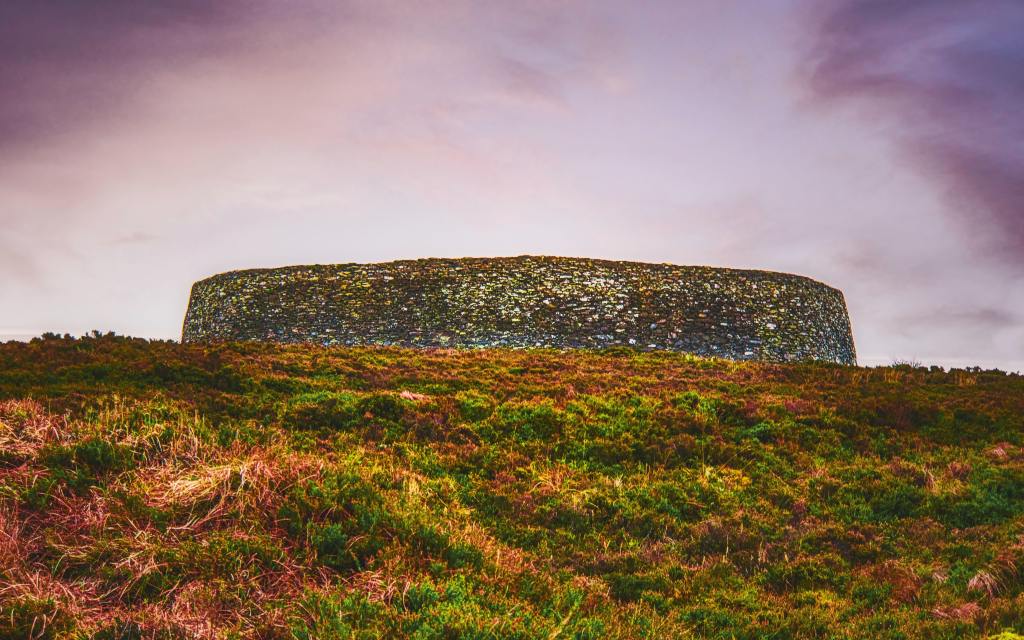
I think my fascination with Ancient Ireland began when I was eight, on a family trip back to Ireland to see “the old country” and meet up with our cousins who live on the homestead in County Antrim. It was a tour around the island, starting in Dublin and rounding the coastline to the Wild Atlantic Way, finishing with the North. As a child, seeing both modern Ireland and ancient ruins next to each other was unlike anything I had experienced before coming from America. I mean, my hometown was founded in 1802, not very old compared to the beehive monastery I’m standing next to in the image above. To me, a storybook had come to life, and what intrigued me the most was what these ancient people were doing with these now stone ruin buildings that were so odd to me compared to how buildings function in our modern context. I was fascinated to understand what this world looked like.
Fast forward to high school, I am impatiently waiting to learn about ancient Ireland as I sit through World History, American History, and European History hoping maybe just maybe this is where I’ll catch a break, but no there was nothing but a short line about the Potato Famine, Oliver Cromwell and the obligatory St. Patrick mention on March 17. I wasn’t the only one disappointed by the underwhelming coverage of world history, a classmate didn’t even get the chance to learn about his home country of Australia.
But one day in my college class History 201 I was assigned a final project that fit the bill, a historical abstract and thesis, on any topic I wanted, this was the moment! Fascinated by this unknown Ireland, puzzled by why Belfast was closed down on our trip for violence, and curious to know why there was tension between my Irish Republic and Northern Irish relatives, I decided to dig into the 1916 Uprising and Home Rule Movement.
When we toured Dublin, I remembered that bullet holes pointed out in the post office, which I found odd at the time, and started there. What I didn’t expect to discover as I did this research was this call back to Ireland’s identity, and ancient Ireland before the Norman Conquest of 1069 AD. One of the High Kings and great legends, castles, and beauty. Ireland of the ruins I saw, a land of fortresses to defend against Vikings and neolithic structures that seemed impossible to build. I also found a deep Catholic sacrificial nature to this rebellion, an identity so complex it was so much deeper than I was expecting and made me crave more! Even after three months of researching for my thesis, I felt like I had just begun there are innumerable layers to the Irish fight for freedom.
A few semesters later as a junior, I had the opportunity to plan my own independent study. I decided to feed my curiosity about the inspirations behind the Uprising and Gaelic culture revival which began before the fight for Home Rule. I wanted this independent study to help me understand the poets, the language, and the culture. I chose the Early Medieval period from the 5th century to the 11th-century invasion by the English to basically study an overview of how Ireland turned from a pagan faith to Christianity, what this meant to the culture and how did Ireland look during this time of Vikings and High Kings. I dove into the legends of the mythical first Irish that enchant the spirit of the ancient culture. The storytelling and imagination were so beautiful to me. This space before the Normans came and began centuries of despair was so pure to me at the time, like Harry’s first time in Diagon Alley or Hogwarts Castle.
I carried this sense of wonder into adulthood, determined to understand this world of myth and legend deeper. When life gave me a few curve balls and I found myself with empty, looming days of unemployment, this sense of wonder carried me into creativity by starting the Muirin Project site and plotting out the novel Udal Cuain, complete with side journals of the Celtic calendar and character journals to fully immerse the reader in this world of my imagined storybook Ireland that my eight-year-old self wanted to explore. But I didn’t expect it to get so dark, and it did get very, very murky. Not that this is a bad history or unworthy to be studied, but I did learn to be careful of what you open yourself up to.






 One Rabbit Riot