

In this week’s update, we have a lot of tomatoes ripening, but do we know the variety of each? It’s questionable. Our corn is starting to develop ears and silk. Along the same lines, we’re harvesting some beans, and there are a lot of blossoms on the other varieties. Finally, I’ll go over some general notes from the week, including pictures, and highlight this week’s Seed of the Week. Let’s dive in.
So Many Tomatoes
We have more than a dozen tomato plants, and the majority of them have fruit that is starting to ripen. Our paste tomatoes, which I originally thought were pear tomatoes, continue to grow and are now more than three inches long. Our actual pear tomatoes also have lots of fruit, and we harvested the first one on Saturday, immediately eating it. All of our pear and paste tomato plants have dozens of fruit on them. Then there are the Queen Aliquippa plants. These are the tallest tomato plants we have (more than three feet tall) and are growing lots of fruit. The problem we’re having is knowing when they’re ripe. Because they remain green when fully ripe, it’s not as obvious as red tomatoes. Thankfully, they develop a blushy red color on the bottom when they’re fully ripe, which will make it a bit easier to know when they’re ready.
That brings us to our Black Krim and Cherokee Purple tomatoes. These tomatoes look VERY similar to each other, growing to similar sizes when ripe and having similar colors and markings. Both are a deep red on the bottom with a dark blue/purple on the top. I think we bought two Cherokee Purple plants and four Black Krims, but it could be the other way around. The numbers could also be wrong. We kept the plant marker with the plants, but it’s currently buried under straw. If necessary, I’ll dig around to find it, but I’m hoping that we’ll be able to delineate between the two before that point.

Corn Silk Developing
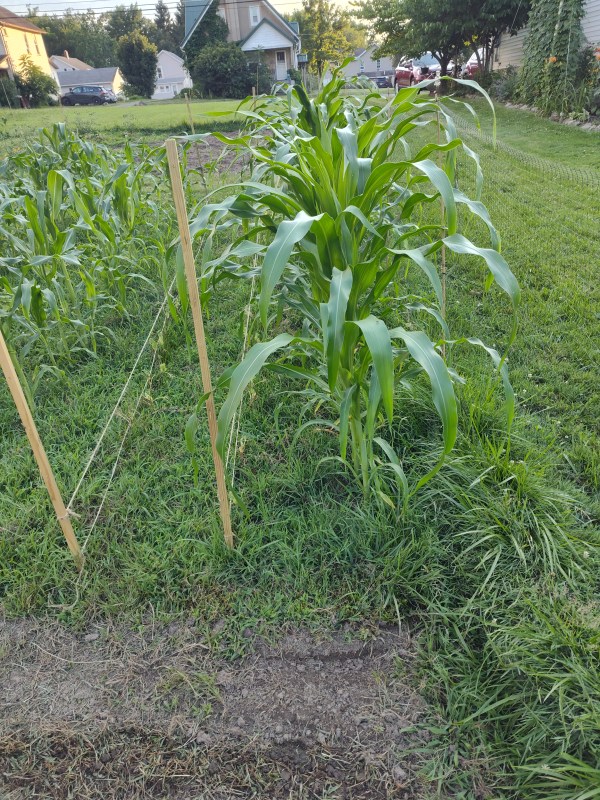
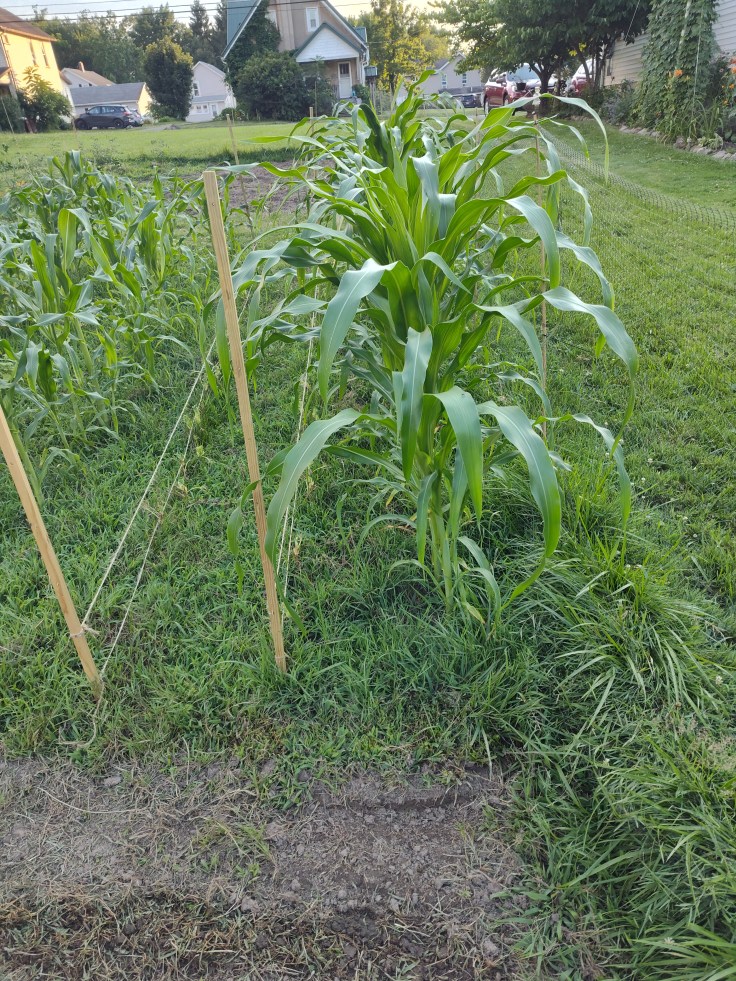
Over the past week, our Butter & Sugar and Black Mexican-Sweet Iroquois sweet corn plants have grown to a point where they’re in tassel, with roughly half the plants now developing ears with silk showing. I think they’re still weeks away from being ready to be harvested, but they’re well on their way. The other variety, Hopi Blue, continues to grow and is close to five feet tall now. The three rows of Black Mexican-Sweet Iroquois that I planted a couple of weeks ago have germinated with nearly a 100 percent success rate. I’ll likely thin these seedlings as needed this week.

Beans Are Finally Starting to Produce
We haven’t had the greatest success with growing beans this year. The late spring and overabundance of rain stunted their growth, and to this point, they’re still only about 18 inches tall. In the past, we’ve had bean plants reach 30 inches tall. That being said, we are starting to see some bean pods on the plants. We’ve been pulling Provider bush beans for about a week now, but only a few pods per plant. Although the pods are pretty small, they’re delicious eaten right out of the garden. Our Jamapa plants are also putting on pods, with at least one being five inches in length. This bean is a shelling variety, though, so we’re going to let it dry on the plant as much as possible before harvesting. Finally, we have the Kebarika beans. These can be harvested as snap beans or as shelling beans. Our plants have been flowering for about a week now, so the bean pods will be following.
Notes From the Garden
- Last week, I weeded and thinned our carrot and beet bed. You may remember that we’ve had a lot of issues growing both this year; however, I’m refusing to give up. My hope is that by clearing the area around the plants and thinning them to only one root every four inches, they’ll be able to develop and be harvestable.
- We now have four spaghetti squashes on our plant. The first two are about seven inches in length, the third one is now four inches in length but still green, and the newest one is still a baby with the blossom only recently falling off.
- The mystery plant beside our spaghetti squash has started to put on fruit. After flowering, the fruit starts yellow and turns green.
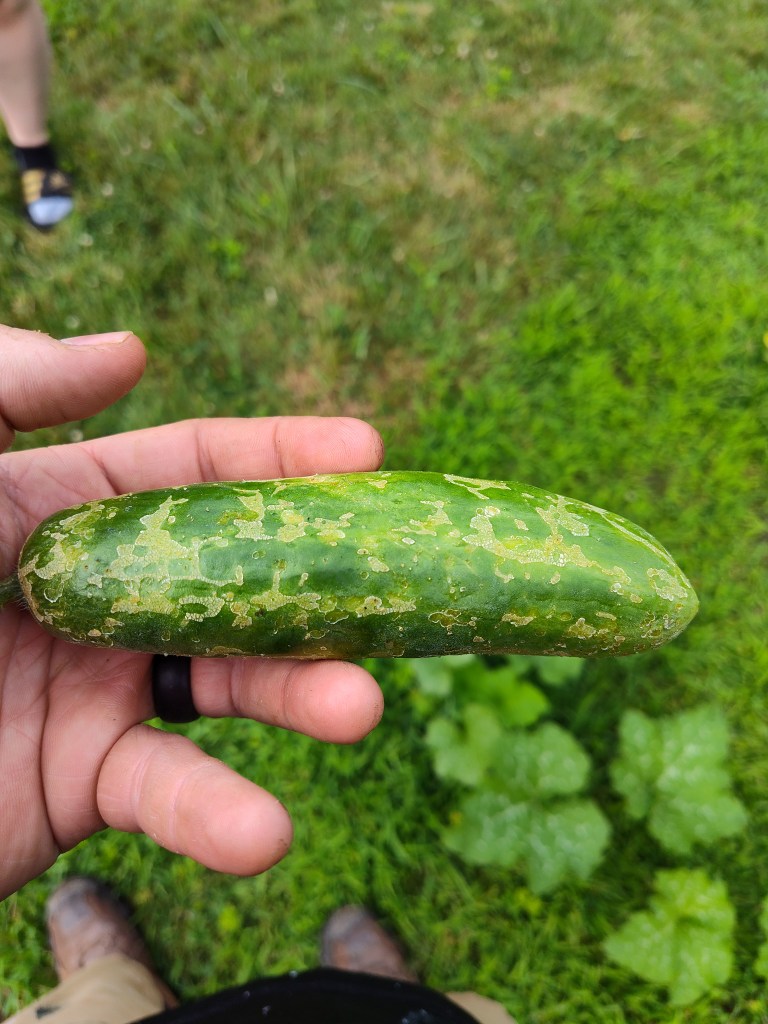
- We are beginning to become inundated with cucumbers. Our Boston Pickling cucumbers are rapidly growing. We’ve already harvested three, and there are at least a half-dozen more on the vine that will be ready in the next couple of days. Our burpless variety has produced two more full-size fruit, but we’ve had a pest getting to them. There have been little scrapes all over the fruit, and it’s the only variety with these, which is confusing. We’ve added some straw beneath the vines and fruit to help with any dampness problems, and I sprayed some insect killer on the plant.
- Our tomatillos are coming on furiously. I understand why people say that you can quickly become overwhelmed by how many you’ll have. We have three plants, and each of them has more than two dozen husks.
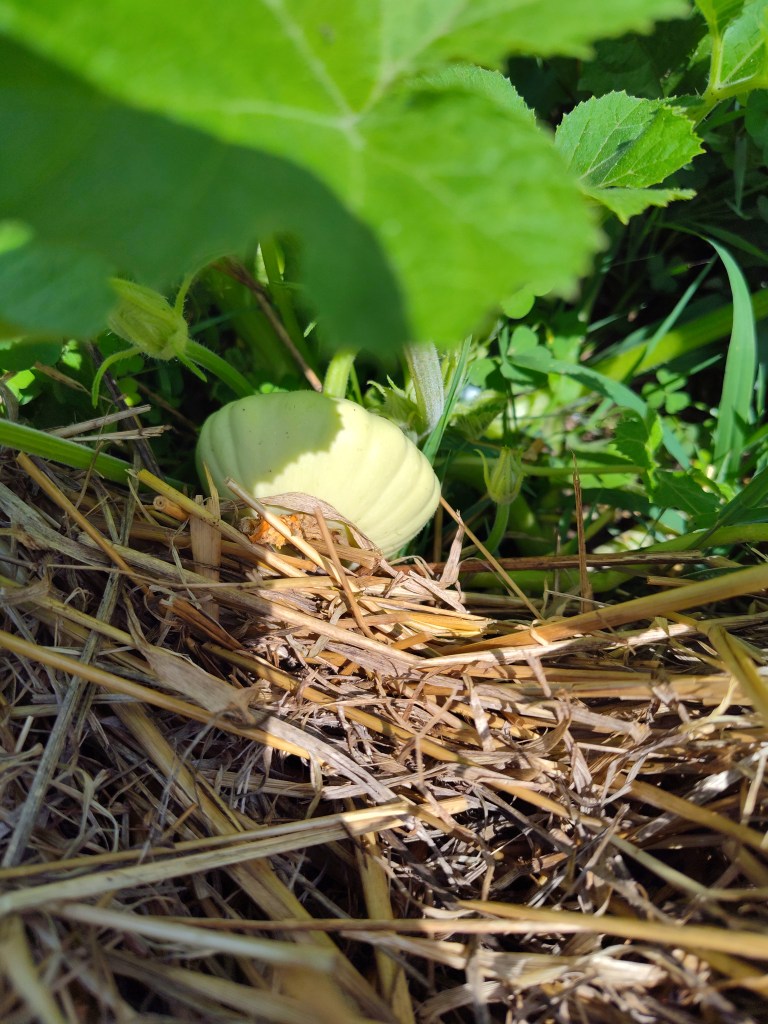
- The first White Scallop patty pan squash that we saw is now about four inches in diameter and two inches tall. Everything I’ve read has said that these will grow to six inches in diameter and three inches tall when fully ripe. They should be ready within a week.


Seed of the Week
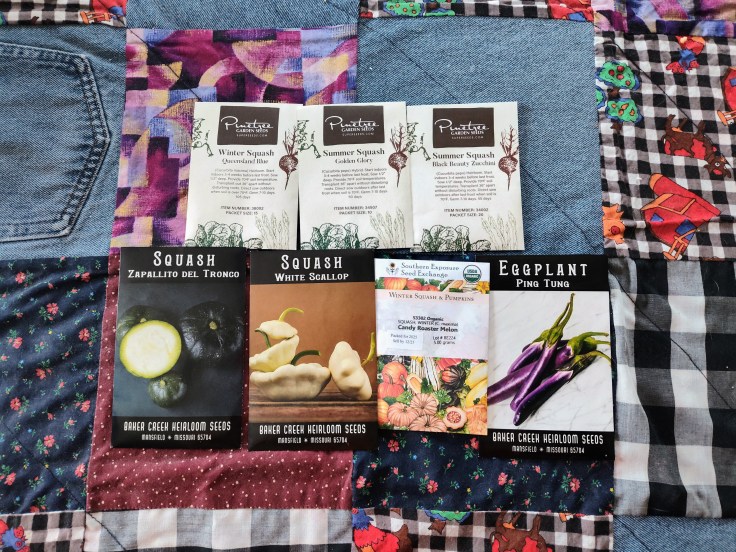
This week’s Seed of the Week is the White Scallop, mostly because it’s doing so well, and we’re close to harvesting our first one. The White Scallop is a patty pan summer squash that is rounder and flatter compared to a zucchini. It’s one of the oldest squash varieties and has been grown by Native Americans for hundreds of years. Baker Creek, which is where we bought the seeds, writes that these were first depicted by Europeans in 1591, so we have evidence of them being grown for at least 400 years. These are very easy to grow. The plants don’t vine out or sprawl, but instead grow vertically and stay compact. They’re supposed to be one of the best-tasting squashes. We’re very excited to eat these.
Up Next
We’ll harvest our first White Scallop squash this week. We’re also hoping to harvest more tomatoes, especially some of the larger varieties. We’ll also likely harvest more cucumbers and need to figure out how to preserve them. Happy gardening!


 One Rabbit Riot