Tomatoes: A Brief History

A research project that started with my looking into Pennsylvania’s native plants has expanded into a general overview of where our most popular commodity crops originated. I’ve said this before: I’m a history nerd and struggle to only do surface-level research. It’s quickly becoming evident that what started as a brief historical post is now a full-fledged project, which I’m excited about. It’s been a long time since I’ve been this excited or interested in doing historical research. Moving forward, I’m going to look at the history of many of the vegetables we grew in our garden this year. Starting out are tomatoes, which are probably the most commonly-grown “vegetable” in the United States.

From South America to Europe to the World

As many know, tomatoes aren’t vegetables. They’re technically fruit and are members of the nightshade, which also includes potatoes, eggplants, peppers, and tobacco. The part of the tomato plant that we eat is the berry, although we eat it as a vegetable rather than a fruit.

The modern tomato’s origins go back to Western South America in Ecuador and Peru where it grew wild. Around 500 B.C., it was first domesticated by the Aztecs and Mayans in modern-day Mexico. It wasn’t until the 16th century that Europeans first saw them as they conquered the people groups of Central and South America. Spanish priest Bernardino de Sahagun reported seeing tomatoes in Aztec markets in what is now Mexico City (known as Tenochtitlan at the time). In 1544, they first appeared in European literature in Pietro Andrea Mattioli’s herbal. Mattioli was an Italian doctor and naturalist whose commentary on medicinal plants was pivotal. At this time, tomatoes were viewed as a new type of eggplant, and in 1554, he referred to them as “golden apples.”

After the Spanish first encountered tomatoes, they took the fruit with them as they continued their mission of conquering the Caribbean and (eventually) the South Pacific. From the Philippines, they were taken into Southeast Asia and reached China in the 16th century. In Italy, they were mostly grown ornamentally due to toxicity fears associated with other nightshades. In fact, they weren’t incorporated into cuisine until the late 17th-early 18th century.

Elsewhere, the tomato reached the island of Great Britain until the late 15th century, but due to the spread of misinformation by John Gerard that tomatoes were poisonous, it took centuries before they were widely consumed. Tomatoes reached the Middle East in the late 18th to early 19th century when a British diplomat transported them to Aleppo, Syria.

Tomatoes were first mentioned in the United States in 1710 when they were recognized by an English herbalist named William Salmon in modern-day South Carolina. It’s speculated that they arrived via the Caribbean and were grown on plantations in the Southeast by the 1750s. Like other parts of the world, the majority of Americans (or colonists prior to the American Revolution) maintained the view that tomatoes were poisonous and should not be consumed. However, that mindset changed during the 19th century as horticulturalists began breeding tomatoes for commercial sales. The most famous of these horticulturalists was Alexander Livingston, who was responsible for helping to develop a tomato that was uniform in size, smooth, and sweet. In 1937, the USDA that he was behind over half the major tomato varieties that were available at the time. Since that time period, more than 100,000 varieties of tomatoes have been identified, and they are largely broken down into five or so categories.

Types of Tomatoes

Tomatoes are generally categorized in the following ways:

Beefsteak

The beefsteak variety is the largest variety of tomato, often measuring nearly 8 inches in diameter and weighing a pound or more. It’s one of the most popular types grown in the United States, and gardeners love beefsteaks for their wide range of uses, including in sandwiches and salads; however, they aren’t a good saucing tomato due to the large and numerous seed cavities. Popular varieties include the Brandywine, Cherokee Purple, and Mortgage Lifter.

Cherry/Grape

Although cherry and grape tomatoes are technically separate varieties of tomatoes, I’m writing about them together because people tend to grow them for the same purpose: fresh eating. Cherry and grape tomato plants produce small fruits, from the size of a blueberry up to a golf ball. Cherry tomatoes tend to be spherical and more uniform in size, while grape tomatoes are often oblong. These types are the ones most closely related to the wild varieties that were grown in South and Central America. Cherry and grape tomatoes are usually eaten fresh or in salads. Popular varieties include Matt Wild Cherry, which shares many characteristics with its ancient, wild relative, Black Cherry, and Yellow Pear.

Oxheart

The oxheart tomato is similar to the beefsteak in size, but different in shape. Whereas beefsteaks are round and spherical, an oxheart tomato will be shaped like a heart or strawberry with a round top that tapers to a point at the bottom. They have fewer and smaller seed cavities than beefsteak tomatoes, which means less water. They are a versatile type of tomato and can be used in everything from fresh eating to canning. Common varieties include Amish Paste and Oxheart Pink.

Paste/Plum

Paste/plum tomatoes are the perfect tomatoes for making sauces and canning due to their low number of seed cavities. This means they have less water content than other types of tomatoes, making them perfect for cooking down into sauces and pastes. Their plants are often determinate, so all their fruit will ripen around the same time, making it easier to harvest batches for processing. Some of the most popular varieties to grow are Amish Paste, Roma, and San Marzano.

Slicing/Globe

Globe tomatoes are likely the ones that come to mind when you think of tomatoes. They’re uniformly round, can be red or green, and can be cooked or eaten raw. They’re easy to slice and serve on sandwiches and can be chunked for salads. They are sweet, but only have a mild tomato flavor. There are many varieties of globe tomatoes, but some popular ones are Black Krim, Mountain Princess, and Bumble Bee.

There you have it; a very brief history of the tomato and the categories they are separated into. I say it’s very brief because there are entire books dedicated to the history of the tomato. One is The Tomato in America: Early History, Culture, and Cookery by Andrew Smith. That is a phenomenal book to read if you can find it. It’s also available to borrow digitally for free through Open Library. Tomatoes are one of the most important and popular vegetables grown commercially and in home gardens, so it was always going to be impossible to provide an in-depth history in a single blog post. But, if you’re like me, you will find this interesting and be intrigued to embark on additional research.

I’m going to continue to do these brief histories of vegetables, but they won’t be a weekly occurrence. I’ll publish them as I’m able to work on them and sprinkle them in with other out-of-season content. Next up, I am going to start writing about the seed catalogs we’ve received for the 2026 growing season.

Exploring the Origins of Our Crops & The Role Immigration Played in It

I’m continuing my exploration of what is commonly grown in our state of Pennsylvania. Last week, I wrote about the state’s native plants and what we have growing on our property. This week, I’m looking at the commercial crops that are most prominent in the state and if they are native to North America or were brought here during European Expansion. I ultimately want to learn if the origins of Pennsylvania’s most commonly-grown crops align with where most of the state’s immigrants came from during the 17th, 18th, and 19th centuries.

Like Magz, I majored in history, and even though I don’t work in history, I still love it. I also approach a lot of things in life from a historian’s perspective and try to ask questions to dig deeper into topics. The gardening offseason seems like a great time to dive into these sorts of topics. Eventually, I want to look at all the vegetables we grew in the garden in 2025 and learn when they arrived in North America if they aren’t native to the continent.

What Does Pennsylvania Grow?

With this question, I’m not talking about what people grow in their personal gardens. I’m talking about the crops that are commercially grown and contribute to the state’s agricultural sector. Pennsylvania plays a prominent role in the agriculture of the United States, equating to just over $9 billion in 2024. That ranked 23rd in the country.

The majority of what’s grown in the state won’t surprise most people. There are a lot of cereal grains (wheat, oats, barley, and sorghum) as well as corn. These are largely grown on a commercial scale and are used to feed animals, as Pennsylvania is a large producer of dairy products. But there are also some surprising crops that you may not associate with the state and a lot of vegetables that are sold throughout the country and world.

Here are Pennsylvania’s most common crops, along with where they originated:

CropNative/Non-NativeOrigin Location
CornNative
WheatImportedFertile Crescent
OatImportedFertile Crescent
BarleyImportedFertile Crescent
SorghumImportedSudan
SoybeansImportedEast Asia
TobaccoNative
SunflowerNative
PotatoesImportedSouth America
Sweet PotatoesImportedSouth America
ApplesImportedCentral Asia
PumpkinsNative
PeachesImportedChina
MushroomsNative
RyeImportedFertile Crescent
BlueberriesNative
CherriesImportedFertile Crescent

Those crops aren’t in any particular order, but they do make up the bulk of what’s grown commercially in the state. It’s difficult to know exactly when immigration to the United States peaked, but most people think of the 19th and early 20th centuries as a key time period because that’s when large groups of Europeans arrived. They brought with them their cultures, foods, and seeds in an effort to keep a semblance of their home alive with them. It’s now why we grow so many different vegetables, both commercially and in home gardens.

Again, these aren’t in any order, but the countries are:

  • France
  • Netherlands
  • Sweden
  • Britain
  • Germany
  • Wales
  • Northern Ireland (aka Scots-Irish or Ulster Scots)
  • Ireland

If you compare the crops and where they originated with the countries that contributed the most immigrants, you won’t see any connections. On the surface, that is shocking and may lead to the question, “How did those plants/seeds get to the United States?” It requires taking the research to a deeper level, which taught me a few things.

Plants Arrived From Asia Via Europe

It was decades after European immigrants came to the United States that people from Asia, including the Middle East, immigrated in large quantities. And by that time period, the majority of what we grow commercially in Pennsylvania was already established. Instead, these plants were “obtained” by Europeans via colonization and trade and brought back to Europe where they were planted. In some cases, new varieties were established through adaptation that allowed these plants to thrive in different soil conditions and climates.

Ignorance of Where Our Food Comes From

It’s my belief that because of how history gets told in the West certain aspects are conveniently forgotten. In history, we were always taught that popular history is told by the winners/victors/privileged. You usually have to look to find firsthand accounts from the losers of a battle or war or from an underprivileged person. I think this holds true for the history of what we eat. In the United States, we were taught from a young age that Europeans brought their food, including plants and seeds, with them. But there was never a mention or discussion of whether those plants were native to Europe.

It took me until at least high school to realize that the Silk Road, British East India Trading Company, and Dutch East India Trading Company played key roles in transporting ingredients and plants across the globe. Sometimes, that happened through legitimate trade. Other times, it was less legitimate and more forceful. Either way, crops like cereal grains, cherries, soybeans, and peaches all came from the fertile crescent, Central Asia, and East Asia. Meanwhile, the Spanish brought potatoes and sweet potatoes back from Central and South America as a result of the inquisition. Learning this was a reminder to always go one level deeper when researching. I used to do that all the time when taking history classes, but it’s easy to get out of the habit if you aren’t being forced to.

Immigration Always Has & Always Will Play a Key Role in the American Identity

The United States is at a weird, and frankly, sad place in time. While immigrants have always been treated unfairly, including by other immigrant groups, we’re at a crossroads. Immigrants, including those legally in the country, are being rounded up and deported to places that aren’t their home. This is in spite of us being told that only those with criminal records would be subjected to arrest and deportation. Another lie. Forgotten is all the positive impact that immigrants have on communities and the economy, including how we grow our food. We’ve already seen the struggle to produce food at the same level as a result.

For some reason, there is a group of Americans who forgot how the country was started and the fact that immigrants and foreign-born people have always comprised a large part of our population. Unless a person is 100 percent Native American, everyone is in the United States because of immigration. Whether it was pre-Revolutionary War or the 20th century following the brutal genocides in Africa, Europe, and Asia, people have always been welcomed here with open arms. I’m concerned that we’re forgetting that.

American culture is weird. We want to say it’s a melting pot, but that’s not true. It’s better than a melting pot. A melting pot implies that people lose their personal identity and assimilate into each one common culture. What we’ve always had is an ability for people groups to maintain their uniqueness while pushing toward a common goal. Whether it was the millions of Europeans who came over during the 19th and early 20th centuries or the recent movement of those from the Middle East, Africa, and Southeast Asia, everyone has played a key role in shaping and honing what we know as American culture. The culture isn’t set in stone, but is instead one that is always changing and being refined. When we lose sight of that, we become isolationist, nationalistic, and the antithesis of what the nation was founded as.

Very little of what we consume or partake in as Americans is uniquely American. Sure, we’ve refined a lot of the seeds and plants to better serve our needs, but the majority didn’t originate here. And new foods and seeds coming to the country haven’t stopped. I listen to a podcast called Seeds and Their People, where the hosts talk to farmers and gardeners and discuss the origin stories of them as people and their seeds. Recently, they’ve had Palestinian refugees on their podcast who’ve been in the United States since the war in Gaza broke out in 2023. Regardless of where you fall on the Israel-Palestine debate, there are a lot of people whose lives have been completely altered by decisions that never considered their opinions. These farmers have been able to get seeds native to Palestine to plant in America. That may seem like a small thing, but those seeds represent their culture and help them feel at home. We should never lose sight of that.

This post really expanded from what I originally set out to write. I thought that I’d just look at where our state’s most common crops originated. It morphed into a deeper conversation of the importance of immigration to American culture and how we get our food.

Happy Halloween or Samhain?

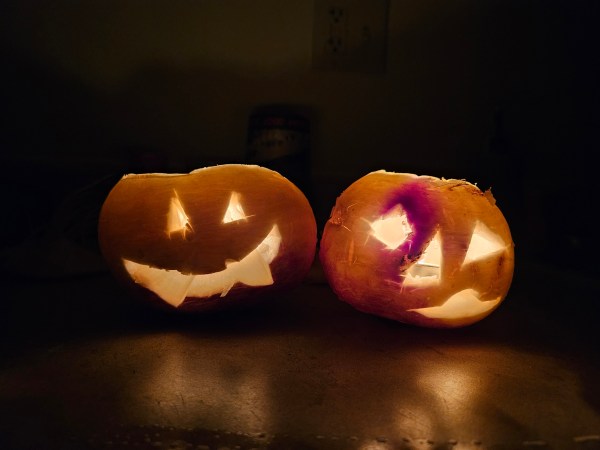
As a kid I carved pumpkins, as I mentioned in my jack-o-lantern pants posts, many moons ago. But as an adult, who has spent many years diving into history, the specifically Irish history of my ancestors, I have found myself switching to a new tradition. Turnips.

The turnip was the orignal carving vegetable for the original halloween, samhain in gaelic. Irish culture gave the traditions of halloween to the British colonizers and Irish immigrants took the traditions with them to America. Trick or treating, costumes, jack-o-lanterns carved pumpkins are all adopted from this key festival of ancient Ireland.

Samhain was a two day celebration. A bit like new year, a bit like day of the dead, and a time when the division between the spirit realm and earthly realm became thin. Fires lit the dark night, masks were worn and turnips carved to warn off evil spirits. The dead could return for a visit and it was unsettling. The world could end, if the gods were not placated.

Of course all this uncertainty is part of the human life and how we make sense of the changing seasons and our unpredictable world. I think its fascinating how they processed these uncertainties in a feast day, abd found ways to distract themselves in the darkness of short days and impending winter. Along with the othet traditions mentioned there was divination and superstitions, like predicting future outcomes with cabbages, or just games of chance, such as finding a small trinket in your slice of pie.

How does the macabre play role in Samhain and why do we have such traditions as graveyards and ghosts? It was a part of the ancient Samhain traditons to visit burial places, make offerings to the dead, and even eat in silence. Of course, while leaving a place at the table for a lost loved one or other spirits that may roam.

There is also a darkness to this festival, and layers to how far things are taken due to beliefs. This is where I stop feeling comfortable, when it gets into the druid roots. It could be quite a sinister feeling ritual, and the druids, well I had to pause my Udal Cuain research because this druid pagan chapter of culture is too dark for me. Any religion that practice human sacrifices is a no for me dawg.

But if you would like to learn more about the lighter and in my opinion, more fascinating parts of Samhain I highly recommend checking out the Ulster Folk Museum’s website.

Happy Halloween!

Pop Press, Historical Biases, and the Straw Man of Politics

What is historical bias? As I dove deeper into my historical training, it became the elephant in the room of every class discussion and the turf monster of every thesis. It is where worldview intersects with historical interpretation and constructs an invisible wall between historical accuracy and interpretation in our present.

Even with firsthand accounts or eyewitness testimony of events, personal bias, and interpretation passively or actively weave themselves into the evidence. It is inescapable.

Something that I’ve gleaned, with a better understanding of, has been from listening to Biblical scholars meditate through the Greek and Hebrew translations of the Bible aka primary sources. It is truly an extraordinary work to ponder accounts from the past and sift through the biases we have as moderns to catch a fleeting moment of connection with the past filled with as deep of empathy for their pov as we can.

It is fleeting because the easier and more common way we interact with history is through quick and heavily biased source material.

A thesis-first and evidence-second approach, instead of first studying the evidence and letting it reveal the thesis is how we as humans prefer to communicate. But what we will gain if we let the text talk to us. Letting the text speak is similar to the Socratic method except instead of a conversation with people, you let the sources speak.

This does not translate well to our current pace of consuming information. It is slow and requires patience to study and understand the matter at hand from many angles. Therefore the “pop press” way of disseminating information, like the History Channel so often uses, rises from the ashes once again to the far reaches of TikTok, Instagram, and YouTube.

This is not to say that only bad history or bad thesis drafting is a product of social media. I’ve learned wonderful details about a vast array of histories, fashion, language, and culture through these social platforms that I couldn’t have had access to at college, because the experts didn’t exist. Dress History wasn’t even a widely accepted specialty during my time in college. Social Media has provided a platform for niche history lovers to share their passion with a new audience. Social Media also provides a salon of discussion to debunk myths or provide deeper context to a subject that was given the “pop press” treatment.

So why am I writing about this today? I was watching a video from a creator who used to be a fantastic source of fashion and film content, a 2000s historian of girlhood with insightful and researched evidence that let the text speak. The original work was so high caliber that this current slump into heavily biased “historical” fashion videos and content that is just politics loosely veiled as film or fashion-focused, has been a great disappointment to me. The creator is so talented, and to see them be swayed by forces that are in our culture is sad.

Not only a disappointment, but it has shown me how important it is to stay committed to awareness of historical biases and the humble acknowledgment that we can’t talk in absolutes when it comes to interpretation. We have to be open to exploring the sources from many points of view and not let ourselves be mouthpieces of modernity, with the clever out of “victors write history” so what is the point of going deeper.

Victors certainly change history and can try to control its narrative, but history is the story of humanity and is bigger than one group’s manipulation.

For example, in my wheelhouse, I am the descendant of Irish immigrants who were potato farmers in Cork. The Potato Famine was discussed historically as just a blight. Bad luck. Not a big deal. Oh well. The crisis was met with such apathy that Irish clergyman Jonathan Swift, wrote “A Modest Proposal” to draw attention to the British attitude towards the Irish was not unlike the absurdity of his proposal.

But now, we know that this event can be classified as a genocide because the British colonized Ireland for centuries. There was enough food in Ireland until the British stole it and imported it out of their colony of Ireland. The “victors” affect history but their version is not the guaranteed final version forever. They inflict death and destruction but this will not stay in the shadows forever, the light is greater than the dark.

My point is that this summation, “The victors write history” is paltry.

So what started this ramble of historical bias?

A video essay about the history of the Goth aesthetic which had random political bias inserted as fact and a lack of nuance to the conclusions based on a clearly preconceived thesis where evidence was cherry-picked to fill out a video that wasn’t really about Goth style. It was about our Nov 5, 2024 election and unnecessarily put a lot of negativity out into the world instead of talking about the Goth aesthetic.

I believe it’s time that we as a society stop stirring up dissension and casual hate in the name of the political savior. These candidates never save anything. They try their best but they are just humans. Is it worth hating an entire group of people because they hold different views? Never.

No human is perfect, so how can human government create a perfect society? It’s a straw man.

I hope in time, the strong political biases I see swaying storytelling in my culture will sour. Instead, I hope an appetite for deep discussion to understand each side of the coin will spring forth. For truth, for the sake of truth, warts and all. For deeper connection. To understand what people believe and why they believe, with mutual respect, and respect for the biases we hold so that we don’t let our biases keep us from true understanding and continue to fertilize this culture of casual hate I am seeing in 2024.

I hope this post is not too convoluted. I wanted to discuss this without saying what creator I am referring to because it is not them I want to critique but the fallacy they have fallen under and the way they are approaching history, politics, and interpretation of these things without the awareness of their personal bias. It’s creating foolish and unuseful content that reads more as pop press propaganda than well-researched discussion, which is what I think they excel at doing. I believe they are amazing and I want to see their talent shine once again!

Bias is such a difficult thing to wrestle with and I acknowledge that no matter how I tried to check mine at the door, it still persists. I try to hold it loosely and pursue the truth, but I am an imperfect human. 

Thank you, reader, for being here and I hope this was an interesting ramble if nothing else. If I have offended you, I humbly ask for your grace and willingness to love others – enemy or friend, because that is how we will make this world a better place.

I Struggle in December

December is a weird month. I like Christmas and in the same breath, all the holiday joy reminds me of loved ones who aren’t with me anymore. The darkness of winter, the time change, and dreary gray days have felt like my mind washing over my environment when I get sad.

My grandma passed away on December 18, a few years ago now. Before she passed, our family holidays moved from being at home to being celebrated at a nursing home because my papa had broken his neck and wasn’t able to recover fully from the injury at 80 years old. The season has felt a little empty now for seven years. It hasn’t been all bad, my husband and I have created new traditions and I’ve found a lot of joy in rejecting the tradition and finding new ways to enjoy the season. Making things and being generous to others, whether in my community or social circle, has been the best way to make this month joyful for me personally.

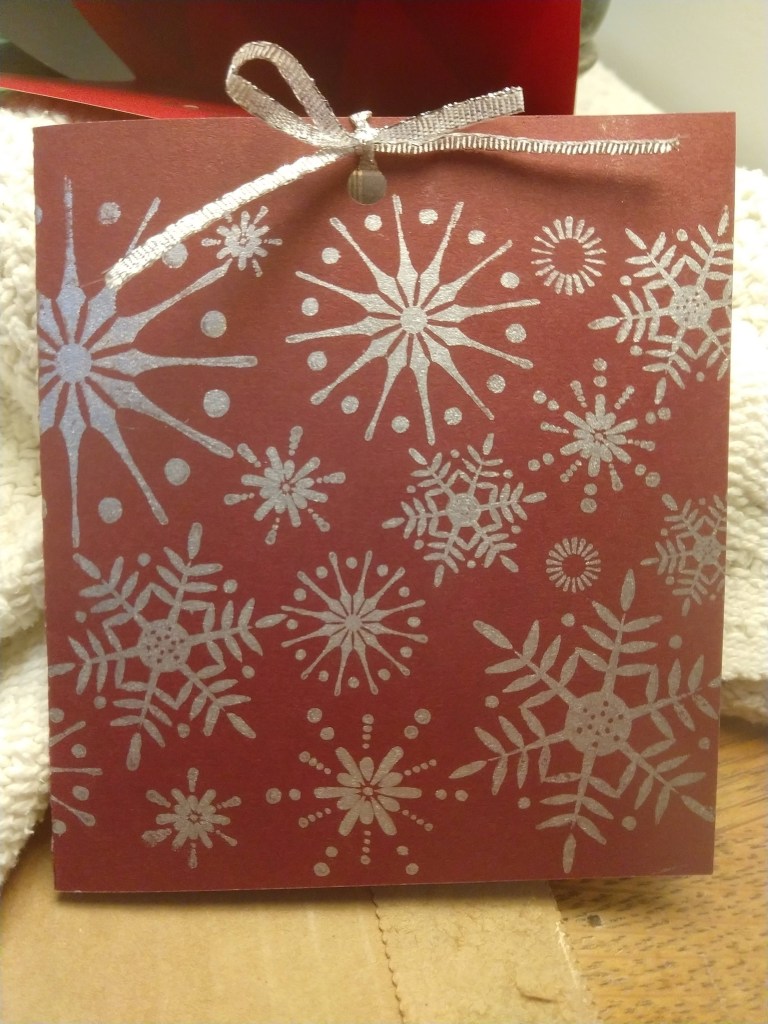
Potato Technology’s A/W 2022 was about this exact point, I wanted to make things for the people who showered me with love and encouragement as I found my way back from grief to a new normal. The last Christmas season before the pandemic, we made cards for a local nursing home and that is still one of my favorite Christmas memories of the last seven years.

That was the same year my brother came to visit me on Christmas. We never spent a holiday together in our 26 years of being brother and sister. It was cool and also hard to process. I think there will never be enough time or enough normalcy to make my relationship with my brothers feel whole because we didn’t get the chance to have that and had to make our own traditions with our separate moms. My sister’s existence with another mom makes the entire thing more complicated, as I have been both shoehorned into that nuclear family even though I don’t belong and have been passed over for the normalcy of my sister’s two-parent home.

My dad and my stepmom don’t understand boundaries. If I put up a boundary, they tear it down. They even weaponize this time of year to make me feel guilty. Before I cut off contact it was guilt to be at their house in south Georgia for every Thanksgiving and Christmas on my dime. This irks me because they are incredibly rich compared to me and most people in my life and it’s unfair to place these financial and emotional expectations on me. Since I have cut contact because I got tired of the toxic environment, I get a reminder of my failure with a Christmas card and sometimes a present. The card used to come from my dad but as I have not done as he wished, it now comes from his wife and has become more cutting.

I’m not sure if it will come this year but it hangs over my mind as I feel grief that my dad can’t be in my life without hurting me, and if I take a step back from the dysfunction for my own sanity, I receive nasty cards reminding me how it is all my fault. Merry Christmas, you’re failing us as a daughter. In reality, the situation is complicated and I am sure at fault for things but the sheer inability to acknowledge that it takes two people in a relationship to make it or break it baffles me.

I think all this baggage could be why, I am utterly distraught that my friendship with a friend I met in college which was honestly always dysfunctional, and probably better for both of us to go separate ways, has ended abruptly. Even though I saw it coming and was honestly on borrowed time, the fact that it fell apart at this time of the year is bringing me quite low. I don’t understand how it all happened as quickly as it did. Because I’ve lived so many years now with those nasty Christmas cards, I can’t help thinking this is all my fault and that I didn’t mean much to her anyway. Which is crazy because I know that our friendship did mean a lot.

Man, this time of the year is not as holly or jolly as those songs claim. It is complicated because it can’t be perfect like the movies tell us it will be. If you are having a hard time, know that I’m here for you and I’m sending you love through my keyboard because I am not doing well either. Thank you for spending a bit of your day with me.

Create a website or blog at WordPress.com

Up ↑