Easter: A Confrontation of Oppression?

Something I have pondered through this Easter season, thanks to the Bible Project Exodus Way series, is Jesus’ motivation for His mission and how His ministry confronted oppression in the 1st century. Oppression from sin, society, and the corruption of the Jewish leaders, all under foreign occupation. It was a tense atmosphere. That is something I tend to forget. I think that the Pharisees were petty, and Rome was a casual player; instead of Jesus existed in the context of people who wanted to be free.

The Romans were incredibly brutal. If you have watched Gladiator or Gladiator II, there is a temptation to get caught up in the splendors of Rome, but they were a society sustained by oppression. Gladiators were slaves; any immigrants or conquered nations were slaves, there was a strict class divide, and women were not valued. With newborn baby girls and disabled babies being thrown away to animals, off of cliffs, or sold to human traffickers. It was a common practice.

Doesn’t this sound like eugenics and the practices we saw in the extermination plans of genocides? Yep. It’s a cycle of evil and sin that we fall into over and over again. Same ship, different day.

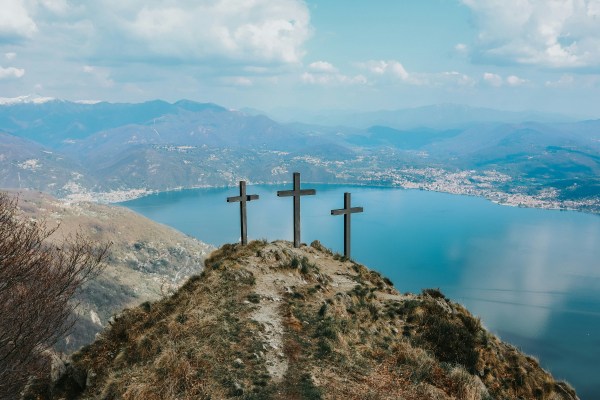
Under Roman occupation, the cross and crucifixion were a common and calculated practice of execution. Men, women, and children could be crucified, usually by the roadside. It was designed to instill fear and was engineered to be a horrific death, and yet Jesus willingly allowed himself to be crucified for us. All of us, His mockers, those scheming against Him, even those Romans.

He came to challenge our understanding of love through the radical expression of it, taking the sin of the entire world – past, present, and future – on His fully human, yet fully God, shoulders – to pay a price we cannot pay for freedom from oppression.

Jesus ministered to everyone in His path, but He sought out those who were abandoned by the society they lived. Jesus healed the sick, the lepers who were kicked out of society and left to live as outcasts, when they needed compassion and care. Those who were disabled were ignored, but Jesus saw them and healed them. He confronted the demons who took up residence inside people and cast the demons out, ending the oppression of their host and restoring peace.

He gave second chances. There were many times throughout His ministry when the disciples and His followers let Him down, yet Jesus forgave them. Even when they denied and abandoned Him, Jesus forgave. Forgiveness confronts the oppression of grudges, vengeance, malice, and bitterness.

Our society is embroiled in grudges, vengeance, and the oppression that comes with unwillingness to forgive. Justice with an iron fist, eye for an eye. That is not what the Bible calls for, even in those Old Testament passages that are brought up to challenge this – the Egyptians were free to join the Passover and be spared from the plague that killed the firstborn, the kingdoms that were in Canaan when the Israelites did it God’s way were conquerered not by violence. God is a just God, a righteous God, and even in the Day of the Lord is not a God of oppression. We are called to forgive, to be reborn in salvation as new creations in Christ, and to give second chances with generosity and love.

The Passover of the Jews was at hand, and Jesus went up to Jerusalem.  In the temple he found those who were selling oxen and sheep and pigeons, and the money-changers sitting there. And making a whip of cords, he drove them all out of the temple, with the sheep and oxen.

And he poured out the coins of the money-changers and overturned their tables.
And he told those who sold the pigeons, “Take these things away; do not make my Father’s house a house of trade.”

His disciples remembered that it was written, “Zeal for your house will consume me.” So the Jews said to him, “What sign do you show us for doing these things?”

Jesus answered them, “Destroy this temple, and in three days I will raise it up.”
The Jews then said, “It has taken forty-six years to build this temple, and will you raise it up in three days?”

But he was speaking about the temple of his body. When therefore he was raised from the dead, his disciples remembered that he had said this, and they believed the Scripture and the word that Jesus had spoken.

John 2:13-22 ESV

It’s been a daily struggle for me and the rest of us who have eyes open to the oppression occurring in our midst. I am angry. I want to fight against the pervasive corruption. This Holy Week has been a week of me learning about the El Salvadorian CECOT prison, where there are no second chances ever, hearing that Autism is an “epidemic”, Putin launching missiles during Ukrainian Easter celebrations, and my state’s governor being the target of arson because of his faith.

The ceasefire, which I knew was broken, just fills me with frustration at the ongoing suffering and senseless death. Like the Pharisees, Sadducees, and Romans, the apathy for suffering people and the greed for power and money is the “tale as old as time” plot playing on today. I wish the world would wake up. It’s also the tax deadline here in the United States, and I have to say, I am the least confident I’ve been in my adult life that my taxes are doing anything good for my community.

Especially when social services and disaster relief funding are cut. I want these leaders in my midst, and my fellow citizens who are lukewarm like the church of Laodicea, to stop perpetuating “Christianity” as a form tied up with politics and confront the ways that they are participating in the oppression of others and repent, because this week is about freedom. We are all invited to become a new creation.

True freedom. From who we are, have been, come from, or what we feel we can’t be. It is a transformative second chance of mercy and justice that we have not earned, but is freely given. No corruption or cronyism can take it away, nor can violence or tyranny.

If you are reading this and haven’t experienced this kind of freedom, may I recommend the Chosen, the Bible Project, and the gospel of John first? John is so thematic, and it’s a story that will pull you in. The world is a vampire, but there is hope. Stay strong, friends, and know that you are loved.

#51 – Forsythia, Thumb Print Cookies and Rain

Driving home on a cloudy, rainy Sunday a wash of bright, sunshine-yellow that burst upon the landscape once I got within my hometown’s county. A golden, almost firey shrubbery that dotted the yards of homes near and far. But what is this? This long-forgotten friend that signals spring, the forsythia.

At first, I thought this was a local plant, potentially a Pennsylvanian cherry blossom? But actually, I learned that forsythia originates from Eastern Asia and Eastern Europe. I wonder what brought them here? Maybe the simple beauty or immigrant communities from Eastern Europe who came to Beaver County brought a sense of home? That would be cool.

Since I moved from home, I think my springs have been colored with different shades of spring. The crocus, the daffodil, and when May creeps in, the rhododendron (a tongue twister). I look at photos and videos with wanderlust of the Sakura and forget my local splendor, the forsythia.

I didn’t realize how much I missed those beautiful golden blossoms until I saw them again. It was a welcome call, a return to normalcy to a world of childhood that felt like a warm hug. As I mentioned before in Easter Traditions and Celebrating the Resurrection there isn’t a lot of familiarity in my holidays anymore, but this, it felt like a moment stuck in time.

This wasn’t the only familiar sight of the weekend. I went home and got to give my parents hugs, and my family dog snuggles, and ate a new little tradition – thumbprint cookies from My Sweet Lily. My mom and Scott (who I’m referring to when I say my parents) travel down to Pittsburgh’s Strip District each Easter season to get a ham at Wholey’s Market and make another stop. To a bakery that sells dairy-free confections of creme-filled pastries called lady locks and these cookies called thumbprints, rolled in sprinkles with a dollop of icing on top.

This variety with the frosting, is incredibly sweet, vibrantly colored, and sort of stomach ache-inducing but I love them and choose to indulge in their sweetness once a year. I’ve had these cookies with jam and with a chocolate ganache, which is splendidly rich. I was curious where these cookies originated from and they are an Americanized version of the Swedish hallongrotta cookie. The name hallongrottor translates to raspberry cave, as these cookies are traditionally served with raspberry jam filling the depression in the top of the cookie.

Today we have a familiar friend visiting our basement, rainwater. Oh rainwater, flowing into the basement and making the journey to the washing machine an adventure of tiny stream crossings. I’m trying to be patient and accept that this Spring is going to be a rainy one, just like the rainy winter we had and it will pass. The basement will dry out.

Meanwhile, the rain is kind of calming, gentle, and cozy on this April day. I can’t believe it’s April already and I’m so excited. I’ve been designing up a storm for summer and I can’t wait to share it with you. ❤

Easter Traditions and Celebrating the Resurrection

For a while now, during Easter Week, I feel a bit like Charlie Brown, and like unsatisfied Chuck, I’ve been doing some thinking. Why does it feel like however I’m celebrating Easter that year, it’s just not exactly enough or appropriate for the gravity of what Palm Sunday, Maundy Thursday, Good Friday, and Resurrection Sunday truly represent?

Tradition!

Some of this feeling is my fault as I have changed churches a lot and gone through big moves and stretches of not knowing where to attend for a complex of reasons. That being said, I remember as a kid the feeling of joy and exaltation that filled the house from Palm Sunday on when I lived my grandparents. There was the music, a 1995 Easter cantata that my Grandma would play while baking tea rings, a Swedish wreath shaped pastry, for us and the whole neighborhood. It was a tea ring factory filled with music that told the story of Jesus’ triumphal entry, his walk to the Cross, his death and Resurrection, as told from different perspectives of witnesses.

My grandparents, I see now as an adult, gave me an example of balance for this holiday, because it wasn’t somber and it wasn’t trivialized into a holiday about bunnies and chocolate with a splash of Jesus. There was genuine joy, faith, and love for others expressed. Grandma would usually play piano at church on one of the Sunday services and Papa would help serve communion as part of his duties as a church Elder. He and I would enjoy the Easter chocolate after service and my extended family and friends would come over after church for a meal. There was usually a small candy egg hunt for me and my cousins too.

Since then two things have changed in my experience of Easter – the absence of family for those traditions and the absence of faith in our Easter celebrations.

When my mom got remarried I experienced my first Easter holiday where believing Easter was about Jesus was weird. My new family were and are some of the nicest people I’ve met and yet, this day was so weird because I’m not exactly sure what we were celebrating? As they grew up in the church but had moved away from the faith into adulthood and raised my cousins without any context of Jesus, it was an odd day, full of love and great memories, but a bit hollow? It was eye opening in a good way of the bigger context of the world and how not everyone believes the exact same things as you but you can still get along. It was a point of maturity for sure and put this ache in my heart for the old holidays with my grandparents.

The weirdest of these experiences for sure has been the holiday with traditions but without family. Do traditions matter if there is no one to share them with? It’s a weird place to think through because you don’t want to lose your family traditions, but like, you can’t help feeling like its dead without the rest of the family to share with. And this is not because my family all died, no just my grandparents did, and my extended family on that side lives within a 10 mile drive of each other. They simply have no interest in getting along anymore and have just dropped our family connection because of silly disagreements and its sad. Being on the receiving end of it it honestly feels like crap. There have been holidays I have absolutely dreaded because of this and its taken time to start to be okay with the new normal of being an island.

Love Your Neighbor as Yourself

Something that has helped me move forward to a new normal has been to focus on what the holiday is actually about – Jesus’s death and resurrection so that we can have salvation from our sins and become a new creation in Him. In doing this I found myself ironically back at the same problem, no matter how I celebrate this day it doesn’t feel like enough. Until yesterday while I was doing dishes and was daydreaming, I thought about something I think is profound.

I think the reason this holiday in the United States feels a bit flat is because this day represents a moment in humanity that is a bit bigger than just a day of remembrance. It’s a day where I want to give thanks to God for sending his son to do this amazing work of redemption. It was the ultimate gift that I have received. It symbolizes a new start and also a day of freedom and independence from my sin. It is essentially four of our major holidays rolled into one – Thanksgiving, Christmas, New Years, and the Juneteenth/4th of July. Because of this I’m not sure if I will ever feel truly satisfactory with how I celebrate this holiday. I don’t think its possible and that’s okay. And potentially how the Reformed Presbyterian church (as much as my Wesleyan mind grumbles giving Calvinism the nod here) is right and celebrating the resurrection every Sunday is the most satisfactory.

So I guess my point here from all my rambling is that I miss my family, I wish they would come back but if they don’t its okay because there are others who love me that may not share my beliefs and the ultimate point of this holiday is not ham, candy, or pastry, it’s the resurrection and what we do with this fresh start. Giving in love of our time and our resources to bless others with what we have to continue what Jesus started almost 2000 years ago. He is risen! He is risen, indeed.

Create a website or blog at WordPress.com

Up ↑