
Pop Press, Historical Biases, and the Straw Man of Politics

What is historical bias? As I dove deeper into my historical training, it became the elephant in the room of every class discussion and the turf monster of every thesis. It is where worldview intersects with historical interpretation and constructs an invisible wall between historical accuracy and interpretation in our present.

Even with firsthand accounts or eyewitness testimony of events, personal bias, and interpretation passively or actively weave themselves into the evidence. It is inescapable.

Something that I’ve gleaned, with a better understanding of, has been from listening to Biblical scholars meditate through the Greek and Hebrew translations of the Bible aka primary sources. It is truly an extraordinary work to ponder accounts from the past and sift through the biases we have as moderns to catch a fleeting moment of connection with the past filled with as deep of empathy for their pov as we can.

It is fleeting because the easier and more common way we interact with history is through quick and heavily biased source material.

A thesis-first and evidence-second approach, instead of first studying the evidence and letting it reveal the thesis is how we as humans prefer to communicate. But what we will gain if we let the text talk to us. Letting the text speak is similar to the Socratic method except instead of a conversation with people, you let the sources speak.

This does not translate well to our current pace of consuming information. It is slow and requires patience to study and understand the matter at hand from many angles. Therefore the “pop press” way of disseminating information, like the History Channel so often uses, rises from the ashes once again to the far reaches of TikTok, Instagram, and YouTube.

This is not to say that only bad history or bad thesis drafting is a product of social media. I’ve learned wonderful details about a vast array of histories, fashion, language, and culture through these social platforms that I couldn’t have had access to at college, because the experts didn’t exist. Dress History wasn’t even a widely accepted specialty during my time in college. Social Media has provided a platform for niche history lovers to share their passion with a new audience. Social Media also provides a salon of discussion to debunk myths or provide deeper context to a subject that was given the “pop press” treatment.

So why am I writing about this today? I was watching a video from a creator who used to be a fantastic source of fashion and film content, a 2000s historian of girlhood with insightful and researched evidence that let the text speak. The original work was so high caliber that this current slump into heavily biased “historical” fashion videos and content that is just politics loosely veiled as film or fashion-focused, has been a great disappointment to me. The creator is so talented, and to see them be swayed by forces that are in our culture is sad.

Not only a disappointment, but it has shown me how important it is to stay committed to awareness of historical biases and the humble acknowledgment that we can’t talk in absolutes when it comes to interpretation. We have to be open to exploring the sources from many points of view and not let ourselves be mouthpieces of modernity, with the clever out of “victors write history” so what is the point of going deeper.

Victors certainly change history and can try to control its narrative, but history is the story of humanity and is bigger than one group’s manipulation.

For example, in my wheelhouse, I am the descendant of Irish immigrants who were potato farmers in Cork. The Potato Famine was discussed historically as just a blight. Bad luck. Not a big deal. Oh well. The crisis was met with such apathy that Irish clergyman Jonathan Swift, wrote “A Modest Proposal” to draw attention to the British attitude towards the Irish was not unlike the absurdity of his proposal.

But now, we know that this event can be classified as a genocide because the British colonized Ireland for centuries. There was enough food in Ireland until the British stole it and imported it out of their colony of Ireland. The “victors” affect history but their version is not the guaranteed final version forever. They inflict death and destruction but this will not stay in the shadows forever, the light is greater than the dark.

My point is that this summation, “The victors write history” is paltry.

So what started this ramble of historical bias?

A video essay about the history of the Goth aesthetic which had random political bias inserted as fact and a lack of nuance to the conclusions based on a clearly preconceived thesis where evidence was cherry-picked to fill out a video that wasn’t really about Goth style. It was about our Nov 5, 2024 election and unnecessarily put a lot of negativity out into the world instead of talking about the Goth aesthetic.

I believe it’s time that we as a society stop stirring up dissension and casual hate in the name of the political savior. These candidates never save anything. They try their best but they are just humans. Is it worth hating an entire group of people because they hold different views? Never.

No human is perfect, so how can human government create a perfect society? It’s a straw man.

I hope in time, the strong political biases I see swaying storytelling in my culture will sour. Instead, I hope an appetite for deep discussion to understand each side of the coin will spring forth. For truth, for the sake of truth, warts and all. For deeper connection. To understand what people believe and why they believe, with mutual respect, and respect for the biases we hold so that we don’t let our biases keep us from true understanding and continue to fertilize this culture of casual hate I am seeing in 2024.

I hope this post is not too convoluted. I wanted to discuss this without saying what creator I am referring to because it is not them I want to critique but the fallacy they have fallen under and the way they are approaching history, politics, and interpretation of these things without the awareness of their personal bias. It’s creating foolish and unuseful content that reads more as pop press propaganda than well-researched discussion, which is what I think they excel at doing. I believe they are amazing and I want to see their talent shine once again!

Bias is such a difficult thing to wrestle with and I acknowledge that no matter how I tried to check mine at the door, it still persists. I try to hold it loosely and pursue the truth, but I am an imperfect human. 

Thank you, reader, for being here and I hope this was an interesting ramble if nothing else. If I have offended you, I humbly ask for your grace and willingness to love others – enemy or friend, because that is how we will make this world a better place.
Sewist Reacts: What In the Vintage Inspiration Is This?!

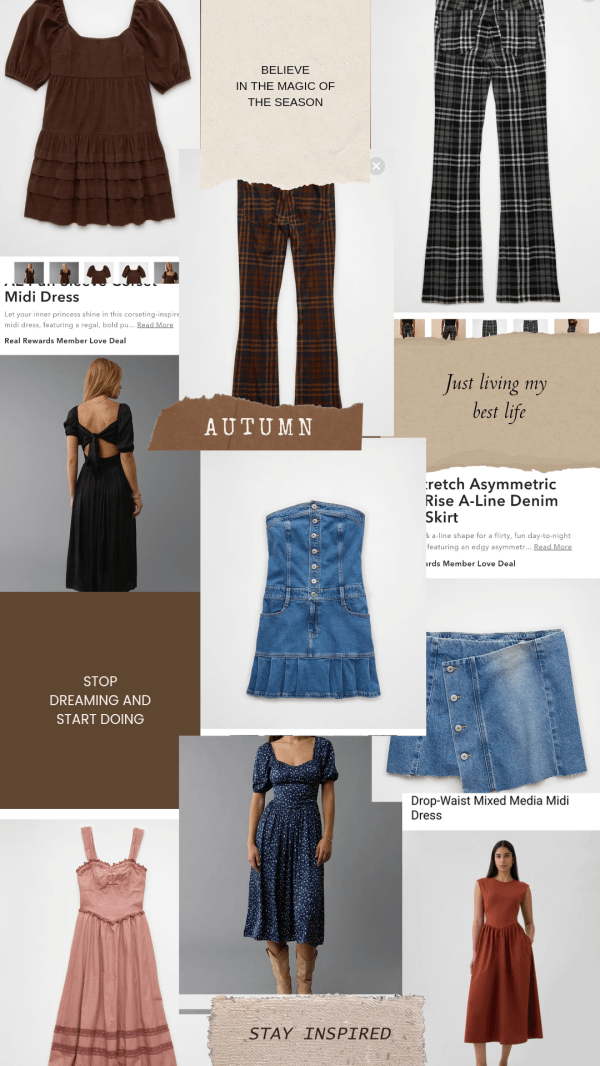
Fast fashion is a problem for many reasons. The overconsumption. The exploitation of workers. The lack of quality in construction and fabric. Polluting water sources and landfills. Ruining thrift stores with Shein products. But one I hadn’t considered was how these fast fashion brands are watering down design to the point that they are misrepresenting fashion terms like corset, choosing the wrong fabrics for construction, and not even trying to pattern match. It’s becoming nonsensical!

Fall fashion trends and fall sales are in full swing here in the US. I’m seeing ads everywhere, in between Instagram stories, in my email inbox, on YouTube, on television advertisements, etc. It’s bonkers! You would think that we had empty closets and had never owned cold-weather clothing before! Each season you need to completely restock your wardrobe! Buy, buy, buy!

So I caved and I started to look at these websites. Looked, not purchased. That is the key here because I found some wacky things masquerading as vintage and historical-inspired pieces of fashion. These fashion brands are two that are quite popular in my neck of the woods.

The Gap does Medieval Plate Armor

A brand I get a lot of ads from, which amuses me because I don’t like this brand, is the Gap. I probably see ads because I do buy occasionally from Old Navy and they are owned by the same company. If only the Gap knew how I feel about them, they would realize it is a lost cause. I think that the Gap cuts its patterns weirdly, is expensive for the quality, and is dry toast in terms of its aesthetic. So I wasn’t surprised to see a rather vanilla dress. What surprised me were the style lines of this dress and the fabric they chose.

This dress looks inspired by 16th-century plate armor, a breastplate specifically, but it is made out of what I would guess is a stretch jersey because there is no structure or fastenings in the photos. So a rigid garment, being made out of a stretch shapeless fabric, just isn’t right. There is something off about the shape of the bodice and how it hangs on the body. This is a missed opportunity. I think they could have added boning channels or made this out of a stiff woven fabric. Maybe a coordinating vest? Vests have come back in popularity. It’s a misrepresentation of the historical garment they were inspired by and as a dress historian, it bugs me. This dress is already an attempt at thinking outside the box, so why not do it properly and celebrate the design? 🙂

There is an exhibit at the Met, linked above showing a historical example of what I am talking about, featuring an exhibit of 16th-century armor with beautifully sculpted lines.

A Corset That is Not a Corset

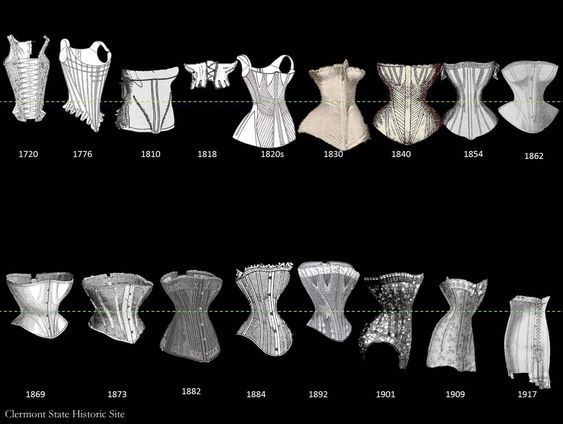
This dress is not a corset. Maybe it is a Victoria’s Secret definition of a corset with the stretch smocking on the back, but this is not in form or function, what a corset is or was. The corset was a supportive undergarment, a foundation garment as they were called that shaped the body and supported the bust according to the specific standard of beauty at the time. The first iteration of the corset appeared in the 16th century, called a pair of bodies. This was followed by stays in the 17th and 18th centuries and the transition to the corset in the 19th century which held popularity until the 1920s when the corset began to fall out of fashion for other types of garments. This is a very quick overview and I probably oversimplified this so I would recommend checking out historical costuming YouTube for a better reference, also the V&A has an online exhibit featuring Victorian corsetry.

Because of the lack of familiarity, we have with the corset in our 21st-century mind, we tend to slap the word corset on any shape that looks like a formed bodice, which is what this is a bodice cut to accentuate the waist but will fall flat because it is not made with any structure to give the garment a shape. There is no lacing, cording, fake baleen, or steel to give this any shape beyond the body that will wear it. It is all smoke and mirrors. But that bugs me, because American Eagle, the maker of this dress, is a popular teenage and young adult brand that can shape the minds of the future by their experience with clothing!

So why not ride this wave of aesthetic TikTok dressing and go full-on corsetry? Tight lacing is not required, nor was it popular for most women historically, except for the Kim Kardashians of antiquity who did it for the spectacle, people of the past needed to move and breathe just like us so it could be a corseted bodice, and not be controversial! It’s just a thought. I do appreciate the trim on the skirt, it is very 1890s, and I like it.

This dress has the same problem, this is not a corset and this is barely a puff sleeve. This is bad marketing and bad fashion education. You could never corset an open-back dress and to puff a sleeve you need quite a lot of volume and possibly some Tarleton to help keep the sleeves voluminous. The Fashion Institute of Technology has an online exhibit featuring the Gigot sleeve, a beautifully puffed historical design.

When it comes to historical dress there are so many cool designs from the past, and with the amount of research that exists and abilities to connect through technology, there are endless ways to be inspired from the past but not screw it up. I think we should embrace the gift we have of historical dress knowledge and technology like sewing machines, the internet, etc to make something beautiful. These companies have so many resources at their disposal, that I wish they would try a bit harder to make good clothing. But alas, they are fast fashion, and this is one of the worst fast fashion blunders I have seen from these two brands, the Gap and American Eagle until I found this one pair of plaid pants, but that is another story!

Thank you, reader, for going on this adventure into historical dress with me. If you are as tired as I am of the current state of fashion, I encourage you to learn how to sew! It’s the best hack I’ve found.

What I Would Pick for the ‘Sew Your Decade’ Challenge

In honor of National Sewing Month and the 160 years of their existence the big four – Simplicity, McCall’s, Butterick, and Vogue Patterns are taking a look back at their patterns. The Simplicity Creators group turned this little moment of fashion history into a challenge, Sew Your Decade. I first learned about this through a video from Stephanie Canada where she took a look at the patterns Simplicity was highlighting on their ‘Stitch in Time’ historical presentation of patterns and fashions made by these four companies over the years. A lot of them were reproduction patterns and had dubious choices, including some 1950s patterns in the 1960s. But that’s more of an editing problem.

Because I have a lot of other projects in progress but I love historical fashion, I thought I would take a look through the historical pattern wiki and choose a pattern from each decade of what I would want to make if I had the time to make a garment from each era. I’m using the vintage patterns wikia and historical sources instead of the patterns on Simplicity’s site because the originals are just more appropriate and imaginative than the ones selected on the timeline and the reproductions they sell currently.

1800s Era (1860s-1890s)

Butterick 9111; ca. 1897; Ladies’ and Girls’ French Bathing Costume. 
Pictured in September 1897 Butterick catalog.

I choose this bathing costume because it is such a unique relic from the past but also because we’ve seen some new designs for swimwear come out recently that reimagine the typical 20th century-21st century swim suit, that look less like bikinis and more like a crop top and a skirt.

1900-1910s Era

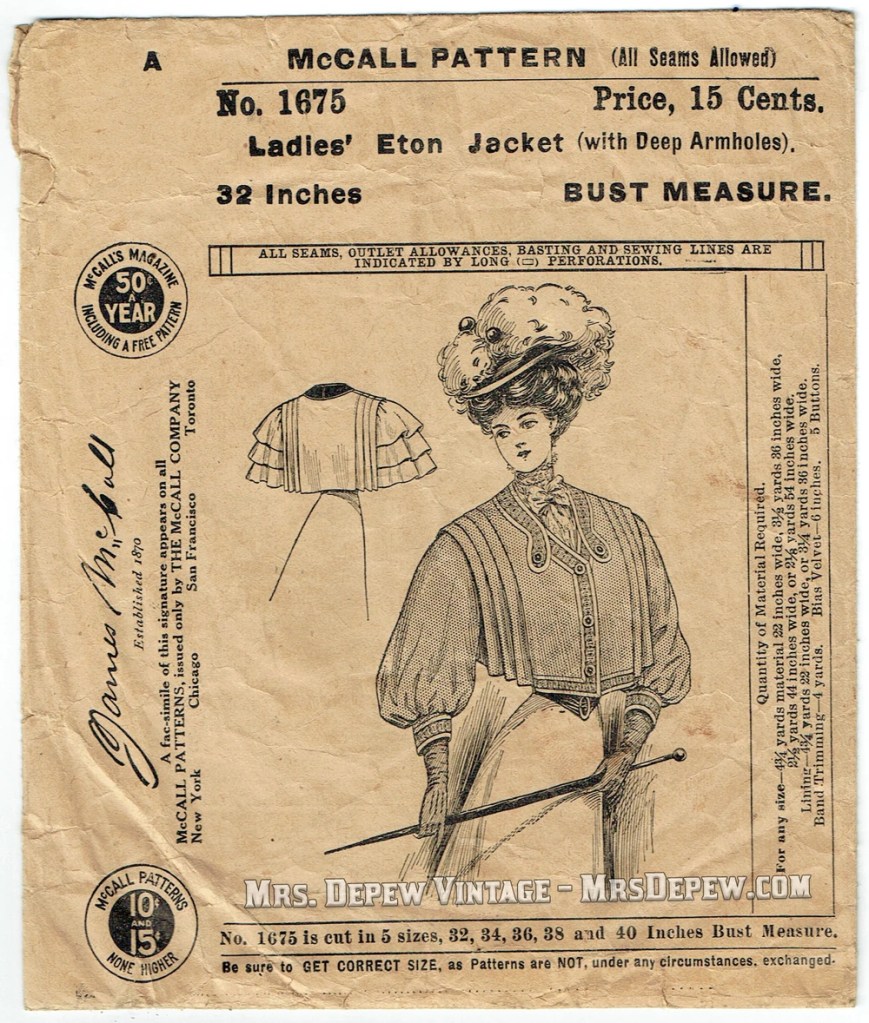
McCall 1675; ca. 1907; Ladies’ Eton Jacket (with deep armholes).
Featured in McCall’s Magazine September 1907.

What a fabulous jacket! That’s why I would choose this Eton jacket from 1907 because not only would it create a great historical silhouette, I’d love to try styling it with other items from my modern wardrobe.

1920s Era

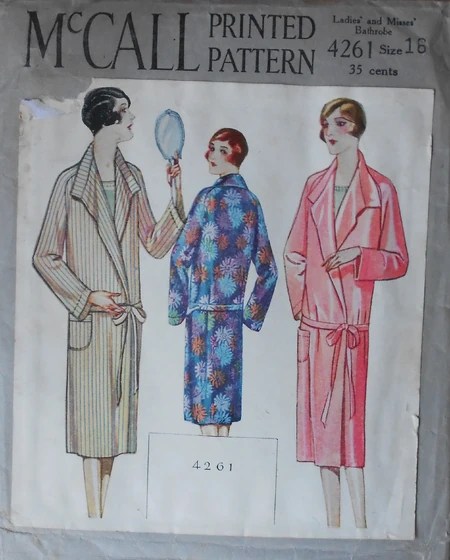
McCall 4261; ©1926; Ladies’ and Misses’ Bathrobe (Vintage Pattern Wikia)

The flapper dress patterns you see in the store are so played out and inaccurate. My choice was influenced by the wonderfully boxy lines of this robe. It encapsulates the straight up and down silhouette of the time while looking like a piece that could be dressed up or down, for around the house or used for wearable garment in the right fabric.

1930s Era

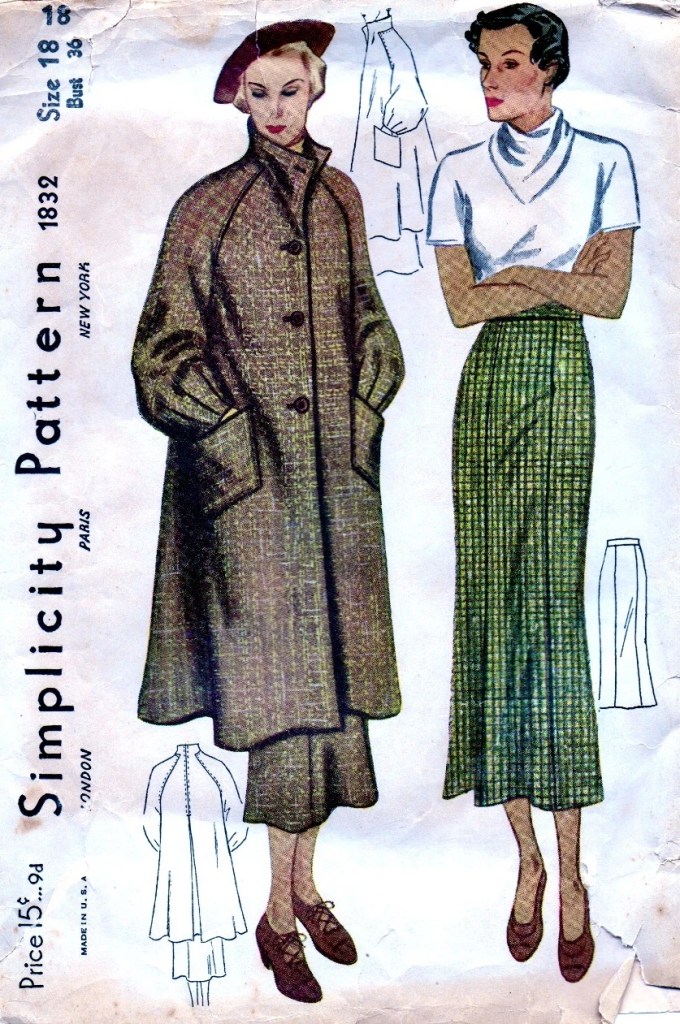
Simplicity 1832; ca. 1935; Ladies Swagger Coat and Six Gore Skirt. Coat has full raglan sleeve tucked at the wrist, patch pockets, stand-up collar and inverted back pleat.

Oh my goodness, this coat is fabulous. I may try to track this down in the future just to try my hand at it because I love these style lines. I love the raglan sleeves with the contrast of the narrow 1930s skirt. It’s so chic.

1940s Era

McCall 4037; ©1941; Ladies’ & Misses’ Dress

I like the academic style of view A and the elegant style lines of view B. I think I would get a lot of wear out of a dress in this style. The 1940s are one of my favorite eras for vintage fashion, I love the style lines of this time period and the 1920s-1930s.

1950s Era

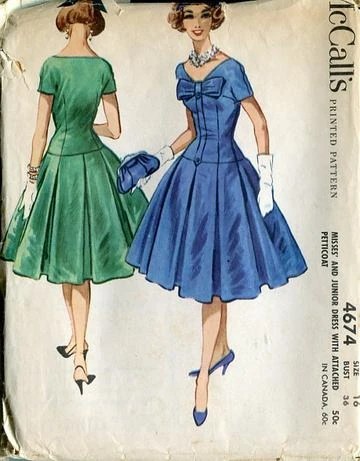
McCall’s 4674; ©1958; Misses’ and Junior Dress with Attached Petticoat.

The 1950s is not my favorite era of fashion, mainly because this silhouette looks horrible on me and it’s really over done when people think of “vintage” so for inspiration I went to 1958, the year my grandparents got married to find something interesting. I like the bow on the front of this and flounce of the skirt. The shape reminds me a bit of a bridesmaids dress I tried on that my grandma wore for her friends’ wedding in the 1950s.

1960s Era

Vogue Paris Original 1434; ca. 1965; Pierre Cardin – Suit. Side-buttoned jacket with standing, bias ring collar and cuffs. Tie belt at front, welt pocket and three-quarter length sleeves. Slim skirt.

I chose this one, first because I had yet to choose a Vogue pattern and secondly, because this suit is sharp and screams 1960s glamour. I love the over sized buttons. The classic shape and the slightly mod-artsy feel of the over all look.

1970s Era

Simplicity 7887; ©1977; Go Everywhere in Misses’ Jumpsuit and Unlined Jacket: Top-stitched jumpsuit with front seam interest has front zipper, buckled back tabs and optional rolled-up cuffs. Top-stitched jacket with collar interest has front button closing, flaps and long set-in sleeves with button trim.

This is a unique pattern. I like how many styling options we get in the line drawings. It’s an interesting jumpsuit I could see made up in several types of fabric for casual or fancy styling. I should see the blazer made in a contrast fabric or the same. Jumpsuits were a staple of the 1960s and 1970s so I think this is a great option to represent the decade.

1980s Era

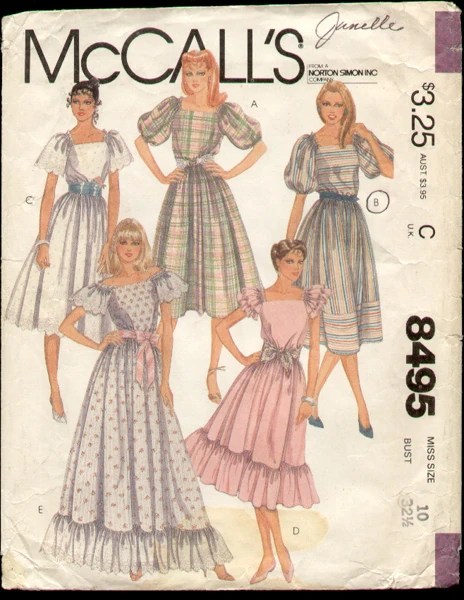
McCall’s 8495; ©1983; Misses’ Dress and Tie Belt: Dress has square neckline, elasticized waistline, center back zipper and sleeves with elastic in shoulder casings. Self fabric tie belt.

This pattern is so extra. I didn’t realize how much the cottagecore aesthetic pulled from this time period – wow! I thought the 1980s was just inspired by the 1940s, but there is a lot more there to see. I think this would be a great upcycling project with bedsheets.

1990s Era (I’m vintage?)

McCall’s 7241; ©1994; Misses’ Jumper and Overalls: Loose fitting jumper view A and B or overalls view C with lined bodices have suspenders fastened in front with buttons or overalls buckles; jumpers have side seam pockets; overalls have front yoke and pockets.

I originally wanted to pull from 1993, but this pattern is too perfect for me. I honestly want to make all three of these. I have fabric that would work for view B. I wonder how difficult it would be to track down?

Closing Thoughts

A special thanks to Vintage Pattern Wikia for making it possible to browse vintage patterns and for keeping these moments of fashion history alive. Thanks also to Stephanie Canada for putting this on my radar and for sewists like her who are keeping vintage patterns accessible to us to sew with. This was a fun challenge posed by the Simplicity Creators group and Simplicity itself for putting this on all of our radar. Although I’m not going to sew anything from what I found because I seriously have to many projects to add another right now. It’s a great way to appreciate vintage paper patterns and the effect they have had fashion and clothing in the last 160 years. Sewing your own clothes is such a great way to make things that fit you, and have your own flair, they also combat the unhinged mayhem that is fast fashion. It’s a win win 🙂

My NanoWrimo 2023

How late in the month is too late to make it count? Today, on the second to last day of the month I got a brain wave and have two chapters in a rough draft! I don’t want to give too much away because it’s early in the process. I’m ecstatic though! I was beginning to think Udal Cuain was a fluke and another idea would not come my way. Making lemonade from lemons, that’s the inspiration at least.

If you celebrated Thanksgiving, I hope you had a wonderful holiday with your loved ones. If you don’t celebrate I hope you had a great weekend. I got some solid advice this weekend that I think catapulted this process forward. I was at my mom’s and met up with a former professor from my college. He’s become a family friend over the years which is cool because he was one of my favorite professors.

I was showing him what I was getting up to with sewing and knitting, sharing my design journey, and he asked me if I was planning to sell my creations. I was honest and shared that when I think about taking the leap to sell online or in person, I am filled with doubt that my items are good enough to sell. All I can see are the mistakes instead of listening to feedback from others that they would be interested in purchasing. He considered this and replied that the difference between a published dissertation and a perfect dissertation is that one is completed. It may not be perfect but that doesn’t mean it doesn’t have value. When we get stuck in the loop of perfection, we may never move forward to the next step.

This echoed advice I received from a random stranger who is also a writer, earlier in November. That staying organized with the writing process is less important than just getting started. I can’t write a book unless I get the ideas down on paper, no matter how chaotic the first draft is. She encouraged me to just write and edit it later but to get the ideas out of my head. It gave me the motivation to begin an outline for a dress history research project that I’ve been working on here and there in November. This would be non-fiction, which I was fine pivoting my attention to, but I am stoked that I actually had an idea for a non-fiction project because I want to push myself to go all the way this time. To not get stuck in re-writes with Udal Cuain and abandon the project instead of pushing forward to publish it.

I feel a creative spark coming back! This month may not have gone to plan and that’s okay. I have two chapters and an outline for another project. I am truly pleased! What I have been reminded of through this process is how important people are to our lives, strangers and mentors alike, you never know what solid advice others have to share if you take the leap to reach out and connect.

My 1920s Football Sweater Dream and The Banshees of Inisherin

I have a history with 1920s fashion, 1920s Ireland, and 20th-century football at Geneva College. My first successfully hand-knit sweater is a blend of all these flavor notes. As I consider how this piece came to be, it truly feels like the best possible way to write a love letter to the things that have become a piece of me, whether through ancestry or by my own seeking out, it is my beginning spark that pulled me into the world of designing knitwear.

I’ve been knitting for a decade now with degrees of success. I’ve kept to the small projects. Things like scarves, hats, mug warmers, a tea cozy, and tried my hand at mittens. There have been attempts at sweaters and even an oversized cardigan that turned out okay, but not what I had hoped. But then a movie was made that created exactly what I was looking for, they even made them by historical techniques and by hand. That movie is Martin McDonagh’s The Banshees of Inisherin.

The collar, the shoulders and silhouette of these pieces of knitwear look pulled out of a vintage collection of 1920s extant garments. Because they made these for the movie, it gave me hope that I could capture something historical from the weaving of my needles. This is what I came up with:

Originally, my plan for this sweater was to recreate a sweater I bought from H&M in 2011. I loved the striped boxy shape and easy to pair because of the neutral color story. I was knitting the body while I watched The Banshees of Inisherin for the first time and was taken aback by the knitwear of Padraig O’Sullibhean’s character. It was rugged, cozy, and yet practical in a beautiful celtic sea blue, almost teal hued wool yarn.

With only the body finalized and a sleeve on my needles, I realized I could pivot. I craved the chance to make something like the 1920’s football sweaters of Geneva’s yearbooks but I also wanted to capture the old style of sweater making from the early 20th century. Being from Irish descent, with my ancestors being from the O’Sullibhean clan out of Cork, it seemed like the stars aligned on this project. So I pivoted and widened the shoulders to look more inline with football attire. I added a longer ribbing to the bottom for a vintage feel and lastly I recreated the open collar of Padraig’s sweater.

The finished project perfectly marries the football feel with the connection to the past I desired, wrapped up in a sweater silhouette that I hope more people attempt. Historically inspired knitting was a blast. It also stands out which makes me happy. ☺️

After ten years, I finally did it! Knitting this, my first successful sweater, by my own drafted pattern was even sweeter. Thank you reader, for letting me share this project with you. It is one of my favorites.

Making a Dress Inspired by Escape Maps

What is an escape map you ask? Beginning in World War I, the Australians developed an escape map in July 1918 for Allied soldiers to escape from the German Holzminden prisoner-of-war camp. To do this, the creators needed a material that would be durable, unlike paper which could be destroyed by water, and so sections of the map were sewn into the clothing of prisoners who escaped through an Allied tunnel.

Moving forward into World War II, the British Royal Air Force, and the United States military used maps printed on a silky material called rayon. This is where the concept of silk escape maps comes from. If shot down in enemy territory the servicemen could use these maps to get back to safety or evade capture. Thousands of these maps were created during the war and during the post-war era these maps remained but for a different purpose. The destruction of the war was evident across Europe, during this period of rebuilding there was a lack of everything, including fabric and so these escape maps and parachutes were repurposed into clothing. For more examples of what these items looked like I highly recommend checking out this BBC article and this piece by Hannah Steinkopf-Frank for their wonderful images and research.

Just a Girl with Aviation in Her Blood and a Passion for Dress History

I’ve always been fascinated with unique garments from history and the story behind them. That is what makes dress history one of a kind because the garments were not just objects of history, people lived their lives in them. It tells us about what they looked like, what their life consisted of, their status, and their creative ability. The parachute and escape map garments truly speak to the resilience within the makers to find the normal and reclaim their humanness during one of the darkest times in human history. With that being said, what makes these dresses truly special to me is the connection to aviation. My dad is a pilot, aviation nerd, and history fan. From our conversations I have a well of random airplane knowledge I’m never going to apply to my life, but it truly fascinates me. It is his passion for it that I understand because I am so much like him. Although I have gone through bouts of hating aviation because it feels like the thing that comes between me and my dad having a close relationship, anything airplane related reminds me of him.

When I saw this fabric on sale at Hobby Lobby, I knew I had to get it. It is a canvas material, so a far stretch from the silken rayon of the WWII Escape maps, it is covered in what looks to be aviation charts crisis-crossing the world. It immediately made me think of the escape map garments and although the fabric cutter thought I has lost my mind when I said I was going to sew a garment out of it, I’m glad I didn’t listen. This dress is constructed from one of the comfiest and most flattering self-drafted patterns I have made. I wear it often and it makes me feel special because it is closely tied to my own story. Although I can’t share this dress with my dad I know he would be proud and that feels good.

Rediscovering Fiction Writing

I’ve decided to get back into fiction writing! It’s been a long time, so long I almost forgot how to begin. Because of how fuzzy my creative brain has felt, I’ve been stuck in the confines of what feels familiar. I’ve been wanting to go back to what I made before. At first, I wanted to bring back Udal Cuain from memory. The bits and pieces of the characters still live in my mind, but upon trying this without my manuscript – it is a bit daunting, near impossible to remember what I wrote 6 years ago. I considered rebooting it in a new story. I could fix the decisions with the plot that irked me, revising it into a thing, but at that point, why not just branch out to a new world and new characters that embody who I am now as a writer instead of what I was. And so here we are, and I’m excited!

The Writing Prompt

Since about October 2022, the pull to dabble in fiction has returned. This was in part from a close writer friend who challenged me with a writing prompt. She asked me to write about my favorite garment from fashion history and write a story from the perspective of the person who invented the garment. I began to research, to study, to not just pick a garment but pick several and then try to place them in a world with character. There were so many evolutions to this! It was an endless pit of inspiration.

With some time to dream and consider, my first choice was the corset – it is the ultimate historical fashion garment to me because of the craftsmanship, the foundation it created for silhouette and style, and truly to challenge the many people who use it as a scapegoat in the fight against the patriarchy. If only they would do some research (I’m talking to you BBC and Netflix). I ran into a problem – what iteration of the corset would I focus on? Should I include stays? How much is too much detail? Yeah, it was a bit too broad for the kind of historical mind I possess.

My friend suggested I narrow my wild mind down to one era, my favorite era of fashion history. What is my favorite era of fashion history? Well, I broke that prompt too! I could not decide between the 1890s, 1910s, and 1690s. I blame the fantastic fashion history content of Nicole Rudolph’s 1690s-inspired Winnifred Sanderson costuming, Bernadette Banner’s 1890s-inspired garments, and Bernadette’s 1910s Mary Poppins Jolly Holiday Lingerie Dress. My little fashion nerd heart was too enthralled to choose between them. I waded deeper into the idea. Maybe social and cultural norms would flush out the true winner. A character, if I placed her into these time periods, what would her life look like? Could she be a fashion designer like I strive to be or would limitations be placed on her talents?

If she would be prevented by society to make clothing openly, what story would there be to create? I realized I was approaching the prompt from the wrong point of view. It is not if she would be making clothes, it is in what context. A home sewist? A professional seamstress for a rich or royal family? Were women head tailors? Yes, yes they were until the mid-19th century and Frederick Worth changed the industry to a male-dominated designer world. With the right context, there was a bit more wiggle room. She could be a tailor.

There was that curve ball though, I was supposed to write from the perspective of the designer who invented the garment. And this is where my historically trained brain couldn’t seem to get out of its own way. Although I wasn’t finding a credited person for these garments, I was afraid of misrepresenting the history. If nothing else, the fashion industry has built itself on a shady foundation of misappropriating cultures, using questionable materials, pushing toxic beauty ideals, and mistreating its workers. My gut was scared of what romanticizing a garment could do to the real history at play.

Razor Clams and Melancholy

Alright, so what now? Well, I thought, what about the Alexander McQueen Razor Clam dress sketch literally tattooed on my shoulder? I mean isn’t that my ultimate garment? Isn’t he the one designer that captured my imagination? Yes, yes he was. I found security in knowing a rich history of who and how this piece of art came to be. It was safe yet true to my love for fashion design. This dress has always taken my breath away. There is something unbelievable about its construction, yet undeniably beautiful in execution, like a character in a fantasy novel standing before you with a real flying bison and bending to prove it.

I didn’t realize for years that it was made from real razor clam shells, I thought that the shells were 3-D printed. Understanding the realism captured by the use of real shells makes this dress so full of life and story. Literally, these pieces could not be here without a whole story of their own, from their former life as the home of razor clams, amidst the ocean waves to the cleaning and preparation to be sewn one by one into one garment. The time and care required to make this garment is extraordinary. I thought about my own connection to the sea, picking up seashells along the beach. Walking side by side with my Grandma, talking and stopping to discover every little gem of shell and sand. It was our thing. From Marco Island to New Smyrna, to St. Augustine, to Nags Head – we combed those beaches soaking in the memories of time, we can never replace.
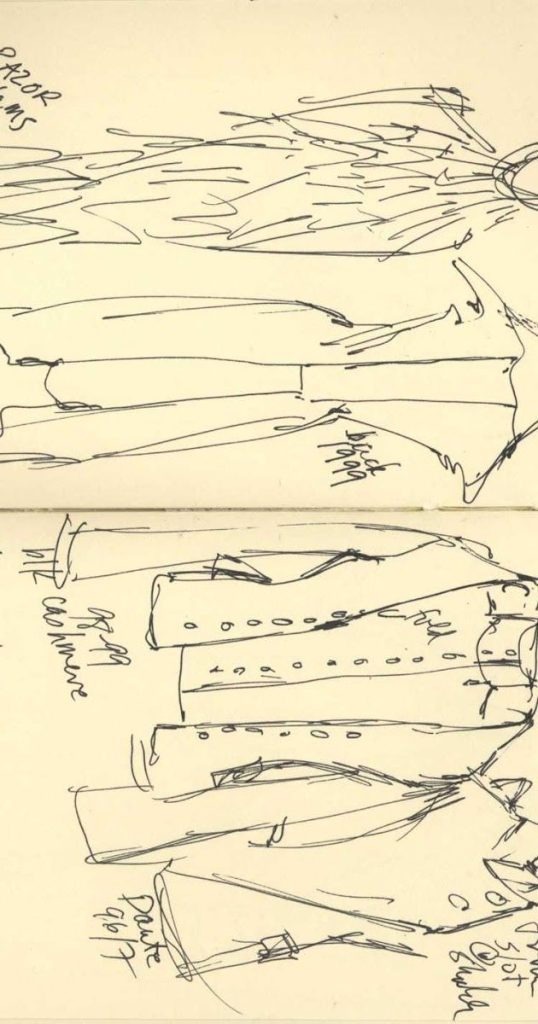
I thought about McQueen and his close relationship with his own mom, and the pain that hung over him after she passed away. I pictured in my mind a day of walking the beach, with the razor-clam shells washing up. Could he have been a shell seeker like me? Could he have been as inspired to create as Grandma and I did with our favorite shell finds? Stringing them onto necklaces. A little souvenir of our walks together. As I wrote, the pain and loss washed over the words a melancholy snapshot took form on the page of a heartbroken fictional character making this dress out of heartbreak for the one he loved. The process was awful. As I wrote, tears slipped down my cheeks and I hated it.

Our Creative Well

The next time my friend and I met to discuss our writing progress, I told her of my switch to the Razor Clam dress and how what came out of my writing broke me. I was in a melancholy cloud missing the flurry of indecision compared to this. In all this chaos, I learned an invaluable lesson. As my friend phrased it, I tend to create from a place of sadness. I seek out the dark and dismal places in my brain to feed whatever I am making, like a tortured artist drinking absinthe or the despair of Poe, I am drawing upon the wrong thing to write from and therefore, my projects hurt me. The same thing happened during the Udal Cuain project. It got dark, and I couldn’t live in that world anymore. She challenged me to find a new place to rely on while I write, to create from a place of joy instead of sadness. It’s changed my whole way of creating as I mentioned in #17- Bad Writing Habits.
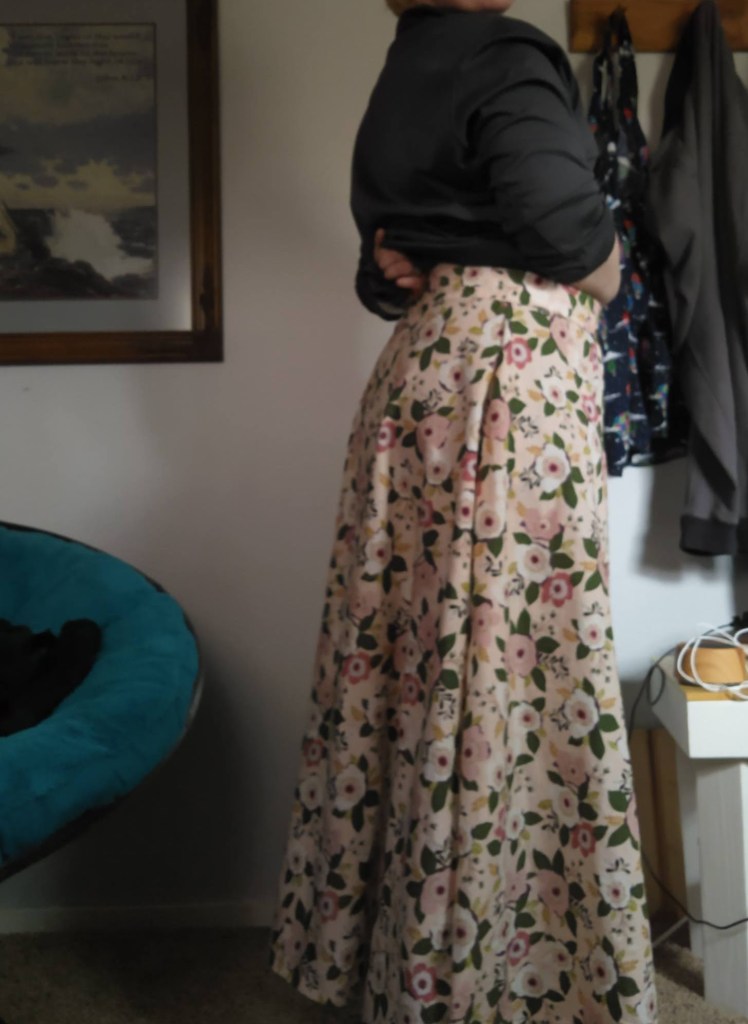
Where do you create from? Is it a place of joy or of pain? It’s an interesting thing to consider, and can definitely affect your tone, plots, worldbuilding, etc. I think the biggest takeaway from this process of failed writing prompt drafts was to reinvigorate my brain to imagine worlds from a simple inspiration, and to begin the path of research and brainstorming for characters, stories, and plots less traveled by the current influx of fantasies, thrillers, smut-tok, superheroes, and meta-storytelling. We need new kinds of stories. With that in mind, I’m excited to keep moving forward. I hope you join me on this journey.

Sewing the 1890s Aesthetic

Red Dead Redemption 2 was not a game I thought I would love or even appreciate. In fact, I’ve never played it myself, I’ve only watched my husband play, and seriously, I enjoy watching him play. The world created in the second game is so immersive and aesthetically pleasing that my dress historian heart sings when I see the detail and research the developers put into making Arthur Morgan and the cast of characters feel well-placed in a game of re-imagined history.

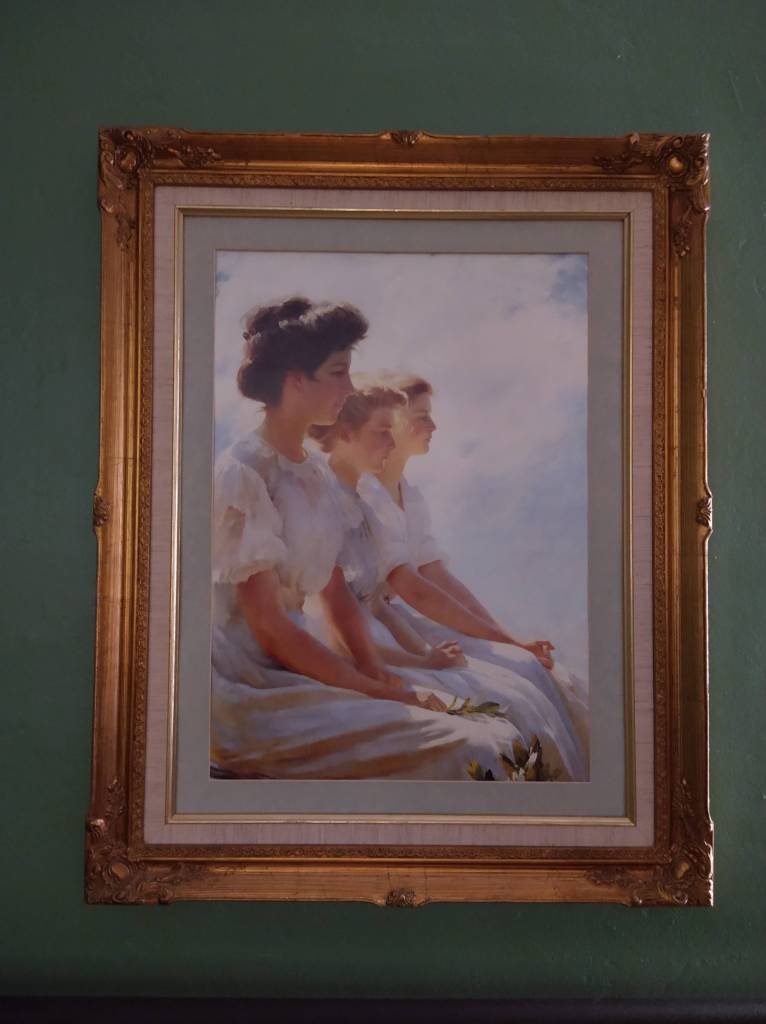
The 1890s have long been a favored period for me. From the popularity of the Gibson Girl look to the Anne of Green Gables movies, puff sleeves, bicycle jackets, and the pigeon breast silhouette with long walking skirts have long captured my imagination. Maybe it was the years of seeing these portraits of my 1890s ancestors above the mantel at my grandparents’ house. Or this Gibson Girl-inspired painting in my Grandma’s bedroom. It made an impact on my appreciation for this time period and design aesthetic.

There is such a quintessential Victorian-ness about it. But also this aura of possibility. The world was changing rapidly during this time through industrialization the Gilded Age brought splendor and wonder. The Arts and Crafts Movement was at its height which is why I think I am so drawn to this style. Arts and Crafts era houses are among my favorite styles of architecture, bringing forth the Craftsman style along with Frank Lloyd Wright’s prairie style. Maybe it was growing up in an old Victorian house too?

And so this game, Red Dead Redemption 2 with its 1899 time stamp and varied styles of architecture has brought me so much joy and comfort. Even the Bayou Nwa of Lemoyne is a delightful reminder of my time living in coastal Georgia. Especially the alligators, which seemed to lurk in every body of water. But those cypress trees still call, like the delightful menswear of Arthur Morgan’s wardrobe, and the wonderfully decorated towns of St. Denis, Strawberry, Rhodes, Valentine, Annesburg, and Blackwater. And so I find myself sewing Arthur Morgan-inspired pieces, for both myself and my husband. Who knows where inspiration will find you? I certainly didn’t think a Rockstar-developed video game would bring me such joy and fashion design inspiration. But it truly shows that inspiration is everywhere if you take the time to appreciate it.

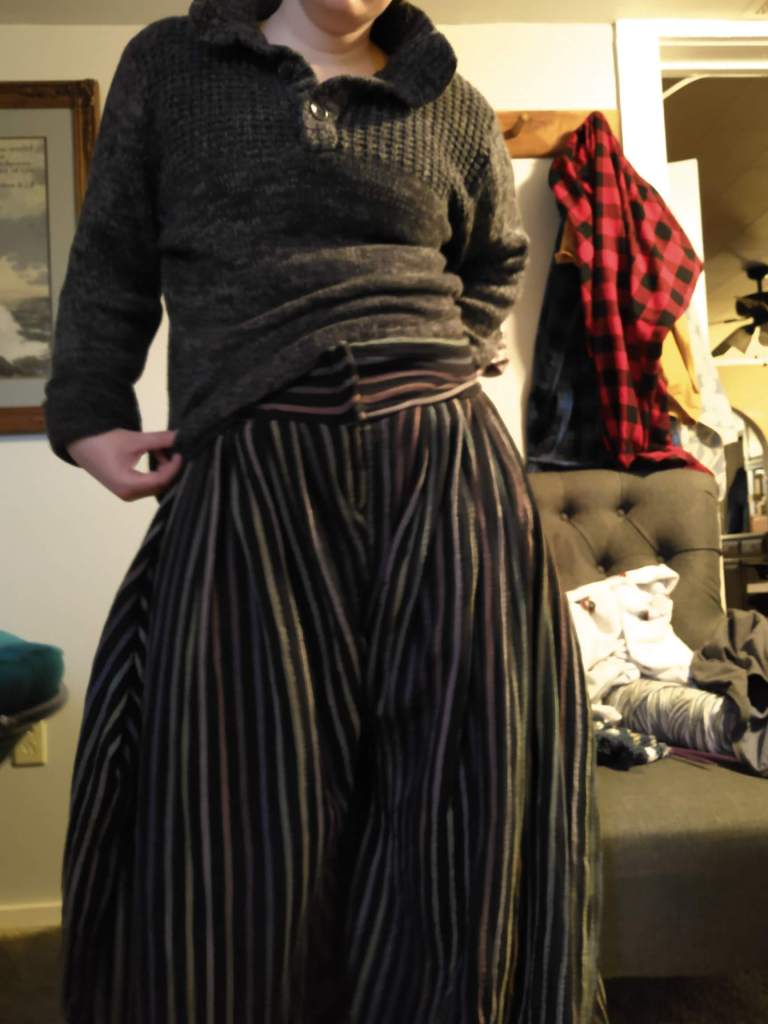
L to R: 1890s long underwear-inspired dress, Vest with high neck in the 1890s tailoring style, Exaggerated 1890s menswear stripe pants

Create a website or blog at WordPress.com

Up ↑