

What is your favorite genre of music?
K-Pop. Boy bands, girl bands, flashy music videos, and complex choreography. BTS. Blackpink. PSY. It’s a genre growing in popularity in the West and you’ve probably heard of it. From the outside, it might not make a lot of sense. So where did this cultural wave of music and fashion originate? Well, we gotta go back a few decades. (Note: I became a fan in early 2022 so I am limited in my knowledge – I’m sorry if I don’t mention a band you stan <3)
Brief History of K-Pop
Western musical influences entered Korean culture in 1885 and continued throughout the 20th century after Korea’s liberation from Japanese occupation in 1945, due to the US military presence and the Korean War. USO tours brought artists such as Nat King Cole and Louis Armstrong to Korea, sparking interest in Western culture and music. This continued into the 1990s as Korean artists experimented with musical styles from other cultures and developed their own sounds. These included folk and rock ballads, with Korean musical groups, like the Kim Sisters performing in Las Vegas and on American television shows in the mid-20th century. J-Rock had an influence in the later 20th century.
The modern K-pop era began on April 11, 1992, when the band Teo Saiji and Boys debuted their first song “I Know” on Munhwa Broadcasting Corporation’s talent show. Their song showcased new jack swing inspirations from R&B and hip-hop which kicked off a wave of Korean hip-hop artists of the 1990s, such as Drunken Tiger. In June 2023, Stray Kids released the song Topline with Tiger JK of Drunken Tiger. Until 2012, K-pop was a success in Asia but hadn’t reached worldwide reach until PSY’s “Gangnam Style” followed by EXO’s debut in 2012, the debut of BTS in 2013, and finally, the debut of Blackpink in 2016. Blackpink would become the first K-pop group to headline at Coachella.
Record Labels, Trainees & Survival Shows
So where do all these bands come from? After the success of Teo Saiji and Boys, first album, and a new appetite for the hip-hop and R&B musical style of these emerging 1990s K-Pop artists, three labels were started that continue to be some of the biggest labels today – SM Entertainment in 1995, YG Entertainment in 1996 (formed by a member of Teo Saiji and Boys), and JYP Entertainment in 1997. This shifted the K-pop industry’s focus to teen-centered music and idol bands that would capture the attention of teen boys and girls – the structure we still see today of boy groups and girl groups. The business was modeled after J-pop in Japan.
Trainees who want to debut as idols undergo rigorous auditions and training to learn singing and dancing skills, but also how to navigate the media by their etiquette and attitude, as well as knowledge, of the Korean language because not all K-pop idols are native Korean speakers. Current examples of this are Lisa of Blackpink, Johnny of NCT 127, and Felix of Stray Kids, who all became fluent in Korean through their idol training.
Another element of the debut process for some groups can involve reality tv style survival shows. The Mnet Survival Show became very popular in the 2010s and led to the formation of many groups including TWICE, Seventeen, ENYPHEN, Kep1er, Momoland, and Stray Kids. The trainees compete against each other while gradually being eliminated. The top seven of Twice’s survival show “Sixteen” were selected to debut along with an audience favorite and J.Y.P.’s selection for eight in total with members added later. The contestants went on to other projects, some debuting with other groups.
Maknaes, Leaders, and Visuals
Something that I found hard to follow at first was the term “maknae” meaning the youngest person in a group, but I’ve learned through time and research that it is a part of Korean culture to recognize who is oldest and youngest within a group. Each group has a recognized maknae, Jong-ho in Ateez, Yuna in ITZY, NingNing in Aespa, and our Maknae on Top – I.N. of Stray Kids.
The oldest or an older member of a group is usually the leader usually each group has a leader, except for some groups like Blackpink, K.A.R.D., New Jeans, etc. The leaders write music and contribute to the group’s concept alongside the producers but they are also the spokesperson for the group and keep the group in order. Some current K-pop group leaders are Taeyong of NCT 127, Mark Lee of NCT Dream, Hongjoong of Ateez, Chaewon of Le Sserafim, and Jihyo of Twice.
Another thing that threw me off was the designation of the visual in a group. There are many roles within these groups – leader, maknae, lead vocals, lead rapper, main vocalist, main rapper, main dancer, sub-vocalist, and the visual. Basically, the visual is the member who best represents Korean beauty standards within the group and has been a part of K-pop from the beginning. Jisoo is the visual of Blackpink, Hyunjin is the visual of Stray Kids, Yeosang is the visual of Ateez, and Miyeon is the visual of (G)-IDLE. There can be a lot of debate between fans on who is the visual and being the visual doesn’t keep you from serving in other roles.
Fandom Names, Lightsticks, Sub-units & Bias
Each group has a fan name with BTS’ fandom name probably being the most famous – ARMY. Blackpink fans call themselves Blinks. Stray Kids have STAY, Ateez stans are Atiny, and NCT fans call themselves NCTzens or NCTizens (pronounced N-citizens) as they are citizens of NCT City (Neo Culture Technology). Twice fans are called Once which I think is cute. EXO fans as a group are called EXO-L and fans individually are referred to as Stars. Itzy has MIDZY and TXT has MOA which stands for moments of alwaysness. Moments of Alwaysness as a name is quite poetic and dreamy. Fans are also referred to as stans, as you stan the group you are a fan of.
I thought lightsticks were pretty gimmicky until I saw videos of them at concerts and close-up videos of the lightstick designs – they are actually pretty cool and unique. I personally love Ateez’s lightstick concept the most, both version one and version two because they feature pirate motifs. I also love the cute and slightly menacing Blackpink double-sided heart hammer light stick as well as Cherry Bullet’s squirt gun light stick.
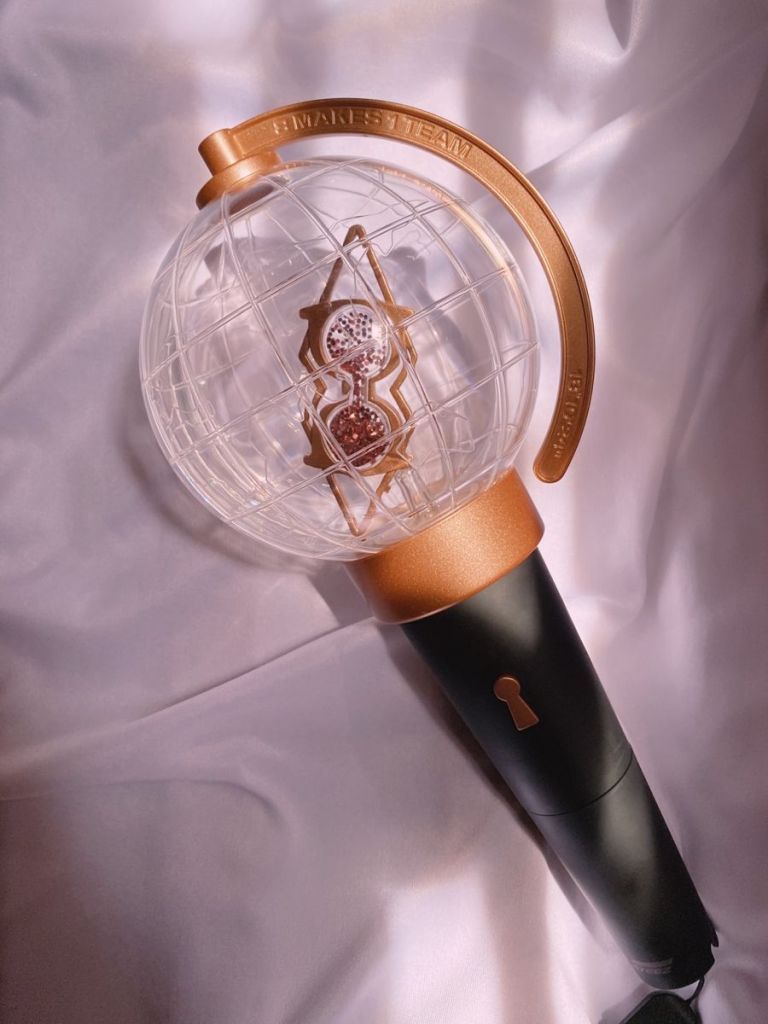

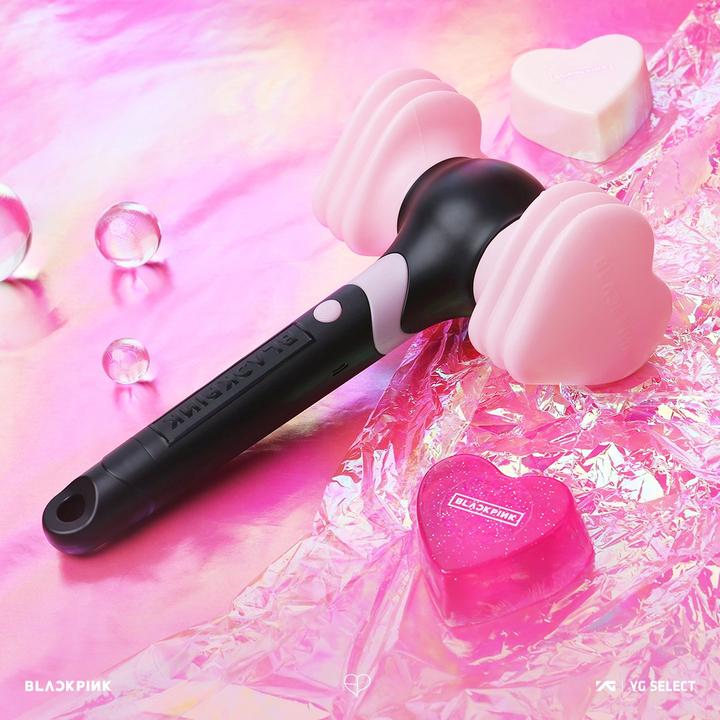
Some groups have sub-units with the actual K-pop group concept and they will release albums within these sub-units while still being a part of the original group. These albums have different concepts than the original group. Notable Sub-units are NCT U, NCT 127, and NCT Dream all within the group NCT. The fandom name NCTzen or NCTizen can be applied to all. Girls Generation has a sub-unit called TTS or TaeTiSeo, Seventeen has BBS or BooSeokSoon, along with many, many other sub-units across K-pop.
Your bias, or selecting a bias is just selecting your favorite member for each group. Your bias wrecker is a member within that group that makes you want to switch your favorite member. At the moment, in Stray Kids, I’d say Felix is my bias and Changbin is my current bias wrecker. In Ateez, Hongjoong is my bias but Wooyoung is turning into a bias wrecker.
Comebacks, Music Videos, and Discography
I first got into the music by watching music videos while I rode my exercise bike, through this I learned to not sleep on K-pop music videos – they are integral to the concept as K-pop is quite visual from dancing to fashion, it is a part of the experience. My early favorites were Kick It by NCT 127, Kill This Love by Blackpink, Don’t Stop by Ateez, Maniac by Stray Kids, and That That by PSY & Suga. I love the aesthetics at play and how the members are styled for these videos. It is in my opinion more inspiring than reading Vogue or watching fashion week anymore.

Comebacks and discography were the most confusing to navigate, to be honest. Comebacks refer to the new release by a band, that includes the promotional material for the concept, photo cards, choreography sneak peeks and dance challenges, performances, the music video, and the single/ep/album being released. There is a lot involved! And to make it more confusing bands release full Japanese albums, compilation albums, and mixtapes that are all different. If you are going to buy a K-pop album I highly recommend doing research first.
I made that mistake with my first album purchase – I bought a BTS album second-hand and bought the wrong version. The store had three different versions of the Love Yourself album. I wanted the version that contained the track DNA, and out of the three versions I purchased the only version not to have DNA. Yep, I bought ‘Tear’ but it was a great learning experience and helped me explore their discography more.
Wrap Up
I hope this little guide is helpful to you if you have been curious about K-pop or have a loved one or friend who is a K-pop fan. It’s a fun world to escape into. There is so much more I could dive into but this post would just be endless so thanks for coming along on this journey with me.
 One Rabbit Riot