A very silly but confounding thing happened yesterday as I was in the homestretch of my current crochet project. It is something that has never happened to me before. I was stumped. What happened you ask?
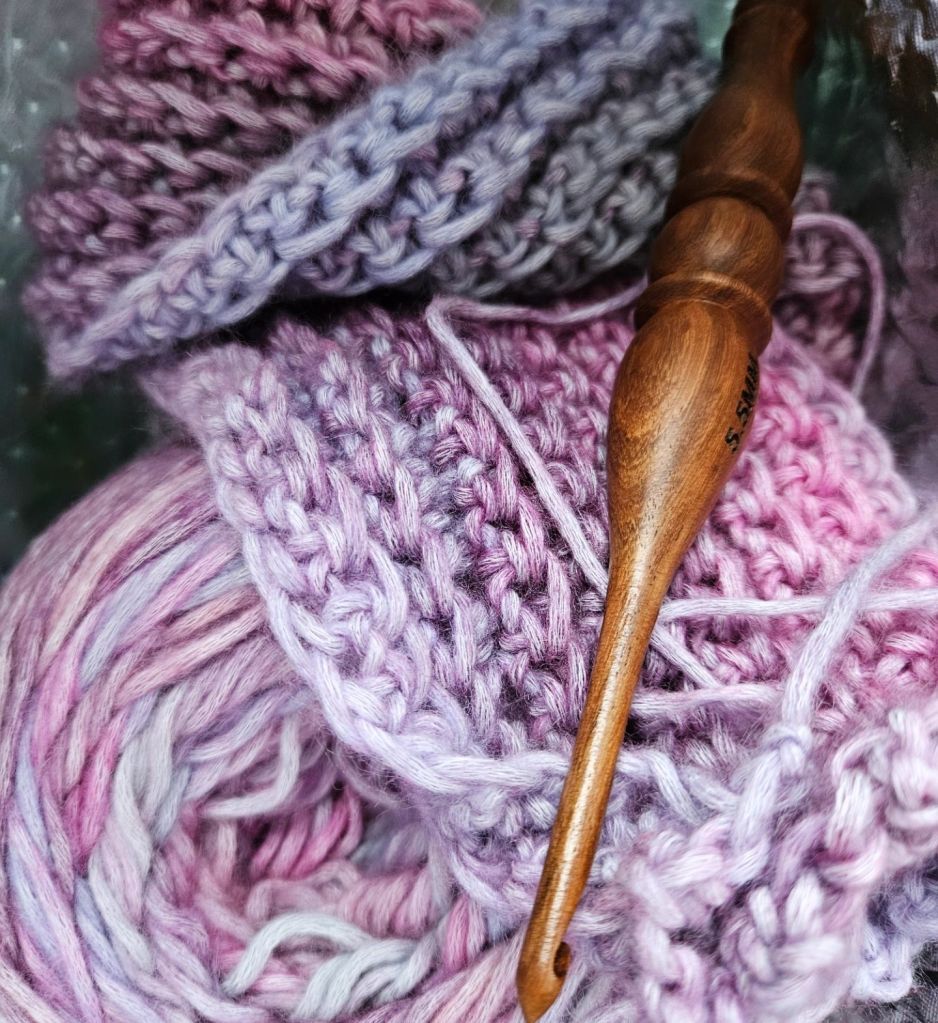
Well, I’m crocheting my first cardigan and to do this I decided to use Caron Blossom Cakes, specifically three cakes in the colorway Blossom. It’s a lovely tonal yarn with hints of sakura, periwinkle, and hydrangea blooms.
This fiber is one of the first affordable yarns to bring me joy in this confusing time of losing Joann. (Thankfully, Big Twist has been saved!) The Caron Cakes were the the buzz of Michael’s, drawing me in for a hope that I’d find a new favorite, and truly I have. This yarn is stunning. Soft to the touch, a half and half blend of cotton and acrylic. It never splits due to its structure which has made my first big project with a crochet hook a delightful experience.
When I first bought the yarn I was being cautious, purchasing the yarn on a bogo sale. I bought 3 cakes containing 481 yards of worsted weight yarn – enough for a sweater. Honestly this was far too scant of a amount, as time will prove. My intial plan was to make a skirt, but as it usually goes will my projects, I call an audible and make something new.
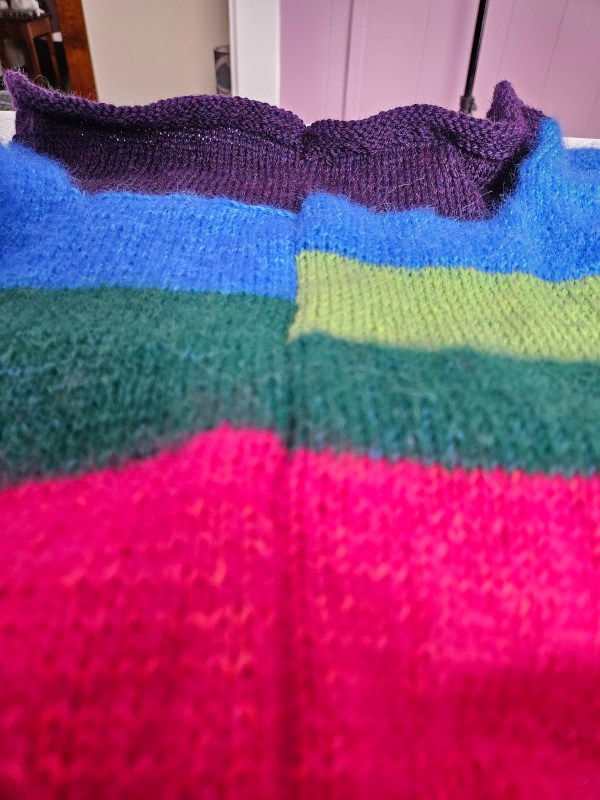
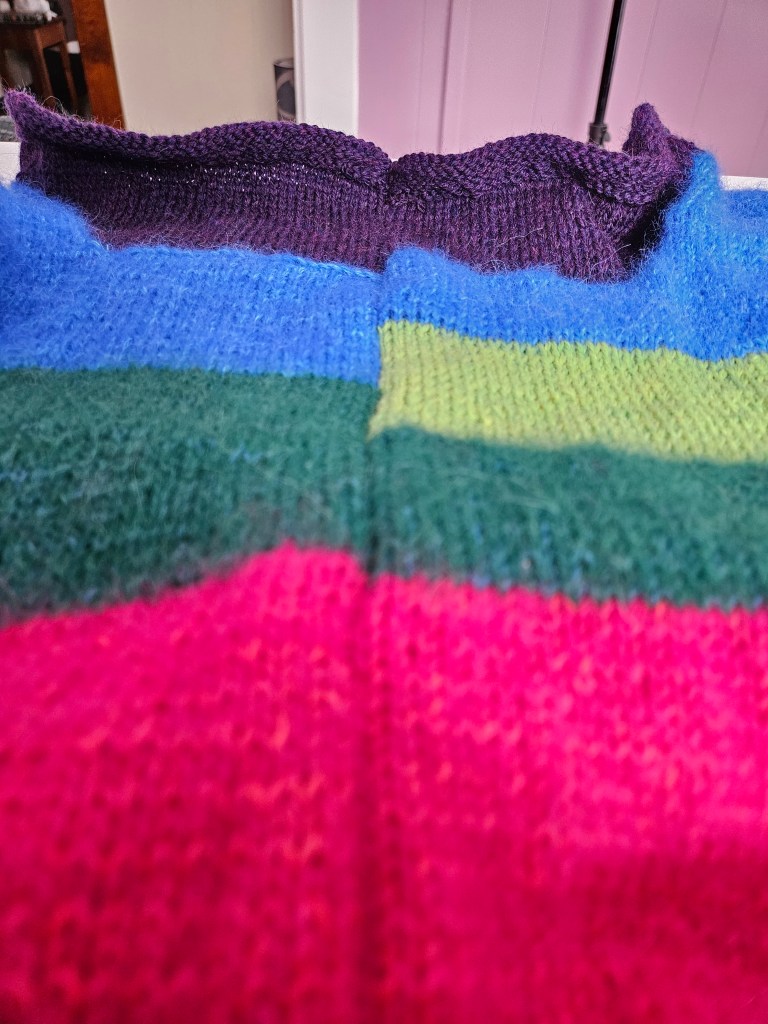
This should have been enough yarn, but I made the decision to oversize this cardigan and pick up more yarn if neccessary – and it was! Yesterday, I finished the body of the cardigan and began my final steps – the sleeves. To my shock I realized, the body panels had consumed 1 2/3 of the cakes. Leaving 1 1/3 cakes left for the sleeves, and these sleeves were going to be long. Much longer than I planned!
I usually knit my sweaters with a drop shoulder to shorten the sleeve length I have to knit because sleeves are so boring to knit! And they eat up yarn beyond my expectation everytime. To my horror, the sleeves were inset, not off the shoulder!
Not only would I have to knit the whole length, oversized, but I would need to using my new crochet skills to employ shoulder shaping – something I still get stuck on knitting. I quickly pulled up the yarn on my phone and was hit with a one-two-three punch – Blossom was out of stock, it was a Michael’s exclusive, and it is discontinued!
I was stunned! Like how do all those things happen right as I ran put of yarn?! 😲
I’ve been knitting since 2013, consistently since 2020 and I have never had a yarn disappear like this. On top of losing Sully last week, I was spiraling. I always have a plan for my knits, a yarn back up plan to piece in yarn if needed, but this project I wanted to be special. All in one color, like a “real” fiber artist. I was putting far too much pressure on this garment.
I’ve seen so many small businesses and artists this week, speak out about how the tariffs are effecting their businesses. Some are seeing 50% of their income being held hostage as the new rules are unclear. It’s left this dark, frustrating haze in my mind, like we’re in the final act of a Totally Spies episode and the evil genius might win.
I went to my stash and found that it was not what I thought it was either. I had a stash of final Joann yarn that I bought almost a year ago, left in my closet after the news with colors I didn’t remember and with less skeins than I recalled. Yeah it was, another pothole in the road. But dang, what is the point of creativity if you give up?
Some of the most beautiful garments were made with limitations. Why can’t I am for such success? I create on a budget, and I enjoy being a scrappy fiber artist – why change my approach now just because August has been heavy? Never give up!
The 2020s have brought many trends and crafts to my attention, but the one craft that has caught my attention, and kept me craving the ability to do it, has been crochet. I love the loops, the lace holes/open weave of its stitching structure, the texture, the projects’ talented crocheters’ design, and most importantly, the granny square projects! I am a colorful knitter, and the granny square scratches that artistic place in my brain. It brings me instant happiness.
In Spring 2024, I made my first attempt to crochet, and it was doomed from the start. I bought a cheap hook, neither ergonomic nor very hooked. The hook failed over and over again to grab the loops. The yarn over motion became yarn slip away, which made the process of learning how to execute crochet stitches dang near impossible! I was busy, not in the headspace to learn a new skill. My frazzled mind became evident in my tight, tortured stitches so snug the hook would not easily pull up a loop. So I set aside my desire for crochet for over a year.
During that time, I recentered my mind and learned new skills that I can see now, in hindsight, that made learning crochet in July 2025 so much easier! I slowed down my sewing and focused on fiber arts, mainly knitting, in the year that followed. During this year of reset, I tried new things that prepared me to be a better student of crochet. I knit socks, I learned colorwork, circular knitting, and explored new fibers and stitches. I learned how to work with my tension, and adapt to a looser weave for colorwork and circular knitting. I learned how to pick up stitches and new ways to construct knit garments. I suspended what I thought yarn crafting was, opening my mind to new techniques, which I believe prepared me to learn a completely different approach – crochet.
Why is crochet such a big jump from knitting? Well, I think for me, because I learned knitting first, my muscle memory was guiding my approach. My brain was shifting into its comfort zone when I would pick up that first crochet hook and reject the notion of using one tool, instead of two needles. My thinking was rigid, just as it was when I first began my language learning journey into the world of Japanese. When learning, we have to hold what we know and what we have done loosely, all while inviting a new guest to the party. A teachable spirit is really a mind of hospitality for the new skill.
I think a good teacher and good exposure also help. When I first tried to learn in 2024, I went to a former neighbor who crocheted and asked her for advice. She let me borrow a book, but didn’t offer much more than that. Although we were in the same town, on the same street, we never crafted together, and when I asked for advice when I got stuck, but she didn’t respond. It sucked. This time around, I went to a tried and true source – TLYarnCrafts, the wonderful Toni Lipsey. Her tutorials saved me when I got overwhelmed by the instructions in my library book. My library was a great source of inspiration, though – I borrowed ‘A Modern Guide to Granny Squares’ by Celine Semaan and Leonie Morgan. This book helped me understand the magic loop and had lovely diagrams to get me started.
Three other crafters who helped me get excited to crochet are YouTube creators – Lizfoolery, Blondie Knots, and Mark Vogel. Mark’s recent granny square vest project was so lovely, I was determined to learn crochet just to make that piece. But it’s not just wearables that have motivated me. I want to make a seashell basket, a flower bookmark, a fish potholder, a pie purse, and blankets! The classic Chevron to replace the one that my great-grandma made, which was lost in 2021, and the star blanket by Betty McKnit. I have also downloaded the hexi-granny cardigan pattern from TLYarnCrafts for a fun, cool weather wearable.
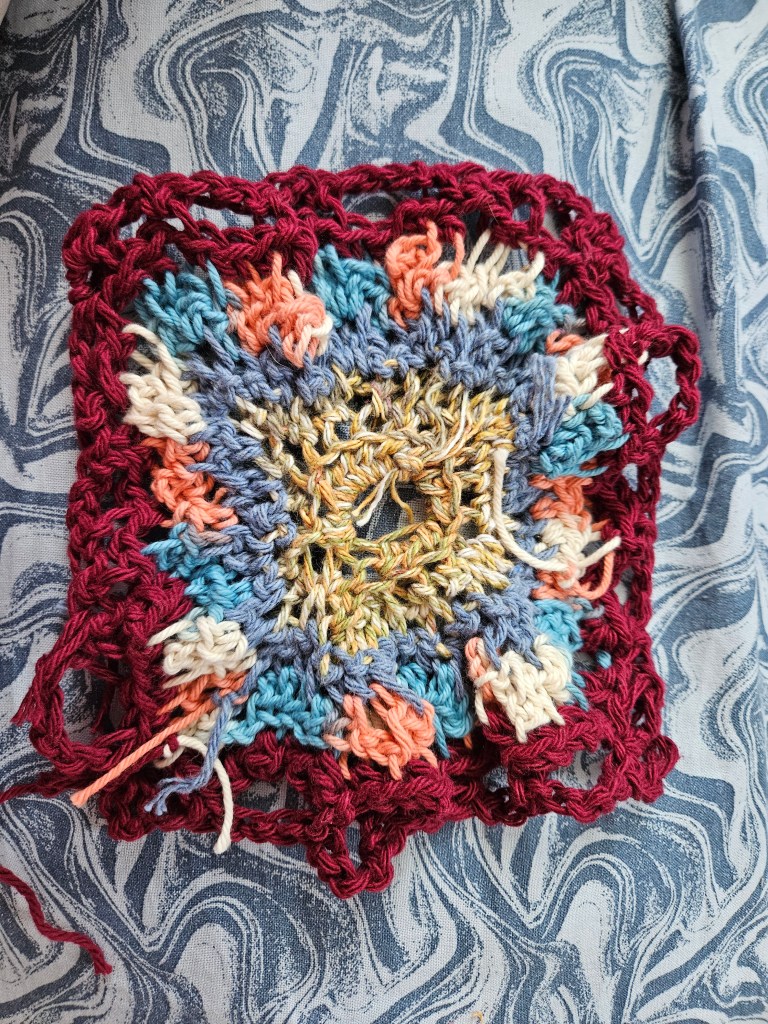
To wrap up, I’ve been crocheting for two weeks now and have made two wonky granny squares, a pair of crochet stays/vest that is 90% done, and a sweater that is cast on with a few inches complete. It feels surreal and also so natural. I love crocheting! Maybe because it is new to me, but I look forward to getting a few rows done each day. It’s become my fun crafting, where I can relax and get lost in the rhythm of loops and yarning over.
Have you ever crocheted? What helped you get through the process of beginning to do the thing? I hope you have a lovely day, dear reader. Thanks for spending a little time here with me in this [I hope] cozy corner of the internet. You make these little moments of reflection an exciting part of my making process. ❤
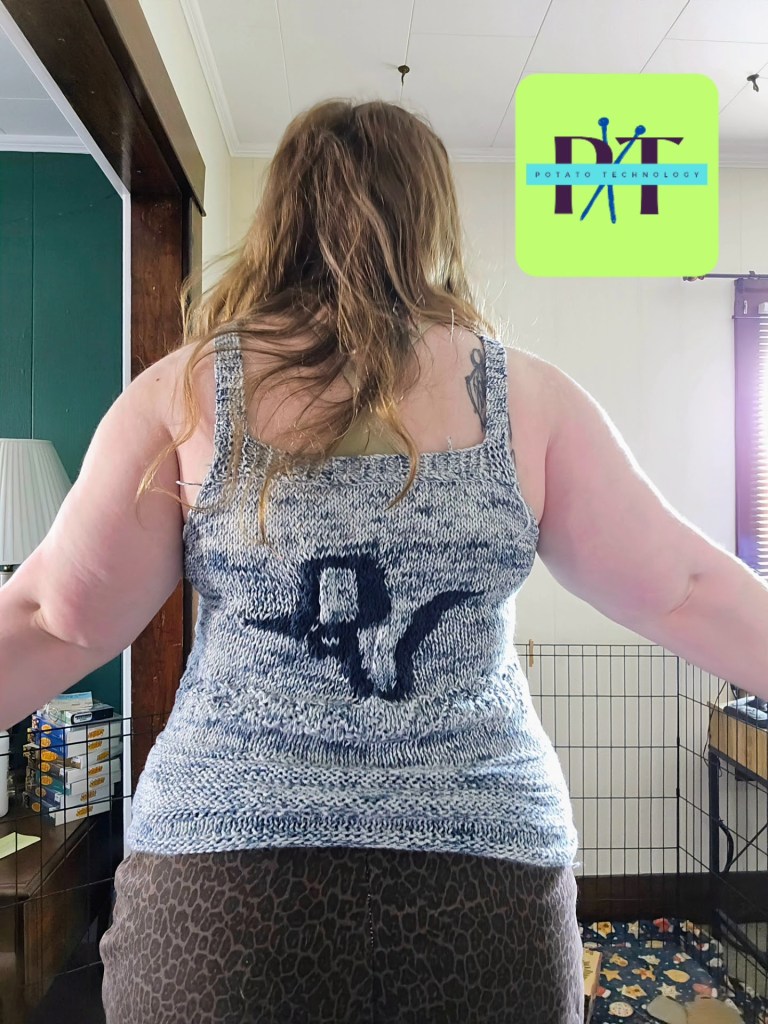
This is a follow-up to my recent post, ‘Will I Wear a Knit T-shirt?’, where I examined the fibers and wearability of a knit t-shirt and discussed whether this summer knit project could be a suitable option. Since then, I finished and got to wear a new piece of knitwear – my first knit tank top. I wore it in July, in full humidity with highs in the upper 80s to low 90s Fahrenheit. My experience surprised me – I said before that my knit t-shirts are wonderfully comfortable, but have a temperature and humidity limit for me, but the tank top surprised me!
I think it was the high pima cotton content in the Knit Picks Comfy – a 75% Pima Cotton and 25% Acrylic mixture that uplifted the breathability for me. I was melting in the hot sun, but the air flow and temperature regulation were spectacular! This tank had delicate straps but did not have a lacy stitch or open weave. It was constructed with regular knit and purl stitches, with sections that had double layers of yarn due to two sections of colorwork graphics on the front and back.
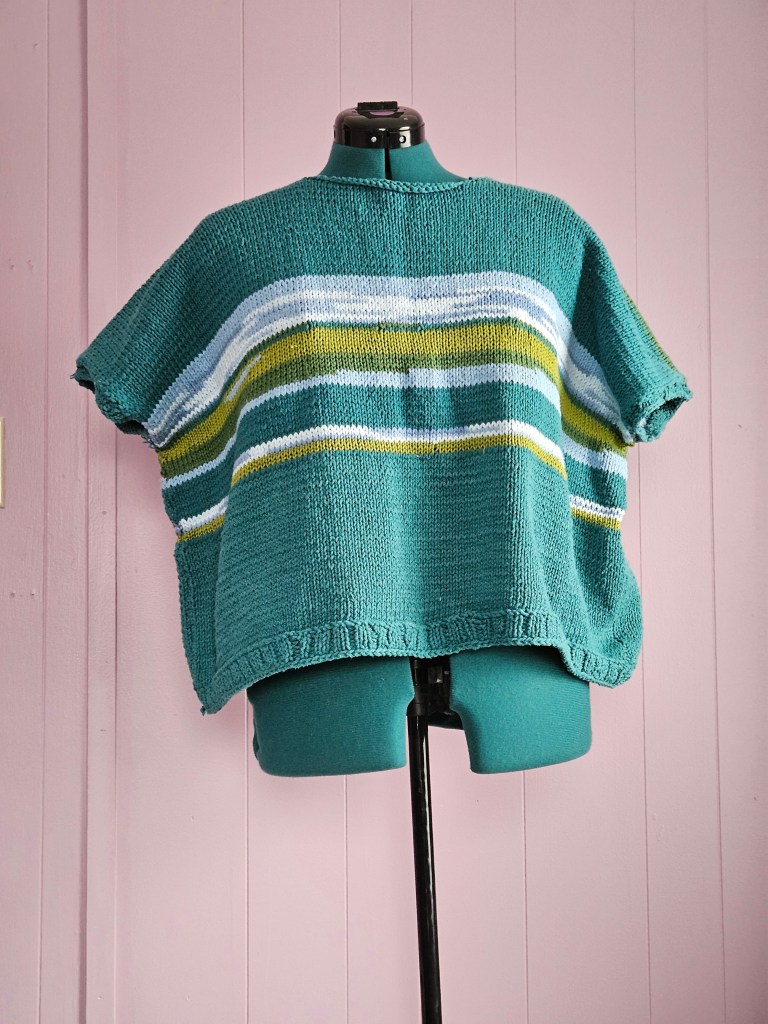
With Pima Cotton, Silk, Bamboo, or Linen as the primary fiber, or a blend of these natural fibers, I believe knit tanks are just as breathable as woven fabric, and for sure more breathable than moisture-wicking tech fabrics, which are polyester. No, I wouldn’t work out in this top, but there is something to say for a garment that is comfy and breathable for those long summer days. It was a simple stitch-up up only calling for two hanks of 100-gram worsted-weight yarn, about 240 yards, with the addition of 1/3 or 40 yards of the accent yarn, another cotton-acrylic worsted-weight blend from Loops and Threads. You can make a tank like this for 30 USD or less, and this is a size large. So if you have a small amount of yarn, you can do a lot with it!
Do you think a knit tank would be an item you would wear?
I asked myself this question last summer with genuine uncertainty. Knitting is such a cold-weather medium that a knit made to be breathable and light for warm weather seemed, well, a bit like an impractical fashion piece. I think this is an important question to ask of ourselves before we jump on a trend. Whether it is to buy a knit t-shirt or to handknit (which means you are dedicating weeks of work to a project), having the right expectation matters. Trying on a knit t-shirt beforehand helped me visualize what I was in for. Knitwear for all seasons is currently having a moment even in ready-to-wear, which makes this a great time to go try on a piece before committing to a big project.
Wearing my Grandma’s cotton knit t-shirts, although they were two sizes too small, helped me visualize knit as a process to make a fabric instead of a woolly winter garment. That’s what makes knitting and crochet extraordinary skills; they are versatile. The fiber maketh the project. The stitch maketh the airflow. Lacey, open weave? Fantastic for hot and humid days. Not so much for a pair of mittens.
To remedy this, I think fiber acquaintance is a fantastic way to learn whether a knit t-shirt is right for you. When I began knitting in 2012, I knew there was wool yarn and acrylic yarn. That was it. However, there is actually a rainbow of fiber waiting to be discovered, and the lineup sure has expanded in the last 13 years!
Cotton
Linen
Bamboo
Hemp
Pineapple
Lyocell
Rayon
Yak
Alpaca
Camel
Mohair
Cashmere
Silk
Did you know that wool has two unique properties? It helps you regulate temperature and is naturally antibacterial/antimicrobial; therefore, it inhibits bacterial growth naturally on the fiber and prevents odors, which is why it is such a great sock material! Although I wouldn’t recommend wool for summer tops, it is a remarkable fiber. There are two fibers, though, that are breathable and naturally don’t let bacteria and microbes hang around – it’s linen and silk! For fiber education and the chance to feel these materials, I recommend finding a friendly local yarn shop and talking to the experts.
Finally, I do have one possible hiccup with my current selection of hand-knit t-shirts. I can’t wear them in 85 degrees Fahrenheit weather and above with humidity, but I do believe a knit tank would fix this problem, and a lacey stitch technique in future projects will solve this. I don’t like sweating a lot in my handknits, and because I was learning with my first few tees, the knitted cotton fabric is a bit bulky. That’s my error. You know what is so cool about knitting, though? You can unravel the finished garments and try again, so I can rework these finished garments in the future. Anyway, I hope you will consider the knit t-shirt as a warm weather staple in your wardrobe, it’s a lovely way to use crochet and knitting all year round!
A few months ago, I wrote about my 2025 being a creative slump. Well, things have changed, and now I’d say I’ve found my pace. It’s a dash! I have more ideas than my hands can craft and it feels freeing, like all the crap from the past few months have lifted and the world makes sense, as long as it is crafted from needles.
New Materials
Maybe it’s the new yarns? I’ve been branching out to find new brands and new favorites. Loops and Threads cotton has provided an affordable fiber to try new techniques and play around. The Caron Big Cakes and Blossom Cakes are getting me excited for every stitch, and Knit Picks Pima Cotton has been a dream to work with.
With the news of Big Twist coming to Michael’s, I’m excited to have my tried and true affordable winter yarn to keep pushing my creative limits.
The most exciting new fiber, though, is a recent pickup from my local farmer’s market. A skein of yarn, from sheep in my neighboring county, that was processed and spun over the border in Ohio. It’s not quite the LYS I was wishing for, but it makes me hopeful for the future!
DIY Merch with Yarn
The North American leg of the 2025 Stray Kids Dominate Tour made me feel some big FOMO for the unique merch sold at the shows. From the SKZ Baseball jerseys to the Evil Skzoo tees, dang, I wanted to participate, until I heard the stories of long hot lines at the baseball stadiums and endless screechers, I came back to reality. But – it got me thinking, why can’t I make my own? So I’ve been designing, knitting, and feeling a buzz of happiness because these pieces are some of my best work to date. I can’t wait to share them!
Kokka Fabrics and Firecracker Fabrics
I’ve found new fabric sources and new go-to brands I love. In support of small businesses, I made a purchase from a local fabric store – Firecracker Fabrics, online, because honestly, it is far too difficult to go into Pittsburgh in road work season. Through this purchase, I fulfilled a goal – to try Kokka Fabrics. They are a textile design brand out of Japan, which is sold at my local shop, and it was a dream to work with! With the bad news of Joann’s and the uncertainty of tariffed materials, to be honest, I was thinking my sewing days would be cut short, but this is a fantastic resource. It was affordable, good quality, and unique – all the things I look for in fabrics but have struggled to find at Joann’s, which made me shop at Mood Fabrics. Now I have another option!
I also thrifted some fabric from my in-town thrift store, truly unique fabric that has pushed me forward to try making shorts again and overalls. For not sewing as quickly this year, the garments I have completed are more daring, and I think that is the new materials and new techniques, like elastic, that are pushing me to design more than just sew. I feel like I am back in my 2021 mindset, and I am ready to make clothes that express my design point of view. I lost that in 2023 and got burnt out in 2024, yet a six-month break got me back into it. Maybe that is one good thing that has come from the chaos – a break to reset.
New Inspiration
I’ve found inspiration from K-pop stages and historical sewing channels up to this point, but it was getting stale. Nothing was sparking that drive to create, until recently, when I found some new making channels. I like to watch other people make things, not to copy, but to learn by observing and then channel what I learn into my own inspirations, such as learning how to embroider, make eyelet openings for corset-ish vests, upcycling ideas, etc. A recent find has been Maybe Bre’s channel with her “Mama Mia Summer” video, inspiring me to make overalls. Mark Vogel’s channel has me itching to learn crochet after seeing his granny square vest, and finally Kali’s Threads/Handmade with Kaye – these sisters are innovative. I didn’t know I wanted to wear a crochet polo button shirt until I saw Kali’s finished garment; it’s beautiful!
Final Thoughts
Sometimes we need a break. Sometimes we need limitations to make us push forward in our goals. Sometimes a change of pace helps rediscover our passion. I’ve started gauge swatching, pattern writing, and looking for pieces I think I should make to enhance my wardrobe that are more fun, less functional. It’s weird how the creative process, when you hit a slump, can convince you of a lack of talent. When really, maybe your cup is empty? Or in my case, maybe you have lost your spark because you needed to raise your standard and make new, challenging projects to ignite your passion again. Until next time, thanks, reader, for spending time with me today. Happy creating to you! 🙂
As a yarn enthusiast, sometimes I have many skeins of different yarn that I don’t know what to do with. This happens when I buy sale yarn, find unexpected yarn secondhand, or buy too much of one color for a project. Purchasing the right yardage is definitely a learning process!
So, how can you make your yarn stash go further and use up those skeins you don’t know what to do with? An easy fix I’ve found is to get really scrappy, lean into stripes, experiment with colorwork, and my new favorite – blending yarn by holding two strands of different yarn, even variegated yarn, to make something fresh and inspiring! This has helped me need to destash, donate, or feel weighed down by my yarn inventory.
Once you have a color story, what do you stitch up? There are the tried and true tanks, tote bags, and scrappy cardigans, but what about something outside the box?
Baskets
Small Storage Bags with Zipper
Shorts
Sailor Collar
Overalls
Mini Skirts
Koozies
Tapestry
I get stuck in the idea of knitting as wearables, but it can be used to make so many things, and at the end of the project, you’ll have something truly unique from your own hands!
One of the most satisfying ways I have found to use up random yarn is colorwork. Hints of color with scrap that add a touch of whimsy? Sign me up!
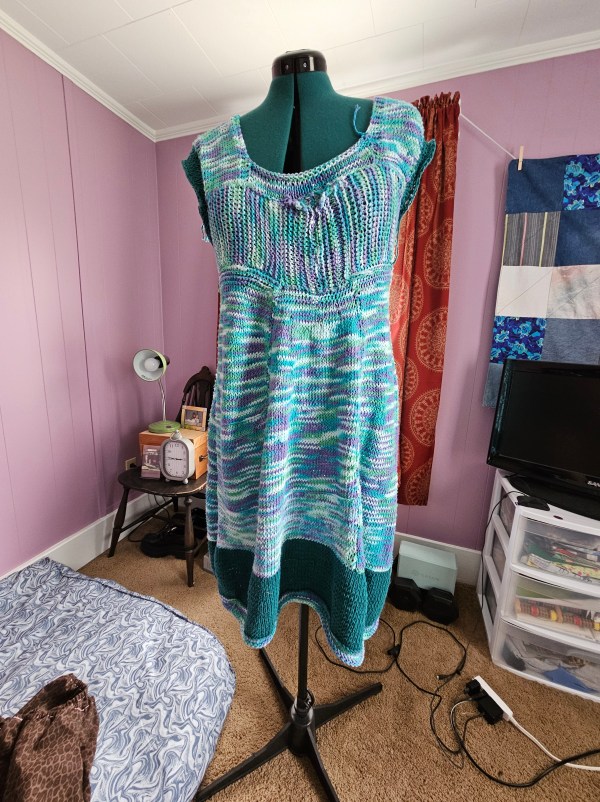
Knitting a dress, how hard can it be right? It was actually pretty managable garment as an intermediate knitter. I would not recommend unless you have made a sweater before but would definitely recommend knitting a dress if you want a soft and stretchy garment that hugs you!
Inspiration
I have made plenty of dresses over the past 5 years, but they have all been cut and sewn from fabric. Knitting kicks it up a notch, asking you to assemble the dress, but make the fabric to boot. I thought it would be silly to try until I discovered some lovely crochet designers on You Tube who make with imagination!
I was inspired by Mama Gwen of TL Yarn Crafts to give designing a knit dress a try. She makes such beautiful dresses all from self-drafted patterns in knit and crochet. Along with Dana from Blondie Knots. Her Coachella scrap two piece outfit helped me have the boost of confidence to try something new.
Materials
Last summer at Joann, before the shenanigans began, I purchased 14 Big Twist Cotton 50g skeins on a sale with the intention of knitting a top. Many months later, this yarn was sitting in my stash with my mind uncertain if the punchy color changing yarn was my cup of tea for a cotton knit top. But a dress? Yes, that could work. Did I have enough yarn though? I’d have to make it so because there was no more being sold.
Because of the circumstances, I decided this dress would be my goodbye to Big Twist.
Design
I knew from sewing, my design would need to be a dress that was either tubular or empire waist to suit my body shape. I decided to knit this on US 7 needles, straight needles. Sometimes I would shift to circular, but this was not knit in the round. With the combination of yarn minders, a measuring tape and patience this dress came together!
To start I knew I wanted the bodice to be the anchor I worked out from so I cast on stitches to work horizontally. From the bodice, I then added one strap to plan the width and placement of the top. I was uncertain how much yardage the skirt would consume, therefore I paused to determine sleeves later.
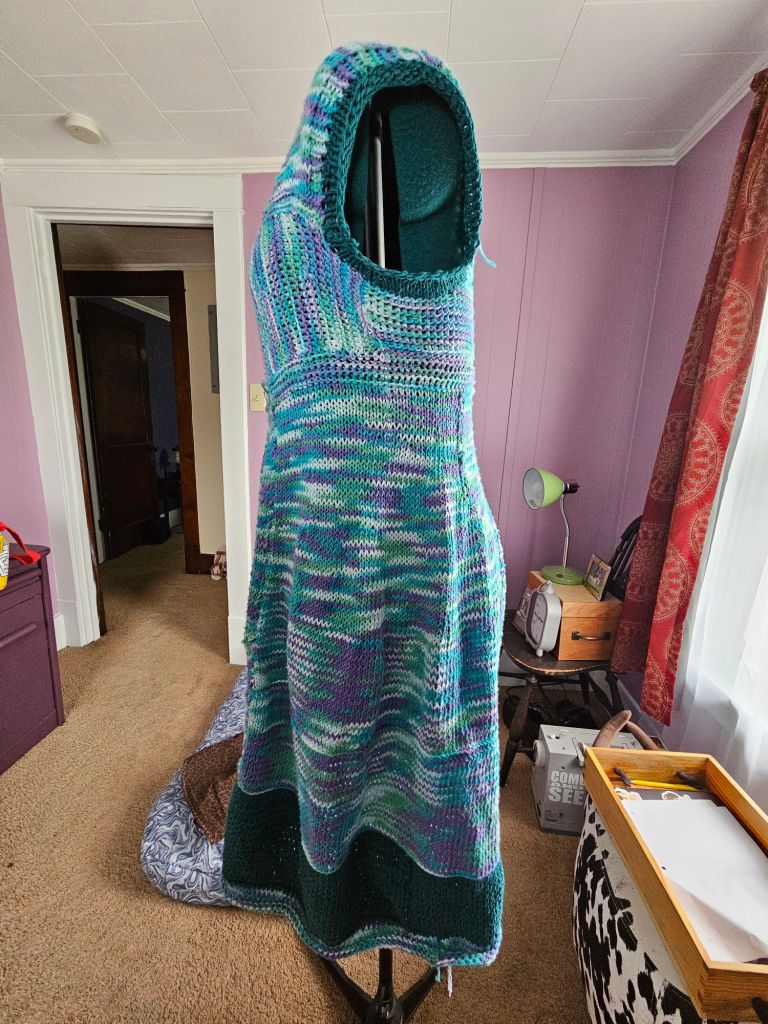
My plan for the skirt was to knit a section by casting on the bottom of the bodice, adding stitches to increase width until I finished a skein. Repeat and fill out the row by picking up stitches to join the sections vertically into a tube. I continued on, and on until weeks later I had a skirt but panicked that I was not going to achieve my desired length and second sleeve!
I decided to pull a teal yarn from my Landscape Painting with Yarn project. This hue pulled the cool tones into harmony in a pleasing way. I used two skeins of this teal color and then finished with the original Water Lily tonal yarn. I finished the second sleeve and tried on the piece with relative ease. There was one fit issue – plunging neckline. But it was a lovely, cozy knit from scratch dress!
The final touches to this project were addressing the neckline and the sleeves which were set too deep. I cast on to the neckline to fill in the gap and provided structure to the straps with several rows of decreases to give the dress a cap sleeve befitting my vision.
Final Thoughts
I am definitely making more dresses with knit! It’s far more pleasant than sewing if you want a comfy yet elegant style. You have both control of the drape and the fabric design. It’s your world, as Bob Ross would say.
This project was more than a goodbye to Big Twist, it was a new chapter for me. I began this journey 5 years ago to learn how to make and now I feel empowered by knowing I can make my own clothes, not just with fabric but with skeins of yarn and needles. It has been a wonderful journey of discovery!
If you want to knit a dress, I’d say go for it! If you’re a beginner, make one but not as your first project – you will be overwhelmed by the sheer amount of time this project took. It was weeks of work that as a beginner, would have scared me. In time I know you can do it though! ❤
As I have dove deeper into the world of fiber crafts and created often, I’ve become more conscious of the fibers I choose. Mainly because when a project doesn’t work, I feel like a jerk for making that mistake in hard to break down acrylic. I would feel less of a fool if my mistakes were constructed in biodegradable natural fibers like wool, cotton, linen, or bamboo. Starting in 2024, I began to migrate back to natural fibers, which I mentioned before in my Summer Knitting Plans post from last year. I had been hesitant to use wool before that, supposed allergies that I debunked in 2024, which led me to explore the many fiber offerings of Knit Picks.
When I was looking at sock yarns in the fall, a particular fiber caught my eye – Oceana. The Oceana line has this vibrant kaleidoscope of colors that evokes the tropical hues of a coral reef. It’s stunning! When my stepdad gifted me a Knit Picks gift card for Christmas, I knew exactly what I would order – the Oceana! Not just for the colors, but the innovative fiber content.
L to R: Sea Lettuce, Spirulina, Tiger Fish, Swordfish, Axoloti
This yarn is composed of 54% Superfine Alpaca and 46% Polyester SEAQUAL, which is made from marine litter cleaned from the ocean, and that plastic is then recycled into polyester (acrylic) yarn that is blended with the Alpaca fiber to create the Oceana yarn. The halo seems to be the Alpaca, based on my experience working with this yarn, and the interior chain fluffy fiber strand seems to be a combo of the recycled polyester and Alpaca fiber. Now, fiber blends are not the best for decomposing, but I like the motives behind this yarn. Instead of using newly created polyester, which doesn’t break down easily and is cluttering our environment, they are taking the trash out of the ocean and repurposing it into something useful. How cool is that? Can more polyester-based products start with recycling the plastic litter before making more? We literally have endless resources of trash, thanks to Shein and our rampant overconsumption.
So how does this yarn knit up? Excellently! It has this plush texture with a fuzzy halo that to me looks like those mohair strands knitters use to plush up a sweater.
I’d say the only cons I have are the price and the yardage. I didn’t find this yarn went far, and had to play yarn chicken a few times. I secondly was only able to order five skeins with my gift card, the yarn was on sale might I add, with a 50 USD gift card. When I ran out of yarn, I chose to supplement with Knit Picks Palette yarn in fingering weight, held in double strands to match gauge. I do understand that part of the price is the process of SEAQUAL and the Alpaca fiber costs as well, but it was just a bit too much for me to purchase more at full price when I ran out, especially when I had existing yarn in my stash that could work.
I had planned to have this project done by the time I reviewed the yarn, but as it is now April, and I’ve shifted to summer and spring knitting it is unlikely this project is wrapping up soon. Here’s a look at the project at its current state. 🙂
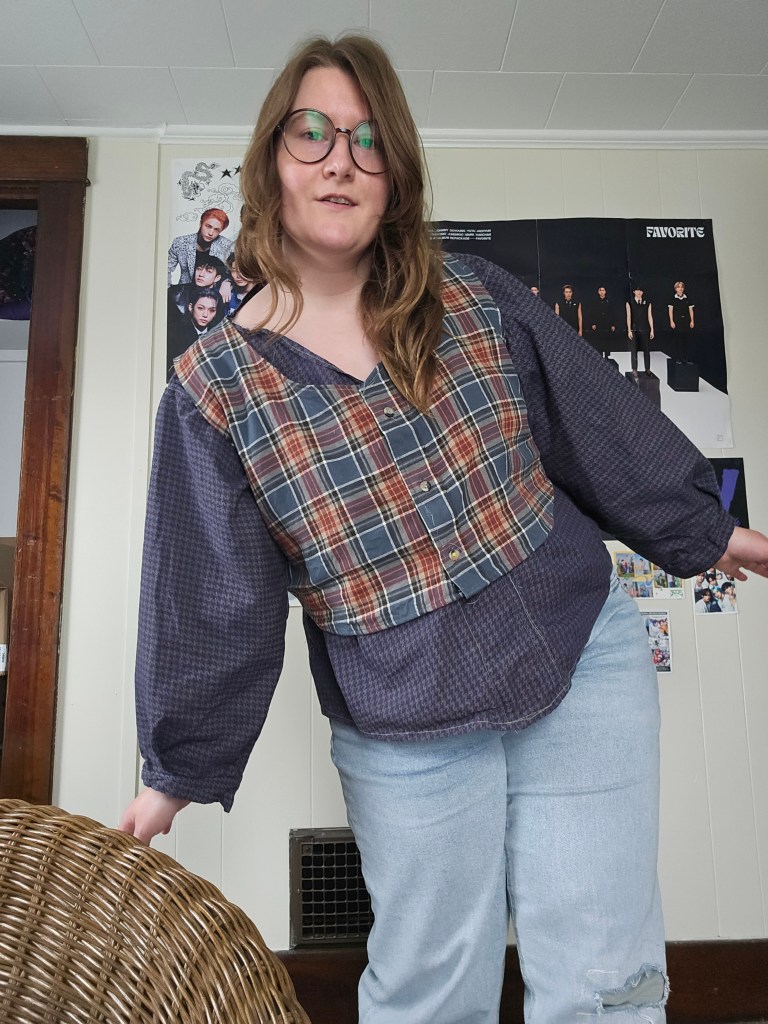
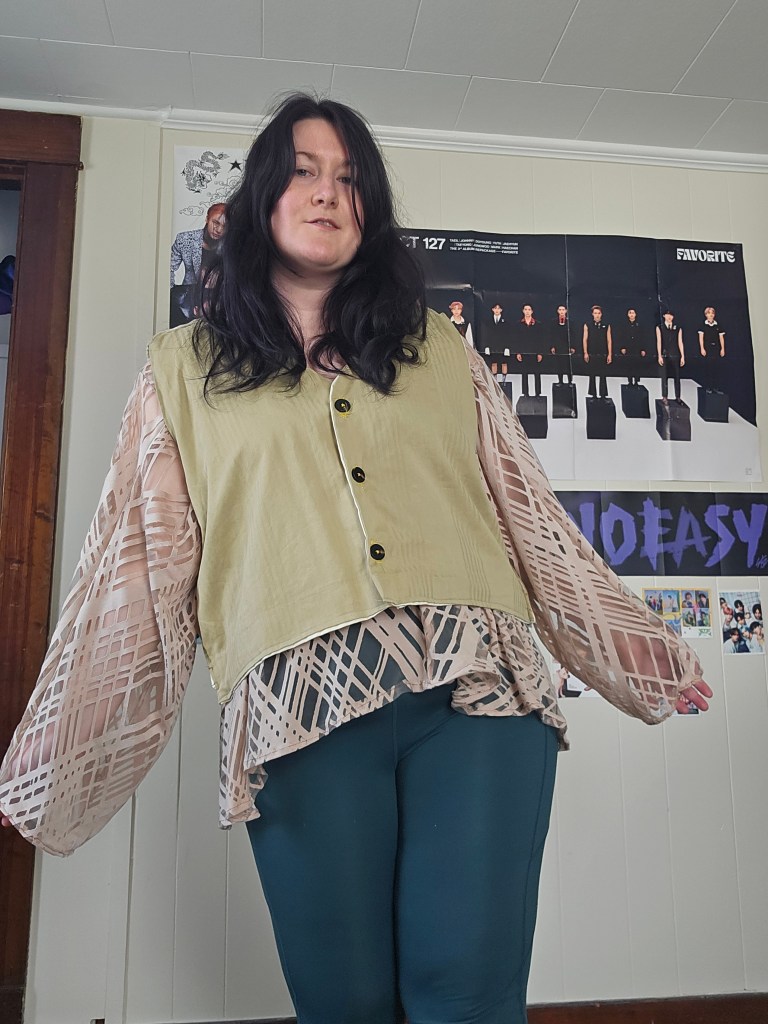
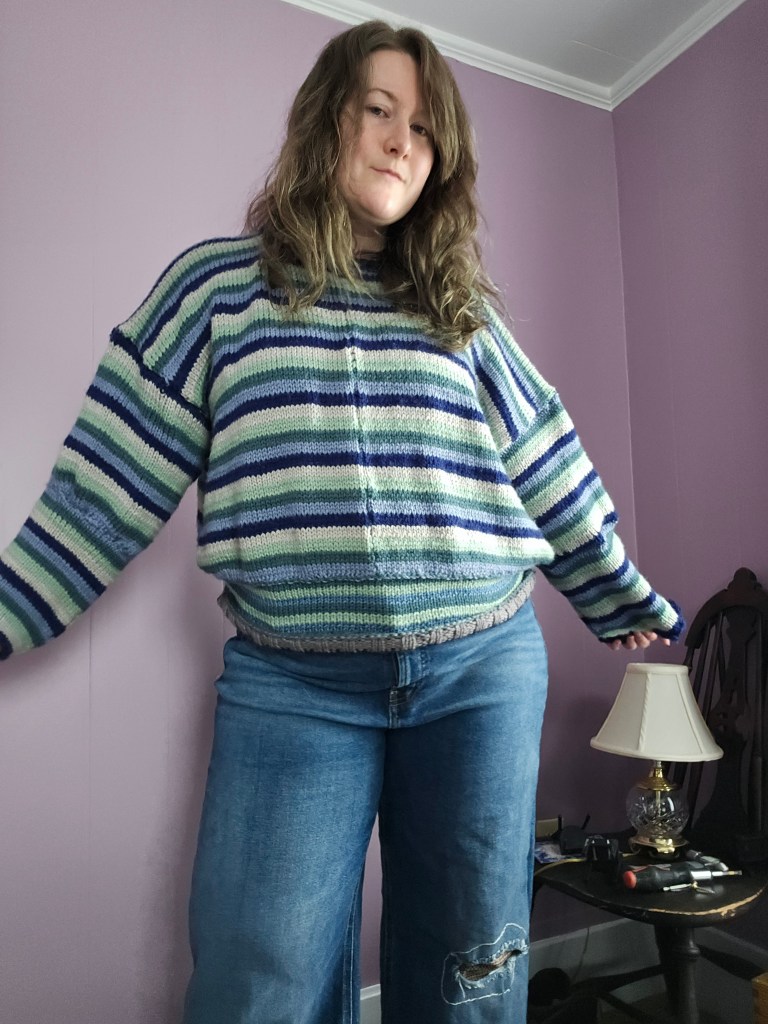
This collection was about upcycling, trying new techniques, and making things that expressed what I like wearing based on previous designs I have made, but with a twist. The items I designed were 75% sourced from existing materials. They were upcycled from items in my closet, hand-me-downs from my mom or grandparents. They were made from destashed yarn I acquired or fabric that had been in my stash for a long time. I focused more on creating with natural materials like wool, linen and as always, I love cotton.
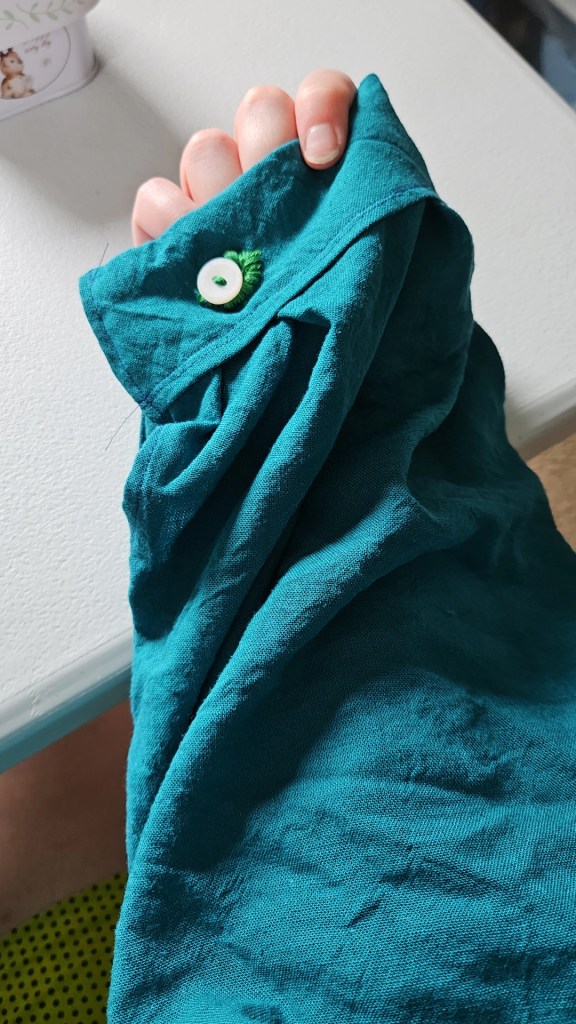
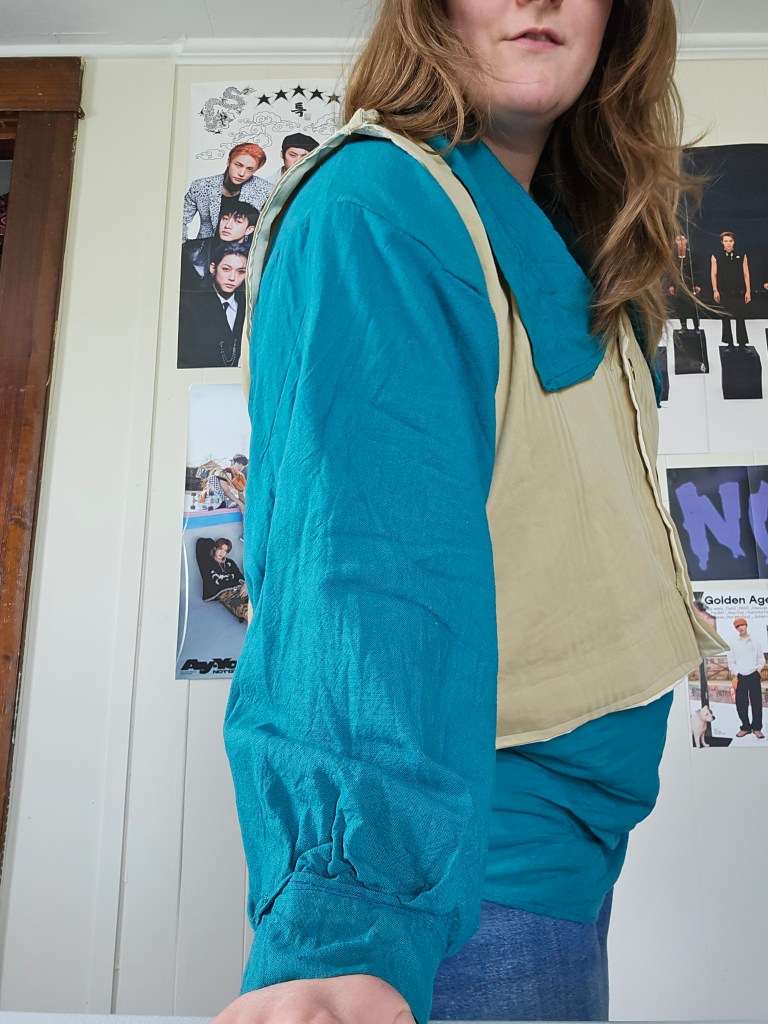
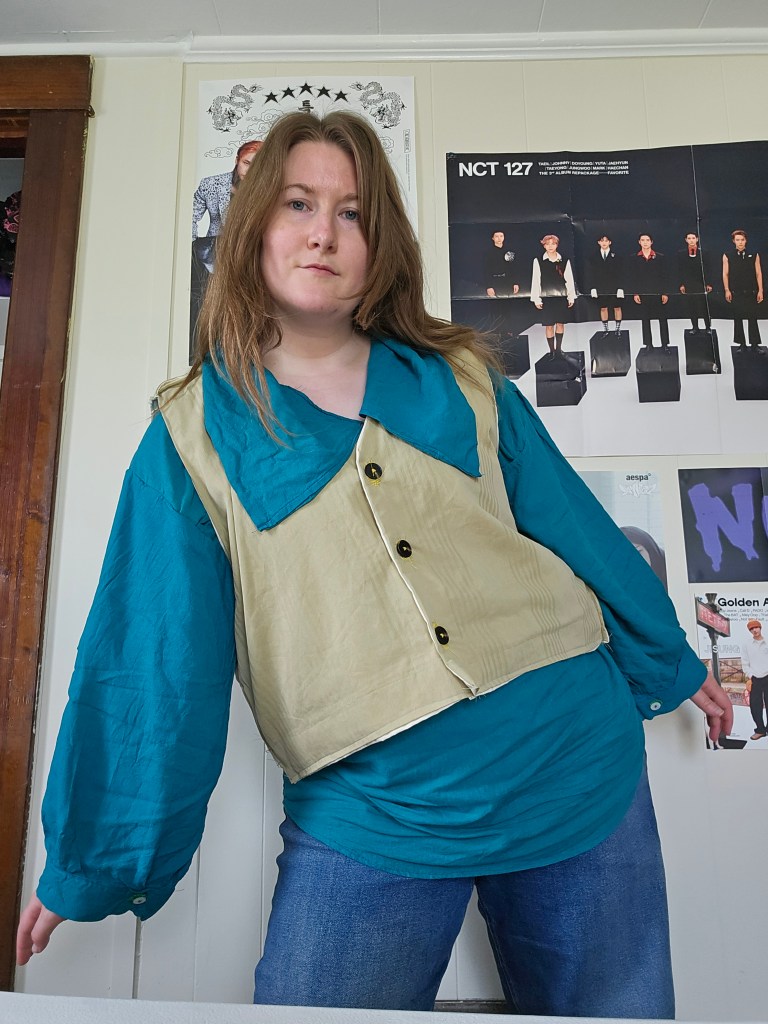
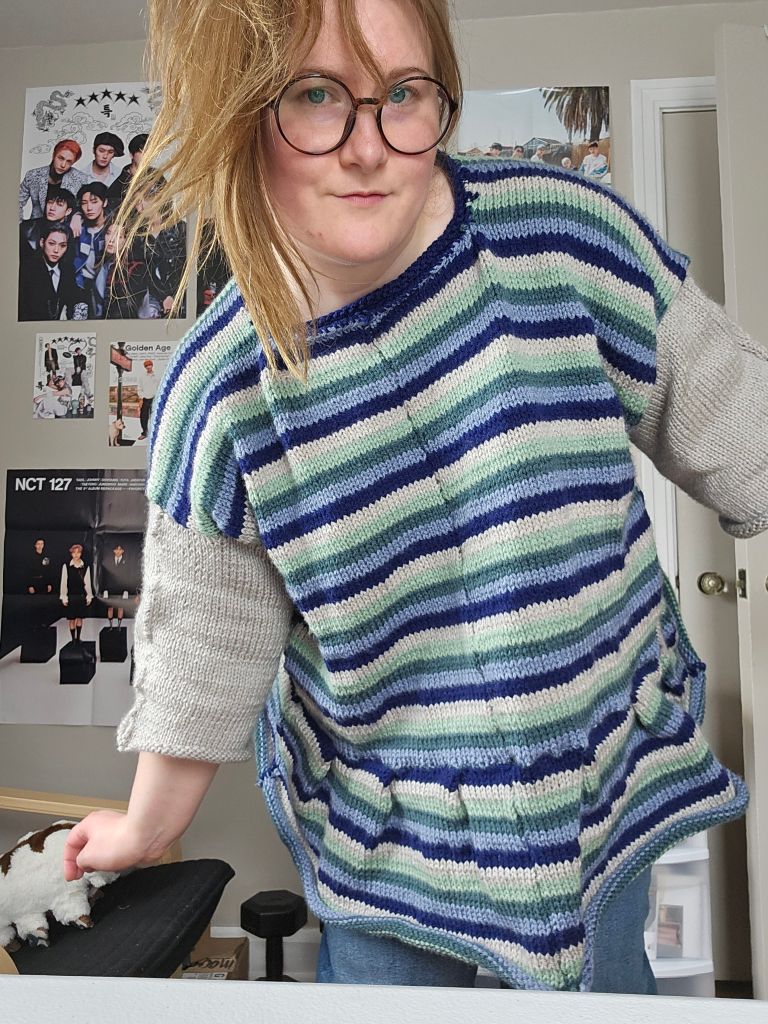
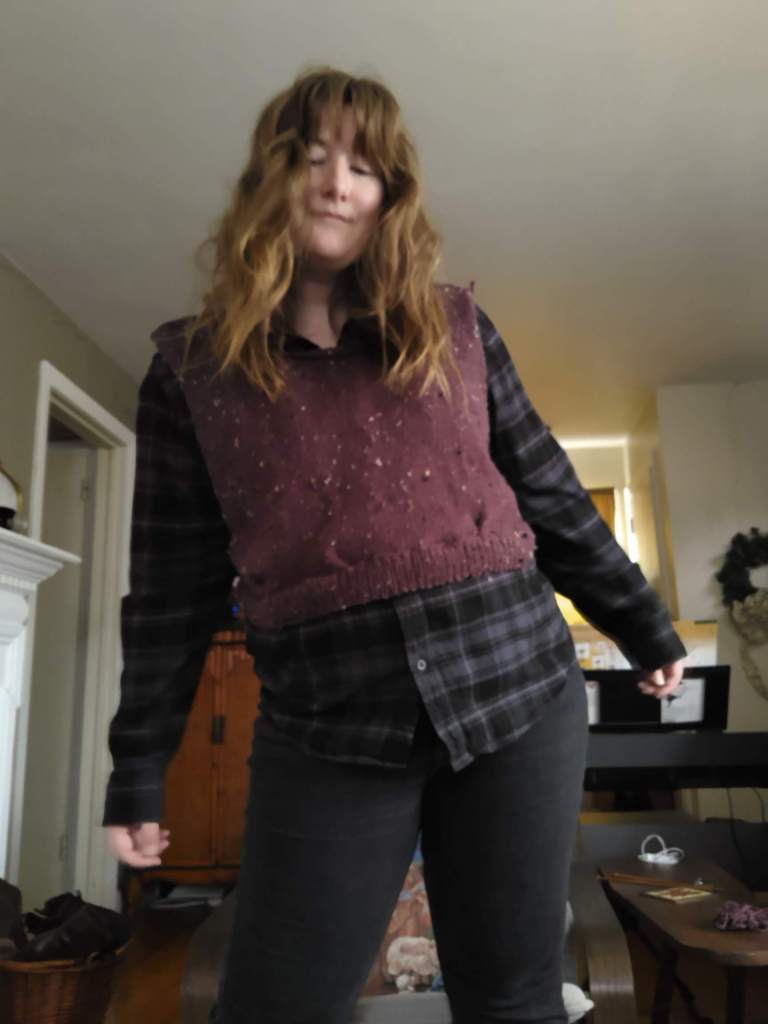
Vests were made from pillow cases and flannels. I re-worked a sweater from the existing sweater and leftover yarn. I dyed denim, deconstructed denim, and made some interesting new shorts and skirts. I combined leftover flannel from Christmas stockings to create a plaid and denim kilt. I used the cut-off sleeves of flannels from my vest projects to create a skirt from four flannel sleeves. I dove deeper into the world of trousers with two new patterns – a floral and railroad stripe. With each pair, I experimented with fastenings and pockets. I constructed my first “Mr. Darcy” shirt from teal linen using Bernadette Banner’s instructions for the body. I put my own spin on the collar, choosing a wider collar similar to a sailor collar that is popular in anime and J-fashion.
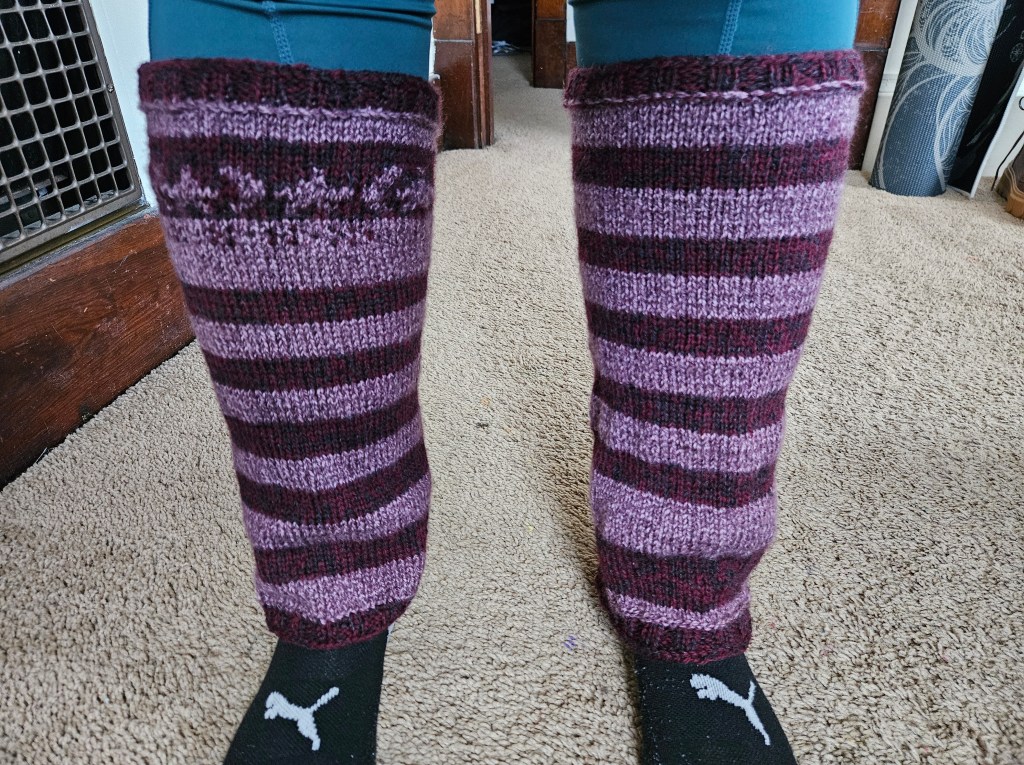
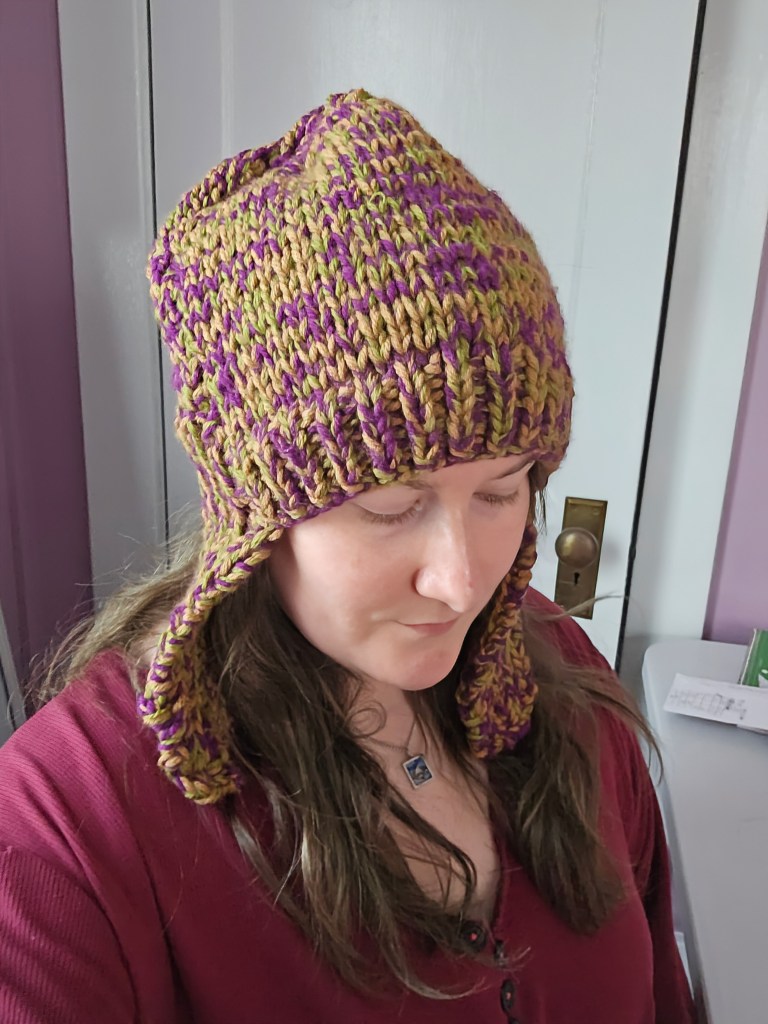
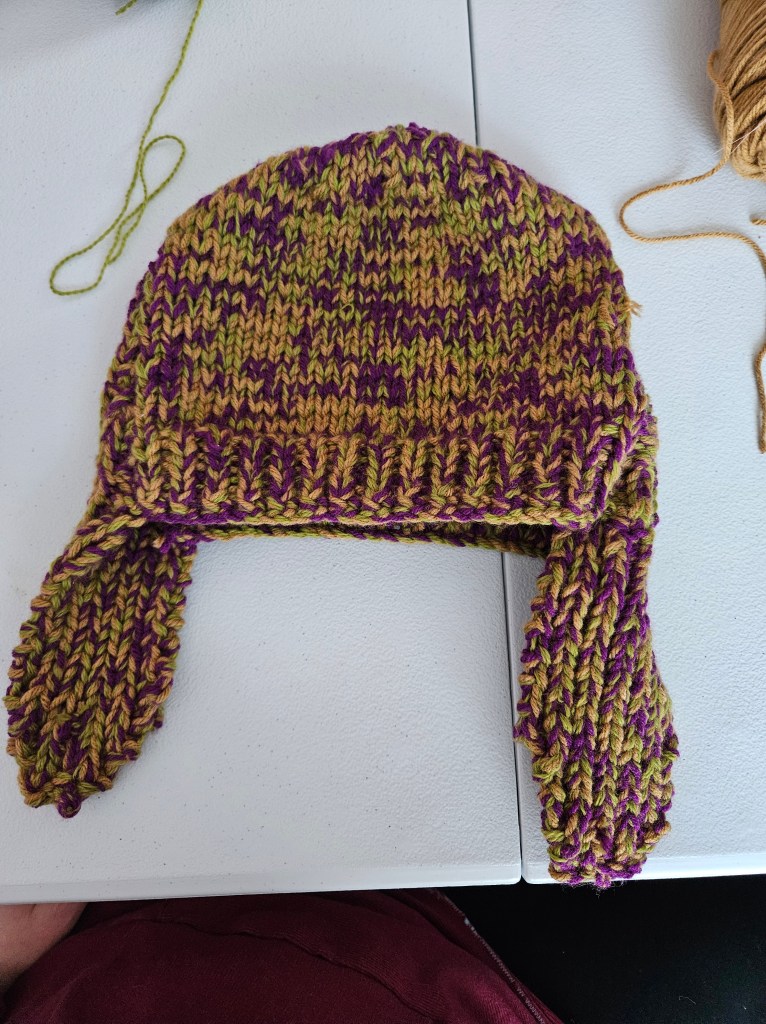
This was the first season I experimented with colorwork in knitting. I made a knit star motif hat from yarn that was leftover from my Magic of Scrap Yarn Cardigan. I made leg warmers, a squirrel motif mitten, and a melange of acrylic and wool to create this ear flap hat that reminds me of medieval European helmets. Although this season of creation was chaotic, I’m not sure if I even included all the projects I worked on, it was a time of great learning. It taught me that fashion design is more than taking raw material and cutting it into a new form.
Great design utilizes new and old. Fashion is about reusing, not wasting, and making things beautiful with careful craftsmanship. It does not mean it needs to be expensive, or need to be made by a great master couturier, it just needs to serve a purpose. We have lost sight of the purpose of fashion, but these projects of upcycling have reminded me that fashion is more than shopping, it is more than consumption, it is about the materials, the vision, the function.
In the summer of 2024, I returned to an old fiber friend, wool, and introduced a new natural fiber – alpaca. When I began knitting in the early 2010s, I bounced between wool and acrylic fibers, not really looking at fiber content and instead looking at the pretty colors and my stitches so I didn’t drop one. Oh, how times have changed! When you love something you begin to obsess, dig, and it becomes a fiber woven into your identity. That’s where I found myself as a knitter for 10 years. I am constantly thinking about fiber content when planning a new project because it’s more than just the make that matters; it is how the garment is worn and washed for many years to come.
Wool
I think we have deep scent memories just like how wool fiber remembers the shape it is blocked into with water and pins. The scent of wool is woven deep into my memories of traveling to Ireland as a child in 2001. It is the fiber my Grandma wore most of the year. She was always cold, even in summer. Wool has always seemed a bit scratchy to me. It triggers my neurodivergent aversion to certain sensations. It was not a fiber I would choose to wear a whole sweater out of, although small accessories I could handle. Coats were fine too, until they weren’t.
After my grandparents passed away, within 6 months of each other I suddenly had things they used to own. Clothing being one of those things, a lot of those clothing items contained wool. I couldn’t stand the fiber being near me. I’d get a head, a migraine really. I’d feel stuffed up and allergic, at least I thought. From 2020-2024 I avoided the fiber. Begging my mom not to knit me anything in wool. I rounded up the wool items and put them in quarantine in a box in my house, the “allergy” being such a wave of anguish to my body. Looking back on it, I can see it was an expression of grief and stress. That smell of wool, it felt like a ghost lingering in the shadows of my mind not a normal fiber. Grief makes things so weird!
Acrylic
Under this belief of a wool allergy, I pivoted solely to cotton, bamboo, linen, and acrylic. If you are looking for a cheap and cheerful fiber acrylic is your yarn. It’s everywhere in the big box stores and that’s exactly what I did. I experimented with Red Heart, Big Twist, and Caron. They come in value packs and the worsted weight is an excellent fiber weight to use when learning how to create complicated garments such as wearables like sweaters that involve sleeves, shoulder shaping, and necklines. I’ve made a lot of mistakes along the way, it’s part of the learning process, yet using these affordable and easy-to-source yarn options took the trepidation out of the creating process.
Acrylic is seen as the “low-brow” yarn for a lot of the knitting community. It’s looked down upon for not being a natural fiber. Take organic and insert natural fiber and it is the same sort of elitism. But honestly, aside from how it’s made, acrylic being a polyester fiber, I don’t get the hate. It’s washable. These garments I was able to block in the dryer. As a knitter who was new to blocking this process taught me how and why blocking matters without the high stakes of felting, shrinking, or destroying my hard work during the wool sweater blocking process. It’s an approachable fiber for beginners.
Fiber Curiosity
Acrylic was my bread and butter, but after a while, we all crave some variety. For winter sweaters the other fibers – cotton, linen, and bamboo aren’t going to cut it. This is where some field trips came in! I’ve mentioned Keystone Safari before on the blog, it’s a wildlife preserve and education center in my region and they have sheep, alpacas, yaks, camels, and llamas. All of which I feed and pet without any allergies! This is where I began to question my “allergy” to wool. How could I spend time around these fibers, in their natural state where there would be more allergens like hay and not have a reaction (when I’m actually allergic to hay and grass)? It didn’t add up.
So in 2024, I began to run experiments. In the yarn shops, I’d pick up wool and alpaca-specific skeins and feel them in search of the truth! At my mom’s house, I’d ask her to see her skeins of wool and I’d do the same, even sticking them in my face, demanding they show me an allergic reaction. Nothing happened. Nothing. Could it be, that was I ready to find my true knitting form? A natural fiber artist, possibly a spinner, with a vast knowledge of wool, alpaca, mohair, and more? Yes, it was time.
Magic of Scrap Yarn Cardigan
So how does felting come into play in this story? It doesn’t sound like a story of woe, but it is. I was quite inexperienced with wool and how one cares for wool, that lack of experience came back to bite me with this lovely cardigan. I made this cardigan from wool extra skeins from my mom. Some of those skeins I put right up into my face to see if the wool would make me allergic. But this cardigan was not just a project of wool, it was a project made of extra wool skeins, wool-acrylic blend skeins, and acrylic skeins. Those fibers require different strategies to care for them properly.
This was my first mistake. I mixed fibers willy-nilly without thinking about each one has unique advantages and disadvantages. Wool is naturally anti-bacterial and requires very little cleaning. You can spot clean and refresh in the air or the snow. But you can’t throw it in the washer, and if you wash you must be gentle to the fibers with delicate movements and gentle water temperature, or else it will felt. Acrylic on the other hand is very durable. You can wash it in the washing machine without worrying about the possibility of felting the fiber. Acrylic fibers do not felt. It does not have anti-bacterial properties though so you clean it. Can you see where this is going? I screwed up the washing portion of this project.
I washed it in the washing machine without thinking and the cardigan shrank. Next, I tried to stretch the cardigan as it dried, while it was wet. Not gently, although the washer had already set the stage for stressed wool fibers. The cardigan no longer fit my person. To remedy this I thought I would hand wash delicately and attempt to re-block the cardigan. This was the nail in the coffin. This fatal mistake transformed the project from a knit cardigan to a felted mess. It was too far gone, like a burnt cooking disaster. There was no coming back from this, the damage was done.
I began to panic. How would I continue using wool and alpaca? I was currently knitting wool socks, um how was I going to wash those? Was I screwed? I was convinced I could never hand wash again without feeling sick to my stomach. I had to find a new solution. Steam. Steam was the answer. I have an iron, an iron with steam. Could I use this instead of purchasing a garment steamer? The answer amazingly was that simple! I steam my wool and alpaca projects now and the steam helps them bloom, they almost block from the steam along. It’s incredible. Just a little steam and the fibers refresh, safely! It’s transformed how I care for my knitwear. Sometimes these creative misfires lead us to places we may not have tried without the failure as a catalyst to try something new. I feel equipped to work with natural fibers, confident that if I spend months on a project I can care for said item for years to come. Have you tried streaming your wool garments before?


























 One Rabbit Riot