
Phone Calls in the Smartphone Era

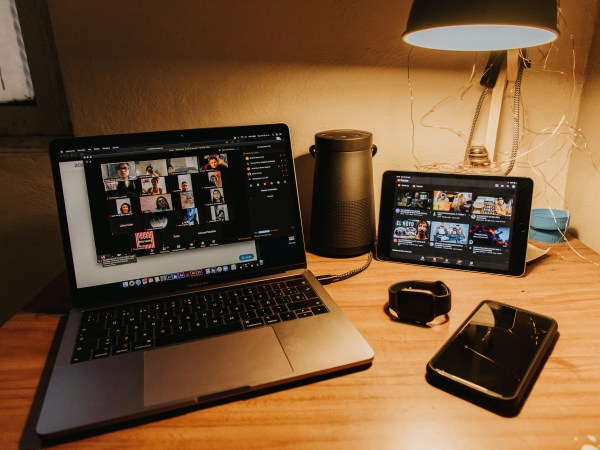
As a Zillennial, on the cusp of both Gen Z and Millennials, my generation(s) have been stereotyped by the older folks as being afraid of phone calls, preferring a text to a voice on the other end of the line. And for a while, I’d say, yeah, I fell into this place of preferring a text as a teenager or chatting online, in my moody, insecure teenagedom, but then the phone call became this novelty of a thing. Calling someone seemed so serious, I became apprehensive if my question or answer was “serious” enough to warrant a call.

I didn’t want to be a burden, which is such a strange upside-down world from childhood, when the phone was the only way to contact your friends. I remember in the days of late elementary school, email being another exciting tool to communicate, like letters, but now email has become an intrusive contact on my smartphone. And maybe, that’s because email felt like real mail, when you could only check it on your window of computer time on the shared family computer. There was a boundary between online and offline. My mind has been marinating on this since watching a Theresa Yea video called, Why the Internet Will Never Be Cool Again.

I’m currently stuck in an endless game of phone tag, which is quite common when I am talking regularly to one of my parents. With my dad, it was a long game of waiting for that perfect window of nothingness. His layover in a city he found boring, I’d keep him company as he complained about life. Entertaining him and supporting him in his time of boredom, because if he were home, he was on the go every single moment. If I needed him, he would usually call me back on a drive home with a small set window for his attention span or horrible service.

My mom, in a similar fashion, gets stuck in these loops going non-stop. Except she answers the phone in loud restaurants, in the car, or at events, just to tell me that she is not available. She will even talk to other people around her, making me wait, or will pass the phone to the people she is with, as if I want to say hi to them when I really just wanted to converse with her about something important.

There is nothing like being on the brink of a panic attack and having your mom pass you to an acquaintance to say hi instead of listening to your crisis. Especially when you called because you thought they were home and available, but really, your loved one is always on the go. Not emotionally available. I hate calling and being met with passive-aggressive pressure to stop talking and let her go, even though she chose to answer the phone and enter into conversation like she was available at first, only to break that illusion as soon as you answer “how you are doing”. Read the room, kid, but honestly, how can I? This is particularly confusing when my parents both let me know how they would prefer me to live closer so I would be more available, but would it matter?

The video call and the text have become two of the most intrusive manners of communication, because a text should be responded to promptly and a video call, in her mind is perfectly normal to answer in a public setting like a restaurant or car without letting me know before I speak, what I believe I am saying in private to a person who is available to talk, to be swiftly gotcha-ed by the fact that I am not alone, and my privacy is not respected. The video call is like a two-edged sword; it is nice to connect with friends and family over long distances, but it is also a tool that hinders connection. It drops in unannounced and forces conversations that should be private to be open to the room.

I crave the dedicated correspondence of my grandma’s era, when she moved to another town, which meant that calling her mom would be categorized as long distance, and so she and her mom wrote letters to each other every day. I haven’t had that kind of connection with my mom since she got remarried, and I miss that feeling of connection, of being heard. It’s something that carried through my Grandma and my Aunt Florence’s generation, my phone calls with them being so intentional and full of connection. It was a visit, a catch-up, and was treated with hard boundaries. The common thread here is the lack of a smartphone.

Phones were still seen as tools to converse, not mini-computers full of distractions. I find this intentionality coming back to conversations I have with my friends; there are boundaries and moments set aside to converse without distractions. We have planned phone calls or dedicated pauses to set aside other tasks to write longer messages, like letters, through messaging apps. It has improved our communication and respect for each other’s time, in a way that I wish I could have with my parents. I just want to connect and not be connected. I want to converse and not call. I want to correspond and not text.

It is all a pipe dream, because this is never going to happen, they are just too enamoured with technology and the endless possibilities of their boomer generation, and the financial leg up that their generation has to be on the go and do things nearly constantly. We live in two different worlds, and that makes me sad.

Pop Press, Historical Biases, and the Straw Man of Politics

What is historical bias? As I dove deeper into my historical training, it became the elephant in the room of every class discussion and the turf monster of every thesis. It is where worldview intersects with historical interpretation and constructs an invisible wall between historical accuracy and interpretation in our present.

Even with firsthand accounts or eyewitness testimony of events, personal bias, and interpretation passively or actively weave themselves into the evidence. It is inescapable.

Something that I’ve gleaned, with a better understanding of, has been from listening to Biblical scholars meditate through the Greek and Hebrew translations of the Bible aka primary sources. It is truly an extraordinary work to ponder accounts from the past and sift through the biases we have as moderns to catch a fleeting moment of connection with the past filled with as deep of empathy for their pov as we can.

It is fleeting because the easier and more common way we interact with history is through quick and heavily biased source material.

A thesis-first and evidence-second approach, instead of first studying the evidence and letting it reveal the thesis is how we as humans prefer to communicate. But what we will gain if we let the text talk to us. Letting the text speak is similar to the Socratic method except instead of a conversation with people, you let the sources speak.

This does not translate well to our current pace of consuming information. It is slow and requires patience to study and understand the matter at hand from many angles. Therefore the “pop press” way of disseminating information, like the History Channel so often uses, rises from the ashes once again to the far reaches of TikTok, Instagram, and YouTube.

This is not to say that only bad history or bad thesis drafting is a product of social media. I’ve learned wonderful details about a vast array of histories, fashion, language, and culture through these social platforms that I couldn’t have had access to at college, because the experts didn’t exist. Dress History wasn’t even a widely accepted specialty during my time in college. Social Media has provided a platform for niche history lovers to share their passion with a new audience. Social Media also provides a salon of discussion to debunk myths or provide deeper context to a subject that was given the “pop press” treatment.

So why am I writing about this today? I was watching a video from a creator who used to be a fantastic source of fashion and film content, a 2000s historian of girlhood with insightful and researched evidence that let the text speak. The original work was so high caliber that this current slump into heavily biased “historical” fashion videos and content that is just politics loosely veiled as film or fashion-focused, has been a great disappointment to me. The creator is so talented, and to see them be swayed by forces that are in our culture is sad.

Not only a disappointment, but it has shown me how important it is to stay committed to awareness of historical biases and the humble acknowledgment that we can’t talk in absolutes when it comes to interpretation. We have to be open to exploring the sources from many points of view and not let ourselves be mouthpieces of modernity, with the clever out of “victors write history” so what is the point of going deeper.

Victors certainly change history and can try to control its narrative, but history is the story of humanity and is bigger than one group’s manipulation.

For example, in my wheelhouse, I am the descendant of Irish immigrants who were potato farmers in Cork. The Potato Famine was discussed historically as just a blight. Bad luck. Not a big deal. Oh well. The crisis was met with such apathy that Irish clergyman Jonathan Swift, wrote “A Modest Proposal” to draw attention to the British attitude towards the Irish was not unlike the absurdity of his proposal.

But now, we know that this event can be classified as a genocide because the British colonized Ireland for centuries. There was enough food in Ireland until the British stole it and imported it out of their colony of Ireland. The “victors” affect history but their version is not the guaranteed final version forever. They inflict death and destruction but this will not stay in the shadows forever, the light is greater than the dark.

My point is that this summation, “The victors write history” is paltry.

So what started this ramble of historical bias?

A video essay about the history of the Goth aesthetic which had random political bias inserted as fact and a lack of nuance to the conclusions based on a clearly preconceived thesis where evidence was cherry-picked to fill out a video that wasn’t really about Goth style. It was about our Nov 5, 2024 election and unnecessarily put a lot of negativity out into the world instead of talking about the Goth aesthetic.

I believe it’s time that we as a society stop stirring up dissension and casual hate in the name of the political savior. These candidates never save anything. They try their best but they are just humans. Is it worth hating an entire group of people because they hold different views? Never.

No human is perfect, so how can human government create a perfect society? It’s a straw man.

I hope in time, the strong political biases I see swaying storytelling in my culture will sour. Instead, I hope an appetite for deep discussion to understand each side of the coin will spring forth. For truth, for the sake of truth, warts and all. For deeper connection. To understand what people believe and why they believe, with mutual respect, and respect for the biases we hold so that we don’t let our biases keep us from true understanding and continue to fertilize this culture of casual hate I am seeing in 2024.

I hope this post is not too convoluted. I wanted to discuss this without saying what creator I am referring to because it is not them I want to critique but the fallacy they have fallen under and the way they are approaching history, politics, and interpretation of these things without the awareness of their personal bias. It’s creating foolish and unuseful content that reads more as pop press propaganda than well-researched discussion, which is what I think they excel at doing. I believe they are amazing and I want to see their talent shine once again!

Bias is such a difficult thing to wrestle with and I acknowledge that no matter how I tried to check mine at the door, it still persists. I try to hold it loosely and pursue the truth, but I am an imperfect human. 

Thank you, reader, for being here and I hope this was an interesting ramble if nothing else. If I have offended you, I humbly ask for your grace and willingness to love others – enemy or friend, because that is how we will make this world a better place.

#41 – Cut Out Cookies

Whenever I am feeling a bit glum, I think of baking. I learned this from my Grandma. Her mom, who lost her parents at a young age and grew up quite poor would make herself “feel” rich by baking a cake.

I think this is such a sweet sentiment to hold because baking is something you can do with a little money or a lot of money. You can make something for yourself for a little pick me up or can brighten someone else’s day. It is shareable, communal, and made with love.

Baking is a moment of connection for me. A connection through the generations. So much about our present world is different from what it has been in the past, except for food. Food bridges those time gaps.

It even bridges distance and time. As I baked last Monday evening, on the other end of the phone my sister-in-law had just finished baking her own cookies and was making dinner. It was like we were together in a shared experience.

Mixing, resting, rolling. The process of rolling the dough to a thin layer, dunking the shaped cutter in flour, and pressing a new image into the dough was timeless. I could have been four or fourteen or thirty and made these cookies with my mom. We always did every year, every Christmas time. I sent her pictures of the cookies and we reminisced about years past.

The dough, the cookie dough reminds me of meals at Eat’n Park and their free smiley cookies. It’s childhood, cozy in a bite. It makes me feel rich in memories and moments spent with people I love.

Baking is my cozy corner of retreat, cut-out cookies my warm fuzzy blanket. I think that is what makes The Great British Bake Off irresistible. What a wonderful place of solace in a gloomy world.

Thank you, dear reader, for spending time with me today. I wish you love and comfort wherever you are.

Create a website or blog at WordPress.com

Up ↑