If you’ve ever watched the Sean Brock episode of Netflix’s Chef’s Table, he tells the story of his upbringing in Southwest Virginia in Coal Country. His dad passed away at a young age, which led to Sean and his mom moving in with his grandparents where they had a massive garden. He talks about spending countless hours in the garden beds and kitchen with his grandmother sowing, growing, harvesting, and preserving all the food that came out of the ground.
I didn’t grow up in Coal Country and I didn’t lose a parent at a young age, but I am from the Appalachia region of Pennsylvania, specifically Central PA in the ridge and valley geological system. I grew up in a valley that was bordered on two sides by ridges. At both ends of the valley, it narrowed, but in the middle was vast farmland full of fertile soil. That type of setting led to a very simple lifestyle, one that still exists today. Nearly everyone has a garden in their yard and there is a large Amish population, so there are produce stands that dot the landscape during the spring, summer, and fall. Like Sean Brock, I spent a lot of time in gardens growing up. Whether it was a family member’s, a friend’s, or someone from church, there was always great conversation to be had when surrounded by plants. Because of all those memories, the garden is more than a provider of food. It’s a place that holds great importance to me. It’s become a home to me.
The Garden Is Home
Some of my earliest memories happened in or around a garden. My grandparents, with whom I was extremely close, always had what felt like a huge garden. They had a big yard behind their garage (some would call it a back forty), and I remember them growing potatoes, tomatoes, and green beans. I’m sure they grew a lot more veggies than those three, but I can still feel the dirt on my hands as we pulled potatoes from the ground and brushed them clean just like I can hear the snap of beans as we broke the stems off before they were steamed or prepped for canning. And because I lived with them when I was younger and later spent my summers there, I was always with my grandma in their garden or kitchen, learning the little nuances of when a certain vegetable is ready to be picked or how moist the soil should be.

My dad has always had a garden too. At the house he rented when I was younger, he had a small garden across the creek in the backyard. He was always interested in growing fruits and veggies that aren’t always common in Pennsylvania. He was the first person I can remember trying to grow cantaloupes (they’re actually muskmelons, but that’s another story for another time). Here in Pennsylvania, not a lot of people try growing melons in their gardens because the growing season isn’t the longest. But he did. They produced fruit but never grew bigger than a softball, and to my knowledge, he never tried growing them again. But his willingness to try something out of the norm has stuck with me all these years and influences my approach to gardening, which you’ll learn through my writing.
He continued gardening when he bought the property and built the house where he still lives. The soil was so rocky (PA is known for its widespread shale deposits) that it took years to get it workable, but he persisted. Today, he has 3 or 4 large beds. He largely sticks to the popular crops like tomatoes, peppers, cucumbers, and onions, but he is still willing to experiment. Years ago, he learned about wild asparagus that grows along the side of the road and went on a hunt to find it. He did, and since asparagus is a perennial, he’s been transplanting and harvesting from the original starts 15 years later.
My mom and stepdad kept a modest garden most summers and only stopped within the past 10 or so years. They were always interested in growing paste tomatoes for sauce and later planted strawberries. They only stopped because it became too much work, but even then my mom would grow cherry tomatoes on her back patio that our German Shorthaired Pointer, Jasper, would eat off the vine. I hope I never forget the memory of him carefully plucking a ripe tomato off the vine. My mom would feign being upset, but I know that it brought her humor and happiness. I grew up surrounded by vegetable gardens and love passing time walking through rows of crops and talking about their progress or just discussing life in general.
When I went to college in 2010, things naturally changed. I didn’t travel back to Central PA as often and my mom stopped having a garden. Looking back, I was disconnected from nature in a way that I had never been before, which greatly impacted me. It took until 2015 for me to begin finding that again. Maggie says that she doesn’t have the same connection with gardens that I do, which is true, but I’ll never forget meeting her grandparents for the first time. They lived on a property in Western PA that everyone in the family referred to as the farm. At one point before they moved there in the ’70s, it had been a working farm, but Maggie’s grandparents used it as more of a hobby farm. Over the years, they had horses and chickens. They also worked the different fields, growing corn and other commercially-grown crops. When I met them, though, they were focusing their attention on a large garden where they grew LOTS of tomatoes. That first visit to the farm was incredible. I got to know Maggie’s grandparents by walking through their garden beds and grass fields, and it was the most welcoming first meeting with a significant other’s family that I ever had. It wasn’t necessarily because they did anything different from others, but the fact that we were able to spend time in a place that was so familiar to me made all the difference. That initial meeting led to more gardening conversations in the years that followed, and even though Maggie’s grandparents have since passed away, her aunt has carried on the gardening legacy started by her parents.
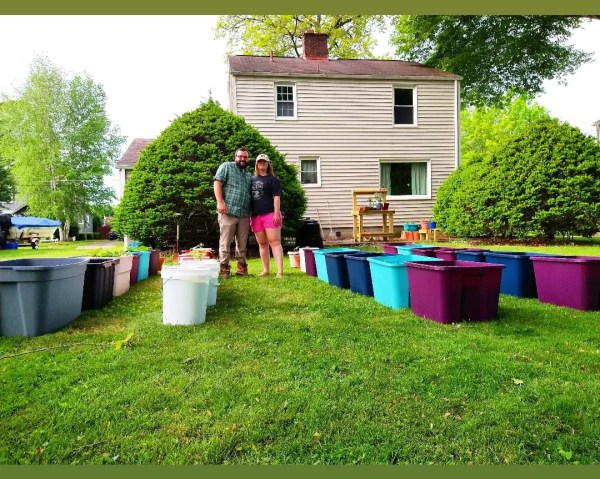
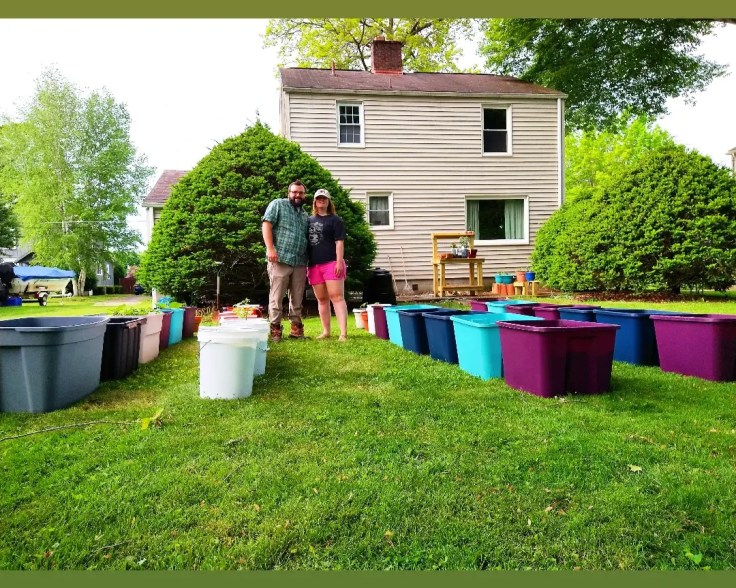
This year will be the first in-ground garden Maggie and I’ve had together. In her post introducing the gardening portion of the blog, she mentioned that we’ve given the Greenstalk a go and later did an all-container garden. Both were valuable experiences. We established our all-container garden in rows, so we could walk between the plants and feel the leaves. In the quiet moments when neighbors weren’t being nosy or gossiping, dogs weren’t barking, and mowers weren’t being run, it was magical and felt like home. The garden we’re building this year will be different, though. We’re going to have the chance to put down roots (both metaphorically and literally) on this property that God placed in front of us.
There are plenty of reasons to garden. I didn’t touch on the importance of knowing where your food comes from or how invaluable it is to have a pantry of food for the winter. I also didn’t touch on why we should focus on saving heirloom seeds that have been passed down through history. Those are all important reasons to garden. But for me, it all comes back to feeling at home. My senior seminar in college was on the subject of place, what it means, and its importance. I won’t bore you with what I wrote my senior thesis on, but looking back, I wish I had written about the importance of the garden in my life. Perhaps I would have been unable to write about it at that stage in my life, but I feel qualified now – it’s one of my homes.
With the increasing reliance on technology, I find myself missing simplicity more and more. My career requires me to be on my computer during the day. I love my job and am so thankful that God has me where I am. Yet, I still find myself longing to get away from technology and offline. I want to feel real tangible things, like fully ripe vegetables and properly drained soil, just as I did as a kid with my grandma. I choose to garden because it means being in touch with my roots. I’m able to feel a connection to my family members that transcends miles and years, and it takes me back to a much simpler time.
We look forward to sharing our garden with everyone, explaining our processes, and exploring the different seeds we are choosing to grow this year. We hope everything succeeds, but odds are, not everything will. So we want to share both the successes and failures and learn from what went wrong. Why do you choose to garden? Happy growing.
 One Rabbit Riot