
Gardening/Farming in Video Games

Growing up, one of my favorite video games was John Deere: American Farmer. Released in 2004 on PC, it allowed you to take ownership of a farm and operate it with the goal of expanding and making a profit. You were able to pick your location in the United States, buy your machinery and attachments (all John Deere, of course), and plan out your fields. You also could buy animals to raise. If I remember correctly, there were cows and pigs, but there may have been more. You were able to pick what crops to plant, but the biggest downside was not driving the machinery. Instead, you selected the field, the job (planting, fertilizing, harvesting, etc.), and which farmhand you wanted to perform the work. After that, you essentially “ran” it, and the non-playable character (NPC) did all the actual work.

I have very fond memories of playing that game, but I think I only played it for a year before moving (literally) and moving on to other video games. But I think playing that game was an important part of growing up. It greatly shaped the types of video games I enjoy in that I don’t like first-person shooter or online games. I would much rather play sports games or ones with long storylines. In fact, I’ve only owned one Call of Duty game in my life, and it was over 10 years ago. I’ve never played Battlefront, and the last military-style game I really enjoyed was Medal of Honor: Rising Sun, which came out in 2003. I enjoy games that have replayability and are even a bit repetitive, such as MLB the Show.

The other thing I learned from playing John Deere: American Farmer is that I enjoy games that are rooted in real life. Granted, I’ve never been a farmer (although I did work on a dairy farm when I was 15), but I have always enjoyed animals, planting, and growing things. The game also looked like everything around me, where there were countless fields and farms. It felt relatable, realistic, and achievable. There wasn’t any stress when playing the game. Instead, it was calm and relaxing. It’s what I would describe as a cozy game, although I’m unsure the term existed at the time.

Cozy Games

Cozy games are great if you enjoy playing video games as an escape and don’t want a lot of stress, fighting, and action when playing. Instead of intricate levels or storylines that require a lot of decisions and quick reactions, cozy games are often more open-ended and allow you to progress at your desired pace. I first started hearing this term in 2020 during COVID, and I think it’s obvious why. People were looking for an escape from reality, especially when they were stuck at home during lockdown, and a game like Animal Crossing: New Horizons was perfect for this. But, if you look back, earlier games fell into this category, including other installments in the Animal Crossing franchise, all The Sims versions, and many simulator games (Roller Coaster Tycoon, Zoo Tycoon, Sim City, Flight Simulator, etc.). By default, these games were able to be as complex or simple as you wanted.

I played most of these growing up, but I largely stopped in high school. However, in 2019, Sims 4 arrived on my radar after many YouTubers started making playthrough videos of it. We bought a copy for the PS4 and dedicated many hours to it, but it didn’t feel cozy. The game could still be played cozily, but most of the playthrough videos were dedicated to challenges (100 Baby Challenge, Rags to Riches, survival challenges, etc.), which made the game feel rushed and stressful. There were also plenty of ways to make the game dark and sinister, which goes against the cozy game ideal.
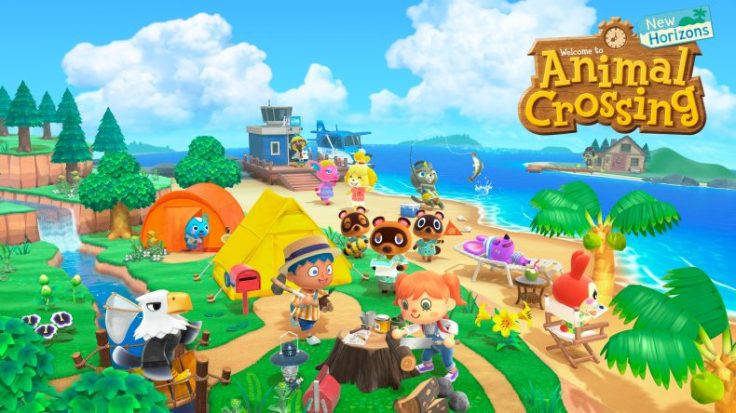
In 2021, we moved and bought the Animal Crossing edition Nintendo Switch that November. Magz had been introduced to the series in 2020 when New Horizons was released and was really interested in all the coziness that came with it. At the same time, I was looking for something equally cozy and remembered playing John Deere: American Farmer. I searched to see if there were updates in recent years (there weren’t) and looked for similar games in the same genre. That’s how I stumbled upon Farming Simulator, which met all the criteria I had: cozy, immersive, and could be played on the PS4. FS22 had just been released in November 2021, so I was able to get the previous version (FS19) at a great price when we bought the Switch. And it’s at this time, that I want to transition into a common theme of Animal Crossing and Farming Simulator: gardening/growing food. While not the sole focus for either game, both series dedicate a lot of time and attention to gardening or growing food, and gardening has become a popular theme in many games, especially in recent cozy games.

Gardening/Farming in Video Games

While farming in video games is really popular now, it’s far from a new thing. John Deere: American Farmer dates back to 2004, and the first Farming Simulator game was released in 2008. I even think about Farmville, which was played through Facebook and was released in 2009. While I played the game, I don’t remember a lot about it, but I do know it was massively popular.

Other video games with a farming element are Fields of Mistria, Roots of Pacha, and Wanderstop. I haven’t played any of these, but the reviews are great, and they’re very popular. Instead, I want to discuss three farming/gardening games that I have played and talk about what makes them great as well as areas of improvement. Lastly, I’m going to talk about how realistic each is.

Farming Simulator

I have only played one installment of this series: Farming Simulator 19. Giants, the game’s developer, tends to release a new one every two years; however, they’ve gone three years between the last three installments. I have watched people play both FS22 and FS25, so even though I haven’t played them, I feel pretty familiar with the series and its recent releases. Farming Simulator is a pretty great representation of farming. I know that I titled this post “Gardening in Video Games” and that it’s gone in a farming direction, but I think any game where you can grow crops on a small scale qualifies.

Best Qualities

  • Mods: Even though you only start with a few maps and a select number of tractors, combines, machinery, etc., the game’s mod library/community provides nearly endless possibilities. If there’s a tractor being used on a farm somewhere in the world, there’s a good chance it’ll make its way into the game. The best example for this was being able to buy Jeremy Clarkson’s Lamborghini tractor from Clarkson’s Farm. It’s not one of the most popular tractors used by farmers, but because he used it, it was modded into the game. The maps are another great example. In FS19, you start with one European and one North American map. Both are pretty good, but you quickly become bored with only two options. In the mod library, you can find maps from many European countries and US states. While not necessarily designed to perfectly replicate a specific town, it’s fun playing on a map that closely resembles where you live or a place you enjoy.
  • Complete Freedom: Farming Simulator gives you the freedom to do pretty much whatever you want. You can create fields where they previously didn’t exist, establish thick forests for logging, and become a dairy or sheep farmer if you want to raise animals. You don’t have to play a set storyline and can stick with a map for as long as you want. Because there are no goals or requirements, you have the freedom to determine what is success.
  • Driving Machinery: The coolest part of Farming Simulator is the ability to drive tractors, combines, excavators, and other pieces of machinery that most people will never have the chance to operate. When cultivating a field or spreading fertilizer, you have to manually raise and lower the cultivator and engage/disengage the muck spreader to not cause problems. It makes you feel like you’re really controlling the equipment.
  • Seasons: By default, Farming Simulator doesn’t have seasons; however, since FS19, there has been a mod to add them. You can adjust the season length from one day per month to eight days. Seasons give the game an extra touch of reality since crops have to be planted in the spring and harvested before winter, like real life.

Worst Qualities

  • “Helpers”: Farming Simulator has NPCs that you can hire to help do work in the fields. Setting it up is pretty easy; however, they rarely do the work as effectively as you expect. The helpers will get lost in the fields, are easily impeded by non-existent obstacles, and don’t complete the task before saying they’re done. They’re meant to be beneficial, but they only get in the way and distract you.
  • Repetition: It doesn’t take long for the game to become a bit repetitive. You do the same tasks (plow, cultivate, plant, fertilize, and harvest) on repeat. This is made better with the Seasons mod, but it still feels repetitive. There are animals that can be raised, but taking care of them requires the same repeated tasks.
  • Lack of Improvements: A big issue that Farming Simulator has had is that there are few improvements between the games. FS22 added some pretty interesting productions to the game, but that was about it. There are many crops that players would like to see in the game, but they remain absent.
  • Terrain Problems: This could also fall into the Lack of Improvements section, but Giants has forever struggled to make the terrain look real, especially when it’s being dug for crops or modified to level the ground. Tire marks from the equipment also never look real.

How Realistic Is It?

Fairly realistic in that you get to use equipment modeled after real-life examples and they all operate a bit different. With Seasons enabled, you have to operate within the growing parameters and can only grow what works in each season and climate. The things that are unrealistic include how quickly/slowly your vehicles consume fuel, the lack of damage, the monetary structure, and how animals are handled. I also wish that you could do some of the smaller jobs that happen on farms in the game. Things like leading the animals out of the barn and into the fields or feeding the calves would be really fun.

In general, my experience with Farming Simulator has been good, even though I haven’t played it in at couple of years. The repetition led me to become burnt out on it. I also grew frustrated with the controls on the console version, as they are finicky. That leads me to another improvement that could be made: make the console-playing experience better. That said, I do recommend playing it.

Score: 6/10

Animal Crossing: New Horizons

New Horizons is the first game in the Animal Crossing series that either of us have played, and I know that farming wasn’t part of previous games or this one when it was originally released. But I am glad they added it, because it brings something extra to the game. Farming isn’t too serious in ACNH. You get seeds or starts depending on the vegetable, dig a hole, and plant it. You water it every day, and after three days, the vegetables will be full grown and ripe. You harvest them, and the plant continues to produce indefinitely. It’s very simple, but it’s incredibly calming to see your character whip his or her watering can around. It takes an already cozy style of game and somehow makes it cozier. The only stressful part is when your watering can breaks in the middle of watering.

Best Qualities

  • Variety: For a game that isn’t solely a farming game, ACNH has a surprising amount of vegetables that you can grow. These are tomatoes, carrots, potatoes, wheat, sugarcane, and three colors of pumpkins. I was surprised the first time I learned that there are so many different vegetables that can be grown. And the best part is that they all can be used in different crafting recipes, some are used in cooking, while others are used to make furniture or decorations.
  • Simplicity: Because farming only plays a small role in ACNH, it’s not a complex process, which is great. It’s a series that’s designed to be played by people of all ages. You simply plant, water them every day it doesn’t rain, and harvest. That’s it. There are no fertilizers to worry about, and all vegetables grow in all seasons.
  • Graphics: I was blown away by the graphics of ACNH when I first saw Magz play it. I didn’t really have any expectations (high or low) for the game’s visuals, so I was shocked that it was so stunning. It’s not 3D, but everything has depth. My favorite thing is how the trees, weeds, and plants will sway when it’s windy or how you can see the plants glisten after you water them.

Worst Qualities

  • Would love to see more vegetables: I mentioned how happy I was with the variety of vegetables, but would love for there to be even more varieties. I’d love to be able to grow corn, beets, broccoli, and cabbage. It’d be a lot of fun to see how these vegetables would be modeled as well as the crafting recipes that would come with them.

How Realistic Is It?

It’s not at all. Plants don’t reach full maturity from seed in three days. Pumpkins, wheat, and carrots don’t continue to grow once you harvest them. You also can’t grow tomatoes, a plant that doesn’t tolerate cold weather, in winter. But that’s not the point of ACNH. It’s meant to be a lighthearted, fun, and enjoyable game. And I love it for that. I think it’s brought me the most happiness of any game I’ve ever played. You can play it for 10 minutes or two hours. If you’re down or in a bad mood, it’ll lift you up. It’s pure joy.

Score: 10/10

Stardew Valley

I came to Stardew Valley nearly 10 years after it was released in 2016. Magz bought it in (I think) 2023 and took a bit to really get into it. She eventually fell in love with the game and would have difficulty putting the Switch down when she played, and I had no idea what was happening. I didn’t understand what the mine levels were, how difficult fishing was, or who Haley is and why she’s so mean at the beginning of the game. After watching videos of people playing it, I downloaded the game in Dec. 2024 and spent a lot of hours playing it around Christmas. I quickly realized why everyone loves it. It’s immersive, entertaining, creative, can be quite difficult at times, and gives you a ton of freedom. What ConcernedApe continues to do with the game is amazing, and all the updates are free.

Farming plays a large role in the game, although you can farm as little or as much as you want. You have a farming skill that is developed as you harvest crops and interact with your animals. You can go through the entire game and beat the main storyline by not farming, but it’s definitely a better experience when you farm.

It isn’t difficult to farm in Stardew Valley, but it does require a lot of planning and thought. You manually hoe the plot you want to plant in. You buy your seeds at the town’s general store or use ones that you find throughout the world or are gifted. You can also purchase or craft fertilizers to improve the quality of your crop. Once a seed is planted, it needs to be watered every day to achieve the highest quality. Then, once the vegetable is mature, you harvest it and either wait for new vegetables to grow or plant something new.

Best Qualities

  • Freedom: By far, the best thing about Stardew Valley is the freedom you have. While there is a main storyline that you should play to reach 100% completion and to experience everything the game offers, it isn’t required. You can choose to focus on farming, mining, fishing, or foraging. I’ve reached 100% on Red Dead Redepemption 2, which is supposed to take well over 100 hours to complete, and Stardew Valley blows it away.
  • Variety: There are roughly 50 crops you can plant in Stardew Valley, ranging from items commonly found in real life (corn, beets, etc.) to some that I’d consider fantasy (powdermelon and ancient fruit). Each type has a season (or two) in which it can be grown as well as the number of days it requires to reach maturity. You can also grow giant versions of some varieties, and each will have quality levels (regular, silver, gold, and iridium). Vegetables are used in crafting recipes, can be given as gifts, and need to be used in pursuit of beating the main storyline. Oh, and this doesn’t even include the variety of fish you can catch or gems you can find when mining.
  • Tools don’t break or wear out: In ACNH, tools eventually fail, forcing you to craft or purchase a replacement. And while I know each tool lasts a set number of uses, it feels as though they always fail at the most inopportune time. In Stardew Valley, that doesn’t happen. You are given the following tools to start: axe, pickaxe, watering can, and hoe. These can all be upgraded, which allows you to do more and use less energy in the process.
  • ConcernedApe’s dedication: The game’s developer, Eric Barone (aka ConcernedApe), has poured his heart and soul into the game. He released the game independently after working on it for more than four years and continues to release updates that improve the game all these years later. He listens to the game’s fans when working on updates, and you can tell that he genuinely cares about the game, unlike a lot of developers.

Worst Qualities

  • Not always relaxing: Stardew Valley is a wonderful game, but it isn’t relaxing at all times the way ACNH is. The mines, and especially the skull cavern and Ginger Island volcano, can be very stressful and difficult. Time can also make the game not relaxing. Time is always advancing unless you’re in your storage or are crafting. A full day takes 14 minutes of real-life time without pauses, and you have to be in bed by 2:00 a.m. or you will pass out, which can lead to you losing items in your backpack. You also have to monitor your energy level, because if is depleted, you’ll pass out. All of this means you have to plan out your day to ensure you get everything accomplished while not taking too much time or using too much energy. It can be a lot.
  • Can cause eye strain: This may be a personal issue, but Stardew Valley strains my eye worse than any other game. I think it has to do with the default contrast levels of the graphics as well as the pixelated graphics. It means I can only play the game for a couple of hours at a time without stopping, which isn’t a bad thing, but it is more tiring than other games.

How Realistic Is It?

Stardew Valley doesn’t use a real-world clock, but a year in the game is divided into four 28-day seasons. Each season has four weeks of seven days. The seasons are like real life (spring, summer, fall, winter), and in all but winter, there are season-specific vegetables/fruit that can be grown. Those are all quite realistic for a game that has monsters and has fantasy elements. I also love that your energy gets consumed as you perform tasks or engage in combat. Finally, I like that you have to use hand tools. It’s so much more engaging and fun than using large pieces of machinery.

Score: 9/10

Do you have a favorite video game, farming or other genre? If so, I’d love to hear about it. Have you played one of the games discussed in this post?
Playing Animal Crossing Has Improved My Style

As a kid, one of my favorite pastimes was designing. I loved the fashion styling flash games from Lizzie McGuire and My Scene. I designed my own catalog of clothes for a made-up brand with my friends in 4th grade, illustrating with my school supplies and piecing it together with scrap paper. Mary-Kate and Ashley’s movies captured my imagination through their use of clothes to characterize each sister’s personality.

That’s So Raven enveloped me in imagination, not from her psychic abilities, no, Raven Baxter’s closet pulled me in! Raven’s room was a stunner as well, like Zenon Kar’s space station cabin, and my Fashion Polly’s colorful playsets that folded out like Richard Hammond’s caravan. My friends and I discovered shows like What Not To Wear and Trading Spaces, which launched my sketches from clothing brands to interior design. I had a notebook full of room drawings. There were designs with slides, hammock beds, and intricate themes. I drew a Survivor-themed room with a tribal council area on the lower level, an outer space room with circular windows and futuristic lighting, even a beach room with a lofted bed, sunset paint scheme, and a pool placed in the middle of the floor. I wish I knew what happened to these sketches; it’s been such a long time.

When I discovered Animal Crossing in 2020, I was curious what the fuss was about, and later the next year, we bought a Nintendo Switch, opening a world of design I thought was lost to childhood. I was thrilled! Animal Crossing New Horizons debuted in March 2020, and because of the unique time, it had a huge following for its charming island life. You begin your game landing on a deserted island as part of a Nook Inc. Getaway Package, and assist Tom Nook in developing the island with the help of Timmy, Tommy, Dodo Airlines, Blathers, Isabelle, and the villagers who move to the island with you.

But what about the fashion and the home decor? This game first places you in a tent that you upgrade into a house, with subsequent expansions costing large sums, but with a relaxed payment policy. You also gain the ability to design custom things with Nook Mile redemption upgrades, craft unique recipes from resources on the island, and buy items from Nook’s Cranny and clothing items from Able Sisters. A ridiculous amount of my gameplay, even years later, comes from pairing and collecting new clothing items for my character to wear on her adventures. This game loves coordination!

As a player who is well-versed in the Animal Crossing fashion catalog, I wait and anticipate finding my favorite pieces with each new island. The game has four seasons, with clothing corresponding to the season at play, including specialty garments for holidays. Currently, as I play in June, it’s wedding season and Able Sisters is selling traditional Japanese wedding attire, Nook Shopping is selling Father’s Day items, and International Children’s Day pieces, which include a paper crown that is oh so cute!

How has this impacted my own personal style, though? Well, it has brought me back to the mindset of creating a full look. Working from home or working in professional painting at jobsites for most of my adult life has killed the style I used to have. I no longer felt the need to put together a look, but instead I got used to throwing on pieces and wearing things for function, not fashion. But that’s not who I really am, just what the environment of life drifted me into. I was missing intentionality, Animal Crossing lit that spark once again. My little character doesn’t just get dressed to do life; she wears a head-to-toe look with hats, bags, glasses, specialty socks, clever shoes, cute tools, and interestingly paired garments. This game got me out of jeans and a t-shirt, or a hoodie and leggings, because this game has trousers in many fabrics and shapes, shorts in colorful prints, skirts in a bouquet of fancy, coats, hats a plenty, tops that span the seasons – it’s a blast to explore! There are dresses – modern and traditional. I can where a kimono! I change her outfit at least once, maybe three times a session. You can also curate hairstyles and experiment with colors.

This exercise has shown me that pink hair is something I’d like to try. It’s my most-used fashion color. It has inspired me to introduce cute socks of varying heights and weights to my wardrobe, even making some of them. I’ve started wearing hats anytime I leave the house – it pulls the look together! My taste in bags has changed; no longer an option for a sleek purse that looks designer, instead give me a duck bag with feet. I love colorful knitwear, flowing skirts, and shoes that are beyond my comfort zone of boots and Converse. Taking those moments in the game to pair weird combinations together has positively impacted my design sensibility. When I plan a sewing or knitting project, I take into account what I’ve learned from dressing up my character, seeking to inject the whimsy and delightful wares of Animal Crossing into my real-life closet. I’m not the only one; I’ve seen this across Pinterest, YouTube, and Instagram.

But what about interior design? Well, this game not only presents the opportunity to design your house and the island, but you can also download Happy Home Paradise to design vacation homes for clients. This has really challenged me in a fun sandbox way to care about how a room is put together. I’ve become far more intentional about my furniture layout, what types of pieces I want to bring into my space, and how I want to pair pieces for a style that tells a story.

Buying a house last year was the icing on the cake of this new foray into design, as we have painted rooms and dug the garden beds, I’ve felt like it is Animal Crossing come to life. I have this canvas to put my stamp on. Moving from rented landlord-beige homes to a space where we can be colorful, it has shown me that the little details do make a space more welcoming and conducive for creating. The simple act of moving our dining room table from one side of the room to the center, allowing for walkways on either side, has made the room a place I want to be instead of a place I pass through. By filling the empty gaps of cabinets in our kitchen with tables, shelves, and a microwave stand, we have transformed the empty space into a room that feels complete. The simple change of painting my sewing room lavender created an entire mood, a calming and happy vibe that makes me excited to work within those four walls. The garden beds and the screened-in porch have been works of dimension, the outdoor space has useful and designated spaces for us to use that make it more beautiful and purposeful.

I am filled with a sense of possibility again, like the girl who sketched those rooms in a notebook, instead of a person muddling through life. In this time when we feel burned out by AI and stale creativity, it’s been electric to feel the sparks of imagination. The crafting aspect of the game has inspired me to be more creative in my own house. We repurpose, re-finish, and build things in our house from scratch. Because of life’s twists and turns, I have a lot of second-hand pieces that at first felt like a let down, like I was poor, but now I see them as incredibly meaningful items that I have the pleasure of caring for in my home. The game’s customization tools, such as kits for sale or the custom services of Cyrus, demonstrate how a coat of paint truly pulls a room together without buying something new.

Did I think when I purchased Animal Crossing New Horizons that I would see an impact on my own design sensibility? Not at all, but it has been the gift that keeps on giving. It’s an incredibly cozy game, full of wonder that I have grown fond of, year over year. Four years later, I still look forward to running around the island, hunting for recipes, wishing on shooting stars, and besting those pesky Happy Home Academy judges. I hope that I never lose my zeal for dress up and design because it is such a fun little way to relax in this wild and wacky world.

My Spring 2025 Soundtrack

Turning grass into unearthed soil – The Tiller

Chirping – Robins

Battleground – Stray Kids

K.K. Oasis

A cut hitting rock – The Shovel

A trickle of water – The Rain Barrel

Staple Jam – The Upholstery Stapler

Cutting Fiberglass Screen – Utility Knife

Slingshot – Nmixx

Glug Glug – Watering Can

Coughing – Garden Tone

Disgust and Fear – The Big Earthworm

K.K. Adventure

My Place

Stalling on Tall Grass – The Mower

Booms that Shake My House – Tannerite from Reckless Community Members

Ice Cream Cake – Red Velvet

Cinema – Lee Know & Seungmin

Humming and Cool Air – The Window A/C

Shock and Gasp – Acid Reflux in the Middle of the Night

Great British Bake Off Theme

Know About Me – Nmixx

Buzzing of Bees

Mia Pulling on the Carpet – Bunny Teeth

Frustration, Fear, and Worry – Trump’s Non Stop Executive Orders

Autism Awareness Content – Fighting The RFK Jr Ignorance

My Winter Soundtrack 2024

Strategy – Twice

Typewriter cadence of chewing sounds on romaine lettuce – Mia, the bunny

Jamboree! – game narrator, Mario Party Jamboree

Pages turning – Kyle reading Seed Catalogs

Falling Up – Stray Kids

The Valley Comes Alive – Stardew Valley

Whirring of a small motor – Kitchen Aid Mixer

Silence blanketing the air – A night of steady snowfall

Large Hop – Mia, leaping into her hay pan

Wowie! – Luigi, Mario Party Jamboree

Sprinkles shaken from their jar – Cookie-decorating

Hallucination – I.N.

The opening of a bag – Mia’s treats

Scissors gliding through paper – the act of wrapping presents

Night – Stray Kids

Well, there’s your problem! – Adam and Jaime, Mythbusters

Departures TV Show Opening Soundtrack

ABCD – Nayeon

Shock and disgust – My mom sprinkled cumin on her Swedish Tea Ring Pastry dough instead of cinnamon

A metal shovel scraping a concrete sidewalk – my neighbor shoveling early on Christmas Eve morning

Hairdresser Reacts – Brad Mondo

Paper rustling – Ricola Cough Drops

Glug Glug – Pouring my facial toner into my hand

A Plastic Lid opening – Fluffernutter Marshmallow fluff

Walkin’ on Water – Stray Kids

A smug Snowboy – Animal Crossing New Horizons

Oh No! – Toad, Mario Party Jamboree

Explosions – Mythbusters

Oh Fuuuudge! – Ralphie, A Christmas Story

Jimmy Carr’s laugh – Big Fat Quiz Show

Learning Japanese from K-Camping, Bunny Content, and Going Back to Basics

Since starting this language journey over a year, my learning style has changed a lot and I feel like I’m falling into a rhythm that is helping me retain what I’m learning instead of feeling overwhelmed. Let’s get into it!

When I started learning in 2023 I decided to go “by the book” I thought and bought the books, used college textbooks to be exact, and dictionaries, thinking it would help me tackle this with ease. What I learned as the process went on is that I don’t have a lot of experience learning languages like I thought. I got distracted by the process I set out for myself – working through the textbook, and in turn, procrastinated like a champ.

What helped me get my motivation back was diving into the language itself and leaving the grammar rules of the textbook behind, like diving into hiragana, katakana, kanji, and some vocabulary. I made hiragana flashcards and katakana flashcards. I began learning kanji from an account called the Joy of Kanji on Instagram, as well as started learning vocabulary from Hamasuke’s Japanese Learning channel on YouTube. This was a great way to start learning words and putting the sounds and the alphabet of syllables together in my mind. I would watch Hamasuke’s channel when I rode the exercise bike to try to keep me motivated and it was fun.

Getting Advice From A Native Japanese Speaker

Online I follow several Japanese language teachers as well as many Japanese creators, one of these creators shared advice on an ‘Ask Me a Question’ story post after a follower asked for Japanese learning tips. He said to memorize hiragana and katakana, learn vocabulary and kanji, and immerse yourself in listening to people speak Japanese and worry about grammar and sentence structure later on. Starting in 2024, that’s what I’ve been doing. It’s been back to basics and it’s working.

Kinda obvious actually, I mean that’s how we learn our first language, but I think when we are learning as adults or learning a second language, we overcomplicate. I was doing that! I’m so glad that this person shared this advice because it’s taken the pressure off and given me a clear path to follow. It’s been game-changing!

My new learning plan has been to copy down hiragana, katakana, and the kanji I started learning on an app so it’s in front of me and in my notebook. I take my flashcards of hiragana and katakana and I write them down. I go through each stack. Sometimes I go through the stack again, and again depending on how focused I am that day. As long as I keep to schedule and do this several times a week, I see progress. When I skip, I notice I don’t make progress and that is motivating to be consistent. This has been better practice for my own retention of the language than reviewing the flashcards on their own.

Recently, I’ve been marking which ones I can guess and which ones I have guessed wrong to begin tracking my own memorization. That has helped me track my progress and I would recommend after you’ve given yourself enough to practice and learn. Where I’ve seen the most growth is in the next thing I’ve added to my learning – immersion in listening to native speakers.

Forget Anime, I’m a Kei Camper and Bunny Girl

It’s been interesting to find that there are a lot of rabbit channels based in Japan on YouTube. Technically I should clarify – they are usagi channels, the word for rabbit in Japanese. I follow several channels – Pocket Usagi, Kogarana’s Bunny Popo Channel, and Hana-chan no Usagi Channel. I’ve been watching Pokke and Milk of Pocket Usagi and Bunny Popo since 2022 and Hana-chan I found this year. They all include subtitles, which I’ve had some trouble following even when I was learning in 2023, the only word I could pick out quickly from the subtitles was Popo-chan. Since following the new learning strategy, I’ve been able to quickly recognize syllables and pick them in the subtitles as well as words like Hana-chan, Usagi, and some kanji that stand out to me like the one for rest.

Where I have felt the most growth has been since watching Coupy Camper Channel over the last few weeks because he has closed captions, and Japanese subtitles to the side, and he also speaks on camera, which the other channels do not. His channel lets me experience the cadence of speech which is different from my English comfort zone and Korean which I hear watching K-dramas. It’s been such an interesting way to either just listen and see what the words mean in my native language or listen and follow the subtitles to see what the Japanese syllables I’m learning sound like and how it all get put together in conversations. It has also shown me how Japanese is written and how to navigate the lines of characters in their vertical structure. Through recognizing the sounds and characters I learned that it is read vertically right to left. It’s helping me understand pronunciation, which is huge!

Coupy Channel is giving me a taste of Japanese culture too from seeing the country from the perspective of a resident, exploring the countryside through his trips, learning about the cuisine from how he cooks, and seeing how it is not that different from life here. I feel common ground and that is helping put the pieces together. I am incredibly grateful for his content because I am not a big anime fan. I’ve tried watching anime and while I love the style, I’ve struggled to find the right ones to pull me in. I will eventually try again. Until then Coupy Channel will be my guide.

LALALALA and ACNH

The R sound in Japanese has been confusing me from the start but unexpectedly, a song has helped me remember the pronunciation to keep me focused on learning the sound when I am practicing. That sound is ‘LALALALA’ from Stray Kids’ ‘樂-STAR’ album. The song is a wordplay of rock in English and ‘rak’ in Korean, the Chinese character means delight and pleasure but rock is the first part of ‘rock n roll’. It’s quite clever. I’ve used this to help me remember to not read the Japanese syllable as ‘ra’ but remember to pronounce it with the softer ‘la’ r-sound.

Animal Crossing New Horizons’ I’ve learned from watching Coupy Channel and the Rabbit channels, features a lot of little details from Japanese culture which is such a cool way to immerse even if it is being played in English. For example, the Firefly squid came to the game in April and I later watched Coupy Channel prepare while camping. In this, I learned the Japanese name for it hotaru-ika. I’ve learned about festivals in Japanese culture and traditions, it’s been a fun primer.

In conclusion, I’m optimistic that I will make some real progress in 2024. Hopefully, the next update will be an exciting one!

#32 – Keystone Safari, Nook Inc. & Loneliness

I am full of delight with hints of fall dancing in the cool breeze of a cold front and speckling the leaves of trees with those first hints of autumn. This is my favorite time of year, as summer fades into a golden glow that leads us into the merriment of fall, Halloween, and beyond towards Christmas. I’ve noticed these little moments as I walk around Keystone Safari, a place that has refreshed my soul more than I could imagine. I’ve found a safe, consistent place to walk and be surrounded by nature. Not only nature but the beauty of creation because Keystone Safari and its sister park, Living Treasures. They are two wildlife conservation parks nearby that have brought a sense of peace and wonderment to an otherwise mundane small town.

Through these experiences, I have been able to see penguins, lions, giraffes, kookaburras, kangaroos, mandrills, anteaters, and more up close and have been astonished by the creativity in their design and the magnitude of what an incredible world we live in.

I love animals. I have since I was a child and if I had been a better biology student, maybe I would have pursued a career where I could take care of animals. Not being in a house currently where we can have a pet, I forgot how comforting being around animals can be, even healing. The opportunity to go feed, pet, or just observe and learn about animals from around the world has been a great blessing. Getting more sun, fresh air, exercise, and experience around big groups of people again has been good for me too. I am not good with crowds.

The reminder of that smacked me in the face on Monday when I went to a local county fair and immediately panicked, by the sea of people. As I walked back towards the animal barns in search of the ‘Goat Olympics’ and rabbit judging, the constant waves of people made me feel like a salmon fighting against a current. No matter what I did I could not relax. My usual trick of looking at the sky did not calm my mind. Instead, I felt like I was white-knuckling it until the exit gate came into view. I feel embarrassed when crowds get the best of me and I wish I could be one of those people who is unphased by the spectacle of it instead of feeling overstimulated.

Something that does bring me back to a state of calm though is a short visit to my current Animal Crossing island. I recently deleted my previous island Acorn and created a new island called Oddinary in hopes of creating a cozy fall-themed island with the fall recipes that will be in the seasonal rotation again. The name of the island is inspired by Stray Kids’s EP Oddinary featuring the songs Venom and Maniac. There is a spooky vibe to music videos that I thought would meld two of my favorite things – fall and k-pop into one cozy place of my imagination.

If you have never played the game, and my knowledge is limited to New Horizons, the game follows the 12-month calendar and is a little escape from reality on an island that you transform from deserted to a community. For me living in a hyper-individualistic (more like selfish) culture, it is like living in another time when community was important and cheers me up on the days I feel lonely.

Although my life is full of blessings, I’ve been feeling melancholy and hiding away in knitting and sewing projects. I need to continue to dig into my devotions, and my faith and trust the process of what I am going through with my parents because God does not leave us in states of loneliness, nor does He forget about us when we need people. He brings people into our lives to fill the gaps of those who have left us and He sustains us with His love and mercy. That’s what I need to focus on and instead, I tend to dwell on what I want not what I need. And I have so many great people in my life who want to be there.

One of those amazing people is Kyle and I think each day I grow fonder of him. Each day we find something new that we have in common and for that I treasure the peaceful bubble that God is leading me towards, cutting away the distractions yet surrounding me with friends who want to be like my family. For that I praise God.

The steadfast love of the Lord never ceases;
    his mercies never come to an end;
 they are new every morning;
    great is your faithfulness.

Lamentations 3:22-23

Create a website or blog at WordPress.com

Up ↑