To Write, You Must Read

To write, you must read. Simple right? Like any skill, it requires building those muscles, learning from example, immersion in a new concept, but as I started to brainstorm a new novel project, my tank was empty. I had concepts, settings, character types, but the world building through dialogue and metaphor…it was pretty bland. Not what I expected!

When I began work on Udal Cuain in the summer of 2016, the story poured out of my mind. I had to carry a notebook around, for the small pieces of plot, personality, and setting I found welling up throughout my day. Names were easy to determine, as well as the dramatic conflicts. Why does it feel so different? Well, I remembered something when I picked up Six Crimson Cranes by Elizabeth Lim – to be a good writer, you must read other stories. In 2016, I wasn’t sewing, knitting, or gardening; I was reading in my spare time. I was still watching movies and TV shows regularly, instead of how I spend my time now watching far too many YouTube videos.

Although I have read a lot of books, it’s past tense. I have not been a consistent reader for years now. Honestly, since 2021, my reading has dropped off. We moved from a town with an incredible library to a borough with a library that is so underwhelming, and on the verge of losing its funding, that I have not been reading new things, nor have I discovered new authors. I have a few books on my TBR list, books that I have bought with the intention of reading, but instead have become bookshelf decor. It’s disappointing.

I used to have a Kindle, where I would buy books on sale for $2.99, sometimes splurging on a full-price one if it was intriguing enough. I would borrow a book a month, and browse the free section for something fun to pass the time. A book I remember finding on a sale that became an absolute favorite of mine was ‘The Shadowy Horses’ by Susanna Kearsley. I found this book initially in high school, reading it before work and during breaks at my summer job. I found Susanna Kearsley again, books upon books of her work at my local library in Meadville. They had a fantastic selection, with a monthly rotation of featured books and new authors. This is how I found Elizabeth Lim – her debut novel, ‘Spin the Dawn’, was a featured YA selection with a stunning cover that drew me in.

I miss the rotation of books and the lack of consumerism. The books were picked by the librarians, books that I could borrow and return with the option of buying. Now, if I want to find something new, the best affordable option is Thrift Books, but it lacks the in-person ambience of a library. Kindle helped me find some great twisty thrillers during the time that the mid-2010s. Remember when Gone Girl, Girl on the Train, The Wife Between Us, and An Anonymous Girl? I used to love these twisty books. There was a fantastic emergence of fantasy around this time, too. I remember finding endless YA fantasy series on my library shelves – I miss that time in my life, diving from adventure to the next. A good story connects us, inspires us. I forgot how important it is to be immersed in stories to be a good storyteller.

So I have picked up reading again. I am forcing myself to put down my projects, and the Animal Crossing, which I didn’t play before when I was reading often, and to read again. It’s going okay. The moments I give myself to sit and read are magical, like I remember, and I think I’ve already had better ideas since reading again. I wish I had kept a list of the books I read in the 2010s; it’s a bit of a blur. Maybe, with a little research, I can find them again and share my favorites with you?

I hope you are enjoying your summer (or winter if you live in the southern hemisphere) and that you have a good story to escape into today. Thanks for checking out my corner of the internet today. I hope to see you again. ❤
#49 – Deactivating Facebook

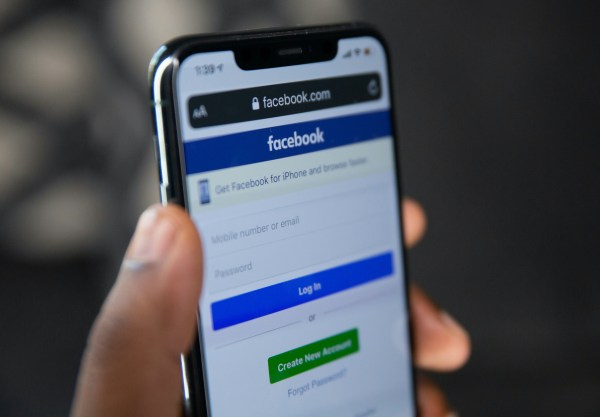
In 2011, my senior year of high school, one of my close friends opted to not come back to our school for his final year and instead chose to do cyber school which meant, because of how much time he already spent working and playing a little game called war of warcraft, I was going to lose contact with him. Now, at the time, I had known this friend since we were toddlers, through church and later on school, it seemed too important to let that friendship fade into nothingness just because of change of life. I knew there was one modern way to stay connected, a way I dreaded and had put off as long as possible – Facebook. And so in 2011, I bit the bullet and got one.

I instantly regretted my decision.

All of a sudden my feed was filled with information overload in the way only social media can with details that honestly make you feel a bit insecure, like realizing, I knew I was a bit of an outsider at school but oh my, a lot of parties and social events were happening that weren’t on my radar that were now showcased page after page. Suddenly, the peace and tranquility of my quiet introverted life, one connected to people outside classmates, was gone. Poof. I felt a comparison. I felt lacking. I felt lame. A person missing the plot that everyone else got. Who were these people I thought I knew?

Was I doing this all wrong? Should I have more friends? The friend count, the status symbol of ye olde Facebook, some of my fellow friends had 1000s of friends and I was struggling to think of 100 people I knew well enough to add. The profile picture, the clever status updates, the albums upon albums of photos of normal days and things. What was this weird and aspirational world? And where did my feeling of contentment go? In an instant, it left me like a hat on a windy day.

I look back on this feeling and wish I had rolled the dice on keeping in touch through email or text because that friendship didn’t last once we entered college and went our separate ways, but those feelings of insecurity and comparison, they took root. Not just me, but I think all of us are waking up to this and how social media is stealing our joy and our world from what it can be.

After all, we know now that Facebook is a terrible way to keep friendships going, except we didn’t know that yet. I mean I think everyone over the age of 60 at the time knew it was not a replacement for having a social life, but we like intrepid explorers too cocky to listen to the warning that the river was going to turn into a waterfall went tally-ho onward into the mist and went over the waterfall. And now with our broken bits of boat and sputtering of water in our lungs, we see our friends float by us in the river and yet just like the metaphor, we are unable to link arms because the current of the algorithm is taking us where it wants to. Unhappy and alone, we arrived in 2024 and it was time for me to climb ashore.

I was watching the first season of the Great British Bake Off with Mary Berry, Paul Hollywood, Sue Perkins, and Mel Giedroyc, circa 2010 and I felt this overwhelming yearning to go back, back to 2010. Like this scene in Joe Wright’s Pride and Prejudice where Elizabeth sees Mr. Darcy appear in the fading mist of dawn.

I thought about this, why did I feel such a strong pull toward this time? I don’t particularly love the fashion of this period nor was it the most exciting time of my life, it was high school for goodness sake with the season of SATs and college applications. But it was strung together with moments of deep authenticity, real connections, and life spent living in real life instead of online. I spent my days with real people, not a screen with someone behind the screen talking to me. It was real and my world, with my people. I wasn’t worrying about FOMO or what other people were doing, I didn’t consider what other people were doing if I wasn’t there or how I should be spending my time compared to what other people were doing. I was just living. It was before social media had its claws into me and the world.

I remember the world being less performative, less homogenous, and more authentic. If someone was cool it was usually because they were doing their own thing and owning it. If someone was pursuing a hobby or a career it was because they had a passion for it, not for social media clout or to be like everyone else. Phones were for texts and phone calls, sometimes photos. At social events, particularly family events and meals, they stayed in your pocket.

If you were using your phone you were actively talking to someone. People knew things and retained information because Google wasn’t at the ready. You had to discuss and determine things through research, using a book or a computer. Photos existed in physical albums, in frames, on fridges, and in wallets. Body dysmorphia existed, but was less of a constant because in person you can’t Photoshop and filter, you have to accept who you are enough to be in person. Trips were shared through home movies, photos, and stories around a table with food and drink.

At that moment, I realized I was done. Done with pretending I like this fake world of connection. I separated my Instagram from my Facebook so that I could continue sharing photos to my Instagram sewing portfolio account, because that is for exposure not connecting, and deactivated my Facebook. I kept Messenger so that three specific people could still reach me and I hit that deactivate button. And I have to say, it felt like a fake haze lifted from my world. That chapter was done and I feel a peace washing over me again.

If it was as easy as leaving one social media platform, what other little swaps could I do to find those things that made the world feel so real and connected before the social media age? That is my next quest. Onward into normal, human connections!

Create a website or blog at WordPress.com

Up ↑