I had plans originally to write about Ralph Lauren Christmas on its own, but then I saw two advertisements, one from local brand Steel City and another from Banana Republic, so bizarre that I knew I would be here. Hopefully not ranting too much, for the goal of this discussion for me is to think more deeply about the subtle oddities in my culture, I see weaving themselves in, like they are normal. Overconsumption, cultural appropriation, and the cosplay of wealth.
Banana Republic’s Holiday Edit
So what does fippery have to do with it? Fippery is another word for ostentatious; it’s showy. Frivility in dress or style. I also find the attitudes of these two brands, and I do want to write about exactly that. Banana Republic has always been in my mind, a bit ridiculous. But with every re-watch of Seinfeld, I see J. Peterman in Banana Republic’s threads, but their recent holiday commercial pushed me over the edge. They are that nonsense.
The holiday commercial is set in Ireland, County Cork, and I know I haven’t been to Ireland in 20 years, but dang, nothing about this commercial felt authentic. They play a cover of “Linger” from the Cranberries over the holiday scene in a pub, wandering around the town, finding a telephone booth with Irish Gaelic on the sign. They are all wearing vaguely Irish clothing, but really it looks like cast walked through a Premium Outlets on their way to Castletownshend, Cork. There are lovely Irish Christmas songs and many other songs by Irish bands that would have captured the spirit of the season better than a breakup song. No shade to the Cranberries, I love them. There were better Cranberries songs to pick. Personally, I would have looked at Dreams, Ode to My Family, and I Can’t Be With You to capture the nostalgia of the season with a non-traditional song.
Moving beyond the music, there was nothing really Irish about this ad. We barely see the town, we barely see the people, or the ancient beauty of Ireland. Think about movies such a Waking Ned Devine or Banshees of Inisherin – the landscape is a character, so is the music, and community. Ireland felt warm, not in temperature, but in the warmth of the people. The land feels like there is magic just under the surface, an imagination unbreakable, and a spirit that carries the culmination of all those who came before in an essence that makes you want to know more. The sweaters are intricate, made with the intention of preserving heritage crafts. Just take a look at Banana Republic’s holiday page compared to Blarney Woolen Mills, which is based in County Cork! The source material was right there. I guess what I am trying to say is obvious: Banana Republic’s collection is the fast fashion version of Irish style, don’t fall for it, no matter how they try to sell you on the “luxury” of it all. Now, what really bugged me about this ad was, in my opinion, the cultural appropriation of it all.
There is a fairisle sweater in this Irish collection, which is actually a Scottish heritage craft from the Shetlands. This sweater contains wool from Italy, being sold as an Irish-inspired sweater. You couldn’t even use Irish wool? Or include iconic Aran sweaters? Fisherman sweaters like the iconic one from When Harry Met Sally? The Donegal Wool sweater and sweater vest, straight up annoy me because these are again Italian wool. There is a wonderful mill in Donegal called McNutt that could have supplied true, authentic craftsmanship. We still have our clothing pieces from this store and Blarney Woolen Mills, 20 years later. I don’t like Ireland, which has been used for centuries, been the butt of the joke for centuries, being used again to peddle some lackluster clothes.
Gap, Inc. is a huge brand; they should have invested in sustainable Irish materials and supported the local Irish economy by using Irish craftspeople to create this collection. But just like J. Peterman, they come and see, then they steal other cultures’ designs to make a quick buck from subpar clothing. Look at the prices! The Banana Republic sweaters, made in Italy with Italian wool, versus the Blarney Woolen Mills sweaters made in Ireland from Irish wool, both made from merino wool, too. Local is better. Also, look at the craftsmanship of the Blarney sweaters; those cables are stunning and also affordable. Shame on you, Gap!
Steel City, What Are You Doing?
Actually, to quote the Big Fat Quiz Show, “You slag!” Steel City is a brand no one outside of the Pittsburgh area will know about, and that’s okay. Small businesses are great, and when this brand first started, they were cool. Their claim to fame was hyper-local graphic tees of beloved cultural things such as Turners Tea, the Stillers (aka the Steelers), Kennywood, Mr. Rogers, the Pens (Pittsburgh Penguins), and nostalgia. Over time, though they have expanded, which is great, creeping out to the suburbs of Cranberry and Ross Park Mall, and that is where things have taken a bizarre turn. In 2022, I went to their location in Cranberry Township and was appalled by how tissue-paper-thin the new items were. We had bought pierogi and Potato Patch shirts, which were of great quality, but the new stuff was off. The prices, quite higher than before, and I was no longer interested in their stuff.
But as targeted ads go, I keep seeing their stuff everywhere, and it has gone in some random places. There was a motorcycle and a desert aesthetic to their pieces now? Okay, odd. Neither of these things has anything to do with Pittsburgh. I guess the name is the only connection? Next, I got ads for quiet luxury workwear pieces, the local graphic tees, now behind a t-shirt club paywall. It felt soulless, and I was incredibly disappointed. I thought in the beginning maybe they were going to make the items in Pittsburgh, but they are made overseas. This morning, though, I got an ad that straight up felt out of touch.
Seriously? In this economy? With the amount of destruction the fashion industry creates on our planet? Honestly, Steel City, what the flipping heck are you doing? This brand is neither relatable nor cool anymore. Wasteful consumption is not in style, no matter what the internet says.
Ralph Lauren Christmas
Now, Ralph Lauren isn’t promoting this; this is just a TikTok trend, and I just wanted to drop my two cents. I’ve spent the last five years chasing the nostalgia of old Christmas, Christmas before everything hurt. Before people died. When I was a kid, things were simple. No matter how much you spend, decorate, chase – this aesthetic is not going to fix what is broken in your heart. I encourage you to seek out authenticity this Christmas. Volunteer time at shelters, donate supplies, check on neighbors. Call those friends or those family members you haven’t seen in so long and connect once again. The Home Alone house is stunning, but remember, what brings the true Christmas spirit is the relationships reconciled for the Old Man and Kevin on Christmas morning. People over things, always.
I Heard the Bells on Christmas Day is one of my favorite Christmas carols/hymns. It regularly appeared in the rotation of songs we would sing when my church went caroling. Still, I haven’t thought about or listened to that song in a few years. This year, however, the song has been at the top of my mind.
If you’ve never listened to it before, here are the lyrics:
I Heard the Bells on Christmas Day Their old familiar carols play, And wild and sweet the words repeat Of peace on earth, good will to men.
I thought how, as the day had come, The belfries of all Christendom Had rolled along the unbroken song Of peace on earth, good will to men.
And in despair I bowed my head: “There is no peace on earth,” I said, “For hate is strong and mocks the song Of peace on earth, good will to men.”
Then pealed the bells more loud and deep: “God is not dead, nor doth he sleep; The wrong shall fail, the right prevail, With peace on earth, good will to men.”
Till, ringing singing, on its way, The world revolved from night to day, A voice, a chime, a chant sublime, Of peace on earth, good will to men!
As you can probably tell by the Old English words, it is a fairly old hymn. Like many hymns, its lyrics and music were at separate times and by different people. The melody/music was written by composer John Baptiste Calkin in 1848, and poet Henry Wadsworth Longfellow penned the words on Christmas Day in 1863. Those words flowed from him following a period of immense grief. His wife of 18 years tragically passed away two years prior, while his oldest son was severely wounded fighting for the Union Army in the Civil War. You can feel the pain in his words, because not only was he dealing with personal grief, but America was also embroiled in the darkest period in the nation’s history. Any time a country’s citizens fight each other, even when the cause is just and moral, it’s difficult to identify a victor no matter the outcome.
For some reason, the lyrics have been on my heart for the past week, especially the third stanza:
And in despair I bowed my head: “There is no peace on earth,” I said, “For hate is strong and mocks the song Of peace on earth, good will to men.”
While we aren’t living in anything close to as brutal and tragic as the American Civil War, America doesn’t feel okay right now. For much of America’s history, her citizens have been able to find commonality and unity in spite of differences. That feels like it’s been eroded away on a daily basis right now. In the past, our presidents have been unifying forces in times of trouble, reaching across the metaphorical aisle to the other side to put the nation’s needs first. For the past nine years, that hasn’t been the case. Hatred and vitriol are on the lips of many politicians, ready to be yelled.
“For hate is strong…”
Rather than operating with wisdom, many act out of emotion first. Donald Trump has made a mockery of the presidential office. Look no further than his poor behavior during this year’s ceremonial Thanksgiving turkey pardon at the White House. What is typically a lighthearted and fun event was used as an opportunity to attack members of the opposite party. Social media and the internet have made it easy for people to loudly share their opinions and attack others without having real conversations with people, and we’re seeing the effect on society and culture. It used to be the minority that would be so vocal, but when a leader is doing it too, it feels different.
“And mocks the song…”
Violence and aggression are the main tactics to arrest, detain, and potentially deport those with the legal right to be in the United States. The country is carrying out military operations in the Caribbean against people we’re told are drug smugglers. We ran covert bombing raids in Iran despite not being attacked first, and we continue to support Israel in Gaza and Palestine even though the operations there have long moved on from being defensive.
“Of peace on earth…”
Then there is the open hatred of America’s immigrant community and the erosion of the country’s social safety net. Governmental funding has been reduced or scrapped altogether, forcing citizens and local/state governments to pick up the slack. And don’t be fooled that it’s because government spending is being reined in. One look at military spending will show the fallacy of that thinking. The destruction of the social safety net has led to a rise in homelessness, food insecurity, and people simply falling through the cracks.
“Good will to men”
Put all of this together, and nothing feels normal. I don’t watch or read the news anymore because it became too depressing and would upset me. I hate seeing people who are hurting, have had their circumstances changed, and their lives uprooted despite having no say in the matter. I can only imagine how upset Jesus would be with this. And it’s easy to leave it there and be bogged down in the sadness…to not look forward to brighter days ahead and focus on the positives. Thankfully, the fourth and fifth stanzas of Longfellow’s poem exist.
Then pealed the bells more loud and deep: “God is not dead, nor doth he sleep; The wrong shall fail, the right prevail, With peace on earth, good will to men.”
Till, ringing singing, on its way, The world revolved from night to day, A voice, a chime, a chant sublime, Of peace on earth, good will to men!
Take heart in knowing that God is still on His throne and that Jesus still died, and more importantly, rose and defeated death for all of us. God has always been and always will be the same. He doesn’t change, which in a constantly changing world, is comforting.
Humans have always done a great job of taking care of each other in the midst of crisis and adversity. Sure, funding cuts have put a lot of strain on non-profits, but people are stepping up to fill the gap. One example is Erie Gives, an annual campaign collects, matches, and distributes money across Erie County, Pennsylvania, non-profits. This year, over $11.3 million was raised for 539 non-profits, destroying the previous record of $9.7 million for 2024. A second example was learning that our town’s police department has vouchers for hotel stays, food, and gas that are reserved for those in need, including people facing homelessness. Humans are coming together to take care of each other and to fight for what they feel is right. That’s heartwarming and eye-opening. If we’re called to be the hands and feet of Jesus, it starts by loving each other as He would.
In this Christmas season, we should focus on the message in Longfellow’s poem and the angel’s message from Luke 2:14 that he was referencing. Because even though it feels dark right now, it’s felt darker at different times in history, and daybreak is always on the horizon. With that, here is my favorite rendition of the hymn.
For two years, I’ve been mulling over how to dive into Stray Kids and their music, the way I’ve done with other K-pop artists, like aespa, Ateez, and i-dle. I sipped my toes in with My Tagline and Skz Hop Hip Tape, but I have not shared anything deeper, because dang, this band can be controversial, fan wars suck, and I also deeply love their music. It’s got me through rough patches and high highs; it is probably my neurodivergent special interest. It’s a spiderweb of music, funny moments, and an overall safe place to land, thanks to elements like Chan’s Room. Borrowing the Song-A-Day challenge format and filling out my own card seemed like the perfect way to get back into K-pop deep dives. (Then I hope – I can finally get myself to write about Kpop Demon Hunters!)
DAY 1 – My first experience with the eight-member Korean boy band, Stray Kids, was their song Maniac (2022). Shortly after Maniac and its album, Oddinary, were released in March 2022, the algorithm served me the Maniac music video, and my taste in music has been transformed. For good, I’d say!
DAY 2 – Case 143, released in October 2022, was my first official comeback experience. With the release of Maxident, I discovered Skz Code, compilations of funny moments, memes, etc. I dipped my toes into the world of Stay and haven’t looked back. Case 143 is one of their songs that challenges song structure, the whole way through. It’s complex.
DAY 3 – Creed. I think this because Karma was released at a time (August 2025) when I felt lost, pissed off, and in need of a song that captured how fed up I was feeling about the world. But I needed a song that was not one of my old standbys of Breaking Benjamin, Evanescence, System of a Down, or Nightwish. Stray Kids, no matter what emotion they explore, always have light in the darkness. I listened to this song like an emotional release through August, September, and in the culmination of stress in October. It just scratched that part of my brain that needed a song to echo all my big feelings.
DAY 4 – Novel is a fantastic, underrated song with a great high note. It’s from The Sound (February 2023), a Japanese release, so it flies under the radar until you dig into their discography. I found it this year while listening to the full The Sound album while tilling the garden.
DAY 5 – My favorite SKZ record is Want so Bad by Minsung, also known as Lee Know and Han. I love this song for its music, the happy feeling it brings me when I listen to it, and the thrill of these two pals getting to write a song just the two of them. This is not because I am shipping them. I’d also argue this song would be lovely in a K-drama similar to The Potato Lab or Business Proposal. It is instant dopamine, give it a listen! My final thought is, listening to this song again, Lee Know’s song Youth from the SKZ Hop album feels like a sequel to this song in their discography, which is varied and, to be honest, vast for only being a band for 8 years.
DAY 6 – Haven is a song about identity and courage, being yourself, and it is so comforting. All I want is the space to be myself. This song was released in 2020, but it didn’t hit my radar until 2024, when they performed it at Lollapalooza in Chicago, and it was like it hit me in my core. I felt like I had found a little virtual home in their music. A haven, literally. I’ve always felt like an outsider – a stray.
DAY 7 – My Pace is a no-skip; it is a song that, when it plays, I must listen and soak up all the vibes of this anthem. I love Changbin’s barking, aggressive rap lines. I want to jump around. It was another stunner from Lollapalooza that I hadn’t appreciated in its true form until I watched them perform it on a big stage. My Pace is an original, from their early days back in 2018, when Stray Kids were still rookies. They have always been good and always deeper than the “noise music” or “braggy” accusations.
DAY 8 – Divine, you have bewitched me body and soul, and I love you most ardently. There is not a boring song on ‘Do It’ (November 2025), to be clear, but this new song, Divine, has eclipsed Do It for me. Divine’s music video is such a fun ride if you like vintage Asian cinema or stories like Smallville, Lord of the Rings, etc. They face down a dark force and defeat it, turning their enemies into the scales of a sweeping dragon in a painting. The song showcases a Korean legend, with the lesson being not to escape away from reality too far and neglect your responsibilities. There is an old school hip-hop feel, random noises, and the electric energy of God’s Menu and Thunderous.
DAY 9 – Just one favorite B-side? That’s cruel. The b-sides are where Stray Kids really shine. I guess if I can only choose one, Leave (November 2023). It’s such a bop. It’s one of their softer, melodic songs that, in my opinion, marked the new era of Stray Kids. By 2023, they were fine-tuning their sound, and I could see where the possibilities could be long-term. The way they share the lyrics across the song, they truly are one band. One sound. Also, that chorus, “Lalalala la Lalalala x3, I’m missing you.” It’s haunting and beautiful. I could see how this band would be one I would keep listening to, as long as they want to put out music.
DAY 10 – LALALALA from the November 2023 album, Rockstar, is magnetic. LALALALA is language play. The original Chinese character Rak, pronounced slightly between la and ra (To the best of my understanding, I am not an expert.) and represents emotions – fear, sadness, anger, and happiness. The song’s journey gets rid of the rest until only happiness remains. Using the repetition of “Feel the rock” and “Let it rock” to bridge the gap between east and west, delicately weaving together this metaphor. The dance, oh, how I wish I could do it. The beat is so catchy. Such a good hype song!
DAY 11 – I’m a sucker for a Seungmin soundtrack. If I had a clear bias in the group (I’m an OT8 bias for reference), Seungmin would most likely be my bias wrecker for how I have grown to appreciate his vocal range since 2022. For all eight members, my favorite OST would be ‘Why?’ from January 2024, but overall, I am enamoured by My Destiny by Seungmin and the growth of his voice over the years. There is nowhere to hide in My Destiny; it is all vocals. So again to the haters, if you think Stray Kids are phonies, they are most certainly not! My Destiny is a romantic song with a subtle melody, perfect for the K-drama, The Potato Lab (March 2025).
DAY 12 – Ceremony (August 2025) is the best workout song, full stop. Try listening to it while doing cardio. The song doesn’t have a chorus until the end; it just keeps building and circling. It will push you, but it will feel like an exhilarating party.
DAY 13 – Parade is a Japanese release from the Hollow album (June 2025), which I’d love to see them circle back to with a music video. A full-scale production with a real parade, a band, confetti, floats, and excitement. Something like Ceremony would be fun.
DAY 14 – When Hollow (June 2025) came out, it changed me. It melted me, and I cried listening to the lyrics. Like ‘Golden’ and ‘This Is What It Sounds Like’, it broke me. One of my loved ones and I were fighting, and I was worried about their health. A former friend was really piling on their problems, and I was drained and feeling lonely. This song got it.
DAY 15 – I love singing along to Surfin’ even though I can only sing half the words, but dang, what a masterpiece from Lee Know, Changbin, and Felix back in 2021 from the No Easy album. It’s summertime. It’s upbeat. It’s got a rhythm that echoes the cadence of the waves and sea breezes. It’s one of a kind.
DAY 16 – I’d love to see them perform ‘Slash’ from Deadpool and Wolverine (August 2024) live on tour, or maybe a festival performance. I don’t think they have ever performed it. It was released quietly with the Deadpool and Wolverine theater release. To the best of what I’ve gathered from people who saw it, Disney didn’t even put it in the movie…because they suck. But like, what about a tiger, dual sword-wielding, superhero? Yes.
DAY 17 – I’d be interested in them re-releasing Hellevator (2017) with the music production and style they have now. It’s a fantastic song, but it does feel a bit 2010s and Chainsmoker-y in the production, as was popular at the time. No shade to the original.
DAY 18 – I’ve been trying to save God’s Menu (June 2020) and have no duplicates, but the opening sequence of God’s Menu goes
어서 오십시오 eoseo osibsio
이 가게는 참 메뉴가 고르기도 쉽죠 i gageneun cham menyuga goleugido swibjyo
and sounds like Changbin is saying “shit show.” I’ve shared this song with a loved one, and they literally have remarked, “Ah, it’s the shit show song” upon hearing it. Still the funniest misheard lyric for me.
DAY 19 – S-Class (June 2023) from the 5-Star Album was not my jam the first time around. It took multiple tries, and feeling a bit lost, until this song won me over. It was so different in structure. But that whistle, the chorus, and the music video eventually got me excited. Now this is one of my favorite title tracks for its signature Stray Kids randomness.
DAY 20 – Tortoise and the Hare (September 2020) for me is the most meme-worthy song because of one simple chorus swap – I know, you know, we know, Lee Know. This was reprised in the song Jjam in July 2024 from the album ATE. It is one of my favorite little easter eggs, especially when Lee Know encourages it with random Tortoise and the Hare references.
DAY 21 – Okay, this might be a weird pick to play for grandparents, but they were both into music. I’m choosing my maternal grandparents for this. Papa was in a quartet, and Grandma was a pianist who also taught. If I could catch their interest with good vocals, solid music, and the romance of the song, I could have opened the door to showing them more. My choice, if they were still here, is Waiting for Us from the album Oddinary (March 2023).
DAY 22 – Cheese is a go-to sing for me when I have chores to do around the house and zero motivation. This song is from No Easy (2021) and has so much attitude. I love it. This song has a misheard lyric for me – “Hook ya? Cheese!” It’s also a song that makes me think of my dog Sully, who loved cheese.
DAY 23 – Since I already used God’s Menu, and I refuse to duplicate with this many songs to choose from, I say Thunderous from No Easy (2021). This song has swagger. I listened to this song second, after Maniac, with maybe God’s Menu or Venom afterwards. Upon watching the Thunderous music video, I thought, “How freaking cool is this band?!” I’d never heard a band blend modern and traditional with such skill before.
DAY 24 – DLMLU or Don’t Let Me Love You (2023) is one of their great, slightly problematic love songs. They do a fantastic job of capturing the dysfunction of relationships, and this song is just that, a song fighting the undeniable pull the narrator feels. It’s got a great beat, and doesn’t get the attention of other Stray Kids songs, such as I Like It or Collision. Honorable mention: Venom (2022), which gets sidelined for Maniac but is complex, satisfying, and has a fun music video.
DAY 25 – In 2023, the University of Illinois Urbana-Champaign covered All In by Stray Kids at a halftime show, and it was so flipping satisfying. I have been waiting for their music to show up like this, and when it did, I was over the moon. All In is a high-energy Japanese release from October 2020.
DAY 26 – Cover Me from 2023’s Rockstar album stood out for many reasons, one of them being the harmonizing, the slow pace, and the one-take high note from Seungmin that is phenomenal. But the lyrics got me; they captured the feelings I’ve felt for so long. Being the kid on the fringe. All my friends had two parents, didn’t live with their grandparents, had siblings with the same mom and dad, didn’t have childhood trauma, and now I understand the outside thing I felt was also because of neurodivergence. I’ve never quite fit anywhere, only in passing, and this song gets all of those feelings. Thank you, Hyunjin, for this gem.
DAY 27 – Rama Giant! That’s how Han’s recording sounds, and I love it. It’s supposed to be “I’m a giant.” I also love this music video, as the meaning is deeper than it seems. Han’s sneeze. The clever line of “do re me fa King giant!” This title track, Giant came out in October 2024, on an album of the same name. I’m not over this song. It was one of my most listened to albums of 2025. It’s a Japanese release, so it gets less notoriety, but that’s okay. I hope one day they add it to the regular set.
DAY 28 – Domino is iconic. It’s also a great car jam because there is no weird stuff in the background, as Kyle says. He doesn’t like how much chaos, sirens, etc, they add to the back track for driving, and I get it. It does create mental chaos. Domino, from No Easy (2021), has been a favorite since my first listen. The cadence, the creativity. I just love listening to it, but especially in the car on a zippy and winding road.
DAY 29 – Chan’s solo, Railway (2024), would be my choice for a superhero theme, maybe an odd choice, but I could see it working for a complex, maybe misunderstood superhero? Watching Smallville has shown me the levels, and somewhere underneath, Clark Kent is here in this song, in the moments when he feels like an outsider. Maybe a show where both Railway and Escape were the title credits and ending credits? That could be satisfying.
DAY 30 – Night (2024) is an original soundtrack, but dang, this song is so good. It’s like a rock opera. The guitar, the piano, the range of the vocals, and the orchestral swell of it all into a final crescendo. This song could easily be just a song for an album. I really want them to keep exploring J-rock and these big opus-type songs. It brings everything I love about classical music into the mix. I crave more.
DAY 31 – Chk Chk Boom has currently dethroned Miroh for me as the Stray Kids anthem, please Stay, don’t hate me. It’s just been the song that has had such massive reach for the past year with awards, the Dominate tour, and even the satisfying feature of Ryan Reynolds in the music video. It shows how much they have accomplished, and it is also a fantastic song.
Phew! I did it. That was a lot of decisions, and I could probably keep revising and revising. I truly love their discography; it’s self-produced, written by them, and choreographed by them. They recently won the Daesang (album of the year) at MAMA 2025. They broke the Billboard 200 record for No. 1 album debuts with Karma, and extended the record to 8 with Do It. It’s truly impressive. In this world of increasing convenience, AI slop, and conformity, you can still excel and be yourself. That’s what they have done.
A research project that started with my looking into Pennsylvania’s native plants has expanded into a general overview of where our most popular commodity crops originated. I’ve said this before: I’m a history nerd and struggle to only do surface-level research. It’s quickly becoming evident that what started as a brief historical post is now a full-fledged project, which I’m excited about. It’s been a long time since I’ve been this excited or interested in doing historical research. Moving forward, I’m going to look at the history of many of the vegetables we grew in our garden this year. Starting out are tomatoes, which are probably the most commonly-grown “vegetable” in the United States.
From South America to Europe to the World
As many know, tomatoes aren’t vegetables. They’re technically fruit and are members of the nightshade, which also includes potatoes, eggplants, peppers, and tobacco. The part of the tomato plant that we eat is the berry, although we eat it as a vegetable rather than a fruit.
The modern tomato’s origins go back to Western South America in Ecuador and Peru where it grew wild. Around 500 B.C., it was first domesticated by the Aztecs and Mayans in modern-day Mexico. It wasn’t until the 16th century that Europeans first saw them as they conquered the people groups of Central and South America. Spanish priest Bernardino de Sahagun reported seeing tomatoes in Aztec markets in what is now Mexico City (known as Tenochtitlan at the time). In 1544, they first appeared in European literature in Pietro Andrea Mattioli’s herbal. Mattioli was an Italian doctor and naturalist whose commentary on medicinal plants was pivotal. At this time, tomatoes were viewed as a new type of eggplant, and in 1554, he referred to them as “golden apples.”
After the Spanish first encountered tomatoes, they took the fruit with them as they continued their mission of conquering the Caribbean and (eventually) the South Pacific. From the Philippines, they were taken into Southeast Asia and reached China in the 16th century. In Italy, they were mostly grown ornamentally due to toxicity fears associated with other nightshades. In fact, they weren’t incorporated into cuisine until the late 17th-early 18th century.
Elsewhere, the tomato reached the island of Great Britain until the late 15th century, but due to the spread of misinformation by John Gerard that tomatoes were poisonous, it took centuries before they were widely consumed. Tomatoes reached the Middle East in the late 18th to early 19th century when a British diplomat transported them to Aleppo, Syria.
Tomatoes were first mentioned in the United States in 1710 when they were recognized by an English herbalist named William Salmon in modern-day South Carolina. It’s speculated that they arrived via the Caribbean and were grown on plantations in the Southeast by the 1750s. Like other parts of the world, the majority of Americans (or colonists prior to the American Revolution) maintained the view that tomatoes were poisonous and should not be consumed. However, that mindset changed during the 19th century as horticulturalists began breeding tomatoes for commercial sales. The most famous of these horticulturalists was Alexander Livingston, who was responsible for helping to develop a tomato that was uniform in size, smooth, and sweet. In 1937, the USDA that he was behind over half the major tomato varieties that were available at the time. Since that time period, more than 100,000 varieties of tomatoes have been identified, and they are largely broken down into five or so categories.
Types of Tomatoes
Tomatoes are generally categorized in the following ways:
Beefsteak
The beefsteak variety is the largest variety of tomato, often measuring nearly 8 inches in diameter and weighing a pound or more. It’s one of the most popular types grown in the United States, and gardeners love beefsteaks for their wide range of uses, including in sandwiches and salads; however, they aren’t a good saucing tomato due to the large and numerous seed cavities. Popular varieties include the Brandywine, Cherokee Purple, and Mortgage Lifter.
Cherry/Grape
Although cherry and grape tomatoes are technically separate varieties of tomatoes, I’m writing about them together because people tend to grow them for the same purpose: fresh eating. Cherry and grape tomato plants produce small fruits, from the size of a blueberry up to a golf ball. Cherry tomatoes tend to be spherical and more uniform in size, while grape tomatoes are often oblong. These types are the ones most closely related to the wild varieties that were grown in South and Central America. Cherry and grape tomatoes are usually eaten fresh or in salads. Popular varieties include Matt Wild Cherry, which shares many characteristics with its ancient, wild relative, Black Cherry, and Yellow Pear.
Oxheart
The oxheart tomato is similar to the beefsteak in size, but different in shape. Whereas beefsteaks are round and spherical, an oxheart tomato will be shaped like a heart or strawberry with a round top that tapers to a point at the bottom. They have fewer and smaller seed cavities than beefsteak tomatoes, which means less water. They are a versatile type of tomato and can be used in everything from fresh eating to canning. Common varieties include Amish Paste and Oxheart Pink.
Paste/Plum
Paste/plum tomatoes are the perfect tomatoes for making sauces and canning due to their low number of seed cavities. This means they have less water content than other types of tomatoes, making them perfect for cooking down into sauces and pastes. Their plants are often determinate, so all their fruit will ripen around the same time, making it easier to harvest batches for processing. Some of the most popular varieties to grow are Amish Paste, Roma, and San Marzano.
Slicing/Globe
Globe tomatoes are likely the ones that come to mind when you think of tomatoes. They’re uniformly round, can be red or green, and can be cooked or eaten raw. They’re easy to slice and serve on sandwiches and can be chunked for salads. They are sweet, but only have a mild tomato flavor. There are many varieties of globe tomatoes, but some popular ones are Black Krim, Mountain Princess, and Bumble Bee.
There you have it; a very brief history of the tomato and the categories they are separated into. I say it’s very brief because there are entire books dedicated to the history of the tomato. One is The Tomato in America: Early History, Culture, and Cookery by Andrew Smith. That is a phenomenal book to read if you can find it. It’s also available to borrow digitally for free through Open Library. Tomatoes are one of the most important and popular vegetables grown commercially and in home gardens, so it was always going to be impossible to provide an in-depth history in a single blog post. But, if you’re like me, you will find this interesting and be intrigued to embark on additional research.
I’m going to continue to do these brief histories of vegetables, but they won’t be a weekly occurrence. I’ll publish them as I’m able to work on them and sprinkle them in with other out-of-season content. Next up, I am going to start writing about the seed catalogs we’ve received for the 2026 growing season.
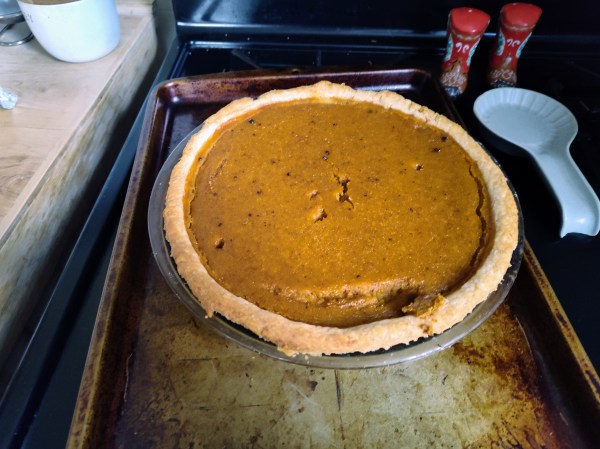
If you’ve been following our blog since the summer, you’ll know that we grew a lot of pumpkins this year. Or at least we tried to. Some of them didn’t take off, but we eventually had success with seeds we bought and planted in July. You’ll also know that one of my goals with the garden was to make food entirely out of the garden. This Thanksgiving, we’ve been able to accomplish that by roasting pumpkins we harvested in September, puréeing the flesh, and making a pie. Here’s a brief walkthrough of the pumpkins we used, the roasting and puréeing process, and the final product, with pictures of each step.
The Pumpkins
The pumpkins we used were New England Sugar Pies. We bought the seeds from Baker Creek. This variety dates back to the 1860s and is the perfect pumpkin for pie. Baker Creek describes it in the following way: “The noted small sugar pumpkin of New England. The orange fruit weighs 4 to 5 lbs and has fine, sweet flesh superb for pies.” That description is spot-on. Without any added sweetness, the roasted flesh was delightful. It was the perfect pumpkin to use. It was easy to grow, and we’ll certainly grow more of this variety.
New England Sugar Pie PumpkinPumpkins we grew
Roasting & Puréeing
I had never roasted a pumpkin prior to this week, but I approached it similar to how I’ve roasted spaghetti squash. I split each pumpkin in half and scooped out the seeds. I think we could have washed, dried, and roasted the seeds to eat, but I wasn’t interested in that much work this time. With the seeds out, I brushed some oil on the flesh, pierced the skin in a few places to aid in the roasting process and put them in a 400-degree oven for an hour or so. Our house smelled so good during this time.
Pumpkins split in half
To purée them, I let them cool entirely and used a spoon to scoop out the flesh, which was much easier than I anticipated. The flesh then went into our small food processor and was blended until smooth, with water being added as needed. A note for future me: Buy a larger food processor. It took some time, since it had to be done in batches, but it was an easy process in general. In the end, we had more than a quart of pumpkin purée, which was much more than we needed for the pie, so Magz made a pumpkin soup with the excess. It was delicious.
Roasted pumpkinsPumpkin puree
Making a Pie
I love making pies. My grandma is an excellent pie maker, so I think I came by it naturally. I also always make a homemade crust. A few years ago, I found a great pumpkin pie recipe that uses almond milk in place of dairy since Magz can’t have dairy. If you weren’t told it was made with almond milk, you’d never know. I used that recipe again this year, and there was no noticeable difference between the homemade purée and canned pumpkin when it came to mixing and baking other than it needed to cook a bit longer due to additional moisture. The end product was great. Please ignore the divot. That was the result of foil touching it when I was trying to prevent the crust from burning. It was absolutely delicious.
Should I have posted this before Halloween? Yes, most definitely! But I forgot, so here we are, and I think that getting this posted before Thanksgiving is still fair. Fall is still here, even though Black Friday is coming at you like asteroids headed for Smallville.
We made a haunted house from recycled cereal boxes and other sources of repurposed cardboard to transform what could have been trash into a piece of Halloween decor from what we already had! The only materials we had to purchase for this project were acrylic paint and felt. We used Apple Barrel brand paint, which is less than 1 USD at Walmart or less than 3 USD on Amazon for big bottles. We also purchased sheets of felt that were 25 cents a sheet. For the adhesive, we used Tacky Glue for construction and Mod Podge to smooth out seams.
Our inspiration was the Addams Family mansion from the 1992 movie version. We wanted an old, mansard-roofed, Second Empire-style, Victorian-era house to play the role of haunted house. I wish our actual house was a bit more historical. It was built probably in the 1930s, but I question if it is a bit older, from the 1910s, from the style of woodwork. So a nice, old spooky build was just the ticket. We gathered inspiration from Pinterest and set forth to construct the house. We used two Honeycomb cereal boxes glued together, which are a bit taller than the average box. For the roof, we chose cardboard from a 12-pack of Wild Cherry Pepsi cans and some mac n cheese boxes for the roof line. The porch was constructed with a Wegman’s 12-pack of sparkling water. Miscellaneous cardboard scraps supplied the porch beams, door, and shutters.
To paint this, I bought an array of colors to mix custom shades. For realism, weathering and highlights, it is important to mix depth into the shades. If you have ever watched Bob Ross paint, you will know that he is always adding depth to his paintings with colors that exist in the natural scenes, but that your eyes may not recall what the colors on their own actually look like. If you want to paint a sky, you need more than just sky blue. If you are going to paint a tree, you need more than just brown and green.
I put two layers of paint on the pieces, which I painted after they were glued and fully dried. The first layer was necessary to block out the cardboard and the branding, which I could see shining through the matte paint. This was an excellent time to try mixing shades. I was able to try several colors underneath the final layer, which helped me determine the color scheme of moody charcoal, black, and burgundy for the roof and trim. The paint not only adds character but also preserves the pieces under a layer of acrylic. The final touch was a cutout silhouette of Gomez and Morticia in the window.
This project took a lot of drying time, and therefore was a month-long project that was finished a few days before Halloween. Because of this, I did not accomplish all I wanted to do, including moss, more weathering, ghosts, etc. Next year, I plan to add on. In the meantime, I am sharing this to inspire you to craft with trash for the upcoming holiday season. Let’s celebrate sustainability and underconsumption and make those decorations with repurposed materials! It truly is a blast. Happy Crafting!
I was inspired to get crafty by these YouTube creators:
If you missed it, I made a Game of Wool Bingo card for episodes 1-3, because in my opinion, this show should not be taken seriously. I’ve given up watching, interacting with recaps, etc. I’m not going to watch beyond episode 3, and that is because hate-watching is validation in the attention economy of 2025. That got me thinking, what do I wish Game of Wool was instead of what it is? Game of Wool, just like Project Runway, I have notes!
No Kits or Internet Dressing Projects
I don’t want any themed-making kits sold per episode. They have been doing this for the episodes I have watched, each week partnering with a big yarn company, honestly making kits that serve no purpose other than a cash grab. I also don’t want to watch weekly episodes with challenges that create useless items. Useless from a practical and technical standpoint.
Crochet and knit swimwear is dumb. You can’t wear it other than for a photo shoot, which places it in the “internet dressing” category. It’s for a photo. It’s not even practical for a music festival. But it does resemble a “Coachella” look.
A crochet deck chair had potential, but it was not used within the materials provided or the time frame.
A dog sweater with a required hat is not kind or practical for dogs. The sweater is comfortable, but the hat is not comfortable for the dog. Again, it is for a photo. Washability was not discussed either.
The mohair sweater was the only challenge that was the closest to being a useful challenge, for design teamwork and wearability, but they ruined it with the ridiculous time frame.
A couch cover is useless, because I have thought about constructing one for my own couch to stash bust, but it’s just not practical for anything other than a showpiece. Which is how they judged it, so a lot of wool was wasted to make a big, useless swath of fabric.
The fair isle vest misrepresented a heritage craft of the region they were filming in. Why not just film a historical film set in the Renaissance, and put the actresses in Victorian corsets without a chemise, tight-laced? Same level of idiocy to be flashy!
This Game of Wool presents everything that late-stage capitalism is in relation to crafting and hobbies, thanks to greed, social media, and the attention economy. The British farmers could use the income; how about sourcing locally? What about sustainability and slow fashion? Yeah, 12-hour challenges do not represent anything but hustle culture. Girl boss, slay!
How Would I Fix It?
Real experts, not these two ladies.
Either all amateurs or all expert contestants. Pick a lane. Either be the Bake-Off or be Project Runway and offer a CFDA mentorship kind of prize.
Bring in a real mentor to help in the wool barn.
Take them on field trips to see wool being processed, dyed, and spun. Same with flax for linen.
Tell the story of why textiles matter and why fair trade for the animals, farmers, and ethical standards matter.
Explain why local matters for the economy and the ecology of the region.
Teach the history of cottage industries.
Teach the history of how knitting has changed the world, such as the development of textile machinery and the creation of the binary code. Essentially, fill in the gap of what Sci Show failed to do.
Set real challenges that teach, showcase the skill of the fiber artists, and show innovation.
Do a challenge that involves unravelling sweaters for yarn and teach the world about this amazing, sustainable possibility.
Task the fiber artists to design patterns, and explore what goes into design and proper pattern writing, because it is a technical skill.
Make things that will be auctioned off for charity.
Bring in people as guest judges who will bring professional connections and opportunities for the fiber artists.
Set realistic deadlines, and slow down the pace of the show. Follow a timeline like Mind of a Chef that explores moments of cooking over an entire season.
Let the makers make, unencumbered by the pace of the internet. Take note from Bernadette Banner and other makers out there that celebrate true craftsmanship and sustainability in the heyday of microplastics.
I’m tired of this show discounting a skill that has been tossed aside as a Grandma hobby since the Industrial Revolution. In these weird and wacky times, slow fashion and an appreciation of craftsmanship are in short supply in the media. This show had such potential! But they are truly chasing the money over integrity.
I’m continuing my exploration of what is commonly grown in our state of Pennsylvania. Last week, I wrote about the state’s native plants and what we have growing on our property. This week, I’m looking at the commercial crops that are most prominent in the state and if they are native to North America or were brought here during European Expansion. I ultimately want to learn if the origins of Pennsylvania’s most commonly-grown crops align with where most of the state’s immigrants came from during the 17th, 18th, and 19th centuries.
Like Magz, I majored in history, and even though I don’t work in history, I still love it. I also approach a lot of things in life from a historian’s perspective and try to ask questions to dig deeper into topics. The gardening offseason seems like a great time to dive into these sorts of topics. Eventually, I want to look at all the vegetables we grew in the garden in 2025 and learn when they arrived in North America if they aren’t native to the continent.
What Does Pennsylvania Grow?
With this question, I’m not talking about what people grow in their personal gardens. I’m talking about the crops that are commercially grown and contribute to the state’s agricultural sector. Pennsylvania plays a prominent role in the agriculture of the United States, equating to just over $9 billion in 2024. That ranked 23rd in the country.
The majority of what’s grown in the state won’t surprise most people. There are a lot of cereal grains (wheat, oats, barley, and sorghum) as well as corn. These are largely grown on a commercial scale and are used to feed animals, as Pennsylvania is a large producer of dairy products. But there are also some surprising crops that you may not associate with the state and a lot of vegetables that are sold throughout the country and world.
Here are Pennsylvania’s most common crops, along with where they originated:
Crop
Native/Non-Native
Origin Location
Corn
Native
Wheat
Imported
Fertile Crescent
Oat
Imported
Fertile Crescent
Barley
Imported
Fertile Crescent
Sorghum
Imported
Sudan
Soybeans
Imported
East Asia
Tobacco
Native
Sunflower
Native
Potatoes
Imported
South America
Sweet Potatoes
Imported
South America
Apples
Imported
Central Asia
Pumpkins
Native
Peaches
Imported
China
Mushrooms
Native
Rye
Imported
Fertile Crescent
Blueberries
Native
Cherries
Imported
Fertile Crescent
Those crops aren’t in any particular order, but they do make up the bulk of what’s grown commercially in the state. It’s difficult to know exactly when immigration to the United States peaked, but most people think of the 19th and early 20th centuries as a key time period because that’s when large groups of Europeans arrived. They brought with them their cultures, foods, and seeds in an effort to keep a semblance of their home alive with them. It’s now why we grow so many different vegetables, both commercially and in home gardens.
Again, these aren’t in any order, but the countries are:
France
Netherlands
Sweden
Britain
Germany
Wales
Northern Ireland (aka Scots-Irish or Ulster Scots)
Ireland
If you compare the crops and where they originated with the countries that contributed the most immigrants, you won’t see any connections. On the surface, that is shocking and may lead to the question, “How did those plants/seeds get to the United States?” It requires taking the research to a deeper level, which taught me a few things.
Plants Arrived From Asia Via Europe
It was decades after European immigrants came to the United States that people from Asia, including the Middle East, immigrated in large quantities. And by that time period, the majority of what we grow commercially in Pennsylvania was already established. Instead, these plants were “obtained” by Europeans via colonization and trade and brought back to Europe where they were planted. In some cases, new varieties were established through adaptation that allowed these plants to thrive in different soil conditions and climates.
Ignorance of Where Our Food Comes From
It’s my belief that because of how history gets told in the West certain aspects are conveniently forgotten. In history, we were always taught that popular history is told by the winners/victors/privileged. You usually have to look to find firsthand accounts from the losers of a battle or war or from an underprivileged person. I think this holds true for the history of what we eat. In the United States, we were taught from a young age that Europeans brought their food, including plants and seeds, with them. But there was never a mention or discussion of whether those plants were native to Europe.
It took me until at least high school to realize that the Silk Road, British East India Trading Company, and Dutch East India Trading Company played key roles in transporting ingredients and plants across the globe. Sometimes, that happened through legitimate trade. Other times, it was less legitimate and more forceful. Either way, crops like cereal grains, cherries, soybeans, and peaches all came from the fertile crescent, Central Asia, and East Asia. Meanwhile, the Spanish brought potatoes and sweet potatoes back from Central and South America as a result of the inquisition. Learning this was a reminder to always go one level deeper when researching. I used to do that all the time when taking history classes, but it’s easy to get out of the habit if you aren’t being forced to.
Immigration Always Has & Always Will Play a Key Role in the American Identity
The United States is at a weird, and frankly, sad place in time. While immigrants have always been treated unfairly, including by other immigrant groups, we’re at a crossroads. Immigrants, including those legally in the country, are being rounded up and deported to places that aren’t their home. This is in spite of us being told that only those with criminal records would be subjected to arrest and deportation. Another lie. Forgotten is all the positive impact that immigrants have on communities and the economy, including how we grow our food. We’ve already seen the struggle to produce food at the same level as a result.
For some reason, there is a group of Americans who forgot how the country was started and the fact that immigrants and foreign-born people have always comprised a large part of our population. Unless a person is 100 percent Native American, everyone is in the United States because of immigration. Whether it was pre-Revolutionary War or the 20th century following the brutal genocides in Africa, Europe, and Asia, people have always been welcomed here with open arms. I’m concerned that we’re forgetting that.
American culture is weird. We want to say it’s a melting pot, but that’s not true. It’s better than a melting pot. A melting pot implies that people lose their personal identity and assimilate into each one common culture. What we’ve always had is an ability for people groups to maintain their uniqueness while pushing toward a common goal. Whether it was the millions of Europeans who came over during the 19th and early 20th centuries or the recent movement of those from the Middle East, Africa, and Southeast Asia, everyone has played a key role in shaping and honing what we know as American culture. The culture isn’t set in stone, but is instead one that is always changing and being refined. When we lose sight of that, we become isolationist, nationalistic, and the antithesis of what the nation was founded as.
Very little of what we consume or partake in as Americans is uniquely American. Sure, we’ve refined a lot of the seeds and plants to better serve our needs, but the majority didn’t originate here. And new foods and seeds coming to the country haven’t stopped. I listen to a podcast called Seeds and Their People, where the hosts talk to farmers and gardeners and discuss the origin stories of them as people and their seeds. Recently, they’ve had Palestinian refugees on their podcast who’ve been in the United States since the war in Gaza broke out in 2023. Regardless of where you fall on the Israel-Palestine debate, there are a lot of people whose lives have been completely altered by decisions that never considered their opinions. These farmers have been able to get seeds native to Palestine to plant in America. That may seem like a small thing, but those seeds represent their culture and help them feel at home. We should never lose sight of that.
This post really expanded from what I originally set out to write. I thought that I’d just look at where our state’s most common crops originated. It morphed into a deeper conversation of the importance of immigration to American culture and how we get our food.
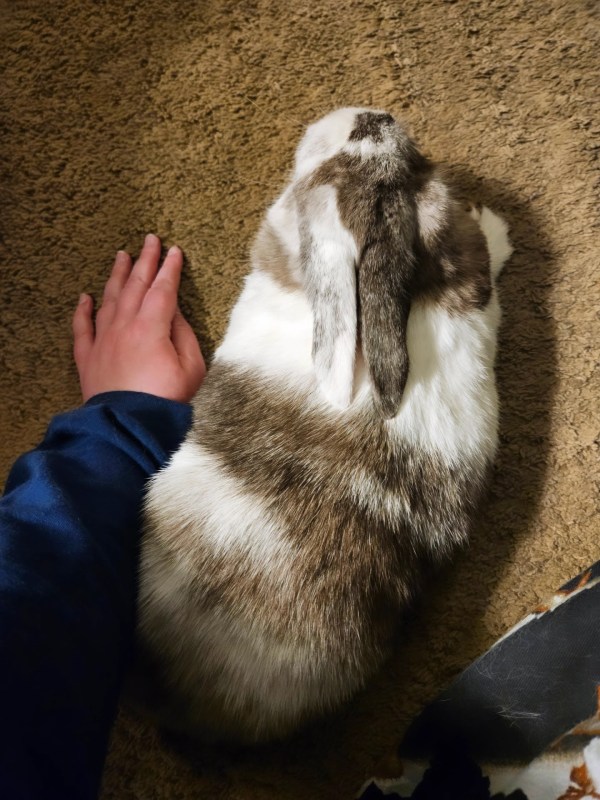
One year ago, we adopted Mia from a local rabbit rescue. We knew life would change, but we didn’t consider how much we would change and grow from this experience. These are my reflections on how our little house bunny, Mia, has shaped us in our first year together.
Awareness
Today, I accidentally scared Mia. I came downstairs from working out, with music playing on my phone, distracted and not considering the little bunny, snoozing in a deep sleep. As soon as I looked up from my phone, I was highly aware of what my blissful ignorance hath wrought: ears standing tall, eyes wide, and body tense, ready to run at the slightest hint of danger. Before Mia, I was aware of what startled me, but with Mia and her own sensitive ears, it has challenged me to approach life with an even gentler touch. Today was a day I forgot, but with each passing month, these moments of unawareness are decreasing. Getting used to how aware Mia is of her surroundings was intimidating at first. I remember feeling on edge those first weeks, feeling like I was unable to relax – scared to scare Mia – a bit impossible of a standard!
I’ve learned to be quiet, internally and externally. The desire for quiet, for the little prey animal in our midst, has become a craving for quiet coming from a place inside me. What felt like a burden at first has become a blessing, because the awareness of the sound level, the peaceful environment I wish to create for Mia, has become a goal I desire for my own needs. The awareness of the quiet and the peace is something that I need, that Kyle needs. It’s healthier for us, but in this distracted and noise-polluted world, I don’t know if my awareness was going to attune to this again without Mia.
Structure
Mia has a schedule, possibly wearing a little watch somewhere under all that fur. She hops to her dinner spot around 5 pm, and waits for her breakfast starting at 8 am. She knows what time we should go to bed, with a precision I wish I could stick to. I’m not blessed with a sense of schedule. I tend to drift off course, but Mia is teaching me structure, and her needs are reminding me how comforting a schedule can be. Taking care of her is teaching me more about what I actually need to take care of myself in a healthier way. How is this little bunny so wise, so intuitive? The promise to care for her, every day, is a responsibility that I thought would feel heavy and burdensome, but instead, it is a way I have rediscovered purposeful living. I am grateful.
Letting Go
Detachment from physical things is the hardest lesson I’ve had to learn from living with Mia. Mia loves to chew my stuff. She has chewed holes in sentimental blankets, she has forever changed favorite pieces of furniture, and she will take a chunk out of newly made pieces fresh from my workroom. She doesn’t discriminate from store-bought items either – brand new overalls, my phone case, my Nalgene bottle. This has stressed me out. Mia has chewed the couch, a brand new coffee table hand-built by Kyle, the freshly painted baseboards, slippers, and I’m sure there will be more. I’ve gone through the stages of grief. I’ve had moments of intense frustration and questioning it all. But when I committed to adopting Mia, I told myself that I would remember that people are more important than things, and in this case, people and little furry members of the family.
The Floor is Great
I love sitting on the floor. I have always loved sitting on the floor; it grounds my mind – no pun intended. But dating and spending time at future in-law houses and not wanting to be weird, renting with worn wood floors, and moving into adulthood with busy schedules, changed my life from a cozy floor sitter to work chairs and collapsing into couches at the end of the day. Or sitting at my sewing table in a chair with bad posture. I stopped sitting on the floor. But with a rabbit, they like and need you to be on their level. I believe it is essential for bonding with your rabbit. At the beginning, it was hard. It felt unnatural after a decade of not being on the floor. The floor felt hard, unwelcoming. Even with carpet. But after a few months, I felt comfortable. My hips and back hurt less when I spend time on the floor. A year later, I am back to being a floor dweller. Without Mia, would I have ever gone back? I don’t know, but wow, my body feels more comfortable, younger even.
Slow Down, Be Present
The final thing that my rabbit soulmate has taught me this year is to be present and slow down. Mia is already four; she has an estimated lifespan of 12 years, which is not a lot of time when you really care about someone. I don’t want to miss any more moments with her. Kyle and I celebrated 9 years of marriage this year, 11 years together. Time feels like it is flying, and I want to be more present in my relationship with him. My mom and my stepdad are also getting older, and I want to be more present. Mia is teaching me that. Where I can, when I can make the choice to pause what I am doing to spend time with her, and I challenge myself to do so. That has been a challenge. I tend to hyperfixate on projects, which burn me out, but a difficult bad habit to break.
This year, I have created less, but I am feeling the balance being restored to my life. Without Mia hopping over to spend time with me, who knows if I would be shifting my perspective to a healthier state of mind? I can feel my mind and body feeling less stressed. Mia naps a lot, and that is another piece of the slowing-down puzzle that I am learning to accept without guilt. Rest is important. Rest is necessary. Slowing down is good for us. But we resist, because it’s tough to go against the grain. Rest is seen as lazy, even though our bodies and minds get burnt out. Living with Mia is helping me reset those misconceptions and take better care of myself.
Final Thoughts
I would 100% recommend adopting a rabbit if you have been thinking about it. Adopt any pet, actually, or volunteer at a local animal shelter. Do your research and get involved; it will change your life for the better. Animals are so calming. Mia has helped me open up again, in ways I thought I was closed off for good. It’s helped me understand my neurodivergence, my sensitivity, my trauma. She just gets me. She listens, she is there. She has become a best friend, and don’t we all need more of that in our lives? And what about Mia? Well, I’m honored that we got to provide her with her furever home. She has a big space to zoomie around, endless hay, and pets. She gets to watch TV, explore the couch, and have all her toys and treats to herself. She is the center of attention and trusts us. It’s amazing to know a prey animal trusts you. It challenges you to be the best person you can be.
As a knitter, a crocheter, and a fan of shows such as Bake Off and Project Runway, I am hate watching Game of Wool. Yes, it is that mediocre. It’s frankly, shocking how unlikeable the judges are portrayed, and how blatantly the production is profiting off the design kits, while not openly compensating the designers. It’s been a disappointment for sure. So here’s a bingo card to make your watch through a bit more fun!







 One Rabbit Riot
