The other day, I was at the back of our property with Kyle with our tiller. Above us was this pine tree we believed to be mostly dead, yet behold these little pinecones were growing, cracking open actually. The sound was this bizarre melody of crackling, like rice krispies in milk.
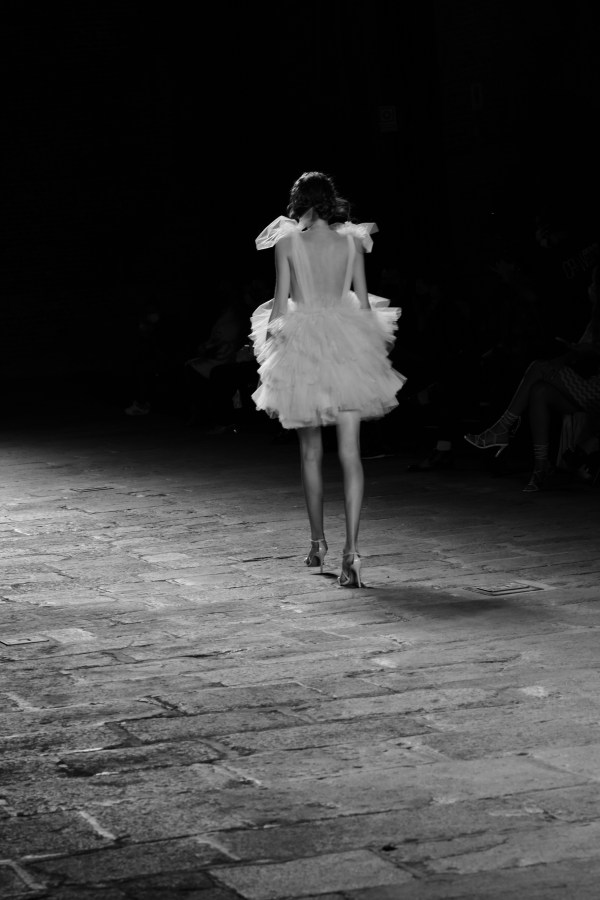
I was talking to my friend recently about fashion week, we bounced between NYFW and PFW in our discussions, primarily NYFW and we both remarked how the spark is gone. Growing up we both lived for those massive February and September issues of American Vogue, but as adults, neither of us read the fashion magazines nor are we swept up in watching a runway show stream on Youtube. In college I remember watching runway shows between classes, soaking up the atmosphere of the music, the makeup, the silhouettes strutting down the long walk away. Now, I hardly care about fashion week. My favorite moments of fashion week are no longer the collections and focus on Hyunjin’s interactions with Donatella at the Versace show and Felix’s runway passes for Nicholas Ghesquiere’s Louis Vuitton Women’s collection.
Out of the two of these collections – Versace and Louis Vuitton, I guess I pay attention to and prefer Donatella’s work, but I’m not looking at the collection, I’m focused on the spectacle anymore with these fashion shows. Versace shows at Milan Fashion Week, not Paris for clarification. I watched a highlight of PFW from Fashion Roadman and was underwhelmed. Even Alexander McQueen cannot get me hyped for the runway anymore. I saw there was a Carhartt collaboration with the brand Sacai which was quite frustrating to me. I’ve worn Carhartt before and it is not my vibe. Some shows reused old items, sorry they presented from the archive, from previous collections for “sustainability” and there was a collection addressing war, which feels a bit like that infamous scene in The Devil Wears Prada.
I know it sounds harsh, but I wish brands would do more for countries around the world than present a “statement” against war with military-inspired pieces when these brands are part of huge conglomerates that have the resources and influence to make a difference and instead, they use fashion to make money from exploited workers. And maybe that is why fashion in 2025 feels so off – fashion is not fun anymore. We know too much, the fashion machine has destroyed so much and is the capitalist monster filled with egos and performative greenwashing.
I’ve mentioned before that I find more inspiration from K-Pop than fashion magazines and that holds true for me in 2025. I’m more interested in customizing my wardrobe and making things personalized to my tastes than following the trend cycle because the trend cycle is regurgitating things from my lifetime that I’m already interested in, such as ballet flats, but assigning them an expiration date and I disagree. By the mid-2010s I was tired of ballet flats, but I had worn them for 10 years at that point and was interested in something new to replace my worn, falling-apart flats. I’d rather pick a reference and get inspired, like watching Seinfeld and writing notes for an outfit I’d like to emulate. But that doesn’t fit with the fashion cycles and seasons, so it’s making the fashion shows seem pointless to me.
But the most off-putting thing I’ve seen this year is the discussion – ‘The Death of Personal Style’ which I have seen explored by Drew Joiner, Mina Le, and Nicky Reardon. This topic has been debated across the internet in spaces I don’t visit like X or TikTok, but I think people are bored and claiming personal style is dying because we need some fresh inspiration. I’ve been in a creative slump so far in 2025 with writing because the internet spaces I hang out in have been so negative this year. Like a communal ennui has rolled in, shrouding creative people in a fog. It’s been hard to not buy into the mindset and I’ve been a member of the club after seeing how worried my loved ones are that are facing being cut from their job or their career sector being gutted. Fiber artists and sewists are definitely in a delicate place right now, finding a new normal after Joann’s.
Yeah, it’s weird. I hate change, and I fear the past being repeated, but something struck me last night after watching two videos that have nothing to do with fashion but humor me. The YouTube creator Suibhne (Swee-nee) makes historical content about countries around the world, I in particular chose The History of Korea and The History of Japan to watch, and it’s heavy. What happened between Korea and Japan in the Sino-Japanese War has had lasting consequences, but so has European colonialism in Asia and America’s forced opening of Japan through Commodore Matthew Perry.
Watching these videos that recount the atrocities of WWII in the Pacific reminds me that the overall concern of what is happening politically in the world and in my home country is coming from a noble place. I think overreaction or potentially appropriate reaction is important to keep any bit of the past from being repeated. It’s staying vigilant, like the servants in Luke 12 who were waiting at the door for the master of the house to return. Complacency is never a good thing.
Stay dressed for action and keep your lamps burning, and be like men who are waiting for their master to come home from the wedding feast, so that they may open the door to him at once when he comes and knocks.
Luke 12:35-36 ESV
So instead of being concerned by the social worry of WWII attitudes re-emerging, I should see it as a positive that people are taking things seriously and are unwilling to let evil take root again for the good of all. Even when I consider how fashion seems so dark because of unethical labor practices, sometimes I wish I didn’t know about the darkness, and instead I should consider how knowledge is not the enemy, the unethical practices are the enemy. Shopping is not as fun, but why is my pleasure more important than the rights of garment workers? It’s not all about me. Knowing this information is not the end point either, we put the awareness into action for change. So fashion feels off, but I think we’re tilling up ground for something new, not destroying something joyful for us fashion lovers.
I wish you hope, joy, and peace wherever you are. Thank you for taking the time to spend it with me today, dear reader. Until next time ❤
In the summer of 2024, I returned to an old fiber friend, wool, and introduced a new natural fiber – alpaca. When I began knitting in the early 2010s, I bounced between wool and acrylic fibers, not really looking at fiber content and instead looking at the pretty colors and my stitches so I didn’t drop one. Oh, how times have changed! When you love something you begin to obsess, dig, and it becomes a fiber woven into your identity. That’s where I found myself as a knitter for 10 years. I am constantly thinking about fiber content when planning a new project because it’s more than just the make that matters; it is how the garment is worn and washed for many years to come.
Wool
I think we have deep scent memories just like how wool fiber remembers the shape it is blocked into with water and pins. The scent of wool is woven deep into my memories of traveling to Ireland as a child in 2001. It is the fiber my Grandma wore most of the year. She was always cold, even in summer. Wool has always seemed a bit scratchy to me. It triggers my neurodivergent aversion to certain sensations. It was not a fiber I would choose to wear a whole sweater out of, although small accessories I could handle. Coats were fine too, until they weren’t.
After my grandparents passed away, within 6 months of each other I suddenly had things they used to own. Clothing being one of those things, a lot of those clothing items contained wool. I couldn’t stand the fiber being near me. I’d get a head, a migraine really. I’d feel stuffed up and allergic, at least I thought. From 2020-2024 I avoided the fiber. Begging my mom not to knit me anything in wool. I rounded up the wool items and put them in quarantine in a box in my house, the “allergy” being such a wave of anguish to my body. Looking back on it, I can see it was an expression of grief and stress. That smell of wool, it felt like a ghost lingering in the shadows of my mind not a normal fiber. Grief makes things so weird!
Acrylic
Under this belief of a wool allergy, I pivoted solely to cotton, bamboo, linen, and acrylic. If you are looking for a cheap and cheerful fiber acrylic is your yarn. It’s everywhere in the big box stores and that’s exactly what I did. I experimented with Red Heart, Big Twist, and Caron. They come in value packs and the worsted weight is an excellent fiber weight to use when learning how to create complicated garments such as wearables like sweaters that involve sleeves, shoulder shaping, and necklines. I’ve made a lot of mistakes along the way, it’s part of the learning process, yet using these affordable and easy-to-source yarn options took the trepidation out of the creating process.
Acrylic is seen as the “low-brow” yarn for a lot of the knitting community. It’s looked down upon for not being a natural fiber. Take organic and insert natural fiber and it is the same sort of elitism. But honestly, aside from how it’s made, acrylic being a polyester fiber, I don’t get the hate. It’s washable. These garments I was able to block in the dryer. As a knitter who was new to blocking this process taught me how and why blocking matters without the high stakes of felting, shrinking, or destroying my hard work during the wool sweater blocking process. It’s an approachable fiber for beginners.
Fiber Curiosity
Acrylic was my bread and butter, but after a while, we all crave some variety. For winter sweaters the other fibers – cotton, linen, and bamboo aren’t going to cut it. This is where some field trips came in! I’ve mentioned Keystone Safari before on the blog, it’s a wildlife preserve and education center in my region and they have sheep, alpacas, yaks, camels, and llamas. All of which I feed and pet without any allergies! This is where I began to question my “allergy” to wool. How could I spend time around these fibers, in their natural state where there would be more allergens like hay and not have a reaction (when I’m actually allergic to hay and grass)? It didn’t add up.
So in 2024, I began to run experiments. In the yarn shops, I’d pick up wool and alpaca-specific skeins and feel them in search of the truth! At my mom’s house, I’d ask her to see her skeins of wool and I’d do the same, even sticking them in my face, demanding they show me an allergic reaction. Nothing happened. Nothing. Could it be, that was I ready to find my true knitting form? A natural fiber artist, possibly a spinner, with a vast knowledge of wool, alpaca, mohair, and more? Yes, it was time.
Magic of Scrap Yarn Cardigan
So how does felting come into play in this story? It doesn’t sound like a story of woe, but it is. I was quite inexperienced with wool and how one cares for wool, that lack of experience came back to bite me with this lovely cardigan. I made this cardigan from wool extra skeins from my mom. Some of those skeins I put right up into my face to see if the wool would make me allergic. But this cardigan was not just a project of wool, it was a project made of extra wool skeins, wool-acrylic blend skeins, and acrylic skeins. Those fibers require different strategies to care for them properly.
This was my first mistake. I mixed fibers willy-nilly without thinking about each one has unique advantages and disadvantages. Wool is naturally anti-bacterial and requires very little cleaning. You can spot clean and refresh in the air or the snow. But you can’t throw it in the washer, and if you wash you must be gentle to the fibers with delicate movements and gentle water temperature, or else it will felt. Acrylic on the other hand is very durable. You can wash it in the washing machine without worrying about the possibility of felting the fiber. Acrylic fibers do not felt. It does not have anti-bacterial properties though so you clean it. Can you see where this is going? I screwed up the washing portion of this project.
I washed it in the washing machine without thinking and the cardigan shrank. Next, I tried to stretch the cardigan as it dried, while it was wet. Not gently, although the washer had already set the stage for stressed wool fibers. The cardigan no longer fit my person. To remedy this I thought I would hand wash delicately and attempt to re-block the cardigan. This was the nail in the coffin. This fatal mistake transformed the project from a knit cardigan to a felted mess. It was too far gone, like a burnt cooking disaster. There was no coming back from this, the damage was done.
I began to panic. How would I continue using wool and alpaca? I was currently knitting wool socks, um how was I going to wash those? Was I screwed? I was convinced I could never hand wash again without feeling sick to my stomach. I had to find a new solution. Steam. Steam was the answer. I have an iron, an iron with steam. Could I use this instead of purchasing a garment steamer? The answer amazingly was that simple! I steam my wool and alpaca projects now and the steam helps them bloom, they almost block from the steam along. It’s incredible. Just a little steam and the fibers refresh, safely! It’s transformed how I care for my knitwear. Sometimes these creative misfires lead us to places we may not have tried without the failure as a catalyst to try something new. I feel equipped to work with natural fibers, confident that if I spend months on a project I can care for said item for years to come. Have you tried streaming your wool garments before?
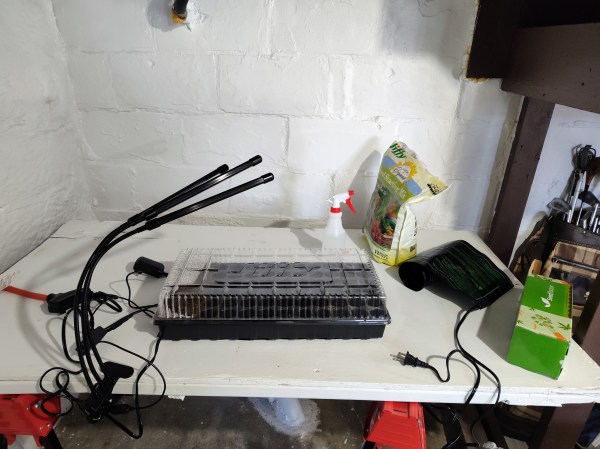
After writing about starting our first seeds for the season, I thought it’d be helpful to discuss our seed-starting setup. Although everyone will have a unique set of equipment, the basic items will generally be the same for everyone. The equipment I discuss below is what Magz and I bought, but you’ll want to determine what best fits your needs. That can be based on how much you want to invest in seed starting at this time, how many seeds you want to start, and how large your seed-starting space is.
Necessary Equipment
Regardless of how big or small of a garden you’re planning, these are the essentials you’ll need.
Heat Mat
Although many people will first think of a grow light when buying seed-starting supplies, a heat mat is equally as important. A heat mat warms the soil to the appropriate temperature for seeds to germinate. They are great because they maintain a temperature of about 70-75 degrees Fahrenheit. They are also waterproof and can be wiped clean, so you don’t have to worry about getting wet soil on them.
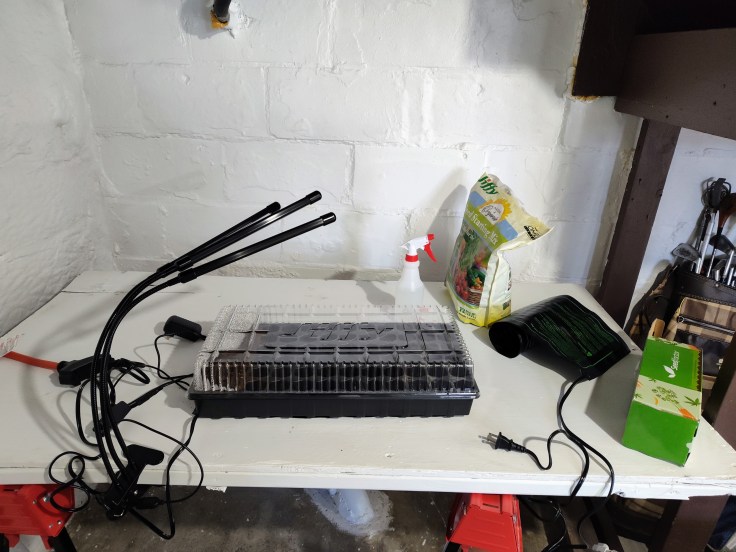
Our seed starting equipment for the 2025 garden.
They’re very easy to operate since the ones we have don’t have a temperature controller. Rather, you simply set them and forget them. Once you plug them in, they stay on 24/7 until you begin seeing your plants poking through the soil. We bought ours on Amazon in Feb. 2022. They are 10 inches by 20 inches, came in a 2-pack, and cost $27.99 at the time. They’re actually cheaper now than they were in 2022 at $23.99. Here is a link to them.
Grow Light
The grow light works hand-in-hand with the heat mat. You don’t need to turn on your grow light when you first start your seeds. That’s because its purpose is to help the plants grow through photosynthesis, and until the seeds germinate and poke through the soil, the grow light has no job. Instead, you wait for germination and see green through the brown soil. At that point, you can begin using the grow light, which you want to mimic the sun by not having it on 24/7. Ours is set to be on 12 hours and off 12 hours. The grow light will be used until you transplant the plants into your garden. Like the heat mats, our grow light also came from Amazon. It was $25.99 when we bought it in Feb. 2022. The exact light we got is no longer sold; however, here is one very similar and is only $23.99. There are different styles of grow lights, but I prefer the ones that clip on tables to the ones that hang. Hanging ones are great because their light is spread across a larger area, but you have to have the right setup to hang them. Meanwhile, the clip-on ones can be attached nearly anywhere and you can angle the lights to fit your needs.
Dome & Tray
You’ll almost always find these sold together as a set. The tray holds your seed-starting cells and will prevent excess water from running onto the table or surface you’re growing them on. The dome, or lid, works like a greenhouse and keeps moisture inside. This is essential during the germination process as the seeds need consistent moisture. The dome can only be used until the plants reach a height where they are pushing up against it. You’ll also want to be careful when using the lid. Keeping the lid on can lead to mildew or mold problems if your soil is too wet. Mini greenhouses are the perfect environment for mold to grow because the soil is warm and wet, and until the grow light is turned on, there are no UV rays to kill said mildew and mold. So, just be sure to monitor your cells each day. The underside of the lid should have condensation on it and the soil should be damp but not soaking wet. If you notice that the soil isn’t drying out within a few days of watering, adjust the lid a bit to allow some airflow. That will dry it out. Seed trays and domes are very easy to find. Your big box stores like Lowe’s and Home Depot will have them, and you can also find them at feed or farm stores, such as Tractor Supply and Agway. They’re very affordable. Here’s one from Tractor Supply for $12.69 that holds 72 cells and includes the compacted soil pellets, so a seed-starting mix isn’t even needed.
Seed-Starting Mix
It’s important to have the right soil mix when starting seeds. It may be tempting to use soil from outside or regular garden soil when starting seeds, but you should resist that temptation. MI Gardener explains it very well in a YouTube video, but the gist is that outside soil and compost will have microorganisms, bacteria, fungus, and bugs in them that can lead to damping off and other diseases in your seedlings. Not to mention, you probably don’t want bugs in your house. Instead, you should use a dedicated seed-starting mix that has things like peat moss, vermiculite, perlite, and coconut coir in it. These give the starting mix a light and airy texture that allows seeds to germinate and grow while also draining well. We look for organic bags of starting mix. Is it necessary? Probably not, but starting mix is so affordable that there isn’t a good reason not to. We bought two bags of Jiffy organic starting mix at Lowe’s. Each was $7.28 for 12 quarts of soil. We’ve used several different starting mixes in our gardens and haven’t found one to be better than the others.
Water Source
This is pretty self-explanatory, but you’ll need a vessel for watering your seeds. In the past, we used small cups to pour the water. This year, we changed to spray bottles and have enjoyed it more. We find the bottles to be better because they don’t spill or flood the seed cells. You don’t want to overwater your seeds, so spraying is a more controlled method. We bought a 2-pack on Amazon that is currently $7.56. Any spray bottle is work, though.
Surface to Set Everything
I’m including this because it can be easy to forget, but you’ll need a good place to set all your supplies. This can be a table, counter, desk, or shelf, but keep in mind that you’ll need to have everything out for several months and there will be UV lights that can be a bit annoying after a while. In the past, we have used a dining table and a collapsible hard plastic table that is nice because it can easily be cleaned. This year, we switched it up and are using a piece of plywood that was left in our basement by the previous owners and a set of sawhorses. It’s working well because the sawhorses keep the seed trays at a nice height and the plywood was free, so it’s not a big deal if it gets dirty. I’d recommend using something you already have. I don’t think you need to buy something new for this purpose.
What Is in Your Seed-Starting Kit?
In addition to everything I discussed in this post, you’ll need to determine the best way to get power to your equipment. That’s going to be unique to your situation. We bought a 50-foot 12-gauge extension cord and a 3-prong adaptor to make sure we had enough length to reach the closest outlet. Keep in mind that the heat mats and grow lights can draw a decent amount of power, so go overboard when using an extension cord just to be safe.
What do you use to start seeds? Is there any overlap with the items we use? We’d love to hear from you and see if we can improve our kit for next year’s garden. Happy gardening.
Throughout this year, I am going to publish a weekly blog post with updates from our garden. It will include progress pictures and anything we learned over the past week and will serve as a general update since a lot can change in a week’s time when gardening. I wanted to wait until we started our first seeds, and guess what? We did!
Peppers Have Been Started
I don’t believe that each year’s garden has started until your hands first touch soil in the spring. Buying seeds and purchasing supplies is wonderful, but it’s all still part of the planning process. Getting your hands dirty for the first time moves everything from a concept to a reality. And that’s the step we took Saturday evening.
Seed Starting
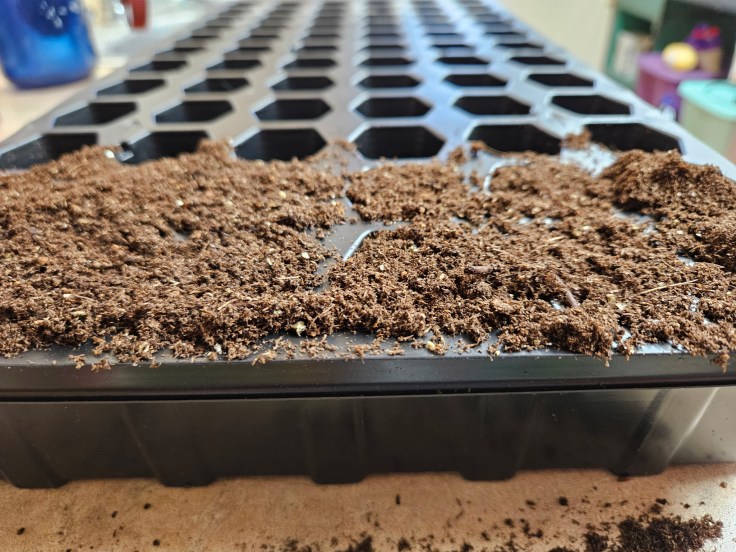
Earlier in the day on Saturday, we made a trip to the nearest Lowes to pick up a downspout extension and grabbed a couple of bags of seed starting mix, another seed starting tray and flat of cells, and gardening gloves. Brief side story: Neither of us could remember if we needed extra seed starting cells. I would have bet a dollar that we had enough to get us started for the year and only bought the new cells as extra. Boy, am I glad we got them. When we came home, I checked our gardening tote, and the starting tray that I thought had cells in it was empty. It’s funny how taking a two-year absence from gardening and moving can make you forget stuff.
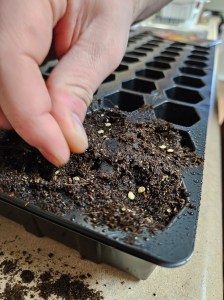
That evening, we unpacked our heat mats and glow light, set up the table we’re using, and ran an extension cord from the nearest outlet. First up on our seed-starting schedule is peppers. (Technically, our mustard greens should already be in the ground, but because they will be directly sown, we have to wait until the ground is tilled). We found our 3 varieties of peppers (California Wonder bells, Scotch Bonnets, and Hungarian Waxes, which I discussed in this post), grabbed our seed-starting mix, and filled a spray bottle with water.
Starting pepper seeds
We decided to grow 3 cells each of Scott Bonnets and Hungarian Wax peppers and 6 cells of the California Wonders. With 2 seeds in each cell, we’re confident we’ll get strong seedlings to transplant later in the spring. Determining how many cells of each variety to start is always a fun process. You want enough to guarantee good germination but not so many that you feel overwhelmed if all of them succeed. Hot peppers are particularly difficult for us because we don’t eat a lot of them and will mostly use the Scotch Bonnets for jerk marinade. We went with 3 cells with the goal of transplanting 2 of them, and if all 3 succeed, we’ll give the third plant away. For the California Wonder bell peppers, we’ll probably transplant as many as we can.
What’s Next?
Next week, we will be starting our eggplant seeds. I’ve been using the seed starting spreadsheet that I created to organize everything and started another page to track the dates and expected germination times for each seed. That will allow us to know if a seed is taking longer than expected to germinate.
We’re also going to be buying our rototiller sometime over the next week. We’re big fans of no-till gardening, but our yard is currently all grass, so we have to break ground. We were originally going to buy an electric tiller since they are cheaper than gas models and we won’t need to use it much after the first year. However, after realizing how expensive 100-foot heavy-gauge extension cords are, we have pivoted to a gas model. We’re still narrowing down the exact one, but I’ll write a blog post about it and how we reached that decision when we get it. I’ll also write a follow-up post reviewing the tiller once we use it. Spring weather is finally starting to arrive after a harsh winter, and we couldn’t be more excited.
Growing up, I spent many spring Saturdays taking trips with my mom, dad, or grandparents to the greenhouses and garden centers in our area. We would walk around the tables that were full of flats holding vegetable starts and flower transplants. That was how my family typically began each year’s garden. It was wonderful to take in the greenhouse smells of damp soil, fertilizer, and new plants. You’d run your fingers over the leaves and quickly learn to identify the differences between peppers, tomatoes, and cucumbers.
Seedlings in a greenhouse (Photo by Zoe Richardson on Unsplash)
Fast-forward to today and seeds seem to be all the rage. There are dozens of seed companies I hadn’t heard of until about a decade ago selling heirloom varieties of seeds that I didn’t know existed until recently. I’m not sure if that’s simply the result of the internet raising awareness for seed loss and advertising for these companies or because people in my circle didn’t talk about heirlooms. Either way, it does seem as though there has been a shift in attitude and approach toward starting a garden.
That raises the question: Which is better between seeds and starts? Based on my previous posts about seeds and catalogs, you can guess which camp I’m in, but that doesn’t mean there aren’t merits for buying transplants from your local greenhouse. Let’s dive into the advantages and disadvantages of both and help you make a decision on which is best for you.
Cost
There is a wide range of costs when choosing how to start your garden. The cheapest we found seeds in our catalogs was $1.95, which was a broccoli packet from Pinetree Gardens.
Fun fact: That price is actually lower than our local Wal-Mart sells Burpee seeds for. Another reminder to buy directly from the seed company if you can. There typically isn’t much difference in price, you’ll find a larger variety, and you’re guaranteed that the seeds were recently packed.
On average, the lowest price in our catalogs was $1.99 per packet. That was the case for most vegetables. The highest price was $15.00 for a packet of pumpkin seeds from NE Seed. Calculate the per-seed price and you’ll get a range of less than $.01 for some beet and carrot varieties up to $1.00 per seed for heirloom cantaloupe and tomato varieties.
Let’s compare that to the price of starts. I’m not 100 percent sure what starts cost at greenhouses in our area since it’s still too early, but a quick search online showed tomato plants in the $3-4 range from Home Depot. That price is comparable to a packet of seeds. However, when you consider that a start produces one mature plant in the best-case scenario, seeds are far more economical. I know that more than one seed is generally used when starting them, but it’s still cheaper to purchase seeds.
Seeds 1, Starts 0
Variety
When you are shopping for starts, you’ll likely find the most popular varieties for your region at a greenhouse. These tend to be successful, are adapted to your area, and are relatively easy to grow. Some examples you’ll find in Pennsylvania are Amish paste and Brandywine tomatoes, Straight 8 cucumbers, and California Wonder bell peppers. Most greenhouses will have these varieties available as starts. You may find some more “exotic” varieties, such as habanero peppers or a non-red variety of tomato, but greenhouses will stock the varieties that sell. 3-4 varieties per vegetable are typically the upper end of what you’ll find.
When you buy seeds, there are many varieties to consider. Even displays in stores like Lowes will have up to 10 varieties per vegetable. For tomatoes, you’ll find several varieties of cherry, beefsteak, and paste tomatoes. For cucumbers, you’ll typically find a few different pickling and slicing varieties. Just today, the display in Lowes had ornamental corn seeds, something I’ve never seen in a store before. You have a lot of options to find the seed that best fits your needs. Then, when you expand to purchasing seeds online or from catalogs, you’ll have dozens of varieties to pick from for each vegetable, including organic and heirloom.
Seed Starting
That many choices can be both positive and negative. If you want the chance to buy heirloom varieties that you’re unlikely to find starts for, it’s a positive. But if you’re just starting out and can become overwhelmed by how many options there are, it’s a negative. Ultimately, I think having more options is a good thing, so I’m going to give this one to seeds as well, but there’s an argument for starts.
Seeds 2, Starts 0
Necessary Equipment
When you buy starts, you don’t really need anything else assuming you have a garden or container. You’ll also need soil, fertilizer, and tools for transplanting and watering. Those are all items that you’ll also need for seeds, though, so I don’t count them for the purposes of this post. So, like I said, once you buy the starts, you have everything you need.
Seeds, meanwhile, need a bit of equipment. You’ll have to have seed-starting cells and a starting mix of soil or compressed and dehydrated soil pods that expand when water is added. This is where the seeds will go. In some cases, you’ll need multiple cell sizes for different plants and to transplant them as needed when growing. Those cells need a tray and potentially a dome to sit in. The cells are placed on top of the tray, which provides a place for water to drain, and under the dome, which holds in moisture, creating a greenhouse effect.
You then need a heat mat and grow light to help with germination. The heat mat is used at the beginning to heat the soil so the seeds can germinate, while the grow light helps the young plants grow through photosynthesis. Neither item has to be expensive: You can get a 10″ x 20″ heat mat for $12 and a grow light for $14, both on Amazon. Finally, you’ll need a surface to set everything on, an extension cord and power supply, and the room for all the seed-starting supplies for several months. None of the items are expensive, but more is needed to start seeds than transplanting starts. In this case, starts require far less equipment.
Seeds 2, Starts 1
How Easy Is It?
Which one is more complicated? This category is an easy win for starts. With them, you purchase them, bring them home, and when the soil and weather are right, plant them in your garden. Once they’re in the ground, it’s the same as starting from seed. You do need to be careful when picking your starts, but most of the hard work has already been done when you buy the start.
Seeds, meanwhile, can be complicated. You have to track a lot of information, including how long each seed takes to germinate, how resistant to frost each is, and whether a seed can be directly sown or needs to be started indoors. This information helps you know when the seeds should be started. With that information, you then need to go through the process of actually starting the seeds. You have to prep your starting cells, choose the proper starting mix, and sow the seeds at the proper depth. After the seeds have germinated, the seedlings will need to be thinned so that plants aren’t competing for nutrients in the same space. A lot of the seedlings will also need to be transplanted into a larger cell before eventually being moved into your garden. It is quite a bit of work and typically requires daily monitoring. As you can tell, starts are much easier.
Seeds 2, Starts 2
Time Commitment
This is connected to how easy each is, but I wanted to touch on how much of a time commitment they are. We’ll go over starts first. The most time-consuming part of transplanting starts is going to the greenhouse and buying them. Traveling to the greenhouse and walking around all the tables is a time commitment, but it is nothing compared to seed-starting.
Starting seeds can take months when you factor in the time it takes to look through catalogs and wait for the seeds to arrive. Peppers are a perfect example of how long seed-starting can take. Because they take a long time to grow, need hot weather to mature, and won’t survive a frost, they should be started up to 10 weeks before the last frost. Around here, that date is May 15, so they can be started now. That is a major time investment and requires a lot of planning.
Starts will win this category, but to be honest, a time aspect of transplants that I’m not a fan of is how long you have to wait to buy them. A pepper start shouldn’t be purchased until after the last frost, and waiting that long makes me nervous. What if the greenhouse doesn’t have the variety you want?
Seeds 2, Starts 3
Control
This category is a bit weird, but I like knowing everything I can about the plants I’m growing. With starts, you don’t have control over how they were started as seeds. That means not having knowledge of the starting mix that was used or if the plant was transplanted before, and if it was, did it experience any root shock? If you’re interested in seed-saving, has the plant been isolated to avoid cross-pollination? That level of control may not be important to some, but I value it.
I like the peace of mind that comes with knowing that our starting mix has proper drainage, that the seedlings are always in the proper cells, and that the strongest plants are kept when thinning them out. I also like being able to transplant the young plants into the garden after a hardening-off process and when they’re smaller than you find at a greenhouse. When plants are younger, there is a reduced risk of root shock when transplanting. Therefore, I’m giving this category to seeds.
Seeds 3, Starts 3
Do What Is Best for You
I have to admit, I was surprised by how this post progressed. I fully anticipated at the start that this would be an easy win for seeds and that I’d be looking for ways to make it more even. Instead, it ended in a draw based on the number of categories each won. I still give seeds the edge because I place more value on the categories they won, though. I think cost, variety, and the peace of mind that comes with seeing the process through from sowing to harvesting are more important than how easy it is to buy starts.
Choosing between seeds and starts is a personal preference. If you’re just starting out and unsure if you want to invest in seed-starting equipment, transplants are a great option. However, if you want to grow heirloom varieties and are confident you’ll want to garden on an annual basis, seeds are the best bet. You can also buy a combination of seeds and starts. My dad has done that for years. Do you have a preference between seeds and starts? I’d love to hear from you.
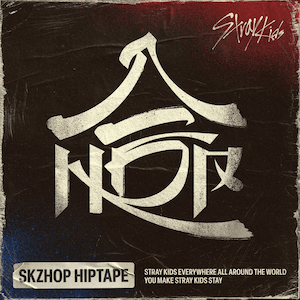
This album was a slow burn for me, as I expected after it was released on December 13, 2024. I was still enthralled with Stray Kids’s recent Japanese release, Giant, which was released on November 13, 2024. This was on the heels of their collaboration with Tom Morello and Young Miko for Arcane’s Season Two Theme, “Come Play” which was released in October 2024 before the show’s release. “Come Play” was the crescendo of soundtracks being released in the fall for Stray Kids with “Night” and “Falling Up” announced for season two of the anime, Tower of God.
But this was two months after we in the STAY fandom were processing the quiet release of “Slash” for Deadpool and Wolverine’s soundtrack in August 2024, a month after their July 2024 release of ATE. ATE was their big release of the year so far after months of waiting for an album after the drops of “Lose My Breath” and “WHY?” a soundtrack for the J-Drama Re:Revenge being released in the first quarter of 2024.
L to R: I.N., Lee Know, Seungmin, Hyunjin, HAN, Changbin, Felix, and Bang Chan
Did I mention this was a busy year for Stray Kids and their listeners? In this year of endless highs, Stray Kids announced their contract renewal a year ahead of the deadline, confirming that all eight members would stay at JYP Entertainment, making music together for years to come. It’s fitting then, that the last release of the year “HOP” was a title with a little wordplay, using the Chinese Hanja character “Hop” which means unity. In K-Pop, groups come and go, just look at New Jeans (2022-2024) and their possible disbandment after leaving ADOR. Contract renewals by all members to the same label are not guaranteed, look at the current state of Blackpink with each member taking their solo careers to various labels.
There is also the logistics of Stray Kids being a boy group with 6 out of 8 members being Korean citizens heading into their mid-twenties. Mandatory military service completion looms, which comes with a period of complications for music production, tours, and storytelling. Currently, BTS is completing their military service as a group (J-Hope and Jin have completed their service as of writing this). NCT 127 is following a different path, sending their members in a delayed fashion, (currently their leader Taeyong and member Jaehyun are completing their service) while the remaining members have released an album and performed tour dates. Although the military service question comes up a lot in K-Pop fandoms, more than I think we should dwell on it, the impression “HOP” and Stray Kids’ contract renewal left on STAYs I would say is like a comforting hug.
I didn’t understand this fully until Stray Kids’ account shared moments from their SKZ 5 O’Clock fan meet where the members performed each other’s solo songs on stage. What does this have to do with SKZ HOP HIP TAPE? Well, HOP was different kind of album from their usual format. On a Stray Kids’ EP or full album, there is usually a title track or several and then B-Sides with all eight members or songs performed by sub-units, affectionately called Rachas. For example – 3Racha (Bang Chan, Changbin, HAN) is their production unit and rapline, vocalracha (Seungmin, I.N.) supply lead vocals, and danceracha (Lee Know, Hyunjin, Felix) the lead dancers of the group. Instead of following this format, HOP is more like a patchwork quilt in my opinion.
Walkin’ On Water
Bounce Back
U (feat. TABLO)
Walkin’ on Water (HIP Ver.)
Railway (Bang Chan)
Unfair (Felix)
Hallucination (I.N.)
Youth (Lee Know)
So Good (Hyunjin)
ULTRA (Changbin)
Hold my hand (HAN)
As we are (Seungmin)
These solo songs, the members perform on tour through solo stages, were songs I was not sure about upon the first listen. Instead of appreciating the music, all I could think of was – is this the end of eight as one? Is this signaling them “growing up and growing out” of their collaborative style?
How silly is that? But in 2025, in our current friendship recession and drought of healthy communities, having deep friendship feels like something you have to “grow out of” to become a lonely “successful” adult. I think it says more about my life and my culture more than the album, to be honest. (Am I okay?) But then, I listened to the album again. And again. I watched the craftsmanship of the music videos and dove into the lyrics and I was impressed! The layers of talent – vocal range, dancing ability, lyricism, concept, etc. Each song has a personality unique to the member, you can clearly see them in the song but you can also feel Stray Kids in each song too.
This is not how I would describe most K-pop solo releases. Take NCT for example – Taeyong has released two EPs, Shalala (2023) and TAP (2024) which are not NCT 127 music. They showcase Taeyong and his unique talents – dancing, vocal range, and visuals. Mark of NCT 127 has released two singles, 200 (2024) and Fraktsiya (2024) which are again vastly different from NCT 127’s musical style. 200 is a casual love song and Fraktsiya is a rap focused song. Yuta of NCT 127 released an album in 2024 that deviates into J-Rock to celebrate his Japanese culture. Blackpink is another example of this, with Rose, Lisa, Jennie, and Jisoo going in completely different directions where they feel like different artists from their Blackpink performances.
For Stray Kids, their solos have range but through their 5 O’Clock Fan Meet performance swaps, it showed me that these songs are fully solos and fully Stray Kids which makes me interested in what the future holds. Will they release solo albums? Will they do sub-units? Will they do these solo mix tapes, like SKZ Replay of 2021, that featured previously unreleased solos and subunit songs? I think they truly just love creating, producing, and performing in an organic way that is synergistic in an unforced way. It’s like a harmony, even when they do their own things, they are still part of the whole without losing themselves. It is a family, a beautiful patchwork quilt, it is as the name “HOP” declares, unity. They do their own thing and some people hate it, but I love it. I’ve never had a band bring me as much musical joy as well as a sense of community as being a STAY.
All the releases of 2024 felt like a present for the fans, each one more exciting than the next, and that is why I think at first HOP did not grab me. There was an embarrassment of riches, too much to process, appreciate, or focus on. Three months later, I see the wonder of it all and hold HOP in regard as a unique experiment I’d enjoy listening to more of. They are always working on something new, what will 2025 hold? I look forward to finding out.
Tariffs. Bird Flu. Ragebait. Clickbait. Speculation. Social Media. Everyone has an opinion. Eggs. But you’re telling me no one has a solution? Anger. Tears. Can no one else see the Ha Satan clearly?
Closures. Monopolies. Let’s spiral. Small business. Big business. DOGE. AI. Algorithm, subscription fatigue. The death of personal style. Kindle downloads. Call BookTok, this 1984. The world is full of NPCs. Could you wake up from your main character energy?
Quiet the voices speaking lacking wisdom. Who knows no good deed. I’ve had enough. Power. Riches. They are for fools. Feel a calling, verses come into focus. So perfectly timed. Elohim. YHWH. Passing over. Lent is upon us. Cling to truth.
“Jesus Christ is the same yesterday, today, and forever.”
I’m modifying this prompt slightly to focus on one aspect of my life – sewing. These are the three tools I can’t imagine working without. After four to five years of sewing clothes and trying out various tools and techniques, these are the cream of the crop for me. This is my just opinion. Depending on your sewing style and personality, this list would probably change. I’m sure if I was a sewist who went to design school, I would also have a different list.
Fabric Clips –
When I started sewing, I had no idea fabric clips were an option. I bought a Dritz tin of straight pins and a pin cushion. This is where things began to get uncomfortable. No matter how careful I am when I use pins, I stick myself. When I use pins for a fitting, the pins slip out of the fabric and scratch my skin. I find the pin tins spill easily which is terrifying if you don’t notice it because you are then surrounded by pins in a spill around your feet. When I found fabric clips, my sewing experience improved 180 degrees. I don’t get stuck and the clips stay in place. I can try things on my body and the dress form, without the discomfort of pins sticking or the annoyance of the pins slipping out of place.
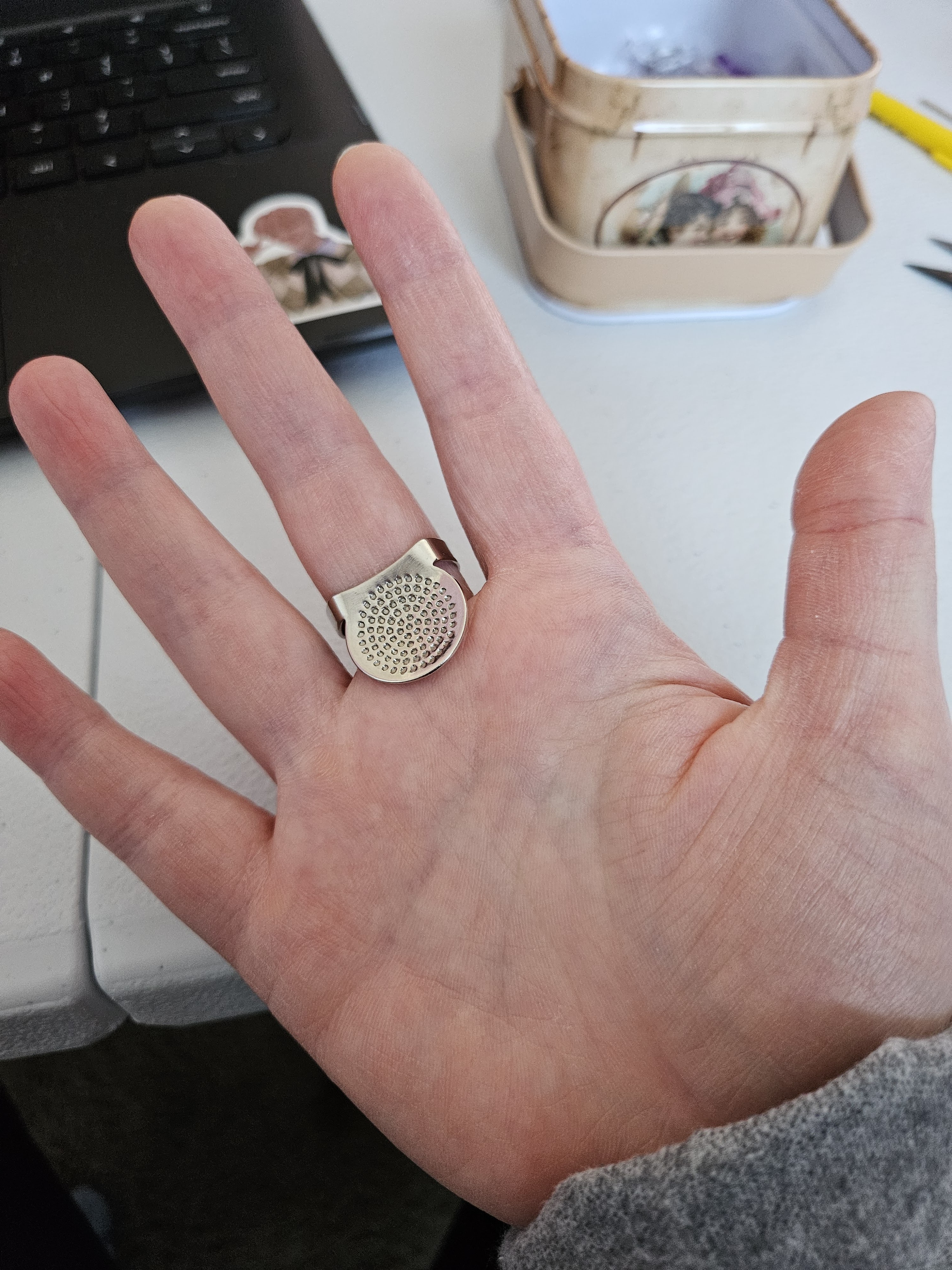
Sashiko Adjustable Ring Thimble –
I’ve tried two kinds of thimbles. The first was the cylindrical metal thimble, which I found hard to use. It fell off my finger or I simply struggled to find the correct finger to place it on for my sewing. I tried another metal thimble that looks like a fencing mask, with an adjustable back. It stayed on my finger just fine. I could make it tighter or looser or move it to a different finger but it still felt odd. I noticed the thimble wasn’t providing the support I needed to push the needle through the tough fabric and in turn, was putting stress on my finger joints.
I was introduced to the Sashiko-style ring plate thimble through the account Geri In Stitches and was hooked. The idea of pushing the needle through dense layers by the palm of your hand instead of your fingertip made more logical sense. This has transformed my hand-sewing experience! I can sew longer without hand fatigue. The ring is comfortable. I hardly notice I’m wearing it until I’ve walked into another room with the thimble still in my hand. This is a Japanese thimble, for the sashiko technique, I am using it for general sewing, but the thimble and sashiko have a rich history of their own that you should check out.
Hand Sewing Needles –
I started my sewing journey by hand sewing before I purchased a Singer Heavy Duty Sewing Machine in 2022. It was my preferred method until my hands started showing stress and my mind was fed with how long garments were taking on a deadline. The switch to a machine was fantastic! I quality garments quickly. The only wrinkle was sewing machine maintenance and gremlins in the machine. Sometimes machines have attitudes. Sometimes you can’t get in sync without your equipment. Sometimes you drop the small screws into the machine and you are in a panic. It’s a wonderful asset but also a source of great frustration for me. For that reason, hand-sewing needles will always be by my side because they are easier to manage, and sometimes you and your machine need some therapy. Also, some projects call for the delicacy of hand sewing. It’s an art form that cannot be fully eclipsed by the machine. For example, how can you attach a button or hook and eye closure without a hand-sewing needle? It’s best to keep them handy.
This winter, it’s wildly beautiful with it’s near constant snow accumulation (uncommon for where I live) and icy drops in temperature where we spent a month or so below 32 Fahrenheit. These rhythms of snow, ice, and cold fronts entering the atmosphere on a Friday and lasting all weekend led to many weeks of waiting, being still, escaping to my Stardew Valley farm. Waiting for the winter to pass, knitting away my boredom.
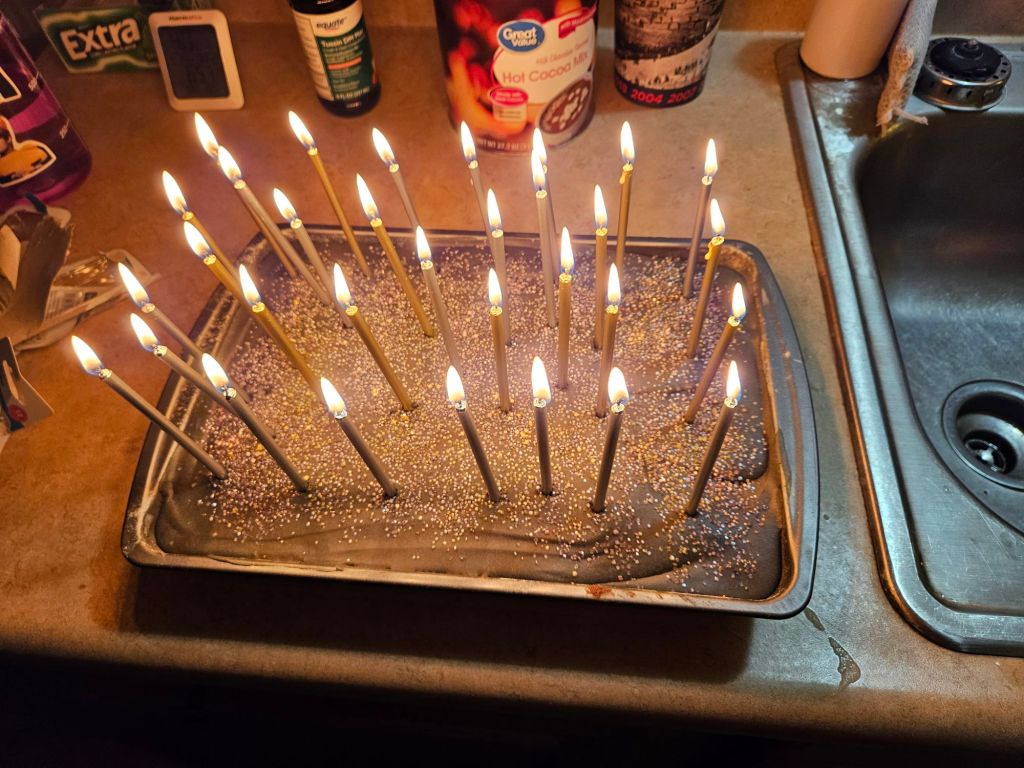
Time Passing Marked By Candles
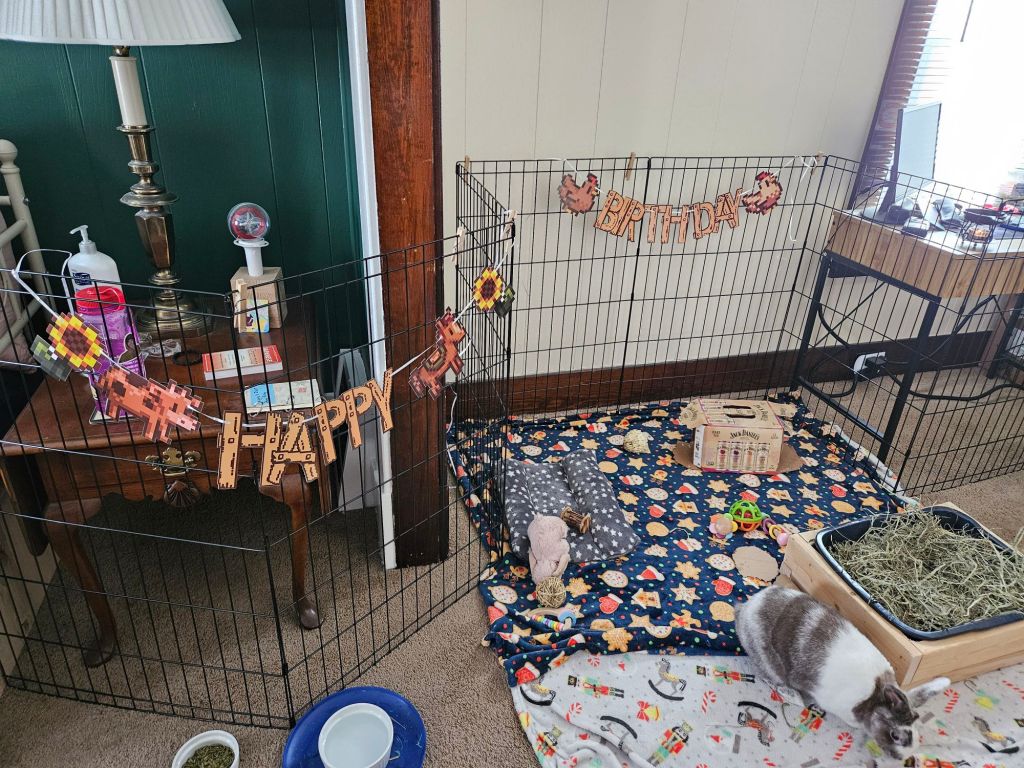
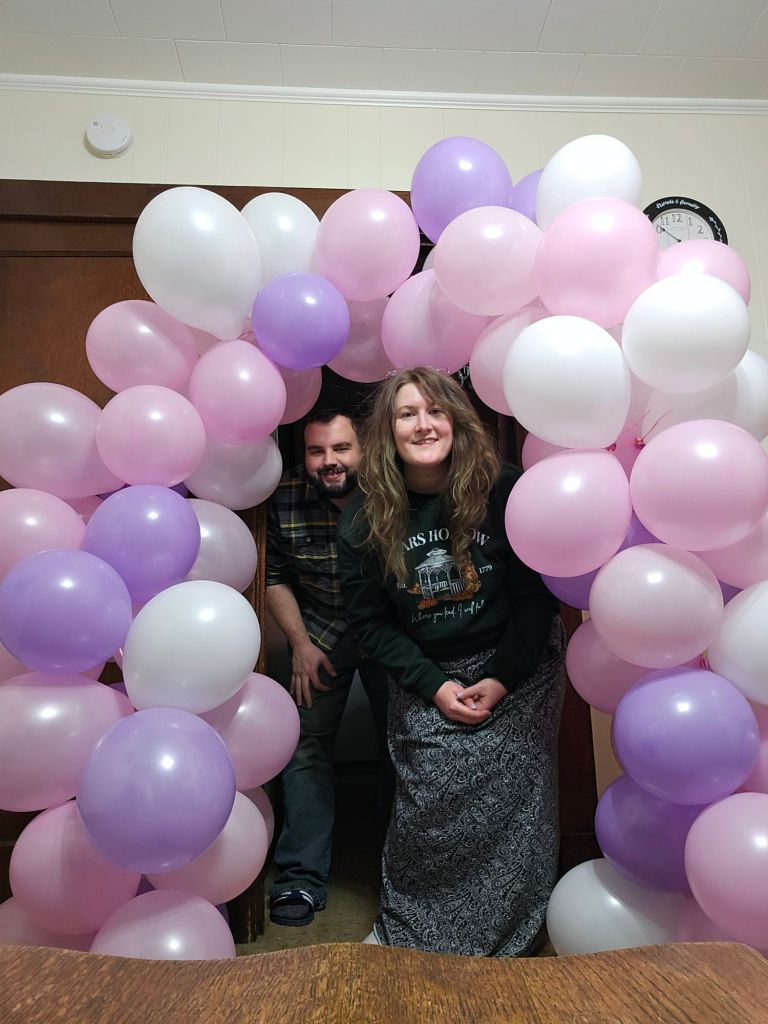
We made a balloon arch for my birthday, a Brooklyn 99 high honor, and I decorated the living room with Stardew Valley garlands, making the time lost to snow and ice marked with something to remember.
In this waiting, I’ve had unwelcome house guest of Winter, the lingering cold. I had a troubling cold over Christmas, with sinus pain that kept me awake through the night. I thought it was gone as we entered January but I realize now the cold retreated but hovered in the shadows throughout the long mid-winter until Valentine’s Day when it re-animated and gave me some of the worst congestion, ear-aches, and sinus pain I can remember. I couldn’t lay down without the sinus pressure pain building, I couldn’t sleep. I felt miserable.
The Grim Night
I think the hardest part of feeling sick is the mental part. The patience to do nothing, and let go of the goals in your mind. It’s boring! There was a few days of utter boredom. Knitting felt like too much, taking naps would trigger the sinus pain, and I remember feeling useless, empty, and void of joy.
I felt deeply frustrated. Why was I going through a second round of this? Why is this happening to the point that I can’t write, or work on my projects, I can’t even keep up with my share of the housework. How long until I feel normal again?
When we lack health, it is the only thing we crave. It truly is more valuable than money. As I go further into adulthood, I growing in appreciation for the little things like health, a boring day where you feel great, and you tend to forget this feeling looking back on it. It blends with the others, but those ordinary moments are what give us such rich life.
Like those mild days of the year, those 60s or low 70s and sunny days, they blur in the background of the weather extremes, but really those days were probably the most mood boosting of the year.
Shall the Shades of Pemberly Be Thus Polluted?
One of the few things that gave me joy during that week of sickness was BBC’s Pride and Prejudice 1995.
It was my first watch. I’ve read the book and watched the 2005 version, but this series had escaped me. I think I put it off because I though it was a hipster scheme. How could this one be so much better than the 2005 movie? With its soundtrack and cinematography? The hype was real, it’s spectacular.
It’s a series I could watch again, and again, for those nature shots and the beautiful furniture. The costumes are true regency in design, compared to the 2005 version. Each character is flushed out like book and it is simply a treasure. 😍
Nothing Nice to Say
February and January to be honest have been a challenge for me creatively. I haven’t known what to write about without it sounding like I am complaining. There is a lot of crap going in the world and it’s been a struggle for me to keep my eyes fixed on the good.
When I’m in this mood, like I was during our house buying process in May 2024, I struggled to write on here as well. I didn’t want to complain and also didn’t feel inspired because of the distractions. And so, time passes.
In this time I’ve been listening, reflecting. I’ve been enamored by the latest Bible Project series. I’ve been waiting for the final blow for Joann’s which happened. I’ve been researching new sources of yarn and fabric, keeping my eyes and ears open for new brands to fill the void.
I started reading again – beginning with an attempt to re-read Crime and Punishment which I shelved for now after Semyon Zakharovich Marmeladov‘s long rant in the bar. I was feeling too sick at that point to envelope myself in that misery and pivotted to Six Crimson Cranes by Elizabeth Lim.
I have filled my days with the soundtrack of Aespa, Stray Kids, and Red Velvet. We even started a new K-drama, Crash Landing on You, which I’d like to write about along with Business Proposal and Extraordinary Attorney Woo.
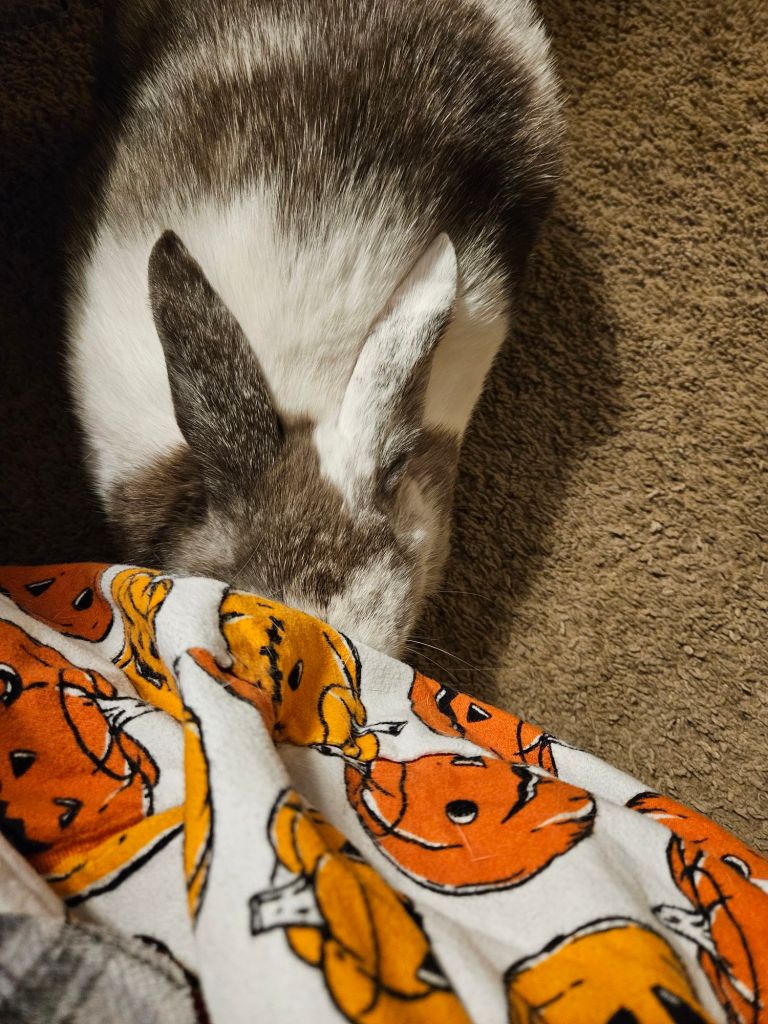
We’re re-watching Only Murders in the Building and laughing our way through Impractical Jokers. All the while I’ve been working on several knitting WIPs that I look forward to sharing! Along with a Mia update, she is one happy bun, and has become a cuddly little friend who desires our company. My heart is full. 🥰
I hope wherever you are in the world, you are feeling healthy, loved and know how much I appreciate you, reader, who spend time with me here. I wish you a lovely weekend!

















 One Rabbit Riot