My 2025 So Far Has Been A Creative Slump

I can’t believe it’s May already, I’ve been so busy with our garden project and a follow up project of screening in our back porch, distracted by Joann’s closure and the evil running rampant in our world that I have been on a slow creative trajectory, and its really catching up to me!

Upcycling, Alterations, Mending

As of late, the bulk of my sewing projects have been preservation, updates, or reworking the garment into something new. In mid-winter, I decided to tailor every t-shirt in my closet. This meant I would be hemming every shirt to end above my hip and bringing the end of the sleeve upward, to end higher on my arm, which is more flattering to my vertical line. I’ve had to repair a few garments and mend some older pieces. I’ve also been taking some of my clothes in and tearing them apart to be upcycled into new projects I can’t wait to share. That I thought I already shared. This leads me to the next point: I have a backlog of projects I held back last fall.

The Head Games of Content

I still battle imposter syndrome, and in doing so, last year, feared that I would run out of ideas. So I slowed down my posting to keep these good ideas and projects in the tank for a rainy day, and instead of this giving me the freedom to create and write without pressure this gave my type-B nature and out to avoid writing, because I had the ideas, and so I sat on them and now it is almost a year later, without these projects having their time to shine. Grinding it out on Instagram last year definitely took my focus from me, and then these constant recession fears have kept me in a place of fear, which has stifled my desire to create, in case I can’t buy more materials in the future. I worry too much. Writing for two years, on this site, led me to a sophomoric slump heading into 2025. I lost the urgency to keep going and backslid into complacency and a lack of creativity. I have also transitioned into a slower creative process in hopes of gaining that spark again!

Hand Sewing 2: Electric Boogaloo

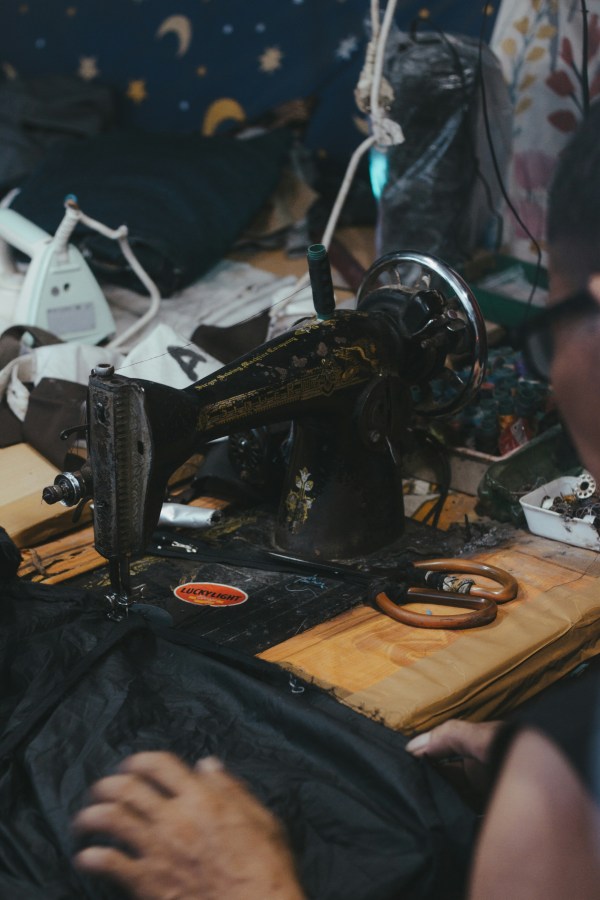
When I began sewing in 2020, I did so through sewing by hand through the tutorials of Bernadette Banner. I did this for two years and then acquired my Heavy Duty Singer, which I switched to using exclusively from the end of 2022 through the beginning of 2025. But this year, I am having some struggles with my sewing machine. I love the speed at which you can make things, but I fear that this boost in speed has dampened my craftsmanship.

When I was sewing by hand, I had the time to consider the project and to ponder where the design was going to lead me. With my sewing machine, I have fallen into a bad habit of making without pausing to ponder. I also started designing simpler, easier-to-sew garments for efficiency instead of art. But speaking of efficiency, I don’t think sewing machines are as efficient as we make them out to be. Mine is quite finicky. It eats fabric and thread. I go through the thread considerably quicker using my Singer than I do by hand. I have to rip seams and sew again, many times, because the machine messed up a stitch or skipped stitches altogether, and I’m tired of it. So my machine and I are taking some time apart.

Slow and Steady, A Life of WIPs

And so, here I am months later with a few finished garments, many WIPs, and a better life balance. Including a refreshed creative well. The time spent working outside with Kyle crafting our screened porch, tilling garden beds, painting, upcycling furniture, studying Japanese, drawing, reading, exercising, etc, has been a wonderful way to remember why I love creating. I find knitting to be my happy place. For a week, I barely knitted, and my mind was filled with far more rage without the needles weaving yarn into cloth. I’ve come to a place in my sewing journey where I want to learn and be ambitious again. I’ve filled my closet with good handmade pieces, but I want to create exceptional, one-of-a-kind things.

I have learned that knitting is my favorite mode of creation, and sewing is the freedom to make what I don’t want to buy or can’t find offered. The process is just as important as the final product, as trite as that is, creation and crafting are where we thrive, not consuming. I find moments of calm in working with my hands and feel satisfaction in stepping away to old creative haunts, like painting or gardening. I think the slump was an important part of growing. I hope that you find creative refreshment and know that you are loved. Stay safe out there, these are dangerous times, and know that I care about you all very much.
Weekly Garden Update #8 – Choosing a Fence

While we’re waiting for the ground to dry out so that we can direct sow some seeds and dig the rest of our garden beds, we realized that we need to figure out how we’re going to keep critters out of our veggies. Where we live, the most problematic animals are deer and rabbits. We definitely have squirrels and birds, but we aren’t going to keep them out.

We’ve always known that we’re going to need a fence, but reaching the point where we need to pick out the one we want to use snuck up on us. Ideally, we would have a limitless budget to pick a fence option that works and is pleasing to the eye. However, that isn’t the case, and choosing an option that is cost-effective is a top priority. I’m going to use this week’s update to discuss what fence option we’re going to use and how we reached that decision.

Short-Term, Not Long-Term

Because we don’t have a limitless budget to build or purchase our dream fence this year, we recognize that the fence we get this year isn’t the one we’ll have forever. There’s a good chance we’ll begin upgrading our fence as soon as next year. But that doesn’t mean we want to buy something that is completely disposable or junk. We don’t need a permanent solution at this time, though. We also want the fence to be minimal and not an eyesore, which removes some of the more expensive and permanent options.

What We Considered

Let’s start by discussing the fence styles we knew wouldn’t be possibilities given our budget and desires for an aesthetically pleasing fence.

  • Wood fencing – picket fencing is beautiful and iconic, but it’s also expensive ($60 for an 8-foot section of 6-foot-tall panel), regardless of whether or not you’re buying the panels or just the materials to build everything yourself. Also, because we need a fence that’s high enough to keep deer out, a picket fence gives off a vibe that you don’t want your neighbors to see what you’re doing. Rather unfriendly.
  • Vinyl fencing – see above, only more expensive ($109 for an 8-foot section of 6-foot-tall panel).
  • Metal fencing – not only is it very expensive ($152 for a 6-foot section of a 6-foot-tall panel), but it also wouldn’t successfully keep the critters out. Deer may not be able to jump it, but rabbits can hop through the spaces.
  • Chain link fencing – this fencing is very expensive ($139 for a 50-foot roll of 6-foot-tall fence), and it also doesn’t create the vibe we’re looking for. It looks like playground fencing and is anything but minimally intrusive. Our neighbors use this type of fencing for their garden beds, and it doesn’t look natural or happy. It also doesn’t work well because rabbits have learned to dig under it.
Fence
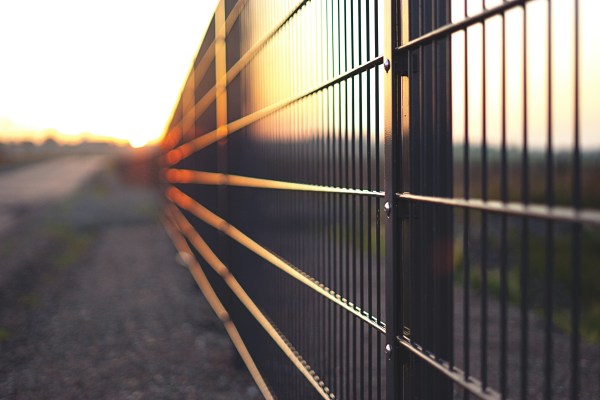
Photo by Simon Maage on Unsplash

Now for the types of fencing we did consider:

  • Rolled metal fencing – this can be either the chicken wire style with hexagonal openings or the welded type with square openings, but I’m including both in this. It’s pretty affordable (a 150-foot roll of 5-foot fencing can be purchased for $61), relatively easy to install, and successful at keeping the critters out. It can also be used for plants to climb. As a bonus, it looks pretty good.
  • Rolled plastic fencing – this can be called multiple things, including poultry fencing. It has 3/4-inch openings, is pretty durable, and easy to install. It’s decently affordable ($33 for a 25-foot roll of 4-foot-tall fence). It’s also green, so it blends in with the surrounding nature and doesn’t look out of place.
  • Construction barrier – this is exactly what it sounds like. It’s the plastic fencing that goes up around construction sites to prevent people from trespassing. It’s often found in orange, but you can find it in green. It’s pretty similar to snow fencing. It’s decently affordable ($45 for a 100-foot roll of 4-foot-tall fence) and very durable, but is an eyesore. The orange was a non-starter, but even the green looks out of place.
  • Deer fencing – this is also called extruded mesh rolled fencing. It is largely used to prevent deer from getting to orchard trees. It’s not overly durable, but there are many examples of people successfully using it to protect their gardens. It is extremely affordable ($23 for a 100-foot roll of 7-foot-tall fence).

What Did We Choose?

In the end, we’re choosing the deer fencing. It provides us with the ideal blend of price, size of roll, and attractiveness. We’re going to need somewhere between 600 and 700 feet of fencing. The deer fencing is less than $200 in total, while some of the others are well over $300. Because we needed to buy so much stuff to get our garden started this season and we screened in our back porch this year, we wanted to keep costs down where possible.

This deer fencing will not last forever, but we’re okay with that. If it breaks down or gets torn, we can replace it. We are also confident that if we take our time with installing it, it can last longer than expected. We can also repurpose the fencing in the future by using it as netting to protect plants from birds. Since it’s so easy to set up and tear down, this type of fencing will also allow us to replace it with long-term solutions a little at a time. Similarly, at the end of the season, we’ll be able to take the fence down and store it. We’ll let you know how installing it went and what we think of it throughout the growing season. Happy gardening.

Beginning My Study of Van Gogh

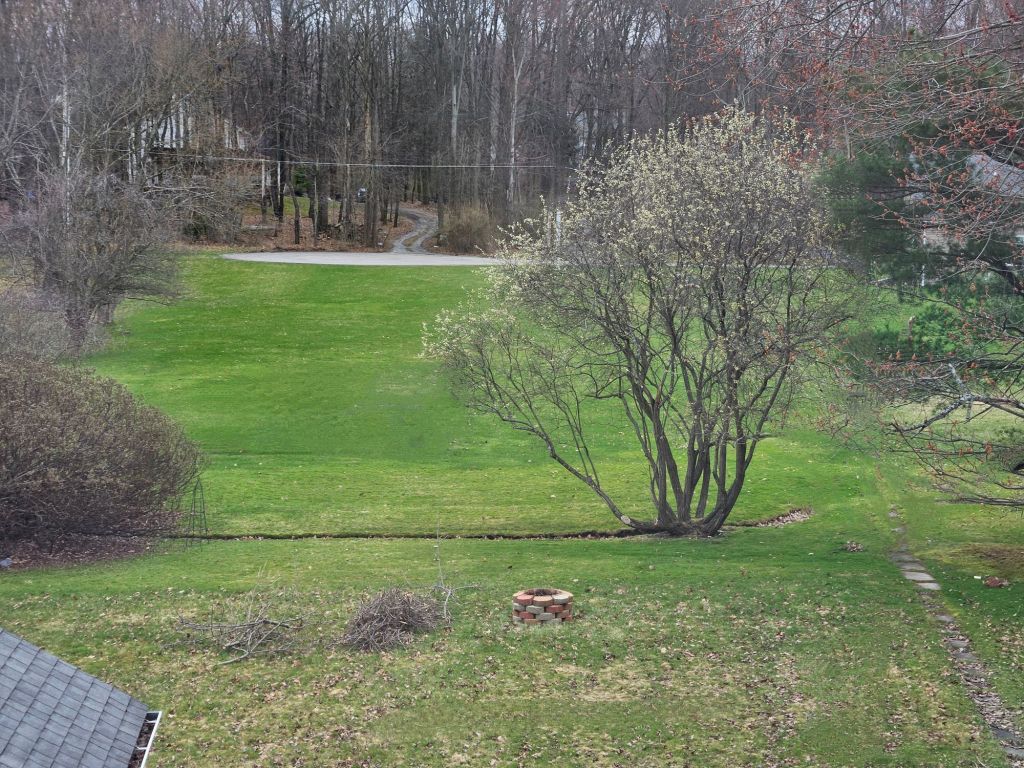
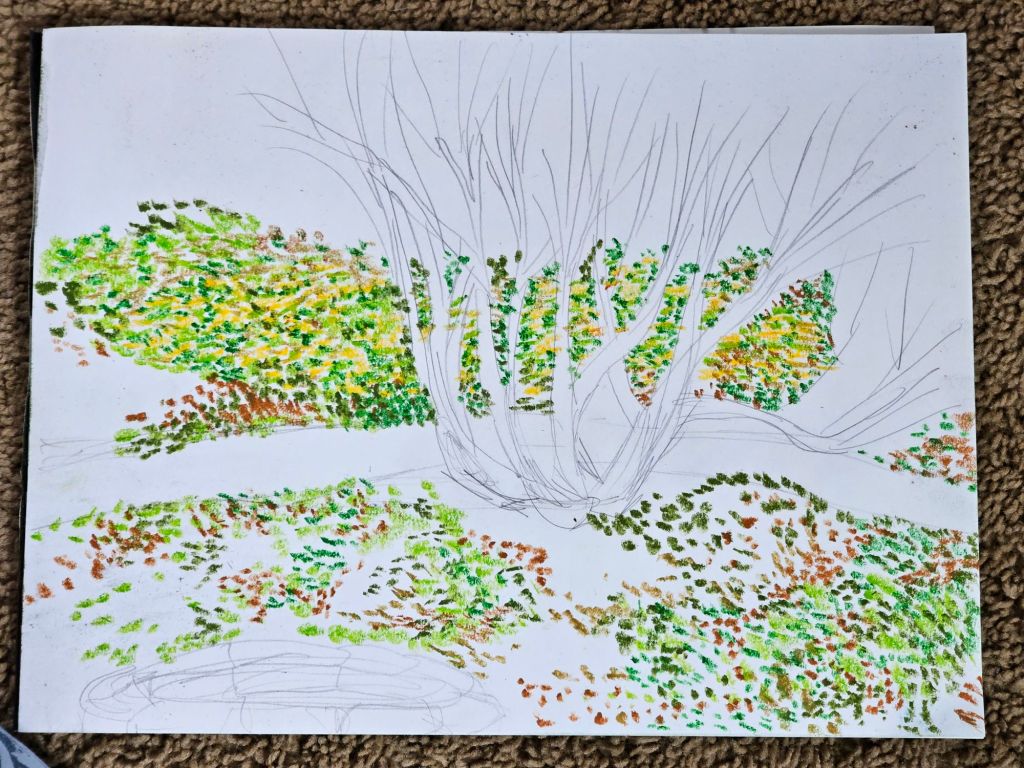
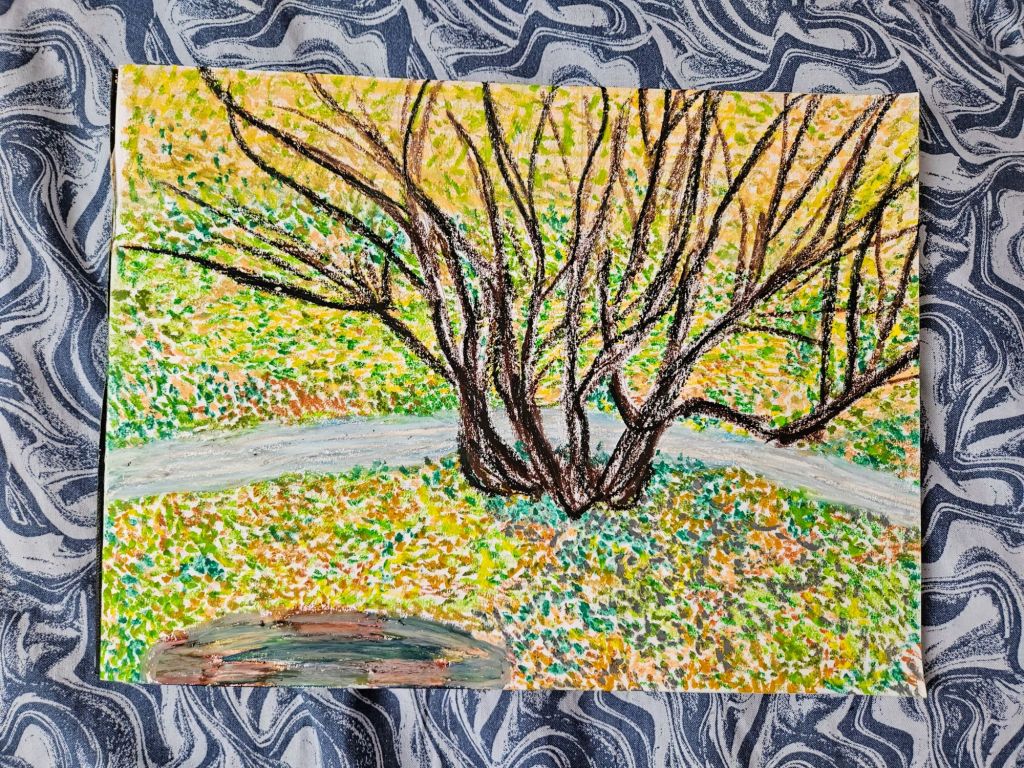
The other day, I ran across Van Gogh’s work again and I went down a rabbit hole of researching his work and soaking it in. I saw his and other artists I admire at the Musee d’Orsay in 2010, and although no pictures were allowed those memories have carried with me. So it got me thinking, would modern life be more beautiful to us again if we saw the world through the eyes of these artists of this movement? 

That’s what I plan to explore this year. This drawing above, captures the view from my sewing room. With modern infrastructure and other touches erased by the magic eraser tool to keep the analog and the natural.

#71 – Caramel

Luscious, warm, a decadent note that makes a dessert sing in perfect harmony. I used to crave this in candy bars, a Twix, or perhaps a scoop of Bruster’s Chocolate Turtle ice cream.

The Great British Bake Off opened my eyes to Banoffee Pie and the simple luxury of making a caramel without instructions. The process is a beautiful as the finished product. A melting sugar and butter, finished with cream.

The Caramel Macchiato taught me what coffee can do beyond ice cream sundaes and candy confections. It can be comforting, a delight to grab between classes, or an awful first job.

But how does one enjoy something they can not eat? I’ve been stumped on how to recreate this treat since my dairy-free lifestyle began, until I picked up a pint of dairy-free Phish Food from Ben & Jerry’s. It had the marshmallow fluff (which I discovered I could eat again this past winter) and ribbons of soft caramel. Caramel that tasted like the real thing.

I began to search for knowledge on blogs and Reddit until I found a recipe so simple I had to give it a try.

  • 1 can of coconut milk
  • 3/4 cup brown sugar
  • 1/4 tsp kosher salt

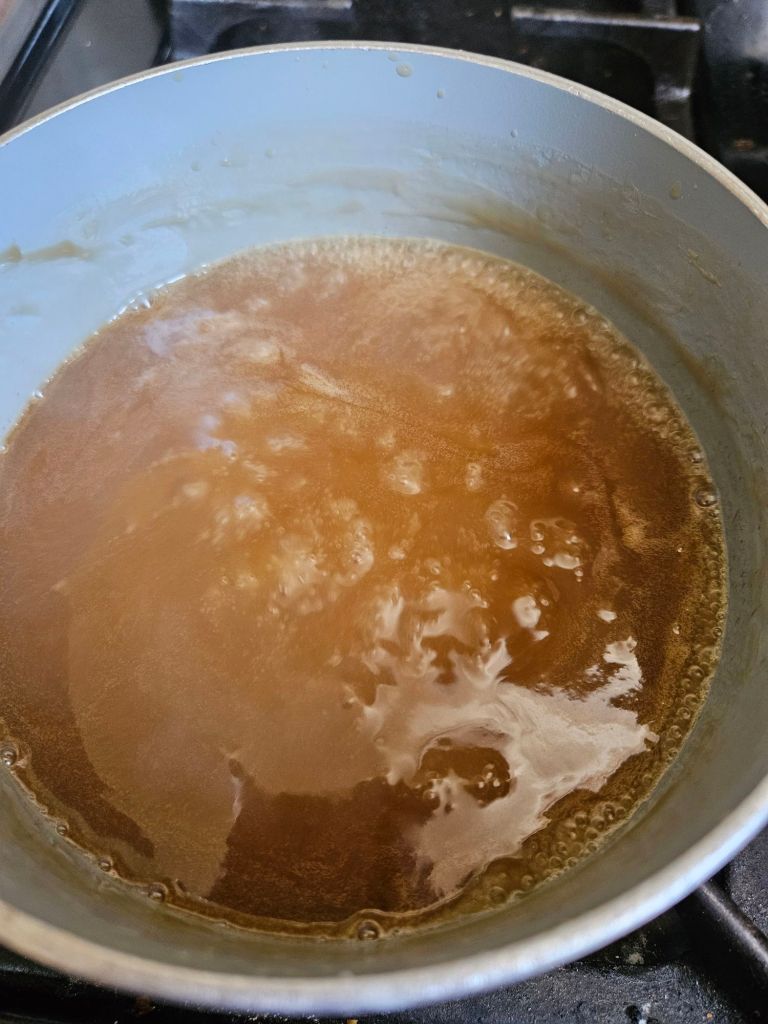
It was so simple. Melt the ingredients together on medium-low, then boil and reduce for 20 minutes. Let cool in a glass jar and store in the fridge. I made it last night and it was marvelous!

I found Vanilla Bean Oat Milk ice cream at the store for a sundae, and bam, I was a kid again, making an ice cream sundae with my grandparents on a summer evening.

What is a flavor that takes you home? Is there a food you haven’t had in a while that will comfort you in these trying times? Make it, your inner child will thank you.

Weekly Garden Update #7 – Making Mistakes, Patience & Construction

Out of busyness, I skipped last week’s garden update. Rather than mail it in with a very light garden update, I ended up taking a week off and coming back this week with a full update. I apologize for skipping last week’s post. We worked on screening in our back porch last week, and it was time-consuming and tiring. In this week’s update, I learned that I’ve made a mistake when it comes to starting seeds, started a bunch of new seeds, and continued learning the importance of patience with gardening.

Seed Starting Mistake

Each day, I check our seed starting trays to see if the plants need water or can be transplanted to a larger growing cell. Two weeks ago, I noticed that a few were a bit laggy and didn’t look as healthy as they did at the start. Since starting the seeds, I had kept the trays on the heat mats and under the lids. I also turned on the grow lights once germination happened. I did a quick Google search and was reminded that the heat mats should be switched off and the lids removed as soon as germination happens. I immediately unplugged the heat mats and removed the lids, but it was too late for some of the starts, and I needed to restart some of them.

When this happened, I was down on myself. I really hate making mistakes when it comes to gardening, especially when starting seeds. Maggie reminded me to be nicer to myself, which is something I always need to be told. It’s incredibly comforting to know that mistakes are okay. I have to remind myself that it has been three years since we gardened, so it’s natural to forget some of the details. And I suppose that if mistakes are going to be made, it’s best for them to happen at this stage rather than when they’ve been transplanted and are a lot further in their development.

Transplanting, Restarting, and Starting

After learning that I needed to restart some of the seeds, I kept looking for opportunities last week in between the porch project to transplant starts, start new seeds, and restart some of the ones that failed. Sadly, it took until Friday, when the weather wasn’t great and we needed a day to rest, to find that time. That afternoon, I transplanted a bunch of tomato, pepper, and cantaloupe starts. I even transplanted a dahlia start that had outgrown its small starting cell. We didn’t buy any larger planting pots for this year’s garden after finding 10 or so of the peat pots from our previous garden. Beyond those, we’ve been reusing plastic containers that would otherwise be recycled.

Then, on Saturday morning, I took the time to restart the seeds that had failed and start some new ones that I hadn’t been able to get to. The ones that needed to be restarted were some tomatoes, peppers, cantaloupes, and dahlias. We also had to restart all of the eggplants, tomatillos, ground cherries, broccoli, and onions. The new seeds we started were our cucumbers, winter squash, pumpkins, and melons. We were originally going to start our beans at the same time; however, I read that they don’t need to be started indoors since they grow so fast. Instead, we’ll wait to direct sow them in the garden. With the newly remembered knowledge about heat mats, domes, the importance of air circulation for starts, and watering needs, we wait.

Gardening Requires Patience

I am not a patient person. I struggle to give things time and want to rush them. This is the case for gardening. At this time, we have a few plants that could be transplanted into the ground outside and other seeds that can be directly sown into the garden. However, the weather has been uncooperative, with cold temperatures at night that keep the soil temp low and consecutive rainy days, which isn’t ideal when seeds are trying to germinate or young plants are trying to establish roots. The rain has also prevented us from tilling the last two garden beds. I know that we’ll be able to get all of this done, but not rushing the process is difficult for me.

Up Next

This week, we wait for the recently-planted seeds to germinate and to see how the starts do after being transplanted. The healthy ones have done very well in the first few days, while the ones that weren’t looking great in the original cells still don’t look too good. We also need to mow our grass for the first time this year, which will include mowing down the areas for the new beds and handling some of the grass that has regrown in the existing beds. Finally, we have plans to finish our screened-in porch when we can get to it and to work in the garden. We had success with setting up our rain barrel and have noticed its impact on the ground around where the downspout originally deposited water. I’m hoping for a pretty eventful week in the garden. Happy gardening to you.

Earthquake MC440 Cultivator Review: Capable of Much More Than You’d Expect

I’ve written about the cultivator we bought in multiple blog posts so far:

As a refresher, we bought the Earthquake MC440 cultivator. It has a 40cc 4-cycle engine and has tines that adjust the working width between 6 and 10 inches. We’ve had it for over a month now and have probably put between 15 and 20 hours on it, so I feel it’s a good time to review it.

Earthquake cultivator

Pros

Let’s get this out of the way now: There are a lot more pros than cons to this cultivator, and I cannot recommend it enough.

Power

Despite only being a 40cc engine, this cultivator has plenty of power. If you don’t have a good grip on it and are prepared to hold it back, it will be ripped out of your hands if you use full throttle. Typically, half-throttle is about all you need for most of the cultivating work. It’s powerful enough to break ground in lawns that have never been dug before, allowing it to take on jobs generally reserved for larger tillers.

Mobility

Before we bought our cultivator, I didn’t know that some of the smaller ones don’t have permanently attached wheels. Instead, they’re only used when moving it to and from the garden beds. Ours has a set of wheels that adjust to determine the depth of the tilling tines. When you aren’t actively cultivating, you can raise the wheels back up for transportation. The tiller is also nimble enough to be maneuvered in tight spaces and stored in the corner of your garage.

Weight

This is connected to the mobility section, but the weight of this cultivator makes it a breeze to use. At only 32 or 33 pounds, most people can lift it if necessary. This makes it easy to lift out of the garden bed or into the back of a vehicle for transportation.

Cost

This was one of the biggest reasons we bought this cultivator. While many larger machines were approaching $500, we spent less than $300 for ours. That amount is higher than some of the smaller cultivators we considered, but this one provided us with the perfect balance of size and power at a cost we were comfortable with.

Durability

I know that we have only had our cultivator for around a month, but we have used it a lot. We also haven’t gone easy on it. We’re asking it to cut through ground that has never been anything but grass and turn over the soil below the grass up to a depth of 4 or 5 inches. We’ve also run it for hours on end, and it has yet to give us an issue. It fires up within a few pulls each time (as long as I remember to turn it on), hasn’t stalled, and the tines remain undamaged.

Cons

Weight

The same thing that allows this cultivator to be mobile and easy to maneuver is a con. The heavier a cultivator or tiller is, the easier it is to get the tines deeper into the soil. That leads to less work for the person running the machine. I’ve thought a bit about how to add some weight, possibly by attaching something to the frame, but I haven’t pursued it.

Mud & Weeds Getting Twisted Around the Tines

This may not be a con with this specific machine or just cultivators in general, but I’ve found that the tines don’t do a great job of preventing mud from getting caked on them. This can reduce the effectiveness of the tines when cultivating. It’s not a huge deal, as it generally only happens when the ground is pretty damp, but it is an inconvenience. Similarly, grass can become twisted around the metal bar that the tines go on. This doesn’t impact the cultivator’s ability to perform, but we typically remove the tines and pull out the grass before putting it away each time we use it. Thankfully, this is an easy process with only one cotter pin on each side holding the tines on. It only takes a few minutes to remove the grass before you’re back in business.

Noise

If you read our post on picking out a cultivator, you’ll remember that we placed a lot of weight on how loud a cultivator would be when considering the power supply. It’s a reason we went with a 4-cycle engine over a 2-cycle. I still think it was a wise decision, because a 2-cycle engine would have been louder, but this cultivator is anything but silent. If the RPMs are kept low, it’s not loud at all; however, if you need extra RPMs to get through tough ground or thick grass, it quickly becomes noisy. I wouldn’t want to use it without some form of ear protection. That being said, any cultivator that uses an internal combustion engine is going to be loud, and it’s still much quieter than a leaf blower, so there’s that.

Would I Recommend the Earthquake MC440?

I would absolutely recommend this cultivator for anyone looking for a lightweight, cost-effective option. While it’s designed to turn over soil and work in existing garden beds, it can punch far above its weight class and does a great job in untouched ground. It has its limitations, but if you are uncomfortable with spending $500 on a large tiller and only plan to use the machine occasionally, this is a perfect cultivator.

Easter: A Confrontation of Oppression?

Something I have pondered through this Easter season, thanks to the Bible Project Exodus Way series, is Jesus’ motivation for His mission and how His ministry confronted oppression in the 1st century. Oppression from sin, society, and the corruption of the Jewish leaders, all under foreign occupation. It was a tense atmosphere. That is something I tend to forget. I think that the Pharisees were petty, and Rome was a casual player; instead of Jesus existed in the context of people who wanted to be free.

The Romans were incredibly brutal. If you have watched Gladiator or Gladiator II, there is a temptation to get caught up in the splendors of Rome, but they were a society sustained by oppression. Gladiators were slaves; any immigrants or conquered nations were slaves, there was a strict class divide, and women were not valued. With newborn baby girls and disabled babies being thrown away to animals, off of cliffs, or sold to human traffickers. It was a common practice.

Doesn’t this sound like eugenics and the practices we saw in the extermination plans of genocides? Yep. It’s a cycle of evil and sin that we fall into over and over again. Same ship, different day.

Under Roman occupation, the cross and crucifixion were a common and calculated practice of execution. Men, women, and children could be crucified, usually by the roadside. It was designed to instill fear and was engineered to be a horrific death, and yet Jesus willingly allowed himself to be crucified for us. All of us, His mockers, those scheming against Him, even those Romans.

He came to challenge our understanding of love through the radical expression of it, taking the sin of the entire world – past, present, and future – on His fully human, yet fully God, shoulders – to pay a price we cannot pay for freedom from oppression.

Jesus ministered to everyone in His path, but He sought out those who were abandoned by the society they lived. Jesus healed the sick, the lepers who were kicked out of society and left to live as outcasts, when they needed compassion and care. Those who were disabled were ignored, but Jesus saw them and healed them. He confronted the demons who took up residence inside people and cast the demons out, ending the oppression of their host and restoring peace.

He gave second chances. There were many times throughout His ministry when the disciples and His followers let Him down, yet Jesus forgave them. Even when they denied and abandoned Him, Jesus forgave. Forgiveness confronts the oppression of grudges, vengeance, malice, and bitterness.

Our society is embroiled in grudges, vengeance, and the oppression that comes with unwillingness to forgive. Justice with an iron fist, eye for an eye. That is not what the Bible calls for, even in those Old Testament passages that are brought up to challenge this – the Egyptians were free to join the Passover and be spared from the plague that killed the firstborn, the kingdoms that were in Canaan when the Israelites did it God’s way were conquerered not by violence. God is a just God, a righteous God, and even in the Day of the Lord is not a God of oppression. We are called to forgive, to be reborn in salvation as new creations in Christ, and to give second chances with generosity and love.

The Passover of the Jews was at hand, and Jesus went up to Jerusalem.  In the temple he found those who were selling oxen and sheep and pigeons, and the money-changers sitting there. And making a whip of cords, he drove them all out of the temple, with the sheep and oxen.

And he poured out the coins of the money-changers and overturned their tables.
And he told those who sold the pigeons, “Take these things away; do not make my Father’s house a house of trade.”

His disciples remembered that it was written, “Zeal for your house will consume me.” So the Jews said to him, “What sign do you show us for doing these things?”

Jesus answered them, “Destroy this temple, and in three days I will raise it up.”
The Jews then said, “It has taken forty-six years to build this temple, and will you raise it up in three days?”

But he was speaking about the temple of his body. When therefore he was raised from the dead, his disciples remembered that he had said this, and they believed the Scripture and the word that Jesus had spoken.

John 2:13-22 ESV

It’s been a daily struggle for me and the rest of us who have eyes open to the oppression occurring in our midst. I am angry. I want to fight against the pervasive corruption. This Holy Week has been a week of me learning about the El Salvadorian CECOT prison, where there are no second chances ever, hearing that Autism is an “epidemic”, Putin launching missiles during Ukrainian Easter celebrations, and my state’s governor being the target of arson because of his faith.

The ceasefire, which I knew was broken, just fills me with frustration at the ongoing suffering and senseless death. Like the Pharisees, Sadducees, and Romans, the apathy for suffering people and the greed for power and money is the “tale as old as time” plot playing on today. I wish the world would wake up. It’s also the tax deadline here in the United States, and I have to say, I am the least confident I’ve been in my adult life that my taxes are doing anything good for my community.

Especially when social services and disaster relief funding are cut. I want these leaders in my midst, and my fellow citizens who are lukewarm like the church of Laodicea, to stop perpetuating “Christianity” as a form tied up with politics and confront the ways that they are participating in the oppression of others and repent, because this week is about freedom. We are all invited to become a new creation.

True freedom. From who we are, have been, come from, or what we feel we can’t be. It is a transformative second chance of mercy and justice that we have not earned, but is freely given. No corruption or cronyism can take it away, nor can violence or tyranny.

If you are reading this and haven’t experienced this kind of freedom, may I recommend the Chosen, the Bible Project, and the gospel of John first? John is so thematic, and it’s a story that will pull you in. The world is a vampire, but there is hope. Stay strong, friends, and know that you are loved.

Nine O’Clock

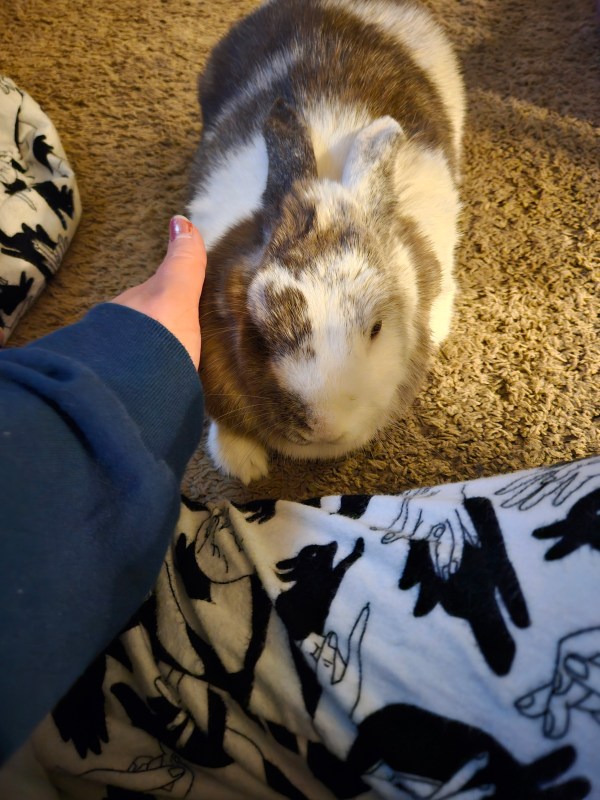
I have a standing date each night. I hurry myself to keep the pace if I see the clock begin to click out of my grasp after my shower. Sometimes I feel like doing my skincare is a chore, I’ll skip the lotion on my limbs or let my hair dry as it pleases if I think I am running behind. As the months pass, I feel the wonderful weight of this schedule, something that was a number on a clock face is now an important engagement with my bunny.

It started slowly, maybe a coincidence? After my shower, I’d walk down the stairs to look for Mia. It was a greeting, then it became a moment on the floor. Now, it has grown into a tradition, an expectation that I will get settled and sit on the floor. I can do some things, other petting Mia, but it must be done from the floor. I can play a little Animal Crossing, one-handed, or find a video to play as background ambience. She’s not a fan of K-pop, though she will tolerate a girl group, with impressive vocals only.

I used to coax her over, after I sat on the floor with a little wiggle of my hand. Recently, she’s been waiting for me in the doorway. Her tail wags, her little body binkies when I open the gate, and last night I could barely find a spot on the floor with her zoomies encircling me. With how rocky our start was, did I ever think Mia would greet me with such effervescent joy? No, I truly thought we would have a distant and tense relationship. Instead, last evening, after 30 mins of pets and snuggles, she flopped next to me, waiting for more pets. She is safe here, and I feel the safety in the silence. The contentment of being with her, the love that is felt in her presence, and the tempo she creates to slow down and breathe.

The greatest thing you’ll ever know, as Nat King Cole wrote in his song “Nature Boy,” is just to love and be loved in return. This line is a key theme of Moulin Rouge, and Bowie’s version of this song was my first encounter with is this song. It’s what I think having a bunny is, to love and be loved in return. I feel her love in her morning greeting, no longer greedy for breakfast for pets, but instead trusting me that food will always be there, she runs over to say “Good Morning.” It’s a celebration of another day, another gift of life, and another day spent with the ones we love.

Weekly Garden Update #6 – Transplanting a Pepper Start & Buying Materials for Our Screened-In Porch

This week’s update will be a bit shorter than usual, largely because there wasn’t a lot that happened with our garden. We didn’t start any new seeds, but we did transplant one of our starts, saw more seeds germinate, and bought materials for an upcoming project that sort of has to do with our garden.

Transplanting a Pepper Start

The first start you transplant into a larger pot is a momentous occasion each year. It signifies that the seeds have successfully germinated and your plants are growing closer to being ready to be moved outside and into the ground. For us, the first start that needed to be transplanted is the first Cal Wonder bell pepper seed that germinated. Since it germinated on March 22, the plant has grown to about 4 inches tall and has developed its third set of leaves. That’s the point when most recommend transplanting pepper plants. Luke from the MI Gardener YouTube channel published a video where he talked about the importance of not crowding a pepper plant’s roots, and if that means transplanting a plant to a larger pot multiple times, that’s okay. We decided to go with the 5-inch tall peat pots so that the plants only have to be transplanted once between germination and going in the ground. It also happened to be the size we had on hand.

When I transplanted the start, I mixed in some Garden-Tone, which is an organic well-balanced fertilizer that promotes root development and leaf growth. After wetting the soil, I was extra careful to not disturb the root system when removing the start from its cell. The day after transplanting, I cut the bottom off a Gatorade bottle so that it could be placed over the plant and act as a greenhouse since the start no longer fit under the dome of the seed-starting trays. We’ll keep you posted on the plant’s progress after being transplanted.

More Germination

Last week, I wrote that we started a lot of seeds, including all our tomatoes, husk tomatoes, and cantaloupes. In the week since we started them, every variety of seed has successfully germinated. This doesn’t mean that every cell has germinated, but that at least 1 cell of every seed has germinated. This is a huge step because these vegetables are going to be a large section of our garden. Some of the tomatoes and the cantaloupes have even had to be thinned already.

Buying Materials for Our Screened-In Porch Project

Over the next two weeks, we’re going to be taking on screening in our back porch. We have a nice-sized back porch that we love sitting on. It’s also where we have our grill. The downside to it is that wasps, yellow jackets, and other bugs love it as well and can make sitting out there kind of miserable. It is also open on all 3 sides, so rain gets blown in. We’re addressing all that by screening it in with a set of French doors. The back will have screens that run from the ceiling to the floor, while the sides will have screens that run from the ceiling to the railing, which is waist high. Below the screens, the sides will be closed so that rain can’t be blown in. You may be wondering what this has to do with gardening. Great question.

When we bought the lumber for this project, we bought extra to use as a trellis for our long beans to climb and to build some planter boxes. In the end, we hope to see the trellis incorporated into the porch. We’ll share pictures of the project when it’s done.

Up Next

This week, we’re planning to pick up the rest of the materials we need for the screened-in porch project and to start our beans and cucumbers inside. Outside, the soil is finally starting to warm up, and it’s dried out nicely. That means we should be able to direct sow some of our seeds. We’ve been very patient with them because the soil hasn’t been warm enough to this point. How are your seeds going? We’d love to hear from you. Happy gardening!

What About the Garment Workers? 2025 Edition

There are a lot of things about this new Trump term that are setting my jaw. The newest one, though, happens to be the tariffs zeroing in on Vietnam, and something we are losing sight of in this discussion—what is going to happen to garment workers?

Vietnam is one of many countries in the global south that are responsible for the garments and shoes we wear every day. In May 2024, they surpassed China as the largest textile and garment market share for U.S. imports. The nation employs around 2.5 million people within the 6000 garment and textile factories across Vietnam. This rapid growth of 37 billion USD worth of garments being made in Vietnam in 2024, from 26 billion USD in 2017, is due to the low wages of Vietnam compared to the higher wages of China and even higher wages in the United States. In the 1980s, before Clinton’s NAFTA in 1993, garments sold in American stores were made in the United States, but this changed during the Clinton era and has gotten worse in the 32 years since through the rise of fast fashion and the fashion industry’s reliance on cheap labor at the expense of the garment workers.

So, now we bring the so-called “Liberation Day” of tariffs, and since this is a space I like to keep safe, I’m going to move on because I have nothing nice to say. What I want to focus on is not making this job American again, the rising prices of garments, or anything political, and instead I’d like to zero in on what seeing the world with a Kingdom (God’s Kingdom that is) lens has taught me so far this year.

I’d say that my eyes being opened began last year with diving deeper into Fashion Roadman’s channel, which led me to watch two documentaries – The True Cost of Fast Fashion and Perfume’s Dark Secret in 2024. The other revelations that were exposed in 2024 such as the labor practices of Armani and Dior, were very telling for how are garments are made from luxury to fast fashion. It’s no secret that the fashion industry, including luxury brands, is not concerned with the moral cost of their decisions and is solely focused on getting money in their pockets for their shareholders. So, what is going to happen within the fashion industry as a result of these tariffs set on Vietnam, especially with no sign of negotiation from the Trump Administration? I think it’s going to be bad for everyone.

I think costs from the brands will be cut from the quality of the garments being made, to the materials, to the contracts with these factories. I think garment workers will probably see the biggest hit in their work environment and wages, as their economy is hurt. Or potentially the factories will no longer get these contracts to cut labor costs, meaning the production of garments will be further entrenched with slave labor in countries where workers are exploited. Then what will those women be left with? Garment Workers are primarily women, and they are skilled laborers who could be left without a way to provide income for their families.

It’s not okay for so many reasons.

That is why, as we look towards Easter, I am thinking about those who are oppressed in our world, because Jesus came to be a new Moses and lead us through the Exodus Way. Thank you, dear reader, if you stayed with me on this one. I wish this world weren’t such a downer right now, but just know, although we are from the United States, we are not pleased and empathize with how this is affecting you too. ❤

Create a website or blog at WordPress.com

Up ↑