To Write, You Must Read

To write, you must read. Simple right? Like any skill, it requires building those muscles, learning from example, immersion in a new concept, but as I started to brainstorm a new novel project, my tank was empty. I had concepts, settings, character types, but the world building through dialogue and metaphor…it was pretty bland. Not what I expected!

When I began work on Udal Cuain in the summer of 2016, the story poured out of my mind. I had to carry a notebook around, for the small pieces of plot, personality, and setting I found welling up throughout my day. Names were easy to determine, as well as the dramatic conflicts. Why does it feel so different? Well, I remembered something when I picked up Six Crimson Cranes by Elizabeth Lim – to be a good writer, you must read other stories. In 2016, I wasn’t sewing, knitting, or gardening; I was reading in my spare time. I was still watching movies and TV shows regularly, instead of how I spend my time now watching far too many YouTube videos.

Although I have read a lot of books, it’s past tense. I have not been a consistent reader for years now. Honestly, since 2021, my reading has dropped off. We moved from a town with an incredible library to a borough with a library that is so underwhelming, and on the verge of losing its funding, that I have not been reading new things, nor have I discovered new authors. I have a few books on my TBR list, books that I have bought with the intention of reading, but instead have become bookshelf decor. It’s disappointing.

I used to have a Kindle, where I would buy books on sale for $2.99, sometimes splurging on a full-price one if it was intriguing enough. I would borrow a book a month, and browse the free section for something fun to pass the time. A book I remember finding on a sale that became an absolute favorite of mine was ‘The Shadowy Horses’ by Susanna Kearsley. I found this book initially in high school, reading it before work and during breaks at my summer job. I found Susanna Kearsley again, books upon books of her work at my local library in Meadville. They had a fantastic selection, with a monthly rotation of featured books and new authors. This is how I found Elizabeth Lim – her debut novel, ‘Spin the Dawn’, was a featured YA selection with a stunning cover that drew me in.

I miss the rotation of books and the lack of consumerism. The books were picked by the librarians, books that I could borrow and return with the option of buying. Now, if I want to find something new, the best affordable option is Thrift Books, but it lacks the in-person ambience of a library. Kindle helped me find some great twisty thrillers during the time that the mid-2010s. Remember when Gone Girl, Girl on the Train, The Wife Between Us, and An Anonymous Girl? I used to love these twisty books. There was a fantastic emergence of fantasy around this time, too. I remember finding endless YA fantasy series on my library shelves – I miss that time in my life, diving from adventure to the next. A good story connects us, inspires us. I forgot how important it is to be immersed in stories to be a good storyteller.

So I have picked up reading again. I am forcing myself to put down my projects, and the Animal Crossing, which I didn’t play before when I was reading often, and to read again. It’s going okay. The moments I give myself to sit and read are magical, like I remember, and I think I’ve already had better ideas since reading again. I wish I had kept a list of the books I read in the 2010s; it’s a bit of a blur. Maybe, with a little research, I can find them again and share my favorites with you?

I hope you are enjoying your summer (or winter if you live in the southern hemisphere) and that you have a good story to escape into today. Thanks for checking out my corner of the internet today. I hope to see you again. ❤

Editing My Manuscript from 2017

Yes, I finally did it. I found the manuscript and shifted through the 250+ pages to wrangle this story of years past down to a neat 187 single-spaced. It was a mental challenge to revive these characters I knew so well and remember who they were and why they were important to me. More important to me than I think I gave them credit in years past. Saoirse, Kinvara, and Biorn were characters I felt connected to because they were just as lost as I was. They had life toss them about, treading water for meaning in the dramatic family civil war they found themselves in. It mirrored life. It foreshadowed the losses I knew were to come and helped me sort out the mysteries of my own life in an imagined Viking Age Ireland full of shifting alliances and invaders.

After all this time, why now? I have two other novel ideas I want to explore yet I felt unable to write again until Udal Cuain was laid to rest. The leviathan of the past which helped me forward when I was stuck. I believe I needed creative closure. It was a manuscript without an ending. I revised and revised the story in 2018, taking it into darker waters. It became too dark for me to continue as my life was moving from darkness towards the light once again, there were things from history and Irish Celtic culture, as well as Norse culture I was unwilling to interact with anymore.

When I was first working on this project, I was steeped in historical research from my independent study about Early Medieval Ireland and fresh from watching the television show Vikings. It was a time when I was hiding behind a shell, numb from unresolved trauma that I was a shell of myself. Hidden away from my true self, masking and unhealthy. The violence of this show and the research on Irish pagan rituals were something I ignored, even though I cannot think of them without shuttering now. These were things, details I needed to remove from my own writing to find my own peace. Not to censor it but instead to be authentic to who I am. If you want to learn more, this novel will just be a stepping stone for more research because I cannot in good conscience tell a story with such evil and bring that evil to you the reader.

The bulk of my revisions were just that, removing things I no longer felt comfortable with to have the story reflect who I am now.

Being in the present, and seeing through the time how I have found peace in my personal life since writing Udal Cuain in 2017, allowed me to give it an ending. I didn’t know where to leave my characters when I was walking through a season of confusion. I see now that I had to read more of my own story before I could write their story.

Why am I sharing this novel on my blog instead of shopping it around to publish or publishing it as an E-book? I don’t know if this novel is something at this time that I am pleased with as a representation of who I am as a writer. It was a story that I needed to write for myself but not something I felt like it was a story I wanted to have out there for people to rip apart. I don’t feel ready to put it to market so I am sharing it on this blog for you the reader to read if you would like to do so.

Analyzing how I wrote the story and talking through the novel planning process has been more rewarding than seeing it as a published book. It was a process that gave me meaning then and still rewards me now for the things I learned through trying something new. When I started jotting down ideas for Udal Cuain I was a non-fiction writer, preferring essays and historical research as a medium to write, as well as a creative expression like poetry. World building? Not a thing I thought I could do, nor did I think that creating characters and crafting dialogue would be as fun as I thought. If you have an idea, go for it! You will surprise yourself by what the discipline of writing and creating will do for your mind. It’s challenging, confidence-building, and relaxing to escape into a world of your imagination. I believe you can do it!

Thank you, reader, for supporting me and viewing those Udal Cuain novel writing posts. It gave me the encouragement to go back and finish what I started many years ago.

The Curse of Rusty Twill

Like a slinking shadow, the smell crawled through the air, around corners, through doorways into my senses. A stench. Burnt, rotten, the stank of a memory I wanted to forget. Alive in the darkness, its origin story, a wasteland of fashion monsters of dye. But what was it that was haunting me? Is its origin or its nightmare of an olfactory bouquet?


It began one innocent day, the day I met the monster of rust and cotton. On an innocent bolt it dared to rest its head, in the middle of the broad day, have it no decency? It was a fabric unlike any other. It called to me. Upon its skin was a color shift, a creasing of sorts that changed it from a monotone to a cacophony of lighter wrinkles depending on its movement. Oh, little fool you were then, innocent, blind. Dreaming dreams of Japanese raw denim and its way of embossing life on its fiber with wear and time. This was no Japanese denim. This cotton twill, was its foil, a disappointment wrapped in the innocence of Hobby Lobby’s fabric aisle. A devil creeping.

But our devil wasn’t creeping, it was clever. It hid its true form, pretending to be normal, a kind soul of twill and natural fiber. A fabric you can count on for pants, jackets, a workhorse, a staple. These were my dreams before the nightmare began.

Maybe it achieved consciousness? An impatient menace, you waited in my fabric cabinet as we packed up and slumbered in our storage unit as time passed by. Did you act out because you thought you were forgotten?


How could I forget how we met? It was one golden summer day, a day full of promise. A new life began in 2×4 frame and carpeted meadows that roam my floor. A washer and a new dryer. As I invited you out of your slumbering resting place, your weave was rough, and a little stuffy, but I thought nothing of it.

That was your warning sign, a marker of what you are. We walked together. I carried you down the steps. I wanted to keep you safe. Gently I washed you with my hypo-allergenic laundry soap. There were no corners cut. I welcomed you into the fabric family but this was no ordinary wash. Something changed about you in that water. You became a monster. Swampy. A whiff smacked me across the face.

In horror, I smelled the washer. A stench emanated from the room. What could it be? My mind raced – did something crawl into the washer and die? Shaking off the fear, I placed you into the dryer which was a deal with Winifred Sanderson. A cauldron of heat and dry air transformed you into a thing of scent not even a dog could love.


With the dryer’s final squeal, I plucked you from your transformation machine. A stink with strength. Fortitude and funk. Your form was different. Your threads were softer, malleable, and even toned. But your evil had spread, and with fear, I pulled towels from the dryer. They became one of your covens, in a soft amber tone. The smell, it was pungent, accosting.

Lost in thought I carried you upstairs and contemplated my fate. Was it the washer or perhaps the dryer? That old, squeaky dryer. What kind of mayhem did the dryer succumb to in its former life? Was it contagious? I shook the thoughts from my mind and tossed the towels back in the hamper, encrusted in a stench that made me question whether they were washed with soap or copper pennies.

But you, the problem, the evil in rust and twill, you, I placated with Febreze and time. I brought you back to my sewing studio and waited. Instead of getting to know the Febreze and fresh air, you woke me up to the stench of your fibers wafting from the room. You evangelized your rancid agenda and spread it throughout my room. A beast of smell, there you sat proudly, smirking at the work of your hands.

You were an enemy beyond my wildest dreams. A creature lurking in the depths of the nose. An odor I could taste, it lingered, it languished in my mind into paranoia. And that was what it was living with you after your second wash, you monster.


I tried to live with you, accept you for your true form but the stench of your dye was a war cry of all that comes from you. You lead the charge of fashion’s destruction of our peace. Rust is your form. Toxic, destructive, you had to go.

I thought you were going to win. Even with you out of my room, your smell lingered. A nightmare with no end. Burnt, acrid, copper pennies, a smell that dries out the senses like the desert of Fury Road. Why must you torment me?

You gaslit me. A smell that lived on. The towels held on to your evil. Third wash, a scream at the growing wall of your fortress. A sinister scent crept, it jumped from the towels to anything washed them with. An evil baked in. Will this nightmare end? What do you want from me? An enemy without logic but hungry for conquest.

The stench was set into the fiber of your being and I played right into your trap for revenge. Foolishly I gave you more to feed on, as I looked in sadness at the towels helplessly smelly lying on the floor. Could they be saved? How far would your campaign of olfactory pain carry on?!

Your rusty threads were a root system taking hold of me. I could feel them choking me in my dreams. A smell that could not be forgotten. A creature unwilling to die. An assassin of fiber. Mutated from fast fashion’s evil realm.


One day, when io began to lose all hope, a bright light, like a sword dropping from the heavens came to me. A plan. I hurried before you could imprison me forever in your devilish arms, running towards the light. I had to dispose of you and your ground zero stank.

With all my might, I held back your reach, your scaly hands from taking the towels with you. A splash of white vinegar. A bottle of vinegar. I drowned your sinister stench, I killed it in the name of all that is good and pleasing, fresh air rejoiced for the freedom to exist again.

Although you are dead and buried somewhere far away, I worry you’ll come back with your creeping stench. Rusty twill of my nightmares…I think you might be alive.

Novel Timelines Are My Achilles Heel

I mentioned in My NanoWrimo 2023 that I am working on a new fiction idea, a novel to be exact. I’ve been pushing myself to write and not worry about being perfect, to let the ideas flow and take life on the page. The polish can be applied later. It’s been a good strategy so far. I have my intro into the world, a general idea of the setting and the characters. I’m meeting them and their world. I have a clear idea of what I want this story to say and where it is going to end. What I am struggling with is the timeline. I have the ending, but the beginning is getting a bit fuzzy.

Story Structure

In my previous project Udal Cuain, I decided to join the story after the damage had been done so to speak. There was an in-media res structure to the timeline with flashbacks and characters processing the aftermath of an exile. It was a definite form of the story. The plot was handcuffed to certain storytelling devices to make it work. I don’t want to do that again. I don’t want my writing to be one note. This is where I am at a crossroads, do I start at the beginning? Do I start in the beginning-ish middle? How many flashbacks do I plan for?

The other thing I am uncertain of is whether I tell the story in first person and then how many perspectives should I include? In Udal Cuain there was an ensemble of main characters, do I narrow it down to one perspective for this one? It’s a lot to consider.

My Plan

My plan at the moment, to keep writing but not get ahead of myself has been to write notes above and below what I have written in my first draft to build out the story beforehand and afterward the chapters I have. I’ve denoted things I want in separate chapters. I’ve started pausing when the ideas are getting ahead of my mind and leaving a note to add more detail where I’d like to come back and elaborate further.

I’ve started planning out character names, and settings cues. This is the first time I’ve jumped in and sketched out the characters after. I had two whole chapters written before I had to commit to placeholder names for the sake of clarity.

With this in place, I’m planning to pause my writing to sketch out a summary from beginning to end that I can use to orient myself within the story and decide where to start. This intimidates me a bit because I’ve never sketched out a timeline from start to finish before. With Udal Cuain I was uncertain where the story was going in the end and it showed. This one has a definite ending.

Writing Music

I’m excited to have a writing playlist taking shape! Music is such a big inspiration for me. The music pulls ideas out of me and without good, expressive music my writing can be a bit flat. Currently, my favorite writing albums to pull from are Tomorrow X Together’s minisode 1: Blue Hour, The Name Chapter: Temptation, minisode 2: Thursday’s Child, Aespa’s Drama, Stray Kids’ Rockstar, Five Star, and No Easy.

How much TXT is on the list surprises me because I’m not a MOA or an avid listener more of a fringe TXT fan. There is something about the melodic nature of their songwriting that has made me happy and focused. SKZ is obvious, 3RACHA just gets me. Their creativity overflows from the music. Drama by Aespa is a sleeper. I didn’t like the new album upon release but it’s good for getting my creative juices flowing.

Goals by the End of 2023

  • Create a working timeline, with a clear start and finish.
  • Determine character names
  • Write a few more chapters, don’t lose momentum.
  • Be a diligent note-taker to keep the ideas flowing.
  • Determine the setting.
  • Have fun while doing it.

My NanoWrimo 2023

How late in the month is too late to make it count? Today, on the second to last day of the month I got a brain wave and have two chapters in a rough draft! I don’t want to give too much away because it’s early in the process. I’m ecstatic though! I was beginning to think Udal Cuain was a fluke and another idea would not come my way. Making lemonade from lemons, that’s the inspiration at least.

If you celebrated Thanksgiving, I hope you had a wonderful holiday with your loved ones. If you don’t celebrate I hope you had a great weekend. I got some solid advice this weekend that I think catapulted this process forward. I was at my mom’s and met up with a former professor from my college. He’s become a family friend over the years which is cool because he was one of my favorite professors.

I was showing him what I was getting up to with sewing and knitting, sharing my design journey, and he asked me if I was planning to sell my creations. I was honest and shared that when I think about taking the leap to sell online or in person, I am filled with doubt that my items are good enough to sell. All I can see are the mistakes instead of listening to feedback from others that they would be interested in purchasing. He considered this and replied that the difference between a published dissertation and a perfect dissertation is that one is completed. It may not be perfect but that doesn’t mean it doesn’t have value. When we get stuck in the loop of perfection, we may never move forward to the next step.

This echoed advice I received from a random stranger who is also a writer, earlier in November. That staying organized with the writing process is less important than just getting started. I can’t write a book unless I get the ideas down on paper, no matter how chaotic the first draft is. She encouraged me to just write and edit it later but to get the ideas out of my head. It gave me the motivation to begin an outline for a dress history research project that I’ve been working on here and there in November. This would be non-fiction, which I was fine pivoting my attention to, but I am stoked that I actually had an idea for a non-fiction project because I want to push myself to go all the way this time. To not get stuck in re-writes with Udal Cuain and abandon the project instead of pushing forward to publish it.

I feel a creative spark coming back! This month may not have gone to plan and that’s okay. I have two chapters and an outline for another project. I am truly pleased! What I have been reminded of through this process is how important people are to our lives, strangers and mentors alike, you never know what solid advice others have to share if you take the leap to reach out and connect.

#31 – Painting for a Future Story

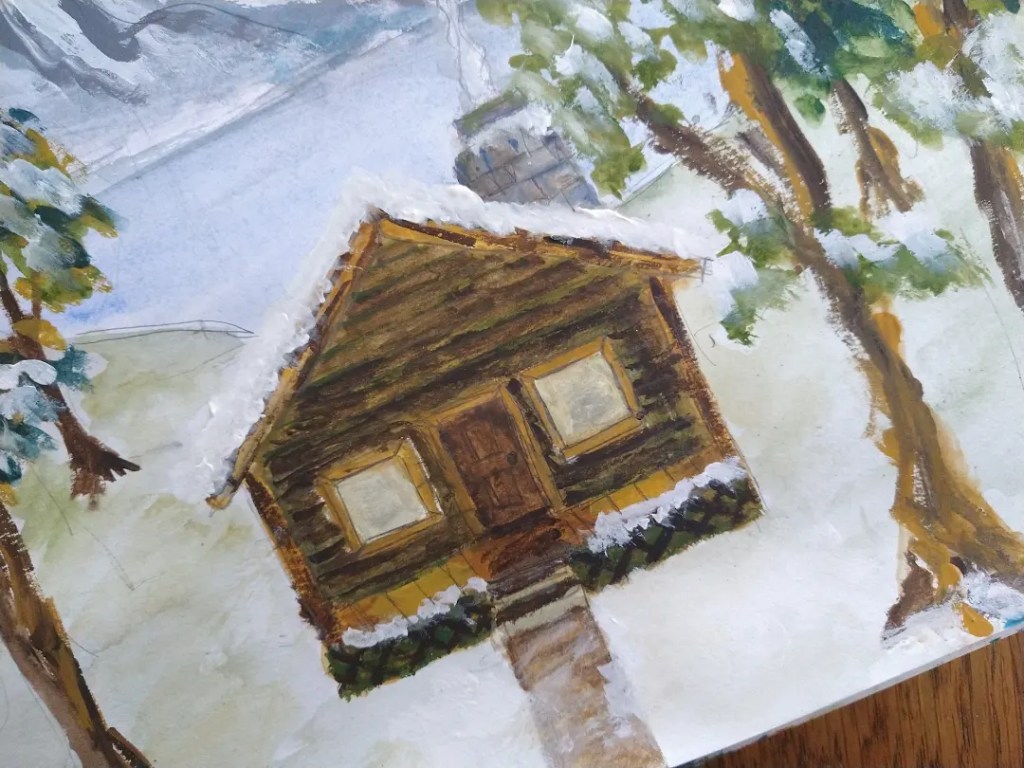
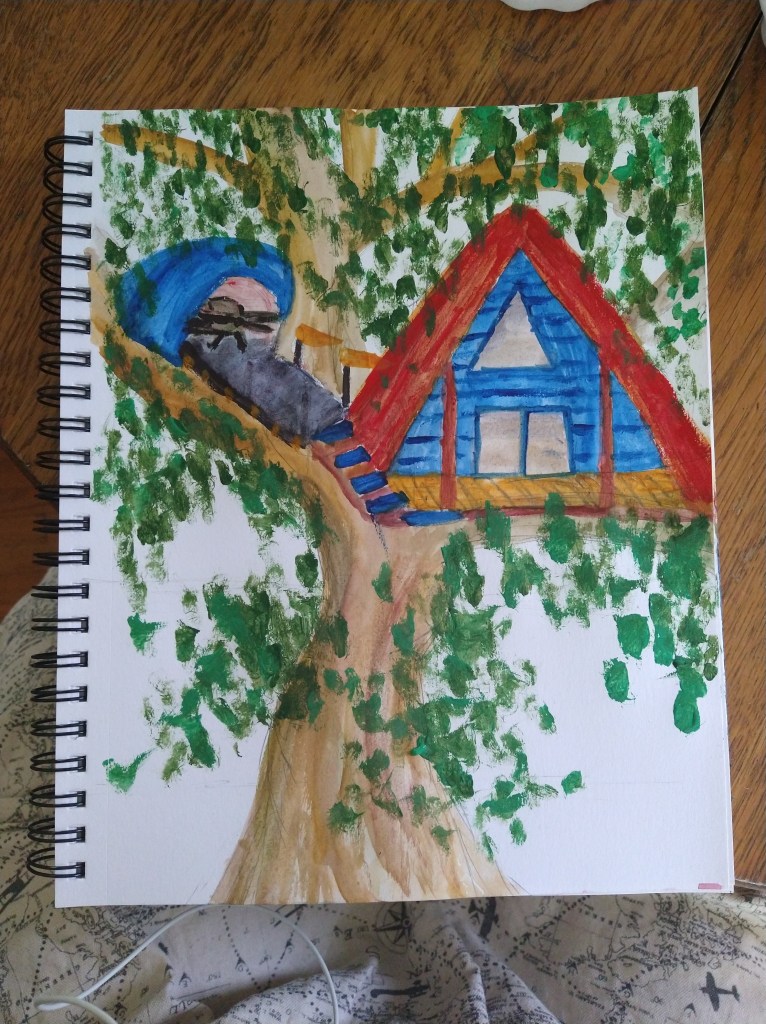
I am a visual person. When I begin drafting a setting or character it helps me to build a story around a tangible place. While I enjoy going to Pinterest for ideas, I like to sketch out original artwork to dive into a place of imagination. This week, I dove into my notebook of ideas and began painting places for potential settings for a story. Here are some of the places I came up with.

Cabin on a Glacier Lake with Mountains

A-Frame Treehouse with Airplane Hanger

Living Roof Yurt on a Beach

Udal Cuain Best and Worst Storytelling Devices

I’ve been thinking, to be honest since I put the Udal Cuain project on a permanent hiatus in 2019, should I attempt to finish it or revise it in some way that would be less dark and depressing? It’s the truth, the story went off the rails into a very dark place that I no longer enjoyed working on. But could I potentially unweave the threads of plots that took the story in an unsatisfying direction? That is something I’d like to ponder. And hopefully, this project is not doomed by its subject material! I think this is applicable to all creative processes because as you make something there is that tightrope feeling that you are balancing between success and utter crap. At least that’s been my experience.

Well, I think the only way to sort through this is to look at the things I think the story should keep and what was an utter disaster. I’m going to give each storytelling technique a grade for a bit of structure. Let’s jump in!

Religion

Udal Cuain is set in the Early Medieval period aka the Viking Age aka the dark ages, which is not as well known as other historical periods. Especially when it comes to Irish history as it was known as Hibernia at the time to the Western world. The Romans were tired of dealing with the Celts and so they built Hadrian’s Wall and left them be. The only group to venture closer were Christian missionaries, including St Patrick, St Brendan, and St Brigid in the 5th century AD. As Udal Cuain was set in the west of Ireland in the 8th century AD, with most of Ireland converting to Christianity and leaving Druidism, the choice to include a druid-influenced calendar and have open belief in the Druid Irish gods was a wise decision. It feels like a plot hole to the historical evidence we do have available. For this reason, I give this religious storytelling choice an F for disregarding history.

I wasn’t as committed to my faith at the time of writing and so I was not interested in bringing Christianity into this world, although I chose the setting to be in the era of a well-established church for the sake of being in the Viking raiding age. That was a bit of a faff and something I would definitely change today if I was re-writing this story. I would either set the story back before the 5th century and nix the Viking Age plot in order to explore the Druid era for continuity’s sake or would remove the Druid part and have a more nuanced approach to these cultural legends in the framework of the 8th century where the High Kings were part of the church and monasteries were a key part of the societal structure. I would probably choose the second option because the Druid world is so incredibly dark and evil – not exaggerating, human sacrifice was prominent – so I would prefer to research something a bit more light-hearted.

Villains

A goal I had for this story was to make a cunning and diabolical villain out of Tearlag, I wanted her to be so good at being bad that the reader could almost respect her but also be waiting for her demise. When we meet her in the story she is a widow who exiled her son and grandkids by force out of her kingdom. She is hypercritical of her children and conniving in her marriages. Her husband Conn was beloved by all but Tearlag has a Machiavellian streak to her. I wanted her to be untrustworthy and truly good at executing evil plans against her enemies, including her family members. As the Dowager Chieftainness I wanted her to have a legacy that she couldn’t quite nail down, but she would use to exact every last drop from her allies.

Tearlag became one of my favorite characters to write, she had so much sass and pure nerve to accomplish what she wanted without giving a hoot what people thought. In the end, it made me sad to know she would have to be defeated. I would say for Tearlag’s character I would give her a B+ because she accomplished all I wanted her to, but now I think I could make her character even more polished. I would develop her character even more to see the layers of how she became this way and search to find if there is any good in her or if she was always born to the villain of her life.

My secondary villain was Tearlag’s son Riordan, who was a chaotic character and a bit of a brat. I didn’t want him to be likable, I wanted his character to wear his misguided decisions like a badge as the selfish person I created his character to be. His flaws drove the plot, and his mistakes bred characterization for other key players in the story. His depression for a lost love that should have never been, all while being married to another woman displayed his inability to handle responsibility that would inevitably inspire his exile. I would give Riordan’s character a solid A because his character did not waiver into plot holes, it was a disagreeable anchor to the story. I would let his story sit in the plot and flush out his failings a bit more so that his exile is more clear to the reader. I may consider if he is redeemable or if a story arc would add anything to his character.

Protagonist

I’m going to start off by being brutally honest that I don’t care for either of my protagonists anymore and would have to re-write them. Both Kinvara and Saoirse fall into the trope of “not like other girls” and I don’t like that. It was such a common storytelling trope at the time of writing that I didn’t see I was falling into it when actually I was trying to make them outsiders in their respective worlds. For this reason, I give them each the grade of D because they’re not hopeless characters but they need some revisions.

Kinvara was the opening protagonist of the book, she is shy yet observant and doesn’t like the current place she finds herself, as an exile on Searbh because of her parents’ loyalty to Riordan and his wife Saoirse. Kinvara is intelligent but a bit judgmental, and has great dislike for her sister Aoibheann as being a frivolous girl for chasing after boys, yet Kinvara effortlessly gets along with the boys, making her a bit of a pick me girl too. Not what I intended! My revisions for Kinvara would be to eliminate with tension with her and her sister, making Kinvara more likeable. I’d also like to make her a bit braver and more willing to seek after the connection to the faeries, in doing so going on her quest without a guy to help her. I’d love to see her face down with Tearlag in a David and Goliath kind of scenario, completely humbling Riordan in the process for fighting this battle for him.

Saoirse was just too dang whiny. Like, if Riordan made her life that miserable I’m not sure why I kept them together? Through the process of the handfastening marriage they had a year to figure out if they wanted to be married, Saoirse could have left after a year since Riordan never stopped his relationship with Caoimhe. I’d like to keep Saoirse’s inner struggle with managing her emotions and feelings of rejection. Her addiction I think brought a depth to her character as self-hatred was a demon she was wrestling with. A relatable thing. Her mentorship with Cheiftain Conn was a plot line I didn’t explore enough, as well as the friendship with Brigid. Saoirse fell into the trap of being defined by her relationship which was not the kind of female lead I intended to create. Defintely a lack of experience in character development on my part.

Faeries

I absolutely loved developing out the idea of faeries in the story based on Ireland’s legendary origin story of a mythical people who founded Ireland called the Tuatha de Danaan and the Formorians. It’s where the legend of the banshee, Finn McCool, and the Children of Lir come from. The imagination of Irish storytelling is incredible and I wanted to incorporate that possibility back into the land of Ireland itself through the character of the faeries who communicated with the sensitive in society – Kinvara and Chieftainn Conn.

This provided a space to dabble into fantasy with magical portals to another dimension and unexplainable powers that would be channeled through the land itself, particularly the sea. Sometimes it would be channeled through specific characters in the story like Caoimhe being endowed with the powers of the raven, essentially a morrigan or banshee. Kinvara could sense would the faeries wanted and could feel the lack of peace within the land itself for the evils being carried out by the Viking raids and Tearlag. For how much imagination and possibility this storyline gave to the story of Udal Cuain, truly a driving force for the adventures and conflicts that awaited the characters I would give it an A+ grade. This was the best part of the story and made it feel unique.

Combat

As a sensitive person I didn’t expect to enjoy writing fight scenes but it was a lot of fun to write moments of struggle and strategic movements. It was something that grew in scope as the story evolved to a point where the characters were sometimes even fighting the environment around them. This added a spooky element to the battle scenes as the enemy was not clear. Would it be a human opponent? A human opponent with a pull over nature itself because of their connection to the faeries? Would the enemy be almost supernatural in strength like the Raven? Or would they just be a dang good fighter? These were ingredients for the pacing and intrigue for the story as it was a battle of kingdoms and ideas. I would give the combat scenes a B for their solid plot movement, but I’m holding back from giving it an A because I could have created more dimension in the story if I had been willing to lean into these battles more and move the story forward instead of being wishy-washy on characters dying.

Final Thoughts

I recommend taking a look at your writing in this rating type of analysis because as I wrote this I felt such clarity on what I liked and didn’t like. I think if I had done this while I was still working on the project I may have been able to revise and carry on instead of getting overwhelmed and burn out from the stress of my day job. Thanks, dear reader, for going on this little retrospective journey with me.

Rediscovering Fiction Writing

I’ve decided to get back into fiction writing! It’s been a long time, so long I almost forgot how to begin. Because of how fuzzy my creative brain has felt, I’ve been stuck in the confines of what feels familiar. I’ve been wanting to go back to what I made before. At first, I wanted to bring back Udal Cuain from memory. The bits and pieces of the characters still live in my mind, but upon trying this without my manuscript – it is a bit daunting, near impossible to remember what I wrote 6 years ago. I considered rebooting it in a new story. I could fix the decisions with the plot that irked me, revising it into a thing, but at that point, why not just branch out to a new world and new characters that embody who I am now as a writer instead of what I was. And so here we are, and I’m excited!

The Writing Prompt

Since about October 2022, the pull to dabble in fiction has returned. This was in part from a close writer friend who challenged me with a writing prompt. She asked me to write about my favorite garment from fashion history and write a story from the perspective of the person who invented the garment. I began to research, to study, to not just pick a garment but pick several and then try to place them in a world with character. There were so many evolutions to this! It was an endless pit of inspiration.

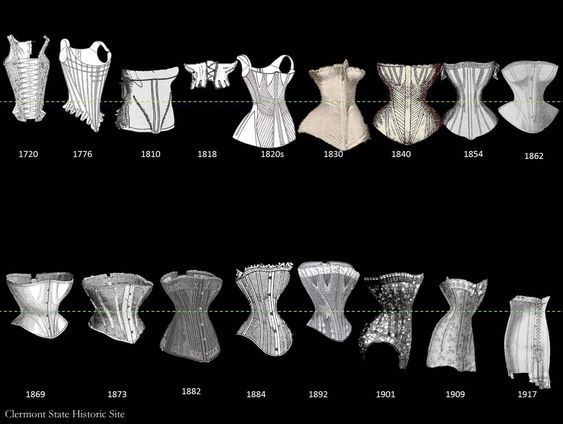
With some time to dream and consider, my first choice was the corset – it is the ultimate historical fashion garment to me because of the craftsmanship, the foundation it created for silhouette and style, and truly to challenge the many people who use it as a scapegoat in the fight against the patriarchy. If only they would do some research (I’m talking to you BBC and Netflix). I ran into a problem – what iteration of the corset would I focus on? Should I include stays? How much is too much detail? Yeah, it was a bit too broad for the kind of historical mind I possess.

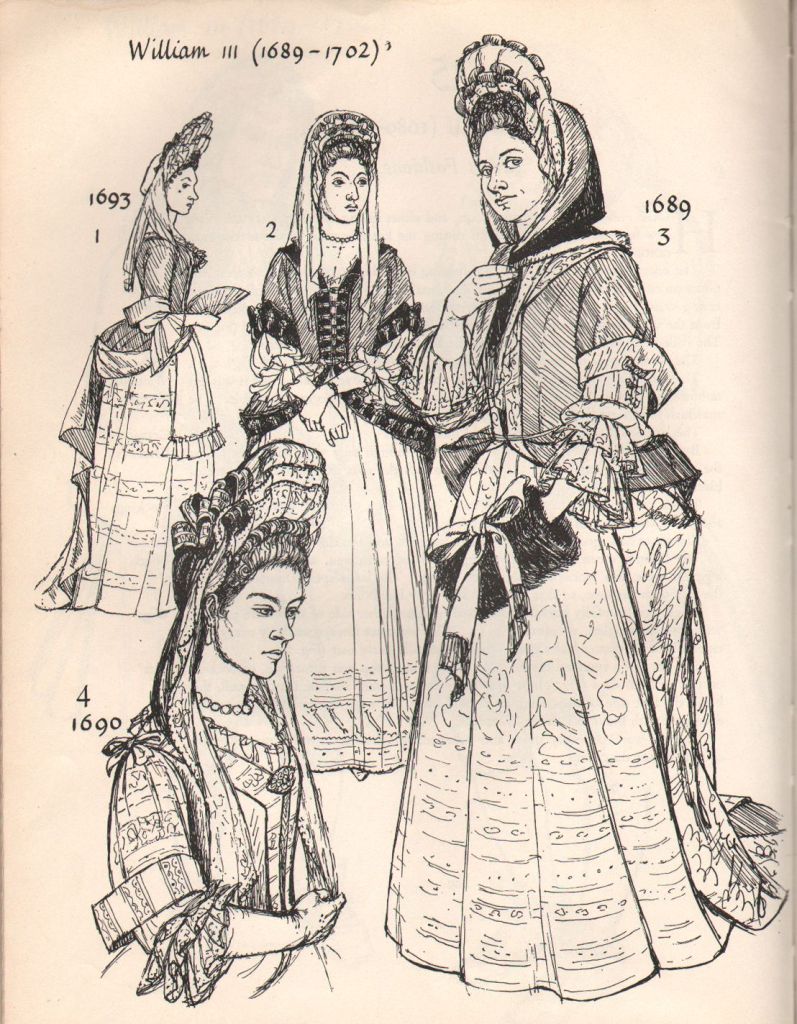
My friend suggested I narrow my wild mind down to one era, my favorite era of fashion history. What is my favorite era of fashion history? Well, I broke that prompt too! I could not decide between the 1890s, 1910s, and 1690s. I blame the fantastic fashion history content of Nicole Rudolph’s 1690s-inspired Winnifred Sanderson costuming, Bernadette Banner’s 1890s-inspired garments, and Bernadette’s 1910s Mary Poppins Jolly Holiday Lingerie Dress. My little fashion nerd heart was too enthralled to choose between them. I waded deeper into the idea. Maybe social and cultural norms would flush out the true winner. A character, if I placed her into these time periods, what would her life look like? Could she be a fashion designer like I strive to be or would limitations be placed on her talents?

If she would be prevented by society to make clothing openly, what story would there be to create? I realized I was approaching the prompt from the wrong point of view. It is not if she would be making clothes, it is in what context. A home sewist? A professional seamstress for a rich or royal family? Were women head tailors? Yes, yes they were until the mid-19th century and Frederick Worth changed the industry to a male-dominated designer world. With the right context, there was a bit more wiggle room. She could be a tailor.

There was that curve ball though, I was supposed to write from the perspective of the designer who invented the garment. And this is where my historically trained brain couldn’t seem to get out of its own way. Although I wasn’t finding a credited person for these garments, I was afraid of misrepresenting the history. If nothing else, the fashion industry has built itself on a shady foundation of misappropriating cultures, using questionable materials, pushing toxic beauty ideals, and mistreating its workers. My gut was scared of what romanticizing a garment could do to the real history at play.

Razor Clams and Melancholy

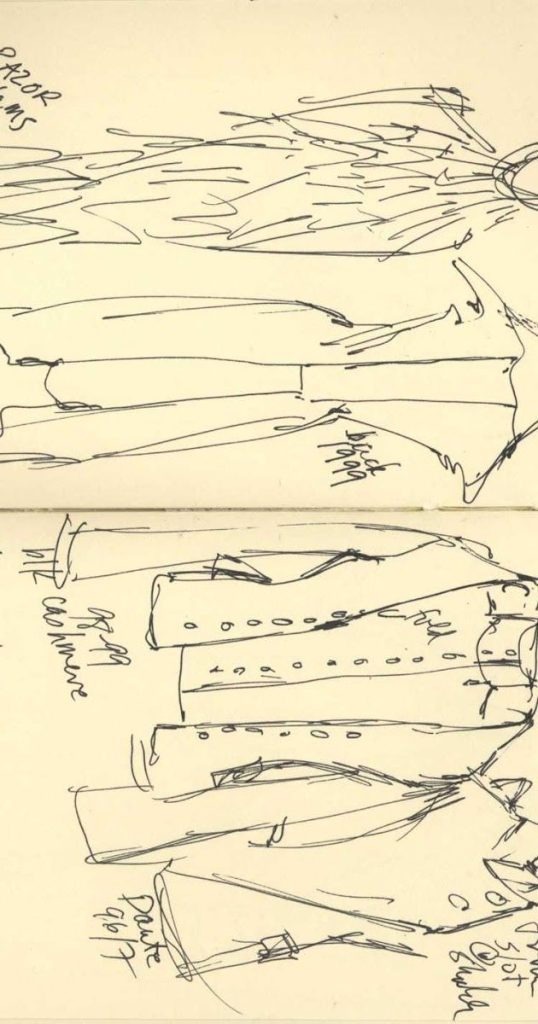
Alright, so what now? Well, I thought, what about the Alexander McQueen Razor Clam dress sketch literally tattooed on my shoulder? I mean isn’t that my ultimate garment? Isn’t he the one designer that captured my imagination? Yes, yes he was. I found security in knowing a rich history of who and how this piece of art came to be. It was safe yet true to my love for fashion design. This dress has always taken my breath away. There is something unbelievable about its construction, yet undeniably beautiful in execution, like a character in a fantasy novel standing before you with a real flying bison and bending to prove it.

I didn’t realize for years that it was made from real razor clam shells, I thought that the shells were 3-D printed. Understanding the realism captured by the use of real shells makes this dress so full of life and story. Literally, these pieces could not be here without a whole story of their own, from their former life as the home of razor clams, amidst the ocean waves to the cleaning and preparation to be sewn one by one into one garment. The time and care required to make this garment is extraordinary. I thought about my own connection to the sea, picking up seashells along the beach. Walking side by side with my Grandma, talking and stopping to discover every little gem of shell and sand. It was our thing. From Marco Island to New Smyrna, to St. Augustine, to Nags Head – we combed those beaches soaking in the memories of time, we can never replace.

I thought about McQueen and his close relationship with his own mom, and the pain that hung over him after she passed away. I pictured in my mind a day of walking the beach, with the razor-clam shells washing up. Could he have been a shell seeker like me? Could he have been as inspired to create as Grandma and I did with our favorite shell finds? Stringing them onto necklaces. A little souvenir of our walks together. As I wrote, the pain and loss washed over the words a melancholy snapshot took form on the page of a heartbroken fictional character making this dress out of heartbreak for the one he loved. The process was awful. As I wrote, tears slipped down my cheeks and I hated it.

Our Creative Well

The next time my friend and I met to discuss our writing progress, I told her of my switch to the Razor Clam dress and how what came out of my writing broke me. I was in a melancholy cloud missing the flurry of indecision compared to this. In all this chaos, I learned an invaluable lesson. As my friend phrased it, I tend to create from a place of sadness. I seek out the dark and dismal places in my brain to feed whatever I am making, like a tortured artist drinking absinthe or the despair of Poe, I am drawing upon the wrong thing to write from and therefore, my projects hurt me. The same thing happened during the Udal Cuain project. It got dark, and I couldn’t live in that world anymore. She challenged me to find a new place to rely on while I write, to create from a place of joy instead of sadness. It’s changed my whole way of creating as I mentioned in #17- Bad Writing Habits.

Where do you create from? Is it a place of joy or of pain? It’s an interesting thing to consider, and can definitely affect your tone, plots, worldbuilding, etc. I think the biggest takeaway from this process of failed writing prompt drafts was to reinvigorate my brain to imagine worlds from a simple inspiration, and to begin the path of research and brainstorming for characters, stories, and plots less traveled by the current influx of fantasies, thrillers, smut-tok, superheroes, and meta-storytelling. We need new kinds of stories. With that in mind, I’m excited to keep moving forward. I hope you join me on this journey.

Create a website or blog at WordPress.com

Up ↑