What If Game of Wool Celebrated Design and Craftsmanship?

If you missed it, I made a Game of Wool Bingo card for episodes 1-3, because in my opinion, this show should not be taken seriously. I’ve given up watching, interacting with recaps, etc. I’m not going to watch beyond episode 3, and that is because hate-watching is validation in the attention economy of 2025. That got me thinking, what do I wish Game of Wool was instead of what it is? Game of Wool, just like Project Runway, I have notes!

No Kits or Internet Dressing Projects

I don’t want any themed-making kits sold per episode. They have been doing this for the episodes I have watched, each week partnering with a big yarn company, honestly making kits that serve no purpose other than a cash grab. I also don’t want to watch weekly episodes with challenges that create useless items. Useless from a practical and technical standpoint.

  • Crochet and knit swimwear is dumb. You can’t wear it other than for a photo shoot, which places it in the “internet dressing” category. It’s for a photo. It’s not even practical for a music festival. But it does resemble a “Coachella” look.
  • A crochet deck chair had potential, but it was not used within the materials provided or the time frame.
  • A dog sweater with a required hat is not kind or practical for dogs. The sweater is comfortable, but the hat is not comfortable for the dog. Again, it is for a photo. Washability was not discussed either.
  • The mohair sweater was the only challenge that was the closest to being a useful challenge, for design teamwork and wearability, but they ruined it with the ridiculous time frame.
  • A couch cover is useless, because I have thought about constructing one for my own couch to stash bust, but it’s just not practical for anything other than a showpiece. Which is how they judged it, so a lot of wool was wasted to make a big, useless swath of fabric.
  • The fair isle vest misrepresented a heritage craft of the region they were filming in. Why not just film a historical film set in the Renaissance, and put the actresses in Victorian corsets without a chemise, tight-laced? Same level of idiocy to be flashy!

This Game of Wool presents everything that late-stage capitalism is in relation to crafting and hobbies, thanks to greed, social media, and the attention economy. The British farmers could use the income; how about sourcing locally? What about sustainability and slow fashion? Yeah, 12-hour challenges do not represent anything but hustle culture. Girl boss, slay!

How Would I Fix It?

  • Real experts, not these two ladies.
  • Either all amateurs or all expert contestants. Pick a lane. Either be the Bake-Off or be Project Runway and offer a CFDA mentorship kind of prize.
  • Bring in a real mentor to help in the wool barn.
  • Take them on field trips to see wool being processed, dyed, and spun. Same with flax for linen.
  • Tell the story of why textiles matter and why fair trade for the animals, farmers, and ethical standards matter.
  • Explain why local matters for the economy and the ecology of the region.
  • Teach the history of cottage industries.
  • Teach the history of how knitting has changed the world, such as the development of textile machinery and the creation of the binary code. Essentially, fill in the gap of what Sci Show failed to do.
  • Set real challenges that teach, showcase the skill of the fiber artists, and show innovation.
  • Do a challenge that involves unravelling sweaters for yarn and teach the world about this amazing, sustainable possibility.
  • Task the fiber artists to design patterns, and explore what goes into design and proper pattern writing, because it is a technical skill.
  • Make things that will be auctioned off for charity.
  • Bring in people as guest judges who will bring professional connections and opportunities for the fiber artists.
  • Set realistic deadlines, and slow down the pace of the show. Follow a timeline like Mind of a Chef that explores moments of cooking over an entire season.
  • Let the makers make, unencumbered by the pace of the internet. Take note from Bernadette Banner and other makers out there that celebrate true craftsmanship and sustainability in the heyday of microplastics.

I’m tired of this show discounting a skill that has been tossed aside as a Grandma hobby since the Industrial Revolution. In these weird and wacky times, slow fashion and an appreciation of craftsmanship are in short supply in the media. This show had such potential! But they are truly chasing the money over integrity.
Socks Are Madness

This is a story of a winding road. It is not just passion that makes us try new and difficult things, but also the desire to fit in. Sometimes the road is bumpy, and bumpier still than we expected.

Last winter, I began a journey; at the time, I did not realize how technical this would be, and oh, how I miss the naive wonder of that time. I started my quest to make socks. The sock does not appear technical from the outside. It is a tube of knit fabric which we slip on our feet, most every day. Due to the Industrial Revolution, socks can be knit by machine with ease and speed. This has suspended our connection to the technology that first developed the sock—hand knitting.

In our modern day, socks are affordable and accessible. They are for sale everywhere in a myriad of textures, weights, and styles. We have socks for athleticism, socks for leisure, socks for style. They are boring, mundane Christmas gifts of childhood, and puppets with googly eyes. But what does it take to make a sock by hand?

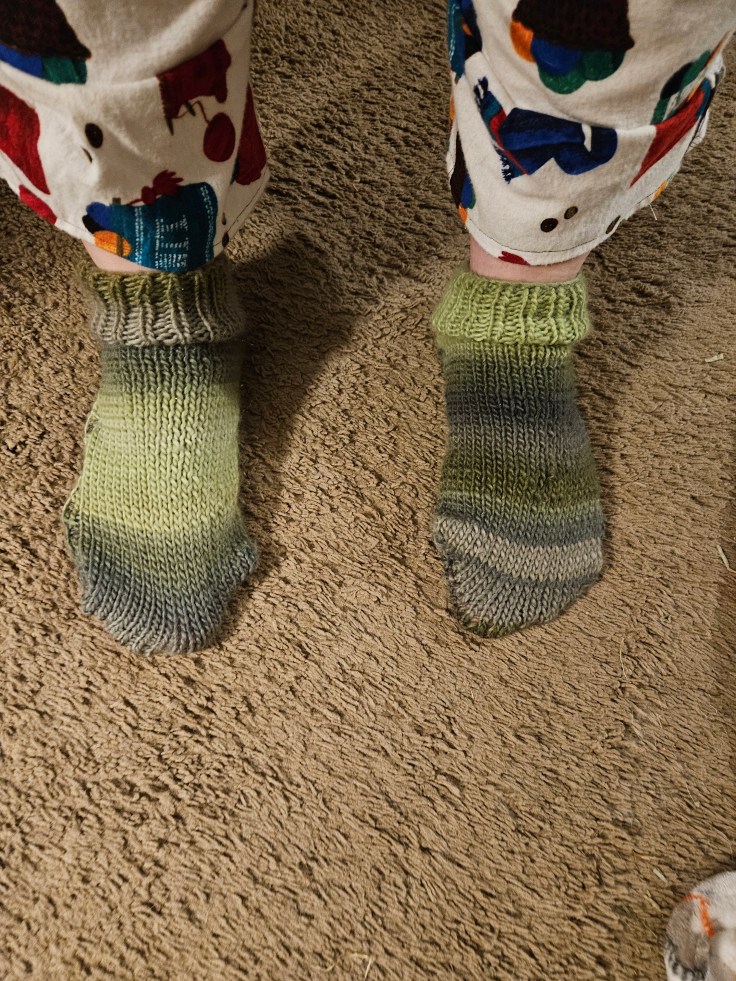
I gave this a shot last year, and it challenged me! I cataloged my experience in Socks, A Journey, and Socks: An Update, where I began knitting socks flat on straight needles and three months later gave circular knitting a try. My first flat knit socks were made top down, in a tube style that negates the heel flap and requires sewing the sock into a tube. They are loose in fit but warm and great socks to wear around the house. My advanced tries, knitting in the round and turning the heel, were more of an adventure. My tension was tight, and my heel flap a nightmare, unable to be duplicated into a second sock, for how off script my technique became. I didn’t grasp the why of what I was doing and therefore messed up the pattern.

This summer, I went to a local yarn shop where I began my journey to sock more traditionally. I picked up a pair of small-gauge double-pointed needles and sock sock-making kit with proper sock yarn of wool and nylon, to do it “properly” and oh my, did this bomb. The toe-up pattern, new to me from my previous projects that were cuff down, pushed me far out of my depth. I sank instead of swimming. The four double-pointed needles and my uncoordinated hands created tension and laddering in the knit, which looks exactly as it sounds. I tried three times to knit a few centimeters before the stitches fell off the needles, the sock falling off with the stitches. In desperation, as the needles were 29 USD and the sock kit 29 USD, I was feeling very silly and wasteful purchasing new needles and new yarn that I couldn’t do anything with.

So I pivoted to my trusty straight needles until I saw my mom later that weekend, and she lent me a pair of small-gauge, small-circumference needles to finish the sock. Still baffled by the heel flap and the vague instructions on the pattern, I tried German short rows for shaping the heel. In a fortnight, I completed the first of the two socks. I cast off and handed it to Kyle to try on, and the size was all wrong. I tried to frog it back into a skein of yarn, but the splitty yarn tangled, ripped, and became a ball of knots. It was over, and I was furious with myself for wasting time, money, resources, and, honestly, hurting my eyes squinting to see my tiny stitches for almost two weeks to accomplish nothing.

Socks are madness. And maybe I should stop beating myself up about my failure when socks are one of the hardest things to make by hand. I am an overachiever and a perfectionist, so this type of failure cuts me deep. I obsess, I rage, and I fall apart in the madness of learning something that may take years to execute once, not even perfectly. But you know what? I have made good socks before! Comfortable, almost perfect for what I was looking to achieve, socks. But I rejected them as being good because I was embarrassed at how I made them. I didn’t follow the right techniques, I used the “wrong” yarn, and I didn’t turn the heel.

Sometimes I have major imposter syndrome as a knitter. I feel like a fraud because I don’t use the exact same patterns, same tools, same yarn as everyone else on the internet. But why is that a bad thing? I’ve listened to other knitters in podcasts discuss how the sameness of knitting is making it boring. Apparently, at Rhinebeck or other knitting events, it is easy to see the same sweater throughout the sea of people, and that is a new thing. Listening to knitters, who have been knitting long before 2020, when I really started knitting consistently, knitters used to do their own thing. Yarn suggestions in patterns were exactly that – a suggestion.

People were designing more and experimenting instead of knitting in the homogenized way we see today, which is one of the ways I feel like an outsider. I don’t want to knit the same things as everyone else, but I also want to be good at the craft, and it leaves me in this push-and-pull tension. It became clear to me, though, that my search to “fit in” with the proper sock kit and the expensive needles didn’t make me a better maker. It was honestly a bit of a handicap. So I guess my takeaway is to be yourself?

I don’t want to stagnate in my skills, but if I can find my own technique to make socks and other garments with the “non-standard” tools and yarn, then is it really stagnation or just getting creative with where my skill level is at? I’ve been pondering this a lot and have more thoughts on this from both the point of view of a knitter and a sewist. But that will have to wait for next time.

It’s Okay to Admit You Don’t Like It

A place I didn’t expect to reach this year, was the mental head space of dislike for a dream I’ve had for most of my life. Now could it be burnout and I just need a break? Probably. But I also think it might a healthy thing to acknowledge something you thought you would love, may not actually bring you joy as you wished.

What am I talking about? Sewing. I don’t like sewing as much as I want to. It is tedious, extremely complicated, and requires a level of patience I lack. I’ve been a sewist for 5 years now. I devoted a large amount of my time over the past five years to the study of garment construction, and I realized that it is not my medium, yarn is, and its not a failure to admit I don’t like sewing as much as knitting and crochet.

I think I have known this for about a year, yet refused to verbalize my feeling because it felt like I failed the one thing I always wanted to do. But why is that a failure?

Just because it’s not my passion, doesn’t mean I am going to stop sewing. I think having this space to put less pressure on it to be “my thing” could make me enjoy it more!

Because then I am free to create, to fail, to be a slow learner, to take breaks from sewing when I am ready to cry. I don’t have to feel pressured to get my skills up to par for selling my work. I don’t have to feel pressure to design my own patterns or build a business on sewing. I can go back to basics of what has always been at my core – art. I am an artist, I don’t set out to be, but I know its there inside me too afraid to commit to the bit.

I love what sewing brings me. It’s a fantastic skill to have. I can design my own clothing made to measure and that is luxurious even if my sewing skills are mid.

I can experiement with my style through upcycling. I love how I can recycle and repurpose fabric instead of donating. That is a important part of comsumption. We buy and buy but don’t think about the life cycle of the garment, but with needle and thread you can leave the buy and declutter cycle.

Sewing has taught me to be a wiser comsumer as well. I buy garments that I can’t sew. Complex garments. I also price compare fabric against pieces in store to figure out what is more cost effective to sew. Such as buying a 6.99/yard, one yard cut of cotton jersey to make one long sleeve basic tee. You can buy these from retailers for 35 USD compared to sewing one for 7 USD.

It’s not always cheaper, but sometimes it is and that is a huge win!

Finally, by allowing myself to feel these feelings, my hope is that I will be free to explore and create unencombered by goals of monetizing my hobby, instead that I enjoy the creative process again.

Have you ever tried sewing? Did you find it challenging?

I Am My Own Crafting Worst Enemy

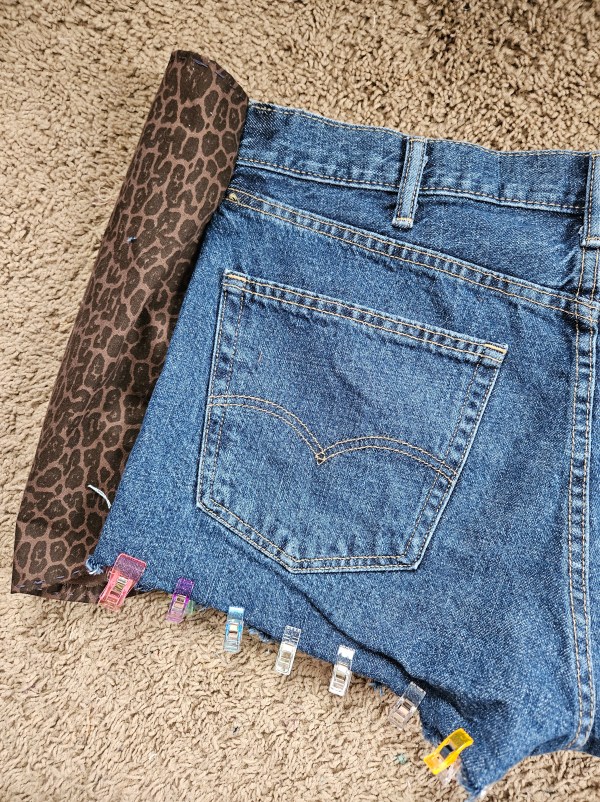
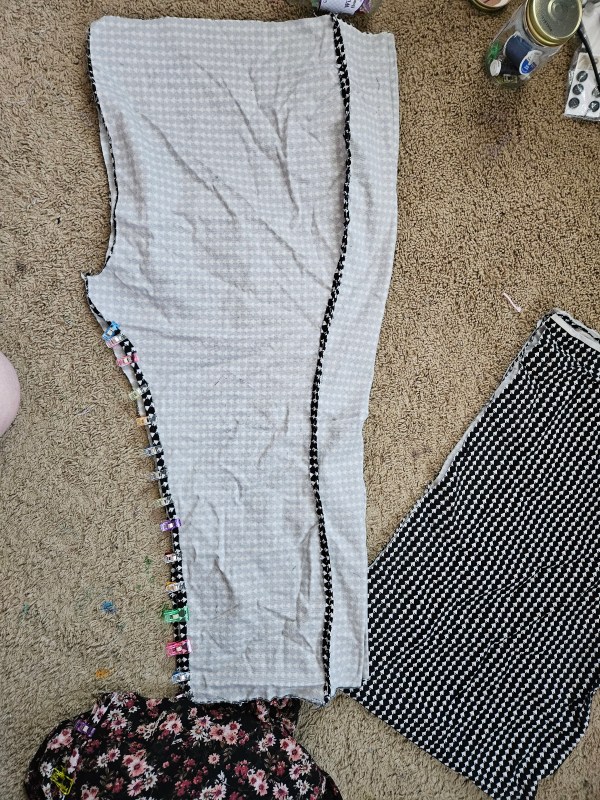
This is an unplanned part three of my “Drafting Shortalls From Scratch” because I did not succeed in making my overalls for winter. Although I have made shortalls twice this summer, a few silly, but very human mistakes, led to the project going awry. This is what I think went wrong:

  • Flew too close to the sun when tailoring
  • Planning < No Plan
  • Lack of Focus
  • Measure Once, Cuss Twice
  • I kinda hate sewing when it feels this hard
  • Putting too much pressure on myself
  • Not Buying Enough Fabric
  • Not Mocking Up
  • Not using my Patterns when I’m stuck
  • Research the Basics

It’s so easy to think we’ve got this and be too confident when going into a project. With knitting, this approach of fearlessness had led to some great projects, but with sewing, this artistic type of approach crashes and burns. Sewing is fabrication, as weird as that sounds. I think I was prepared to sew such complex tailoring projects, such as my shortalls, this summer, because I spent the spring building a screened-in porch with Kyle. Woodworking is very similar to sewing, I learned! It is about measuring, planning, creating things in a specific order, and constructing something that is built to last. When we started working on the porch, I never imagined how much it would teach me about garment construction. But it gave me a template to focus on. Who knew that woodworking would be such an inspirational experience for me?

So why am I sharing this? I am really struggling to accept that sewing is not coming easily to me; no matter how much I practice, it continues to challenge me. I’d like to invite you to join me in not giving up on those things in our lives that are hard.

Designing Clothing That Fluctuates With You

This is inspired by a discussion from Maybe Bre, which made me reflect on something I hadn’t discussed before. As well as my own experience wearing clothing, as a garden-variety human who loves fashion but doesn’t always enjoy how our clothing is made.

By this, I mean the patterns and fastening of our modern times. The zipper is a wonderful thing, and so is the structured waistband. I love them in jeans because denim that isn’t compromised by stretch is a rugged and sturdy garment that isn’t a piece that conforms to you; your body is housed within the trousers. I feel the same way about a structured coat. In doing so, I buy these pieces oversized for comfort, which leaves me with a garment that most of the time doesn’t technically fit me. If I did buy it to fit me right now, there is no guarantee that over many decades it would continue to fit me – I’ve been burned before by this problem. Hence, all my “staple, investment pieces” from college no longer live in my closet because they are no longer my size. If I had planned ahead and bought them a bit oversized, they might still be with me, but they wouldn’t have “fit” me at the time.

My problem with clothing is becoming clear, isn’t it? I desire longevity and wearability from clothing, in a way that is not offered off the rack. I desire my clothes to grow and shrink with me, depending on how my body changes over time. This has been my design focus in the last few years as I have placed myself in the driver’s seat of my wardrobe through the process of sewing and knitting.

My idea is not innovative; it is historical. Clothing, because it was so expensive and hard to make, was more adaptable in the past. Fastenings such as tie waist, lacing, and buttons with multiple sizes of tightness were common because clothing was not as easy or cheap, and they were not seen as disposable or replaceable. Changing fashions came with garment reworks, ye olde upcycling as it were. This is what I desire: the ability to change the fit of my garment.

I recently figured out how to sew with elastic, which is a game-changer for shorts and gathered sleeve hems! Before this, though, I was making most of my bottomweight garments with tie waists or several options of buttons to let the garment adjust to the needs of the day, I’ve also sewed with intentional relaxed fit, initially due to a lack of tailoring skill but over time it has been to allow wiggle room in pieces I have spent days or weeks of my life crafting.

Being present in the making process has taught me to treat my clothing with more respect, even when it is time to discard the current version of it for something more useful. I’ve stopped donating as much, decluttering, and rebuying, to be honest, to be more intentional with the garment and its life cycle. I am the one who brought it to life, I can’t simply consume and discard it like it is nothing. I am deprogramming my brain from decades of fast fashion insanity.

I believe if clothing were made with this design philosophy, that clothing would fluctuate with you over time, I believe we would enjoy wearing our clothing more because instead of buying stretch fabric everything, we could still wear good natural fibers, maybe a bit bulkier than spandex and less figure hugging and lurex denim, but would be better for the humans and the planet. Style and substance, as they say on the Great British Baking Show!

Will I Wear a Knit T-Shirt?

I asked myself this question last summer with genuine uncertainty. Knitting is such a cold-weather medium that a knit made to be breathable and light for warm weather seemed, well, a bit like an impractical fashion piece. I think this is an important question to ask of ourselves before we jump on a trend. Whether it is to buy a knit t-shirt or to handknit (which means you are dedicating weeks of work to a project), having the right expectation matters. Trying on a knit t-shirt beforehand helped me visualize what I was in for. Knitwear for all seasons is currently having a moment even in ready-to-wear, which makes this a great time to go try on a piece before committing to a big project.

Wearing my Grandma’s cotton knit t-shirts, although they were two sizes too small, helped me visualize knit as a process to make a fabric instead of a woolly winter garment. That’s what makes knitting and crochet extraordinary skills; they are versatile. The fiber maketh the project. The stitch maketh the airflow. Lacey, open weave? Fantastic for hot and humid days. Not so much for a pair of mittens. 

To remedy this, I think fiber acquaintance is a fantastic way to learn whether a knit t-shirt is right for you. When I began knitting in 2012, I knew there was wool yarn and acrylic yarn. That was it. However, there is actually a rainbow of fiber waiting to be discovered, and the lineup sure has expanded in the last 13 years!

Cotton

Linen

Bamboo

Hemp

Pineapple

Lyocell

Rayon

Yak

Alpaca

Camel

Mohair

Cashmere

Silk

Did you know that wool has two unique properties? It helps you regulate temperature and is naturally antibacterial/antimicrobial; therefore, it inhibits bacterial growth naturally on the fiber and prevents odors, which is why it is such a great sock material! Although I wouldn’t recommend wool for summer tops, it is a remarkable fiber. There are two fibers, though, that are breathable and naturally don’t let bacteria and microbes hang around – it’s linen and silk! For fiber education and the chance to feel these materials, I recommend finding a friendly local yarn shop and talking to the experts.

Finally, I do have one possible hiccup with my current selection of hand-knit t-shirts. I can’t wear them in 85 degrees Fahrenheit weather and above with humidity, but I do believe a knit tank would fix this problem, and a lacey stitch technique in future projects will solve this. I don’t like sweating a lot in my handknits, and because I was learning with my first few tees, the knitted cotton fabric is a bit bulky. That’s my error. You know what is so cool about knitting, though? You can unravel the finished garments and try again, so I can rework these finished garments in the future. Anyway, I hope you will consider the knit t-shirt as a warm weather staple in your wardrobe, it’s a lovely way to use crochet and knitting all year round!

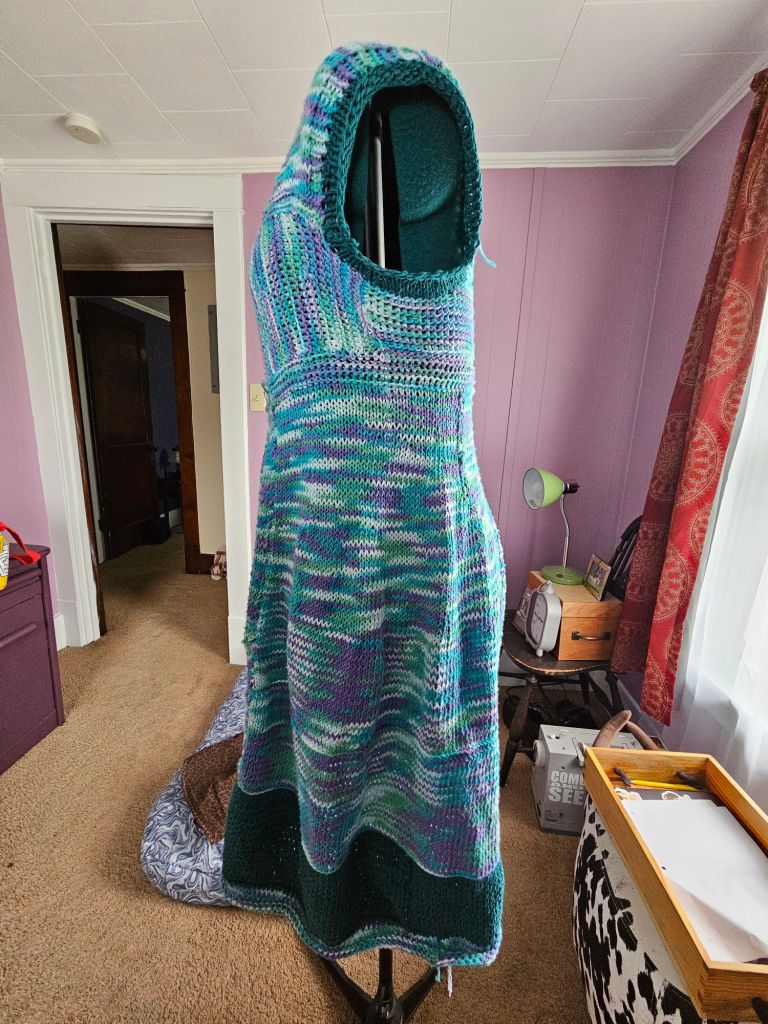
Knitting a Dress for the First Time

Knitting a dress, how hard can it be right? It was actually pretty managable garment as an intermediate knitter. I would not recommend unless you have made a sweater before but would definitely recommend knitting a dress if you want a soft and stretchy garment that hugs you!

Inspiration

I have made plenty of dresses over the past 5 years, but they have all been cut and sewn from fabric. Knitting kicks it up a notch, asking you to assemble the dress, but make the fabric to boot. I thought it would be silly to try until I discovered some lovely crochet designers on You Tube who make with imagination!

I was inspired by Mama Gwen of TL Yarn Crafts to give designing a knit dress a try. She makes such beautiful dresses all from self-drafted patterns in knit and crochet. Along with Dana from Blondie Knots. Her Coachella scrap two piece outfit helped me have the boost of confidence to try something new.

Materials

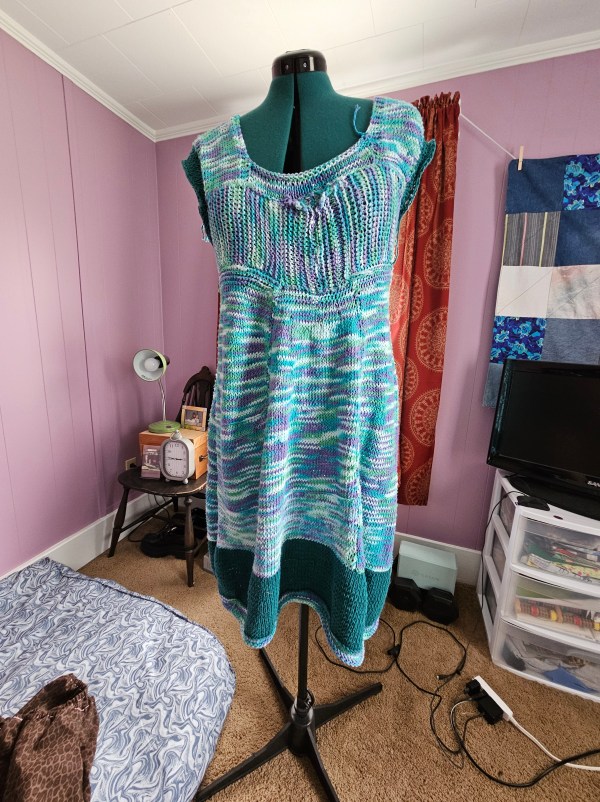
Last summer at Joann, before the shenanigans began, I purchased 14 Big Twist Cotton 50g skeins on a sale with the intention of knitting a top. Many months later, this yarn was sitting in my stash with my mind uncertain if the punchy color changing yarn was my cup of tea for a cotton knit top. But a dress? Yes, that could work. Did I have enough yarn though? I’d have to make it so because there was no more being sold.

Because of the circumstances, I decided this dress would be my goodbye to Big Twist.

Design

I knew from sewing, my design would need to be a dress that was either tubular or empire waist to suit my body shape. I decided to knit this on US 7 needles, straight needles. Sometimes I would shift to circular, but this was not knit in the round. With the combination of yarn minders, a measuring tape and patience this dress came together!

To start I knew I wanted the bodice to be the anchor I worked out from so I cast on stitches to work horizontally. From the bodice, I then added one strap to plan the width and placement of the top. I was uncertain how much yardage the skirt would consume, therefore I paused to determine sleeves later.

My plan for the skirt was to knit a section by casting on the bottom of the bodice, adding stitches to increase width until I finished a skein. Repeat and fill out the row by picking up stitches to join the sections vertically into a tube. I continued on, and on  until weeks later I had a skirt but panicked that I was not going to achieve my desired length and second sleeve!

I decided to pull a teal yarn from my Landscape Painting with Yarn project. This hue pulled the cool tones into harmony in a pleasing way. I used two skeins of this teal color and then finished with the original Water Lily tonal yarn. I finished the second sleeve and tried on the piece with relative ease. There was one fit issue – plunging neckline. But it was a lovely, cozy knit from scratch dress!

The final touches to this project were addressing the neckline and the sleeves which were set too deep. I cast on to the neckline to fill in the gap and provided structure to the straps with several rows of decreases to give the dress a cap sleeve befitting my vision.

Final Thoughts

I am definitely making more dresses with knit! It’s far more pleasant than sewing if you want a comfy yet elegant style. You have both control of the drape and the fabric design. It’s your world, as Bob Ross would say.

This project was more than a goodbye to Big Twist, it was a new chapter for me. I began this journey 5 years ago to learn how to make and now I feel empowered by knowing I can make my own clothes, not just with fabric but with skeins of yarn and needles. It has been a wonderful journey of discovery!

If you want to knit a dress, I’d say go for it! If you’re a beginner, make one but not as your first project – you will be overwhelmed by the sheer amount of time this project took. It was weeks of work that as a beginner, would have scared me. In time I know you can do it though! ❤

Starting a Knit Garment

Do you ever get stuck in start mode when beginning a new thing?

Like you’re wandering through a maze of ideas. Maybe it’s the planning stage, too many ideas, not enough organization? It’s weird. I feel such a rush when I have multiple WIPs on my needles. The satisfaction of binding off stitches and slipping that garment onto my body makes every week of work worth it!

The void though, between new idea and casting on a new project, is a shape shifting process. The indecision sets in.

  • What yarn should I use?
  • Do I have a color palette
  • Stockinette or a new stitch?
  • Texture?
  • Colorwork?
  • Do I have an inspriation garment in mind?
  • Have I thought about how I want to garment to fit?
  • How much positive or negative ease should I plan for?

The next phase is choosing needles, selecting the amount of yardage, and gauge swatching the stitches to inches ratio to calculate the size of the garment.

It feels as important to start with the correct amount of stitches as it does to pour a concrete foundation evenly. I think this is why I get stuck in neutral instead of shifting into gear – when you get a creative idea sometimes the final design outcome is a little fuzzy.

So how do I get out of it and move forward with my design? I sketch, even simply shading the colors together in simple patterns helps me see if the image in my head will fit the realized garment. I also start working with the room to frog the yarn and begin again.

That is my favorite thing about fiber art, you can tear out and begin again without ruining your materials. Even though the first stitches feel like concrete the process is flexible.

Do you get stuck in planning? How do you move your mind forward? Thanks for spending time with me today. You are amazing and I hope you know that you are loved. Until next time. ❤

What About the Garment Workers? 2025 Edition

There are a lot of things about this new Trump term that are setting my jaw. The newest one, though, happens to be the tariffs zeroing in on Vietnam, and something we are losing sight of in this discussion—what is going to happen to garment workers?

Vietnam is one of many countries in the global south that are responsible for the garments and shoes we wear every day. In May 2024, they surpassed China as the largest textile and garment market share for U.S. imports. The nation employs around 2.5 million people within the 6000 garment and textile factories across Vietnam. This rapid growth of 37 billion USD worth of garments being made in Vietnam in 2024, from 26 billion USD in 2017, is due to the low wages of Vietnam compared to the higher wages of China and even higher wages in the United States. In the 1980s, before Clinton’s NAFTA in 1993, garments sold in American stores were made in the United States, but this changed during the Clinton era and has gotten worse in the 32 years since through the rise of fast fashion and the fashion industry’s reliance on cheap labor at the expense of the garment workers.

So, now we bring the so-called “Liberation Day” of tariffs, and since this is a space I like to keep safe, I’m going to move on because I have nothing nice to say. What I want to focus on is not making this job American again, the rising prices of garments, or anything political, and instead I’d like to zero in on what seeing the world with a Kingdom (God’s Kingdom that is) lens has taught me so far this year.

I’d say that my eyes being opened began last year with diving deeper into Fashion Roadman’s channel, which led me to watch two documentaries – The True Cost of Fast Fashion and Perfume’s Dark Secret in 2024. The other revelations that were exposed in 2024 such as the labor practices of Armani and Dior, were very telling for how are garments are made from luxury to fast fashion. It’s no secret that the fashion industry, including luxury brands, is not concerned with the moral cost of their decisions and is solely focused on getting money in their pockets for their shareholders. So, what is going to happen within the fashion industry as a result of these tariffs set on Vietnam, especially with no sign of negotiation from the Trump Administration? I think it’s going to be bad for everyone.

I think costs from the brands will be cut from the quality of the garments being made, to the materials, to the contracts with these factories. I think garment workers will probably see the biggest hit in their work environment and wages, as their economy is hurt. Or potentially the factories will no longer get these contracts to cut labor costs, meaning the production of garments will be further entrenched with slave labor in countries where workers are exploited. Then what will those women be left with? Garment Workers are primarily women, and they are skilled laborers who could be left without a way to provide income for their families.

It’s not okay for so many reasons.

That is why, as we look towards Easter, I am thinking about those who are oppressed in our world, because Jesus came to be a new Moses and lead us through the Exodus Way. Thank you, dear reader, if you stayed with me on this one. I wish this world weren’t such a downer right now, but just know, although we are from the United States, we are not pleased and empathize with how this is affecting you too. ❤

Fashion Feels So Off in 2025

I was talking to my friend recently about fashion week, we bounced between NYFW and PFW in our discussions, primarily NYFW and we both remarked how the spark is gone. Growing up we both lived for those massive February and September issues of American Vogue, but as adults, neither of us read the fashion magazines nor are we swept up in watching a runway show stream on Youtube. In college I remember watching runway shows between classes, soaking up the atmosphere of the music, the makeup, the silhouettes strutting down the long walk away. Now, I hardly care about fashion week. My favorite moments of fashion week are no longer the collections and focus on Hyunjin’s interactions with Donatella at the Versace show and Felix’s runway passes for Nicholas Ghesquiere’s Louis Vuitton Women’s collection.

Out of the two of these collections – Versace and Louis Vuitton, I guess I pay attention to and prefer Donatella’s work, but I’m not looking at the collection, I’m focused on the spectacle anymore with these fashion shows. Versace shows at Milan Fashion Week, not Paris for clarification. I watched a highlight of PFW from Fashion Roadman and was underwhelmed. Even Alexander McQueen cannot get me hyped for the runway anymore. I saw there was a Carhartt collaboration with the brand Sacai which was quite frustrating to me. I’ve worn Carhartt before and it is not my vibe. Some shows reused old items, sorry they presented from the archive, from previous collections for “sustainability” and there was a collection addressing war, which feels a bit like that infamous scene in The Devil Wears Prada.

I know it sounds harsh, but I wish brands would do more for countries around the world than present a “statement” against war with military-inspired pieces when these brands are part of huge conglomerates that have the resources and influence to make a difference and instead, they use fashion to make money from exploited workers. And maybe that is why fashion in 2025 feels so off – fashion is not fun anymore. We know too much, the fashion machine has destroyed so much and is the capitalist monster filled with egos and performative greenwashing.

I’ve mentioned before that I find more inspiration from K-Pop than fashion magazines and that holds true for me in 2025. I’m more interested in customizing my wardrobe and making things personalized to my tastes than following the trend cycle because the trend cycle is regurgitating things from my lifetime that I’m already interested in, such as ballet flats, but assigning them an expiration date and I disagree. By the mid-2010s I was tired of ballet flats, but I had worn them for 10 years at that point and was interested in something new to replace my worn, falling-apart flats. I’d rather pick a reference and get inspired, like watching Seinfeld and writing notes for an outfit I’d like to emulate. But that doesn’t fit with the fashion cycles and seasons, so it’s making the fashion shows seem pointless to me.

But the most off-putting thing I’ve seen this year is the discussion – ‘The Death of Personal Style’ which I have seen explored by Drew Joiner, Mina Le, and Nicky Reardon. This topic has been debated across the internet in spaces I don’t visit like X or TikTok, but I think people are bored and claiming personal style is dying because we need some fresh inspiration. I’ve been in a creative slump so far in 2025 with writing because the internet spaces I hang out in have been so negative this year. Like a communal ennui has rolled in, shrouding creative people in a fog. It’s been hard to not buy into the mindset and I’ve been a member of the club after seeing how worried my loved ones are that are facing being cut from their job or their career sector being gutted. Fiber artists and sewists are definitely in a delicate place right now, finding a new normal after Joann’s.

Yeah, it’s weird. I hate change, and I fear the past being repeated, but something struck me last night after watching two videos that have nothing to do with fashion but humor me. The YouTube creator Suibhne (Swee-nee) makes historical content about countries around the world, I in particular chose The History of Korea and The History of Japan to watch, and it’s heavy. What happened between Korea and Japan in the Sino-Japanese War has had lasting consequences, but so has European colonialism in Asia and America’s forced opening of Japan through Commodore Matthew Perry.

Watching these videos that recount the atrocities of WWII in the Pacific reminds me that the overall concern of what is happening politically in the world and in my home country is coming from a noble place. I think overreaction or potentially appropriate reaction is important to keep any bit of the past from being repeated. It’s staying vigilant, like the servants in Luke 12 who were waiting at the door for the master of the house to return. Complacency is never a good thing.

Stay dressed for action and keep your lamps burning, and be like men who are waiting for their master to come home from the wedding feast, so that they may open the door to him at once when he comes and knocks. 

Luke 12:35-36 ESV

So instead of being concerned by the social worry of WWII attitudes re-emerging, I should see it as a positive that people are taking things seriously and are unwilling to let evil take root again for the good of all. Even when I consider how fashion seems so dark because of unethical labor practices, sometimes I wish I didn’t know about the darkness, and instead I should consider how knowledge is not the enemy, the unethical practices are the enemy. Shopping is not as fun, but why is my pleasure more important than the rights of garment workers? It’s not all about me. Knowing this information is not the end point either, we put the awareness into action for change. So fashion feels off, but I think we’re tilling up ground for something new, not destroying something joyful for us fashion lovers.

I wish you hope, joy, and peace wherever you are. Thank you for taking the time to spend it with me today, dear reader. Until next time ❤

Create a website or blog at WordPress.com

Up ↑