
Unrelatabilty and 2025 Holiday Campaigns

I had plans originally to write about Ralph Lauren Christmas on its own, but then I saw two advertisements, one from local brand Steel City and another from Banana Republic, so bizarre that I knew I would be here. Hopefully not ranting too much, for the goal of this discussion for me is to think more deeply about the subtle oddities in my culture, I see weaving themselves in, like they are normal. Overconsumption, cultural appropriation, and the cosplay of wealth.

Banana Republic’s Holiday Edit

So what does fippery have to do with it? Fippery is another word for ostentatious; it’s showy. Frivility in dress or style. I also find the attitudes of these two brands, and I do want to write about exactly that. Banana Republic has always been in my mind, a bit ridiculous. But with every re-watch of Seinfeld, I see J. Peterman in Banana Republic’s threads, but their recent holiday commercial pushed me over the edge. They are that nonsense.

The holiday commercial is set in Ireland, County Cork, and I know I haven’t been to Ireland in 20 years, but dang, nothing about this commercial felt authentic. They play a cover of “Linger” from the Cranberries over the holiday scene in a pub, wandering around the town, finding a telephone booth with Irish Gaelic on the sign. They are all wearing vaguely Irish clothing, but really it looks like cast walked through a Premium Outlets on their way to Castletownshend, Cork. There are lovely Irish Christmas songs and many other songs by Irish bands that would have captured the spirit of the season better than a breakup song. No shade to the Cranberries, I love them. There were better Cranberries songs to pick. Personally, I would have looked at Dreams, Ode to My Family, and I Can’t Be With You to capture the nostalgia of the season with a non-traditional song.

Moving beyond the music, there was nothing really Irish about this ad. We barely see the town, we barely see the people, or the ancient beauty of Ireland. Think about movies such a Waking Ned Devine or Banshees of Inisherin – the landscape is a character, so is the music, and community. Ireland felt warm, not in temperature, but in the warmth of the people. The land feels like there is magic just under the surface, an imagination unbreakable, and a spirit that carries the culmination of all those who came before in an essence that makes you want to know more. The sweaters are intricate, made with the intention of preserving heritage crafts. Just take a look at Banana Republic’s holiday page compared to Blarney Woolen Mills, which is based in County Cork! The source material was right there. I guess what I am trying to say is obvious: Banana Republic’s collection is the fast fashion version of Irish style, don’t fall for it, no matter how they try to sell you on the “luxury” of it all. Now, what really bugged me about this ad was, in my opinion, the cultural appropriation of it all.

There is a fairisle sweater in this Irish collection, which is actually a Scottish heritage craft from the Shetlands. This sweater contains wool from Italy, being sold as an Irish-inspired sweater. You couldn’t even use Irish wool? Or include iconic Aran sweaters? Fisherman sweaters like the iconic one from When Harry Met Sally? The Donegal Wool sweater and sweater vest, straight up annoy me because these are again Italian wool. There is a wonderful mill in Donegal called McNutt that could have supplied true, authentic craftsmanship. We still have our clothing pieces from this store and Blarney Woolen Mills, 20 years later. I don’t like Ireland, which has been used for centuries, been the butt of the joke for centuries, being used again to peddle some lackluster clothes.

Gap, Inc. is a huge brand; they should have invested in sustainable Irish materials and supported the local Irish economy by using Irish craftspeople to create this collection. But just like J. Peterman, they come and see, then they steal other cultures’ designs to make a quick buck from subpar clothing. Look at the prices! The Banana Republic sweaters, made in Italy with Italian wool, versus the Blarney Woolen Mills sweaters made in Ireland from Irish wool, both made from merino wool, too. Local is better. Also, look at the craftsmanship of the Blarney sweaters; those cables are stunning and also affordable. Shame on you, Gap!

Steel City, What Are You Doing?

Actually, to quote the Big Fat Quiz Show, “You slag!” Steel City is a brand no one outside of the Pittsburgh area will know about, and that’s okay. Small businesses are great, and when this brand first started, they were cool. Their claim to fame was hyper-local graphic tees of beloved cultural things such as Turners Tea, the Stillers (aka the Steelers), Kennywood, Mr. Rogers, the Pens (Pittsburgh Penguins), and nostalgia. Over time, though they have expanded, which is great, creeping out to the suburbs of Cranberry and Ross Park Mall, and that is where things have taken a bizarre turn. In 2022, I went to their location in Cranberry Township and was appalled by how tissue-paper-thin the new items were. We had bought pierogi and Potato Patch shirts, which were of great quality, but the new stuff was off. The prices, quite higher than before, and I was no longer interested in their stuff.

But as targeted ads go, I keep seeing their stuff everywhere, and it has gone in some random places. There was a motorcycle and a desert aesthetic to their pieces now? Okay, odd. Neither of these things has anything to do with Pittsburgh. I guess the name is the only connection? Next, I got ads for quiet luxury workwear pieces, the local graphic tees, now behind a t-shirt club paywall. It felt soulless, and I was incredibly disappointed. I thought in the beginning maybe they were going to make the items in Pittsburgh, but they are made overseas. This morning, though, I got an ad that straight up felt out of touch.

Seriously? In this economy? With the amount of destruction the fashion industry creates on our planet? Honestly, Steel City, what the flipping heck are you doing? This brand is neither relatable nor cool anymore. Wasteful consumption is not in style, no matter what the internet says.

Ralph Lauren Christmas

Now, Ralph Lauren isn’t promoting this; this is just a TikTok trend, and I just wanted to drop my two cents. I’ve spent the last five years chasing the nostalgia of old Christmas, Christmas before everything hurt. Before people died. When I was a kid, things were simple. No matter how much you spend, decorate, chase – this aesthetic is not going to fix what is broken in your heart. I encourage you to seek out authenticity this Christmas. Volunteer time at shelters, donate supplies, check on neighbors. Call those friends or those family members you haven’t seen in so long and connect once again. The Home Alone house is stunning, but remember, what brings the true Christmas spirit is the relationships reconciled for the Old Man and Kevin on Christmas morning. People over things, always.
It’s Okay to Admit You Don’t Like It

A place I didn’t expect to reach this year, was the mental head space of dislike for a dream I’ve had for most of my life. Now could it be burnout and I just need a break? Probably. But I also think it might a healthy thing to acknowledge something you thought you would love, may not actually bring you joy as you wished.

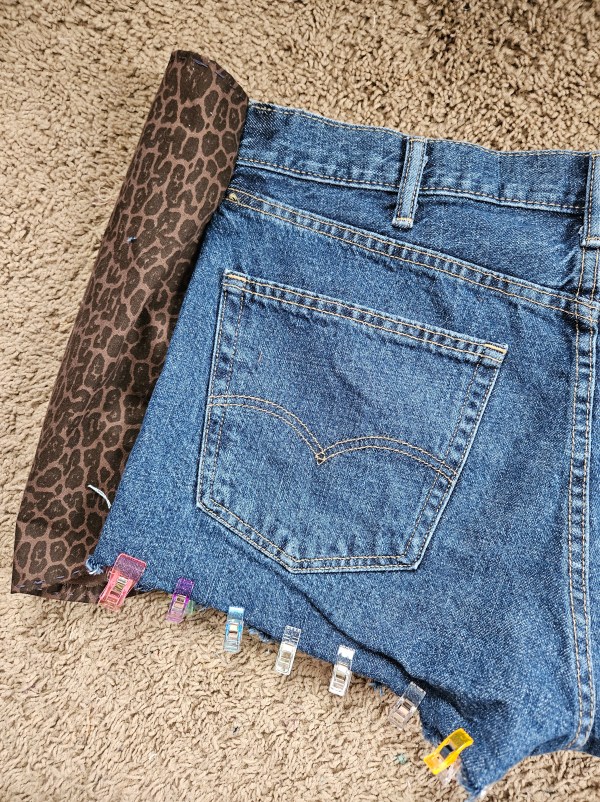
What am I talking about? Sewing. I don’t like sewing as much as I want to. It is tedious, extremely complicated, and requires a level of patience I lack. I’ve been a sewist for 5 years now. I devoted a large amount of my time over the past five years to the study of garment construction, and I realized that it is not my medium, yarn is, and its not a failure to admit I don’t like sewing as much as knitting and crochet.

I think I have known this for about a year, yet refused to verbalize my feeling because it felt like I failed the one thing I always wanted to do. But why is that a failure?

Just because it’s not my passion, doesn’t mean I am going to stop sewing. I think having this space to put less pressure on it to be “my thing” could make me enjoy it more!

Because then I am free to create, to fail, to be a slow learner, to take breaks from sewing when I am ready to cry. I don’t have to feel pressured to get my skills up to par for selling my work. I don’t have to feel pressure to design my own patterns or build a business on sewing. I can go back to basics of what has always been at my core – art. I am an artist, I don’t set out to be, but I know its there inside me too afraid to commit to the bit.

I love what sewing brings me. It’s a fantastic skill to have. I can design my own clothing made to measure and that is luxurious even if my sewing skills are mid.

I can experiement with my style through upcycling. I love how I can recycle and repurpose fabric instead of donating. That is a important part of comsumption. We buy and buy but don’t think about the life cycle of the garment, but with needle and thread you can leave the buy and declutter cycle.

Sewing has taught me to be a wiser comsumer as well. I buy garments that I can’t sew. Complex garments. I also price compare fabric against pieces in store to figure out what is more cost effective to sew. Such as buying a 6.99/yard, one yard cut of cotton jersey to make one long sleeve basic tee. You can buy these from retailers for 35 USD compared to sewing one for 7 USD.

It’s not always cheaper, but sometimes it is and that is a huge win!

Finally, by allowing myself to feel these feelings, my hope is that I will be free to explore and create unencombered by goals of monetizing my hobby, instead that I enjoy the creative process again.

Have you ever tried sewing? Did you find it challenging?

Designing Clothing That Fluctuates With You

This is inspired by a discussion from Maybe Bre, which made me reflect on something I hadn’t discussed before. As well as my own experience wearing clothing, as a garden-variety human who loves fashion but doesn’t always enjoy how our clothing is made.

By this, I mean the patterns and fastening of our modern times. The zipper is a wonderful thing, and so is the structured waistband. I love them in jeans because denim that isn’t compromised by stretch is a rugged and sturdy garment that isn’t a piece that conforms to you; your body is housed within the trousers. I feel the same way about a structured coat. In doing so, I buy these pieces oversized for comfort, which leaves me with a garment that most of the time doesn’t technically fit me. If I did buy it to fit me right now, there is no guarantee that over many decades it would continue to fit me – I’ve been burned before by this problem. Hence, all my “staple, investment pieces” from college no longer live in my closet because they are no longer my size. If I had planned ahead and bought them a bit oversized, they might still be with me, but they wouldn’t have “fit” me at the time.

My problem with clothing is becoming clear, isn’t it? I desire longevity and wearability from clothing, in a way that is not offered off the rack. I desire my clothes to grow and shrink with me, depending on how my body changes over time. This has been my design focus in the last few years as I have placed myself in the driver’s seat of my wardrobe through the process of sewing and knitting.

My idea is not innovative; it is historical. Clothing, because it was so expensive and hard to make, was more adaptable in the past. Fastenings such as tie waist, lacing, and buttons with multiple sizes of tightness were common because clothing was not as easy or cheap, and they were not seen as disposable or replaceable. Changing fashions came with garment reworks, ye olde upcycling as it were. This is what I desire: the ability to change the fit of my garment.

I recently figured out how to sew with elastic, which is a game-changer for shorts and gathered sleeve hems! Before this, though, I was making most of my bottomweight garments with tie waists or several options of buttons to let the garment adjust to the needs of the day, I’ve also sewed with intentional relaxed fit, initially due to a lack of tailoring skill but over time it has been to allow wiggle room in pieces I have spent days or weeks of my life crafting.

Being present in the making process has taught me to treat my clothing with more respect, even when it is time to discard the current version of it for something more useful. I’ve stopped donating as much, decluttering, and rebuying, to be honest, to be more intentional with the garment and its life cycle. I am the one who brought it to life, I can’t simply consume and discard it like it is nothing. I am deprogramming my brain from decades of fast fashion insanity.

I believe if clothing were made with this design philosophy, that clothing would fluctuate with you over time, I believe we would enjoy wearing our clothing more because instead of buying stretch fabric everything, we could still wear good natural fibers, maybe a bit bulkier than spandex and less figure hugging and lurex denim, but would be better for the humans and the planet. Style and substance, as they say on the Great British Baking Show!

What About the Garment Workers? 2025 Edition

There are a lot of things about this new Trump term that are setting my jaw. The newest one, though, happens to be the tariffs zeroing in on Vietnam, and something we are losing sight of in this discussion—what is going to happen to garment workers?

Vietnam is one of many countries in the global south that are responsible for the garments and shoes we wear every day. In May 2024, they surpassed China as the largest textile and garment market share for U.S. imports. The nation employs around 2.5 million people within the 6000 garment and textile factories across Vietnam. This rapid growth of 37 billion USD worth of garments being made in Vietnam in 2024, from 26 billion USD in 2017, is due to the low wages of Vietnam compared to the higher wages of China and even higher wages in the United States. In the 1980s, before Clinton’s NAFTA in 1993, garments sold in American stores were made in the United States, but this changed during the Clinton era and has gotten worse in the 32 years since through the rise of fast fashion and the fashion industry’s reliance on cheap labor at the expense of the garment workers.

So, now we bring the so-called “Liberation Day” of tariffs, and since this is a space I like to keep safe, I’m going to move on because I have nothing nice to say. What I want to focus on is not making this job American again, the rising prices of garments, or anything political, and instead I’d like to zero in on what seeing the world with a Kingdom (God’s Kingdom that is) lens has taught me so far this year.

I’d say that my eyes being opened began last year with diving deeper into Fashion Roadman’s channel, which led me to watch two documentaries – The True Cost of Fast Fashion and Perfume’s Dark Secret in 2024. The other revelations that were exposed in 2024 such as the labor practices of Armani and Dior, were very telling for how are garments are made from luxury to fast fashion. It’s no secret that the fashion industry, including luxury brands, is not concerned with the moral cost of their decisions and is solely focused on getting money in their pockets for their shareholders. So, what is going to happen within the fashion industry as a result of these tariffs set on Vietnam, especially with no sign of negotiation from the Trump Administration? I think it’s going to be bad for everyone.

I think costs from the brands will be cut from the quality of the garments being made, to the materials, to the contracts with these factories. I think garment workers will probably see the biggest hit in their work environment and wages, as their economy is hurt. Or potentially the factories will no longer get these contracts to cut labor costs, meaning the production of garments will be further entrenched with slave labor in countries where workers are exploited. Then what will those women be left with? Garment Workers are primarily women, and they are skilled laborers who could be left without a way to provide income for their families.

It’s not okay for so many reasons.

That is why, as we look towards Easter, I am thinking about those who are oppressed in our world, because Jesus came to be a new Moses and lead us through the Exodus Way. Thank you, dear reader, if you stayed with me on this one. I wish this world weren’t such a downer right now, but just know, although we are from the United States, we are not pleased and empathize with how this is affecting you too. ❤

My Three Favorite Sewing Tools

What are three objects you couldn’t live without?

I’m modifying this prompt slightly to focus on one aspect of my life – sewing. These are the three tools I can’t imagine working without. After four to five years of sewing clothes and trying out various tools and techniques, these are the cream of the crop for me. This is my just opinion. Depending on your sewing style and personality, this list would probably change. I’m sure if I was a sewist who went to design school, I would also have a different list.

Fabric Clips –

When I started sewing, I had no idea fabric clips were an option. I bought a Dritz tin of straight pins and a pin cushion. This is where things began to get uncomfortable. No matter how careful I am when I use pins, I stick myself. When I use pins for a fitting, the pins slip out of the fabric and scratch my skin. I find the pin tins spill easily which is terrifying if you don’t notice it because you are then surrounded by pins in a spill around your feet. When I found fabric clips, my sewing experience improved 180 degrees. I don’t get stuck and the clips stay in place. I can try things on my body and the dress form, without the discomfort of pins sticking or the annoyance of the pins slipping out of place.

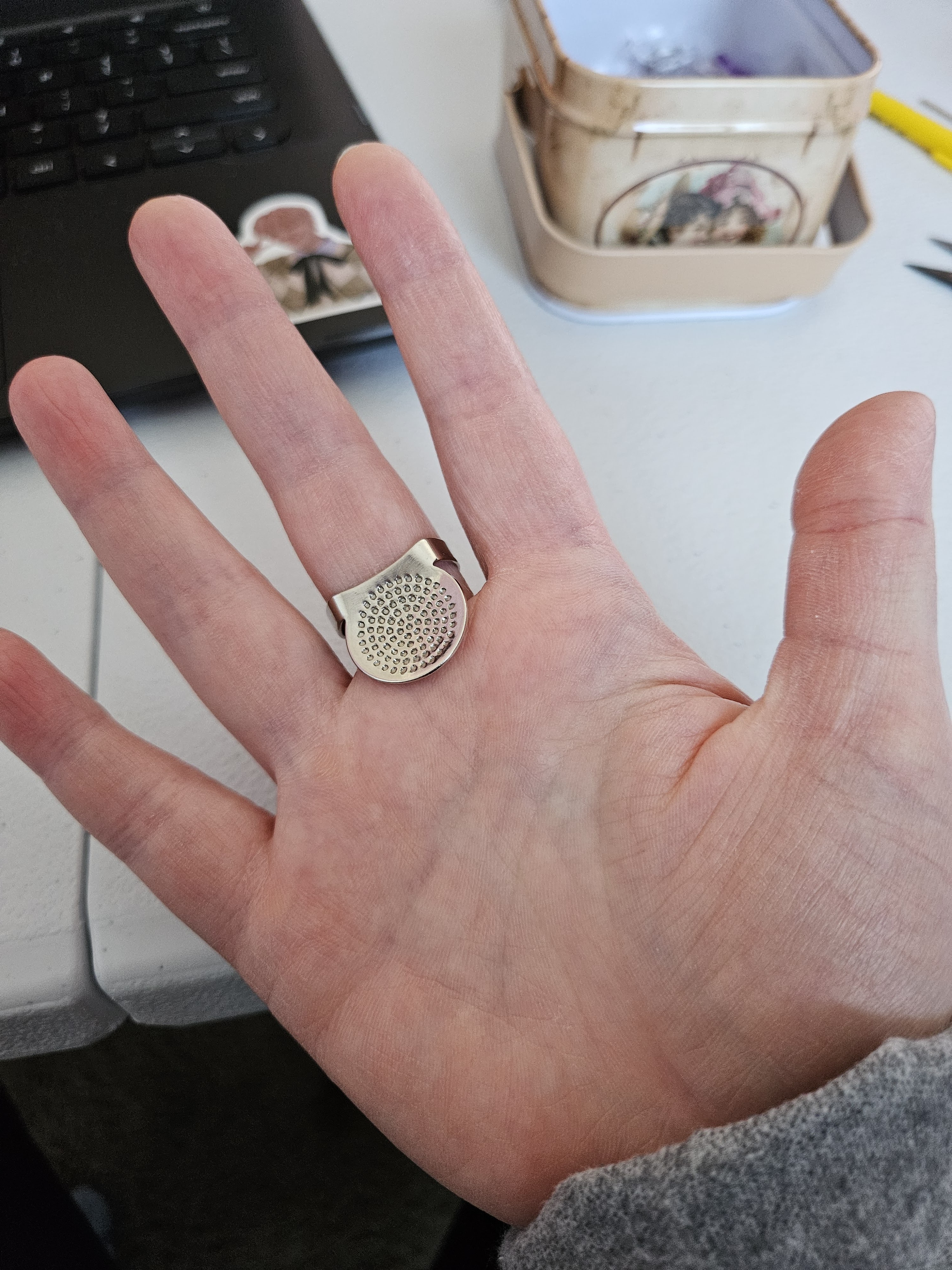
Sashiko Adjustable Ring Thimble –

I’ve tried two kinds of thimbles. The first was the cylindrical metal thimble, which I found hard to use. It fell off my finger or I simply struggled to find the correct finger to place it on for my sewing. I tried another metal thimble that looks like a fencing mask, with an adjustable back. It stayed on my finger just fine. I could make it tighter or looser or move it to a different finger but it still felt odd. I noticed the thimble wasn’t providing the support I needed to push the needle through the tough fabric and in turn, was putting stress on my finger joints.

I was introduced to the Sashiko-style ring plate thimble through the account Geri In Stitches and was hooked. The idea of pushing the needle through dense layers by the palm of your hand instead of your fingertip made more logical sense. This has transformed my hand-sewing experience! I can sew longer without hand fatigue. The ring is comfortable. I hardly notice I’m wearing it until I’ve walked into another room with the thimble still in my hand. This is a Japanese thimble, for the sashiko technique, I am using it for general sewing, but the thimble and sashiko have a rich history of their own that you should check out.

Hand Sewing Needles –

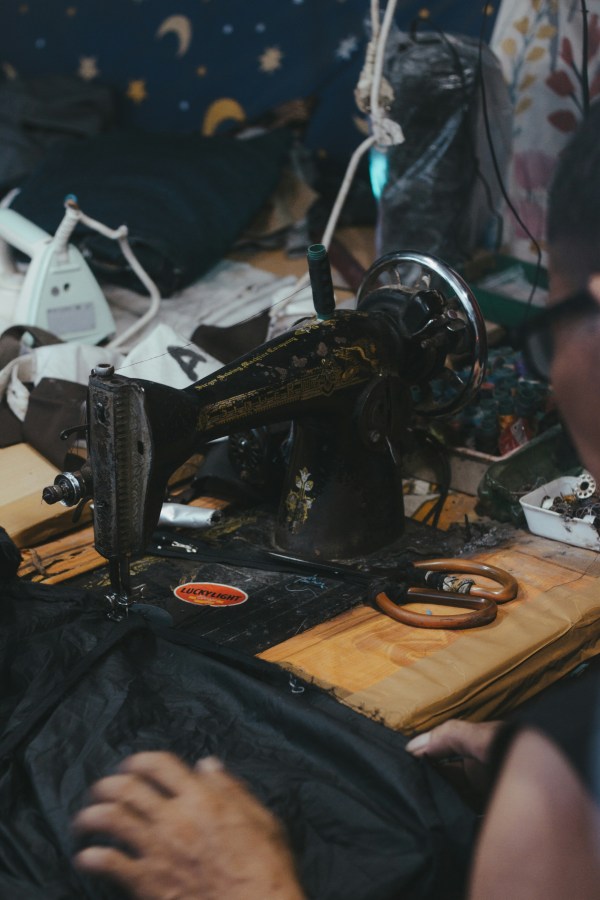
I started my sewing journey by hand sewing before I purchased a Singer Heavy Duty Sewing Machine in 2022. It was my preferred method until my hands started showing stress and my mind was fed with how long garments were taking on a deadline. The switch to a machine was fantastic! I quality garments quickly. The only wrinkle was sewing machine maintenance and gremlins in the machine. Sometimes machines have attitudes. Sometimes you can’t get in sync without your equipment. Sometimes you drop the small screws into the machine and you are in a panic. It’s a wonderful asset but also a source of great frustration for me. For that reason, hand-sewing needles will always be by my side because they are easier to manage, and sometimes you and your machine need some therapy. Also, some projects call for the delicacy of hand sewing. It’s an art form that cannot be fully eclipsed by the machine. For example, how can you attach a button or hook and eye closure without a hand-sewing needle? It’s best to keep them handy.

Black Friday and Cyber Monday in 2024

Have you claimed your deal yet? What are you waiting for? Has every platform, company, or application on your device prompted you to check out their coupon code for an amazing, one-time-only deal?

This year has felt different. Maybe it’s the economy of the United States in 2024, or perhaps it’s the fatigue of advertisements from how many ways we see them nowadays. The Christmas shopping season took on a new flavor in 2020. Sales migrated online, and shopping days—Black Friday and Cyber Monday—became “Black Friday all month” and “Cyber Week.” I feel like Charlie Brown, I’m aghast at the rampant consumerism, which leads me to believe I have changed.

I think it is the amazing work of normal people who have started talking about the current tour-de-force of consumerism that is becoming normalized in first-world nations. I started taking serious note of this during Fashion Roadman live streams, where he discussed the voracious gains of the conglomerates – Kering and LVMH to grow every quarter. While growth was sought, prices soared, and quality took a nosedive. How was this happening? This was a never-ending I sought to learn more about throughout 2024, and along the way, I discovered the web of destruction that almost every company is caught in. Cheaper materials, cheaper production, the global south, slave labor conditions, child labor, toxic chemicals, microplastics, lithium mining, and planned obsolescence. That is as concise as I can get, and trust me, there is so much I’d like to write about on this topic.

How does this connect to Black Friday and Cyber Monday? Well, I used to have a bit of a shopping addiction. This season used to wreck my bank account. Saying no to things I didn’t need because I like clothes was difficult, as dumb as it sounds. It was my way of hiding from my problems by giving me a little treat. I wasted a lot of money and time working to make up for the financial consequences of my actions. Most importantly, it never gave me true happiness. So, if you are struggling with all these sales being shoved in your face, I feel you.

I did go to my local Premier Outlets on Black Friday to pick up a gift for my stepdad and was immediately tempted by the sales and a cute pair of pants I had seen the day before from Old Navy. That’s where being aware of how and where our clothing is being made can really help to wake up to the noise – I remembered where Old Navy makes their clothing in the global south in countries like Bangladesh, where labor conditions are despicable. I snapped out of it. Does this mean I will never shop from Old Navy or another company like them? No, because the system is broken, and all clothing and manufacturing are tainted right now by the Temu and Shein models. But it is helping to only buy if I need something and try to upcycle or make the garment so I can understand how much goes into the process of the garment worker.

Ironically, as I was leaving I saw a sign on the Forever 21 store that they accept Shein returns. We all know where those are going.

This brings me to what actually sparked this post today, it was an email I received from Converse, which advertised a Cyber Monday 75% off sale on everything! Yeah, that’s what the email said. Dubiously, I clicked the link to check it out. I had heard that Nike (the owner of Converse) had a slow 3rd quarter and is falling behind Adidas in the 2020s due to the popularity of the Samba and Blokecore in recent years. Maybe it was true to make Q4 a success? I was surprised by what I saw!

I was surprised to see nothing even approaching 75% off. Either there were a few items that sold out, and the 75% off is gone, or this deal was carefully worded to get traffic. I was disappointed. This goes along with many deals I saw this year on Black Friday and today on Cyber Monday. It’s lackluster. I was looking at colors to touch up my roots and saw that Arctic Fox was running a cyber deal through Amazon, and it was more expensive than the price it was advertised when I purchased it. So what is my point? Be wise and buy what you need when you can afford it, but don’t let the talons of consumerism dig into your wallet this year because there is a cost, and we can’t afford the cost of hyperconsumerism on our fellow humans in the global south, the planet, or our finances.

I saw a short clip someone shared that said on Black Friday, everything is being sold for the price they want. I can attest to receiving junky quality items that were being sold as Black Friday and Cyber Monday deals. It’s a web, but let’s marinate on the problems being brought to light and fight together to solve this problem. I think in time we can sort this out.

I hope wherever you are, you are feeling warm (if you are a Northern Hemisphere person, winter is in full force here!) and know that you were made for a purpose. Thank you for spending time with me today. ❤

Sewist Reacts: Plaid Trousers and Fast Fashion

Plaid. Tartan. The Ancient Celts. Punks. Lumberjacks. Kilts. Pumpkin Patch. A Christmas wrapping paper. A simple pattern of perpendicular stripes, woven together to create a fabric that has stood the test of time. Unsurprisingly, plaid comes around again in the trend cycle each fall and winter. It’s an iconic textile that makes various garments that connect us across cultures. I was delighted to see the plaid trousers as one of these tartan offerings this year. But there is one thing about this trend that I think we should talk about more. Pattern placement. Specifically pattern matching and how this changes depending on garment quality and silhouette. I believe there may be a wrong way to make a plaid trouser even though it should be straightforward. This classic has gone down a bad path this season.

But How Does it Look On a Human Body?

Something that has struck me this year about plaid trousers – how do these pants look worn on a human form, viewed from all angles? I’ve seen many ads from various retailers have been advertised to me, with increasing tempo as we inch closer to Black Friday, and there is one common thread about retail and the fashion industry in 2024. Low quality. Clothing across the board from fast fashion to luxury items are at the lowest quality they have been as brands look to cut costs every step of the way. The fabrics chosen are cheap and not cheerful, and the items themselves are being sewn under inhumane labor conditions in the global south and China. To learn more about this I’d check out the documentary The True Cost of Fashion and check out Fashion Roadman’s commentary also on YouTube. He has a book club discussing How Luxury Lost Its Luster by Dana Thomas.

My opinion is not hyperbole or subjective conjecture, of the three examples I took screenshots of two of the three brands that are known to work with factories in Bangladesh, where the Rana Plaza tragedy happened 9 years ago. Old Navy and American Eagle are these brands, fast fashion brands, that work with factories in Bangladesh, India, Vietnam, and Indonesia. Old Navy, part of the Gap brand that also produces Gap, Athleta, and Banana Republic, which is an odd name for a brand, works with factories in Bangladesh, Cambodia, Sri Lanka, China, El Salvador, Guatemala, China, Nicaragua, and the Philippines. It’s not great.

The third example is from Ralph Lauren, which I am under no guise that because it’s a designer brand the factories are more humane or that the fabric is always better because that’s not the case anymore. Look at Chanel and their gold-plated hardware, or Dior and Armani’s labor controversy in Italy. Ralph Lauren works with factories in China, Italy, the United States, Hong Kong, Pakistan, Sri Lanka, Turkey, Mexico, Cambodia, Vietnam, and India.

They are a little better I’d say but just barely. Their attention to detail in the design of their clothing though, it’s night and day to Old Navy and American Eagle who have gone the way of H&M, Zara, and Shein.

American Eagle: Pattern Alignment and Patch Pockets

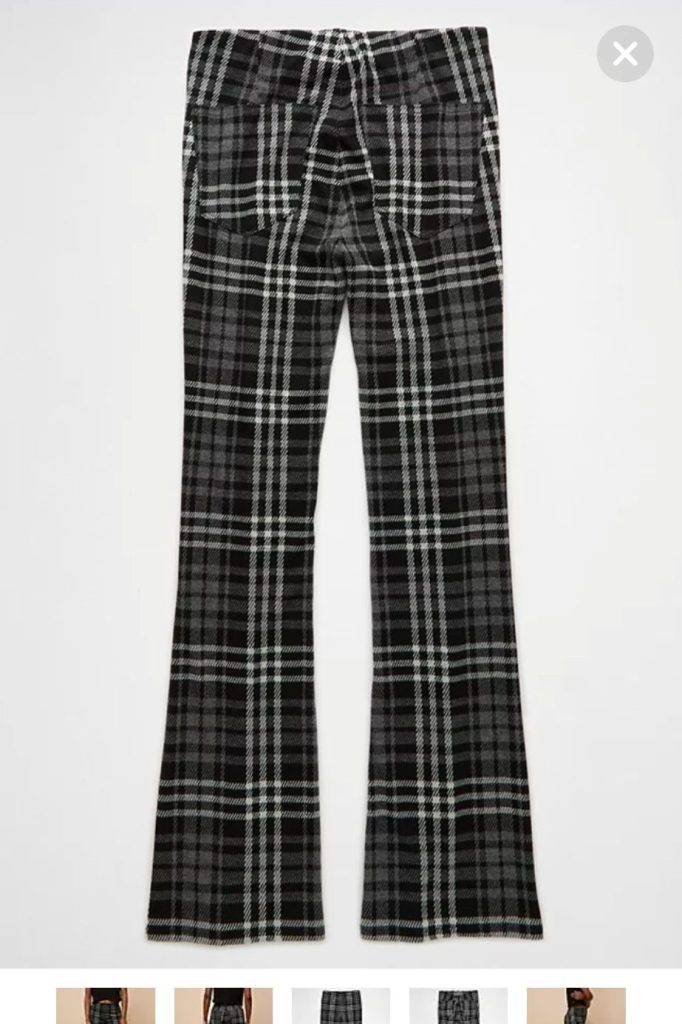
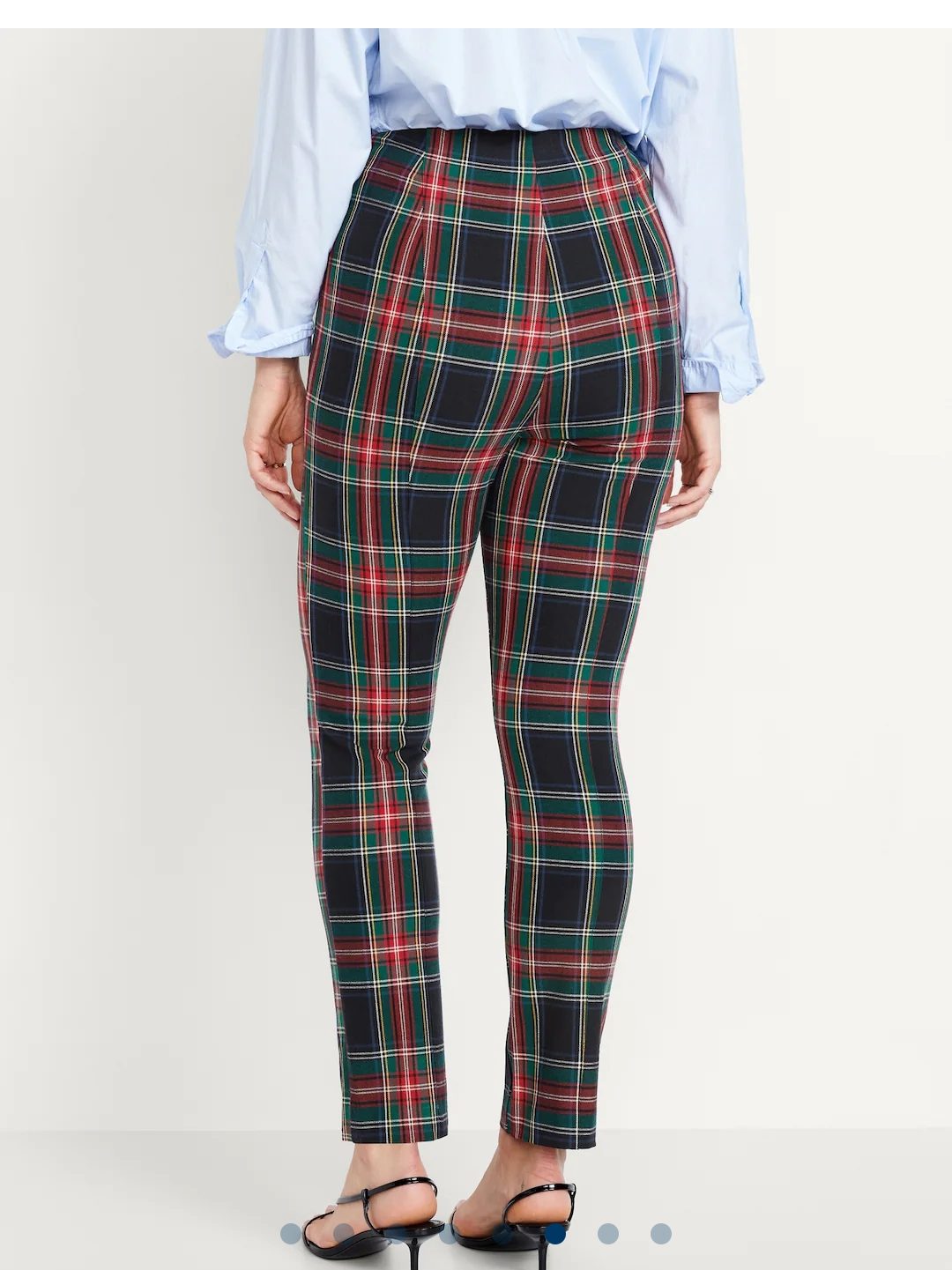
These are a pair of pants that I like in theory. I think a plaid trouser with a closer fitting hip that flares out gently at the bottom is a great idea and would be a versatile item. The plaid print is also matched up quite well in the front view. Something wild happens when you turn the garment around. Those pockets are a bad idea. That’s impossible to match and it detracts from the line of the pants. It emphasizes the way the plaid pattern has to bend with the line of the pants because they chose to change the orientation of the pattern on the butt of the pants only. I think it could be done better and this garment suffers from TikTok lens. It photographs okay and they would be cute from the front, which you can keep as the only view if they are being shown online, but once they enter the real world I don’t think they are going to look as cute. That’s a lot of attention being drawn to one area.

Old Navy: The Lines in the Seat Are Crazy, But Good Pockets

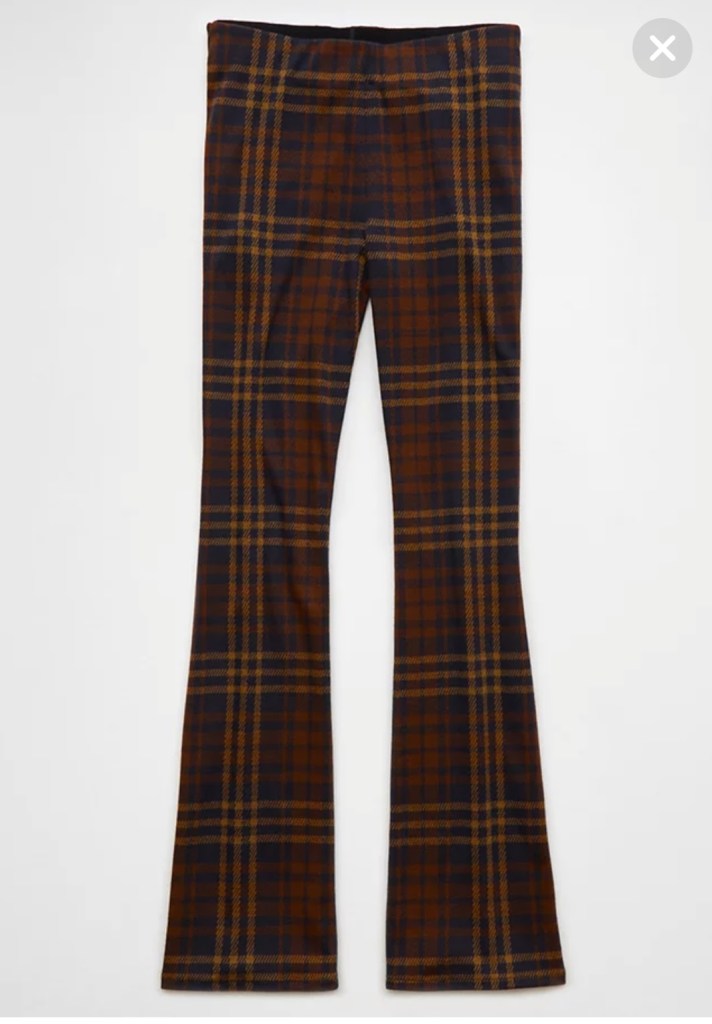
I do think this pattern looks like Audrey Hepburn time traveled through the 1970s punk scene and ended up with Christmas wrapping paper cigarette pants that are cut like leggings. These look really stretchy. Remember in the 2010s when we were wearing patterned leggings? These remind me of them. But they aren’t leggings, they are tailored pants with insert rear pockets and darts at the hip line. I think that is where the problem lies with this garment, the fabric and the fabric needed to make this silhouette.

The product description states the fabric is 55% cotton, 40% viscose-rayon, and 5% spandex. This is not a structured bottomweight fabric. This is a stretchy fabric that is going to have softness and contour your body which is fine in a solid but in a pattern that leads to complications with the pattern. I think the pattern looks odd on the back, particularly along the seat of the pants and the front seam. I think these high-contrast patterns are not a good choice for this application and another type of plaid is better for pants where the distortion of the lines and the seams themselves will not be spotlighted. It’s not where you want the focus of your outfit to be, at the seat line of the garment, that’s uncomfortable. They offered a black watch tartan with lower contrast which was a much better option.

Ralph Lauren: Fabric Choice and Silhouette, but it’s Pricey

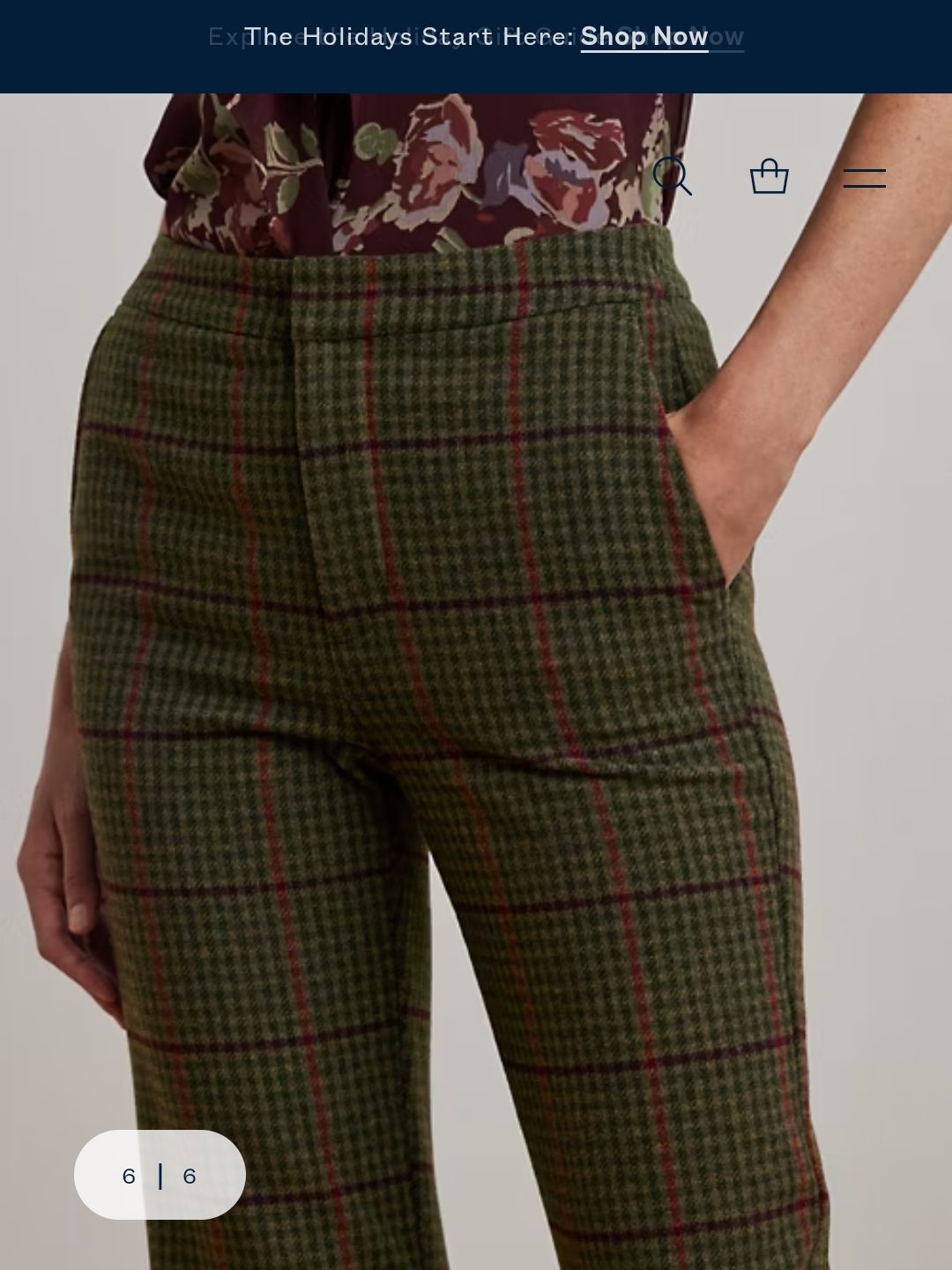
These trousers are comparable to both the Old Navy and American Eagle options for style and silhouette. They have the slight flare of the American Eagle pants and the slim trouser style with insert rear pockets of the Old Navy option. What is different, and in my opinion is a better design choice for these Ralph Lauren pants is the lower contrast plaid style of the fabric and the weight of the fabric which adds structure, eliminating the need for stretch to create the shape. These pants are cut in a way that emphasizes the shape of the wearer in strategic places while also draping away from the body. The pattern cutting of this garment is doing the heavy lifting, not your physique being asked to have the ideal shape to give the pants life.

The plaid is a lower contrast allowing for those tricky seams to fade into the background instead of drawing attention to the problems. On the back seam, the designer chose to use sections of the plaid that were darker, cutting off the pink vertical stripe on both sides before the seam so that the pink appears to flank the seat and therefore draws attention away from the pattern matching of this seam. In the front they follow a similar format, seamlessly integrating the fly into the pattern. The side pockets are tapered again so that the pink vertical begins lower at the hip, drawing the eye to the hip and the waist in a way that enhances the form of the trousers. Again this does not rely on stretch to accomplish this. It takes longer to do, and because of this it has been relegated as a “luxury” feature when actually if you take a bit longer to design to initial pattern after that process it will be easy to grade and use over and over. It’s not a luxury, it’s thoughtful and what design is about.

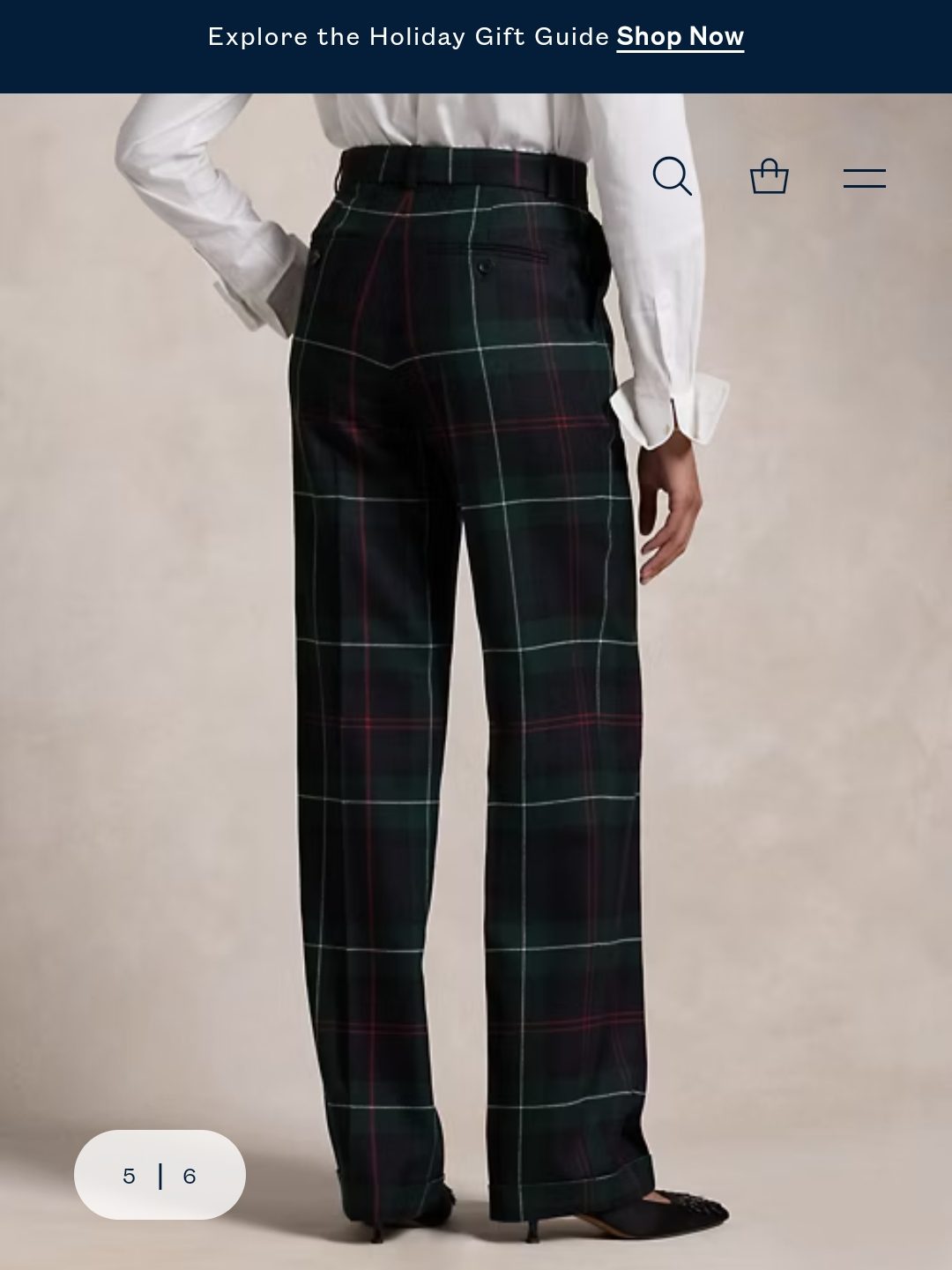
You can see this attention to detail repeated again in these plaid wool trousers. The back seam was mitigated again by thoughtful lines and fabric structure. Because the wool is a heavier fabric and has structure, it can float across the body instead of stretching across it so the diagonal lines of the plaid do not detract from the design of the garment. It also keeps the vertical line of the trousers even though the lines change direction and the pattern is altered here from the standard perpendicular plaid fashion. This shouldn’t be considered a luxury feature either. Wool is a sustainable textile that is durable and creates much less water pollution than stretch fabrics that shed microplastics or denim which requires a vast amount of water to dye.

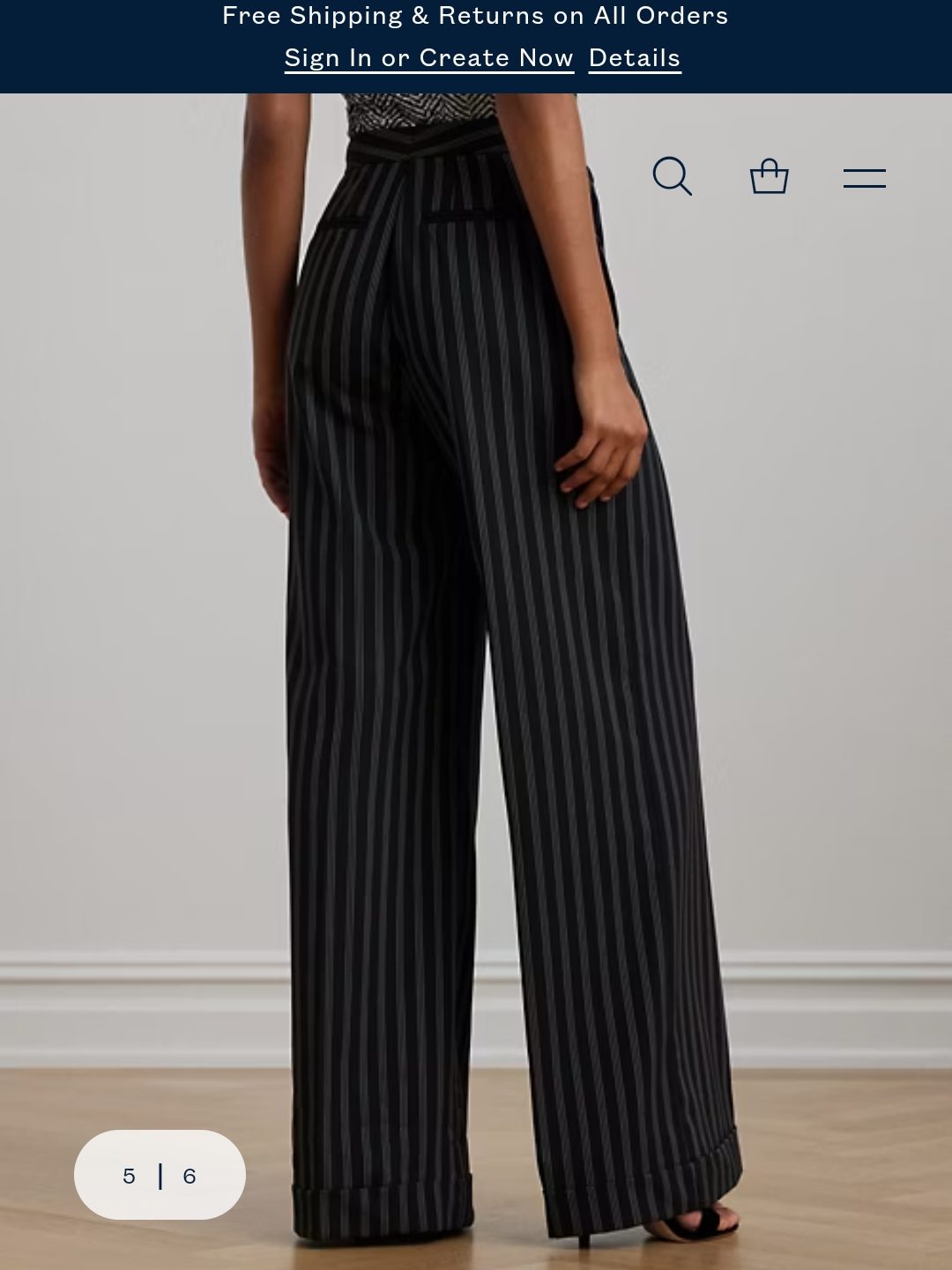
This last example is not plaid but striped, yet the lines of the garment I think still apply. This is another smart design that works with the pattern to create a garment that looks good from all angles. Part of that comes from the wider leg silhouette and the fact that the pant celebrates drape. If this was made from a stretch fabric and was a skinny leg design, a legging basically disguised as a pant, this would be an awkward-looking garment. But affordable should not mean crap design and as consumers we are letting companies determine this as a fact.

Let’s be more discerning in our consumption and look for good design, learn to sew, or support sewing people who can make a good trouser. These Ralph Lauren pants are almost 300 USD and they are not worth that price tag. The Old Navy and American Eagle pants are 50 USD and they aren’t worth that price either. Which leaves the customer with no good option while the brands cash in. We need better clothes made in ethical labor conditions and clothes with good designs that are made to last so that we don’t need to consume so much.

Create a website or blog at WordPress.com

Up ↑