Checker Board Pants: Making Pants From Your Favorite Jeans

In 2024, I was inspired to start making pants. I had attempted making pants before and they were successful but I struggled to make them feel like more than just a pair of lounge pants. Part of this was caused by not choosing a good bottom-weight fabric, and instead opting for a lightweight summer cotton that draped beautifully but didn’t give me that tailored look. I also tried an ill-fated scuba fabric in 2023 that crashed and burned because my thread tension was off. Enter this checkerboard denim print I purchased at Hobby Lobby. It was denim but lighter, not too heavy to be a problem for my sewing machine. But how would I find the right pattern?

I had a pants pattern in my stash for menswear trousers, that I considered using on this project. It’s a solid pattern and would make a straight-fit pair of jeans, maybe not the style I was going for though. I considered buying a new pattern, but then I fretted that the pattern would fit me weirdly or might not fit at all. The current style in 2024 still featured that tapered-in waist on pants that favor an hourglass figure, not my rectangle athletic build, so should I risk it? A big reason I chose to make pants in the first place was that I was sick of shopping and trying on pants that made me feel weird about my body. The men’s section was my go-to for their up-and-down pattern cutting, compared to the extreme tapering and high waist silhouette of women’s pants. Even low rise was stuck in mid-rise inseam, not the true low waist inseam I was accustomed to in the 2000s and early 2010s that helped me find good-fitting jeans because they favored my shape not the post-bbl world of fashion. I digress, my point is that buying a pattern someone else drafted felt like a risk because the fit is such a personalized thing.

My solution was to take a pair of pants in my wardrobe that I liked the fit of and to trace that pair of pants to gauge the shape. I did this with a pair of jeans that were high waist but had a nice loose fit through the hip and leg for the K-pop-inspired baggy jeans style I was interested in making with this 1990s Vans checker board print. This worked swimmingly! So much so that I traced the jeans onto a piece of brown craft paper for a quick pattern to reach for on future projects.

I chose to record this project, start to finish in video from instead of video to have a memory of how I did this to learn for myself and remember what I did but to also inspire others to try this. Pants are intimidating, especially from a paper or PDF pattern. The written instructions and diagrams have puzzled me in past projects but truly, pants are simple once you see how its done. I wanted to help others feel that freedom to create because at least in my American fashion market, fast fashion has destroyed the craftsmanship of pants and standardized sizing. I referenced this in a previous post, Shaping Up where I had to confront the dressing room terror of things not fitting and seeking to not be defined by my jeans size, when trends and pattern cutting shape shift sizes, but to take control of it on my end and get healthier in 2023.

This pants project was one of the most challenging and rewarding projects of 2024. I faced my fear of sewing denim, inserting pockets, and fastenings. I chose to not attempt a fly into I had more pants sewing experience, instead I planned to make what I knew I could achieve under my skill set. I opted for a side closer with a drawstring to have an adjustable fit since the denim had zero stretch. The denim containing no stretch was a feature I sought because I believed it would be easier to work with as it was my first project of this kind, and I wanted a crisp tailoring from the woven fabric. A key thing to note is that the jeans I used for my template also are non-stretch denim. For an accurate this is paramount or else the project will not work. Either you will cut your project too large or too small. It is also essential to leave a seam allowance on your pattern pieces. When self-drafting it is your responsibility to take charge of the seam allowances and plan ahead.

I messed this up with the crotch line and had to make a quick fix. My fix was a diamond gusset. Popular in women’s leggings, this diamond gusset shape piece allows for greater mobility while maintaining the strength of the seams.

The second challenge I faced was the problem of a narrow bolt and an all-over pattern. This fabric was quite narrow and because I was cautious with my seam allowance, I cut my pieces large. This meant that I was not cutting from the longest side, but the most wide. The pattern pieces were cut out missing length on the leg. My solution was to add on to the bottom and pattern match. It’s easier to match than people say, it just takes patience and intentional sewing. I’m pleased with how seamlessly I got my pieces to match up.

The pockets were a challenge. How do you place them? How do you insert them with strength so the pockets can be used without pulling the pants down or ripping? I chose to place them angled on the sides, aligned with my hips so that they would be practical and not create weird bunching at the front of the pants. No wonky crotch fit here!

Would you make your own pants? I hope I inspired you to get creative and go for it if you are sewing-inclined. Thanks, reader, for joining me once again on this quest to grow my fashion design skills. Have a wonderful day!

Beauty Advent Calendars and the Gift of Prayer

Advent calendars are becoming a strange phenomenon. When I was a kid, I knew Advent as the thing that happened on Sunday morning in more formal churches, like the ornate Presbyterian church in town, compared to the less formal Alliance church I went to, which had a gymnasium/sanctuary. A wreath would appear the Sunday, four weeks before Christmas, and a series of candles were lit in purple and pink, until Christmas Eve when the white candle was lit. There was scripture reading, as we looked forward to the coming of Jesus, by recalling the moments throughout the Bible pointing to his birth. It was a time of preparation and reflection on the deeper meaning of Christmas in the Christian context. I didn’t grow up with an advent wreath at home but I thought they were fascinating. I was more familiar with those small, wooden, or felt Christmas calendars that involved opening a door or moving a little trinket to a new pocket each day.

The term Advent calendar now has a different image in my mind. I can probably thank Alexandria Ryan’s Beauty Advent Calendar unboxings for this. I think of small samples, expired makeup, Augustinus Badder’s ‘The Rich Cream’, and Charlotte Tilbury. Now I should explain before this makes her channel sound posh and out of touch. I found her channel many years ago, I believe in 2017, as a makeup subscription box unboxing channel. Since then, it has evolved into a channel with ‘advent season’ that usually wraps up in spring or summer. She purchases beauty and snack advent calendars and opens them to see if they are worth the money by comparing the cost of the box with the total value of the items inside.

It’s a lot of math! For most calendars, it is a lot of samples and Ali-Express private-label junk being sold as exclusive items. It all started back in 2019 with the Sephora Holiday Advent Calendar, which was so poor quality, that she recreated the items from the Dollar Store. This led to an annual Sephora Advent Calendar tradition and grew to Advent calendar season each year. Including Halloween Advent calendars, which are now a thing for companies to sell. The word Advent is slowly changing in meaning from a particular Biblical preparation process to a countdown to Christmas Day to a catch-all seasonless countdown mystery box that can be 12 days(for the twelve days of Christmas)-24 days-25 days or even a 7-day after-advent calendar for the week after Christmas, to a free-form countdown signifying word which correlates to opening a box of mystery items from themed packaging. Instead of being opened daily, most of these are opened all at once and are treated as a good deal, a content generator, or a gift people give themselves or others. It’s far from the chocolate Advent calendars of childhood, it’s a whole cross-section of the consumer market now with Advent calendars that will hold anything and everything, for humans and pets alike.

Now, I’m not here to discuss this from a Biblical point of view, because Advent is not a tradition pulled directly from the Bible like communion, Passover, or baptism, it’s something the church began doing and traditions vary. The date of the celebration of Christmas varies between Orthodox and Catholic/Protestant calendars. Jesus was not born in December, it’s all cultural and has been adapted from European solstice and winter festivals, so it’s not a big deal to me. This is more of a fascination I have with humans and the way we imagine whole new things in such a short amount of time. Our culture of Advent calendars changed rapidly within 5 years! I don’t remember them being such a cultural fixation until a few years ago. Now every store and every company seems to have an Advent calendar that they are ready to sell you!

I believe this happened because we were looking for something to make sense of those weird holidays at the beginning of the decade, combined with late-stage capitalism and hyper-consumption, and boom – it’s a perfect storm for the boxes upon boxes of tiny things being offloaded into these boxes for a hefty price. It’s a way for companies to make a quick buck, offload products they need to sell but won’t move, or rip off customers by filling their calendars with useless junk – like the 2024 VIB Reward Advent Calendar from Sephora.

Even the word calendar is changing with this phenomenon, what is a calendar? Is it a way to track the time and year, by seeing a month at a time until twelve months have passed? Is it a box with doors that contain presents? How many doors equal a calendar? What separates this from a mystery box? Is it simply the doors, the numbers, and the packaging? Does it have to be tied to a holiday at all? Just like Advent in concept is changing so is the meaning of calendar and it’s interesting to me that as humans we do this and we do this so seamlessly? Language is such a curious medium. I can see through this process how words shift in meaning, dialects are formed, and why communicating with someone in the past or future speaking the same technical language as me would be quite difficult.

But what about Advent calendars without the products? Do they still exist and are they fun? I did an Advent calendar this year, the first time I’ve ever had my own. It was a 24-day Advent calendar, that I received in the mail from Prison Fellowship, and was a 24-day of prayer Advent calendar. It was completely free. I didn’t know I was being sent this item until it showed up in my mailbox a few days before Thanksgiving. There were no items to receive each day, just a scripture reading and a prayer. The prayer requests covered the varied needs of their ministry – those who are incarcerated, their families, the corrections officers, the children of those incarcerated, the ministry team of Prison Fellowship, people like me who donate, the communities and churches across the nation so that we can all work in synergy to be prepared and ready to serve God through our part in this mission.

What I appreciated the most about this calendar was how it felt interwoven, it covered needs at all levels. For example, over the 24 days, I prayed for those who were incarcerated who come to Prison Fellowship events and those who haven’t. I prayed for comfort in the isolation of being incarcerated, especially during the holidays when the incarceration process removes you from all connections, not to mention the pain caused by the action that led to incarceration. It is a time of pain for prisoners, their families, and friends. I prayed for the ministry of Angel Tree, the children of prisoners and families of prisoners, for comfort and reconciliation, and spiritual redemption. I prayed for churches and communities, as well as prisons and corrections officers to all work as one to facilitate the redemptive work of God in these communities inside and outside of prison.

It was truly powerful and did not feel like something that was made without prayer itself, because the scripture readings were so intricately tied to the prayers each day. A human could not have done that on their own. It was the first time I’ve prayed the prayers written for me without deviating. I usually try to say my own words and thoughts when given a prayer request, but I felt deep down that repeating the request inscribed behind the door was what was being called for most. It taught me that prayer is not about me nor my wish to put my stamp on it as a creative person. Prayer is more than just communion with God, it is about God and his purposes. His plan over my plan.

I don’t know why I specifically received this. I don’t know if everyone who has donated was sent one or just some people? I haven’t seen much reference to this calendar, but I am so grateful that I did receive it. It was an incredible experience and taught me that even if Advent calendars are being transformed into cash grabs and tools of overconsumption, they can still be a process that prepares us for the Christmas season and brings the focus to God and His work in our lives. It can also be a fun concept that brings holiday cheer, like Catvent, an Advent calendar for cats filled with cat toys. That was an Advent calendar my Instagram friend shared daily on her stories this year which I absolutely loved! It’s truly becoming a multi-layered concept and I’m intrigued, so much so that it is January and I am looking forward to catching up on the next Advent calendars to be unboxed by Alexandria in the new year.

I hope wherever you are you have a lovely day or evening or night. Thanks for spending time with me, dear reader. Until next time!

Bunny Plush Keychain

Recently, I shared a Knit Star Plush Keychain Pattern, but that wasn’t the only keychain I’ve been working on. Behold, a knit bunny keychain made from repurposed fabric! This keychain was inspired by my Skzoo Quokka plush keychain which I have styled on my purse and belt loop. I was tempted to buy more as this trend has been all over my feed this year, but that’s unrealistic. So I thought, in Jeremy Clarkson fashion, how hard could it be?

This key chain was made by repurposing a pair of underwear, that was weirdly made without any stretch. They had no purpose but to be trashed, which I didn’t want to do because they were brand new and I liked the pattern and color story. So I wondered, could I translate this to a plushie and I could make this plushie into a keychain without buying any materials beyond the keychain hardware? The answer is yes!

I used a pen to draw pattern pieces onto the underwear by designating the fabric into four ear-pieces, two head-pieces, and a rectangle piece that would be used to connect the keychain hardware. The rest of the fabric was cut into small cut pieces that would be used as the stuffing. This worked like a dream!

I chose to sew this item by hand because of the small nature of the project. The pieces were too small and delicate to sew by machine with any semblance of control or care. It was a quick make and took one day to complete. I sewed 90% of the ears, turned them right side out, stuffed them, and then set the ears aside. Next, I repeated this process with the circle for the head and stuffed it. When I was certain that all the stuffing was divided between the three pieces adequately, I sewed closed the ears and head. Next, I attached the ears to the head. Finally, I sewed the rectangle and threaded it through the loop of the keychain before attaching it to the bunny plushie. I opted for an abstract look so I did not decorate the bunny plush with a face, therefore if it spins around it doesn’t matter what side is facing out.

Overall, this was a quick and thrifty project with the hardware coming in a pack of two for $2.99. I used the other clip on the knit star plush project. This type of plushie could be made with any scrap fabric you have and could be adapted into other animals. It would be an easy DIY gift too!

Were My 2024 Fashion Predictions Accurate?

At the beginning of January 2024, I made a post for fun predicting what I thought would become popular trends in 2024. Now that it’s December, how well did I do? I accurately guessed 6 out of 10 of the predictions I made! So what were these trends that I predicted and what did I get wrong? Let’s jump in!

Gameday Outfits

The NFL had a moment this year with the spotlight of Taylor Swift and Travis Kelce, and her gameday outfits became a source of public fascination. This created a wave of gameday outfit inspiration online, sparked by Blokecore in 2023. This carried on through WAG fashion and trickled into the mainstream. The Paris Olympics created fashion buzz, as did the movie Challengers. There was a rising fascination for F1 in the US. Not to mention the popularity of the team-branded baseball cap and Adidas soccer shorts paired with a button-down shirt. This one was a big deal and was unifying to be honest because who doesn’t like at least one of these sporting events? There is something for everyone.

Patches and Visible Mending

This definitely became a trend as DIY fashion and upcycling continue to grow in popularity online for sustainability and creative expression. Mending and learning to sew continues to rise in popularity as people choose to opt out of the fast fashion loop in search of clothing that will last all while standing out in a crowd. I think we can agree there was a hive mind within fashion since the Tik-Tok “core” aesthetics took off at the beginning of the decade and we are all looking for original ideas again.

Colorful Knit Accessories

Similarly, knitting along with crochet has continued to grow in popularity as hobbies and as a way to create DIY fashion by hand. It was so popular that chatGPT patterns and AI-created crochet and knit images cluttered the creative space. With Balletcore being popular, so were leg warmers and slouchy socks. Fingerless gloves, colorful hats, and brightly colored vests made 2024 what it was – a fiber artist paradise.

Exaggerated Tailoring

This was seen on the runway, with tailoring having a moment with trousers, vests, and blazers finding popularity once again. Dramatic shapes were popular on the runway. I also saw vests and dramatic trouser shapes in mainstream stores. I think this should always be in style so let’s keep in that way fashion trends. It’s a classic.

Resurgence of the Flip Flops

Yes, these were hailed the “It girl” shoe of the summer after Gisele Bundchen (yes I know I’m missing the umlauts) was seen wearing them. The specific flip-flop brand Havaianas, was the iconic style of 2024, but luxury brands tried to corner that market with $900+ flip-flops. I think it makes sense for these to come around again after how long the Birkenstock sandal has been the favorite choice, followed by Tevas, it’s the next logical evolution from clunky to delicate. Personally, all three of these drive my feet nuts but I’d probably choose the Teva for comfort or flip-flops for sheer chillness. Flip-flops were also worn by athletes at the Paris 2024 games.

Jersey Shore Nostalgia

Indeed Ed Hardy and Von Dutch did trend again this year! Mainly with teens and tweens, but this styling returned to the runway with Kim Petras’ Spring 2024 collection which featured Ed Hardy’s iconic designs. I’m excited for this era of fashion to return because I enjoyed the late 2000s-early 2010s fashion and the over-the-top spectacle of it. I’m certainly more for this than the mob wife styling of early 2024.

Parasols for Sun Relief

This one I thought, was a long shot but it made sense for it to become a trend because of how practical they are while protecting skin from UV damage. They are technically better for the planet than single-use sunscreen. I was not wrong. This market is projected to grow from 2024-2032 as the parasol or sun umbrella market is anticipated to grow globally. In 2024, there was significant growth as a trend for Japanese men. That’s a result! 🙂

What Did I Miss the Mark On?

  • ARMY-core was not a thing even though all BTS members were in the military this year, no trends emerged from this across the K-pop sphere. The only popular examples of camo I saw were from Chappell Roan’s ‘Midwest Princess’ camo hats from her tour and the Harris-Walz campaign hats which copied the same style.
  • Gilded Age Finery did not take off like I hoped. The only instances I found were Bad Bunny’s Met Gala look and Paris Fashion Week using late Victorian and Regency era opulence as inspiration for glamour.
  • Bonnets this was a flop except for two key shifts. One I hope I explain right because I am not familiar with the hair culture. According to a few articles I found black men styled bonnets as a protective hair style in 2024. Secondly, hats became popular again with rope hats and pillbox styles being the most talked about.
  • Cosmic Cowboy or Sailor Cowboy would have been accurate if I had dropped the qualifiers. Cowboy was the most iconic aesthetic of this year with cowboy styling, media, and country music being a key player in pop culture. Americana in general had a moment which is odd but hopefully a turning point for unification in my divided land.

What were your favorite style moments of 2024? And did you participate in any of these trends?

Black Friday and Cyber Monday in 2024

Have you claimed your deal yet? What are you waiting for? Has every platform, company, or application on your device prompted you to check out their coupon code for an amazing, one-time-only deal?

This year has felt different. Maybe it’s the economy of the United States in 2024, or perhaps it’s the fatigue of advertisements from how many ways we see them nowadays. The Christmas shopping season took on a new flavor in 2020. Sales migrated online, and shopping days—Black Friday and Cyber Monday—became “Black Friday all month” and “Cyber Week.” I feel like Charlie Brown, I’m aghast at the rampant consumerism, which leads me to believe I have changed.

I think it is the amazing work of normal people who have started talking about the current tour-de-force of consumerism that is becoming normalized in first-world nations. I started taking serious note of this during Fashion Roadman live streams, where he discussed the voracious gains of the conglomerates – Kering and LVMH to grow every quarter. While growth was sought, prices soared, and quality took a nosedive. How was this happening? This was a never-ending I sought to learn more about throughout 2024, and along the way, I discovered the web of destruction that almost every company is caught in. Cheaper materials, cheaper production, the global south, slave labor conditions, child labor, toxic chemicals, microplastics, lithium mining, and planned obsolescence. That is as concise as I can get, and trust me, there is so much I’d like to write about on this topic.

How does this connect to Black Friday and Cyber Monday? Well, I used to have a bit of a shopping addiction. This season used to wreck my bank account. Saying no to things I didn’t need because I like clothes was difficult, as dumb as it sounds. It was my way of hiding from my problems by giving me a little treat. I wasted a lot of money and time working to make up for the financial consequences of my actions. Most importantly, it never gave me true happiness. So, if you are struggling with all these sales being shoved in your face, I feel you.

I did go to my local Premier Outlets on Black Friday to pick up a gift for my stepdad and was immediately tempted by the sales and a cute pair of pants I had seen the day before from Old Navy. That’s where being aware of how and where our clothing is being made can really help to wake up to the noise – I remembered where Old Navy makes their clothing in the global south in countries like Bangladesh, where labor conditions are despicable. I snapped out of it. Does this mean I will never shop from Old Navy or another company like them? No, because the system is broken, and all clothing and manufacturing are tainted right now by the Temu and Shein models. But it is helping to only buy if I need something and try to upcycle or make the garment so I can understand how much goes into the process of the garment worker.

Ironically, as I was leaving I saw a sign on the Forever 21 store that they accept Shein returns. We all know where those are going.

This brings me to what actually sparked this post today, it was an email I received from Converse, which advertised a Cyber Monday 75% off sale on everything! Yeah, that’s what the email said. Dubiously, I clicked the link to check it out. I had heard that Nike (the owner of Converse) had a slow 3rd quarter and is falling behind Adidas in the 2020s due to the popularity of the Samba and Blokecore in recent years. Maybe it was true to make Q4 a success? I was surprised by what I saw!

I was surprised to see nothing even approaching 75% off. Either there were a few items that sold out, and the 75% off is gone, or this deal was carefully worded to get traffic. I was disappointed. This goes along with many deals I saw this year on Black Friday and today on Cyber Monday. It’s lackluster. I was looking at colors to touch up my roots and saw that Arctic Fox was running a cyber deal through Amazon, and it was more expensive than the price it was advertised when I purchased it. So what is my point? Be wise and buy what you need when you can afford it, but don’t let the talons of consumerism dig into your wallet this year because there is a cost, and we can’t afford the cost of hyperconsumerism on our fellow humans in the global south, the planet, or our finances.

I saw a short clip someone shared that said on Black Friday, everything is being sold for the price they want. I can attest to receiving junky quality items that were being sold as Black Friday and Cyber Monday deals. It’s a web, but let’s marinate on the problems being brought to light and fight together to solve this problem. I think in time we can sort this out.

I hope wherever you are, you are feeling warm (if you are a Northern Hemisphere person, winter is in full force here!) and know that you were made for a purpose. Thank you for spending time with me today. ❤

Sewist Reacts: Plaid Trousers and Fast Fashion

Plaid. Tartan. The Ancient Celts. Punks. Lumberjacks. Kilts. Pumpkin Patch. A Christmas wrapping paper. A simple pattern of perpendicular stripes, woven together to create a fabric that has stood the test of time. Unsurprisingly, plaid comes around again in the trend cycle each fall and winter. It’s an iconic textile that makes various garments that connect us across cultures. I was delighted to see the plaid trousers as one of these tartan offerings this year. But there is one thing about this trend that I think we should talk about more. Pattern placement. Specifically pattern matching and how this changes depending on garment quality and silhouette. I believe there may be a wrong way to make a plaid trouser even though it should be straightforward. This classic has gone down a bad path this season.

But How Does it Look On a Human Body?

Something that has struck me this year about plaid trousers – how do these pants look worn on a human form, viewed from all angles? I’ve seen many ads from various retailers have been advertised to me, with increasing tempo as we inch closer to Black Friday, and there is one common thread about retail and the fashion industry in 2024. Low quality. Clothing across the board from fast fashion to luxury items are at the lowest quality they have been as brands look to cut costs every step of the way. The fabrics chosen are cheap and not cheerful, and the items themselves are being sewn under inhumane labor conditions in the global south and China. To learn more about this I’d check out the documentary The True Cost of Fashion and check out Fashion Roadman’s commentary also on YouTube. He has a book club discussing How Luxury Lost Its Luster by Dana Thomas.

My opinion is not hyperbole or subjective conjecture, of the three examples I took screenshots of two of the three brands that are known to work with factories in Bangladesh, where the Rana Plaza tragedy happened 9 years ago. Old Navy and American Eagle are these brands, fast fashion brands, that work with factories in Bangladesh, India, Vietnam, and Indonesia. Old Navy, part of the Gap brand that also produces Gap, Athleta, and Banana Republic, which is an odd name for a brand, works with factories in Bangladesh, Cambodia, Sri Lanka, China, El Salvador, Guatemala, China, Nicaragua, and the Philippines. It’s not great.

The third example is from Ralph Lauren, which I am under no guise that because it’s a designer brand the factories are more humane or that the fabric is always better because that’s not the case anymore. Look at Chanel and their gold-plated hardware, or Dior and Armani’s labor controversy in Italy. Ralph Lauren works with factories in China, Italy, the United States, Hong Kong, Pakistan, Sri Lanka, Turkey, Mexico, Cambodia, Vietnam, and India.

They are a little better I’d say but just barely. Their attention to detail in the design of their clothing though, it’s night and day to Old Navy and American Eagle who have gone the way of H&M, Zara, and Shein.

American Eagle: Pattern Alignment and Patch Pockets

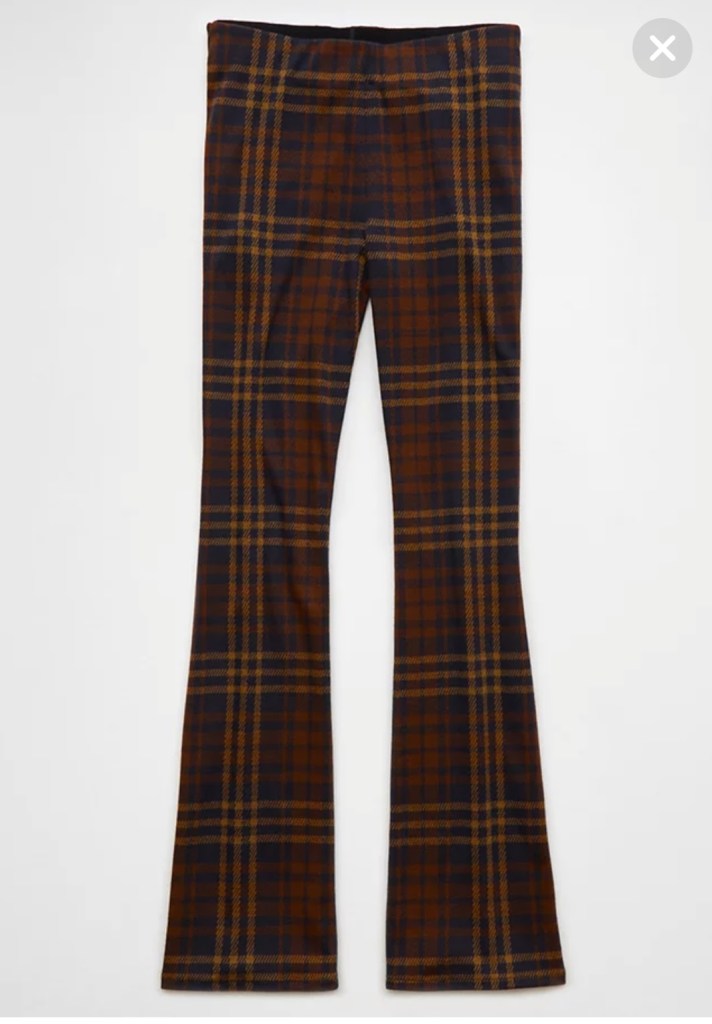
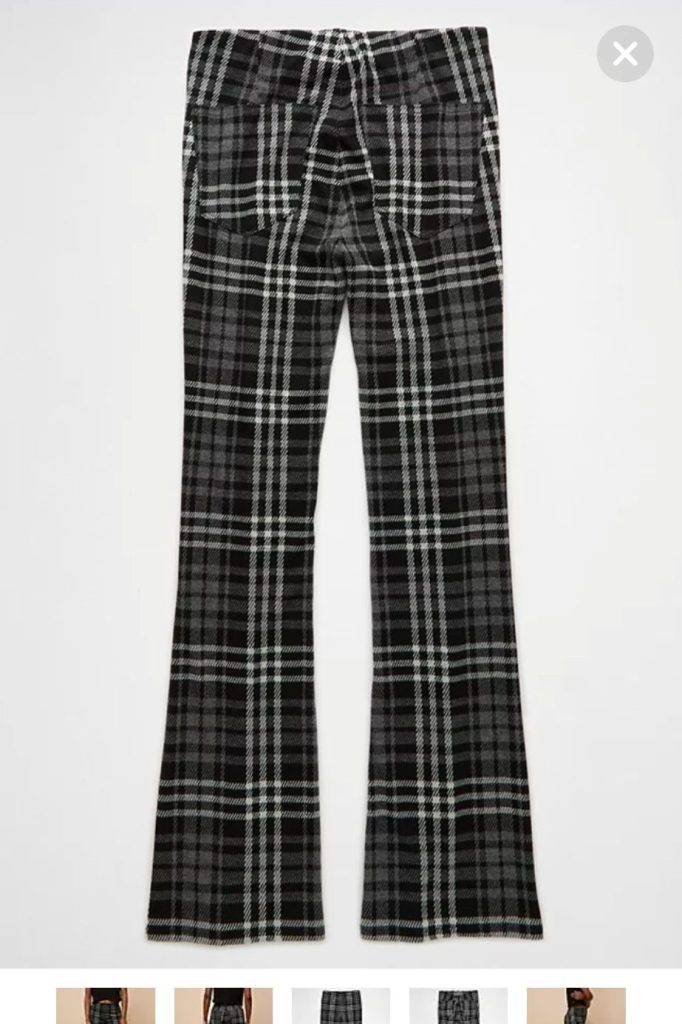
These are a pair of pants that I like in theory. I think a plaid trouser with a closer fitting hip that flares out gently at the bottom is a great idea and would be a versatile item. The plaid print is also matched up quite well in the front view. Something wild happens when you turn the garment around. Those pockets are a bad idea. That’s impossible to match and it detracts from the line of the pants. It emphasizes the way the plaid pattern has to bend with the line of the pants because they chose to change the orientation of the pattern on the butt of the pants only. I think it could be done better and this garment suffers from TikTok lens. It photographs okay and they would be cute from the front, which you can keep as the only view if they are being shown online, but once they enter the real world I don’t think they are going to look as cute. That’s a lot of attention being drawn to one area.

Old Navy: The Lines in the Seat Are Crazy, But Good Pockets

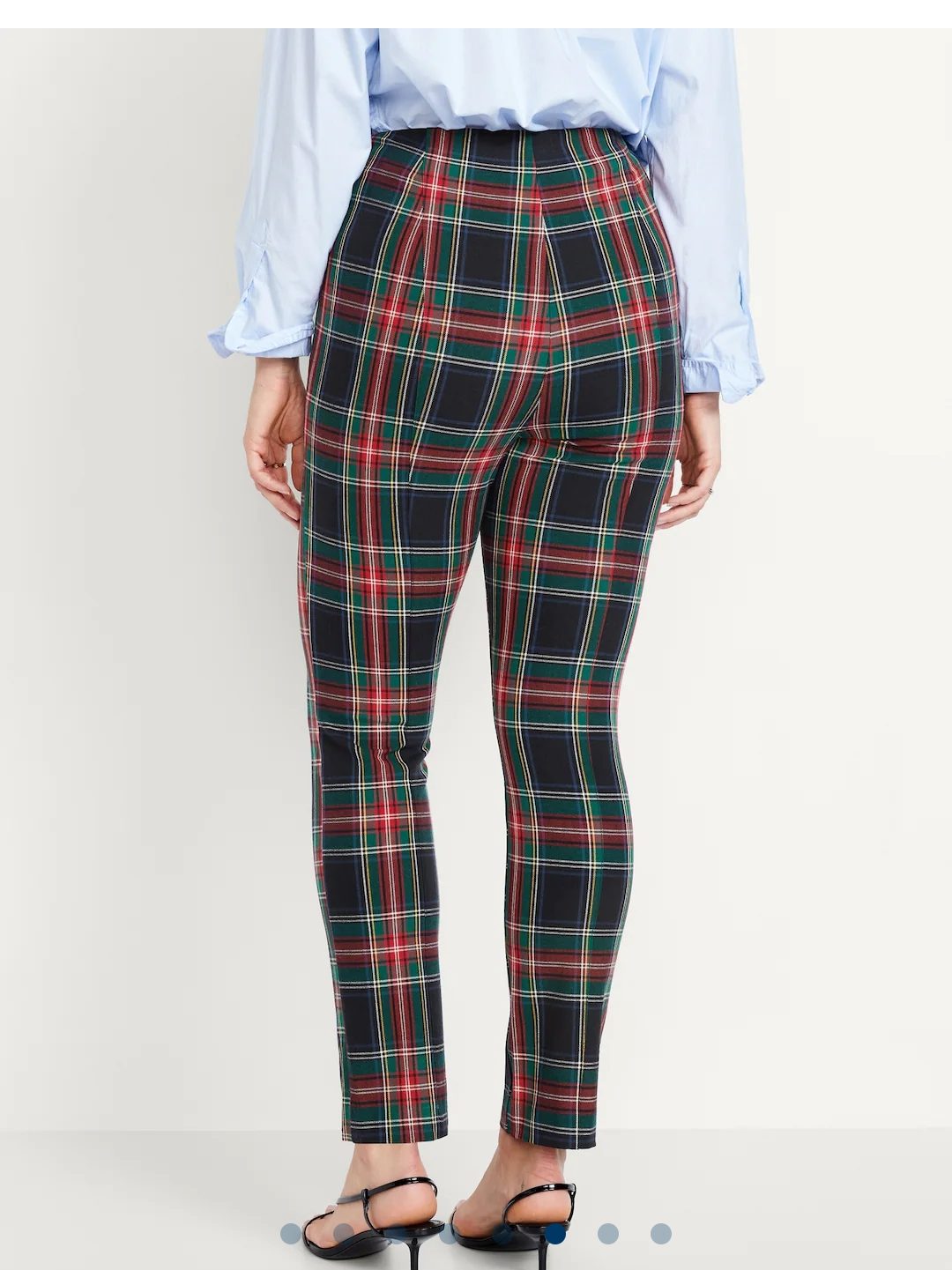
I do think this pattern looks like Audrey Hepburn time traveled through the 1970s punk scene and ended up with Christmas wrapping paper cigarette pants that are cut like leggings. These look really stretchy. Remember in the 2010s when we were wearing patterned leggings? These remind me of them. But they aren’t leggings, they are tailored pants with insert rear pockets and darts at the hip line. I think that is where the problem lies with this garment, the fabric and the fabric needed to make this silhouette.

The product description states the fabric is 55% cotton, 40% viscose-rayon, and 5% spandex. This is not a structured bottomweight fabric. This is a stretchy fabric that is going to have softness and contour your body which is fine in a solid but in a pattern that leads to complications with the pattern. I think the pattern looks odd on the back, particularly along the seat of the pants and the front seam. I think these high-contrast patterns are not a good choice for this application and another type of plaid is better for pants where the distortion of the lines and the seams themselves will not be spotlighted. It’s not where you want the focus of your outfit to be, at the seat line of the garment, that’s uncomfortable. They offered a black watch tartan with lower contrast which was a much better option.

Ralph Lauren: Fabric Choice and Silhouette, but it’s Pricey

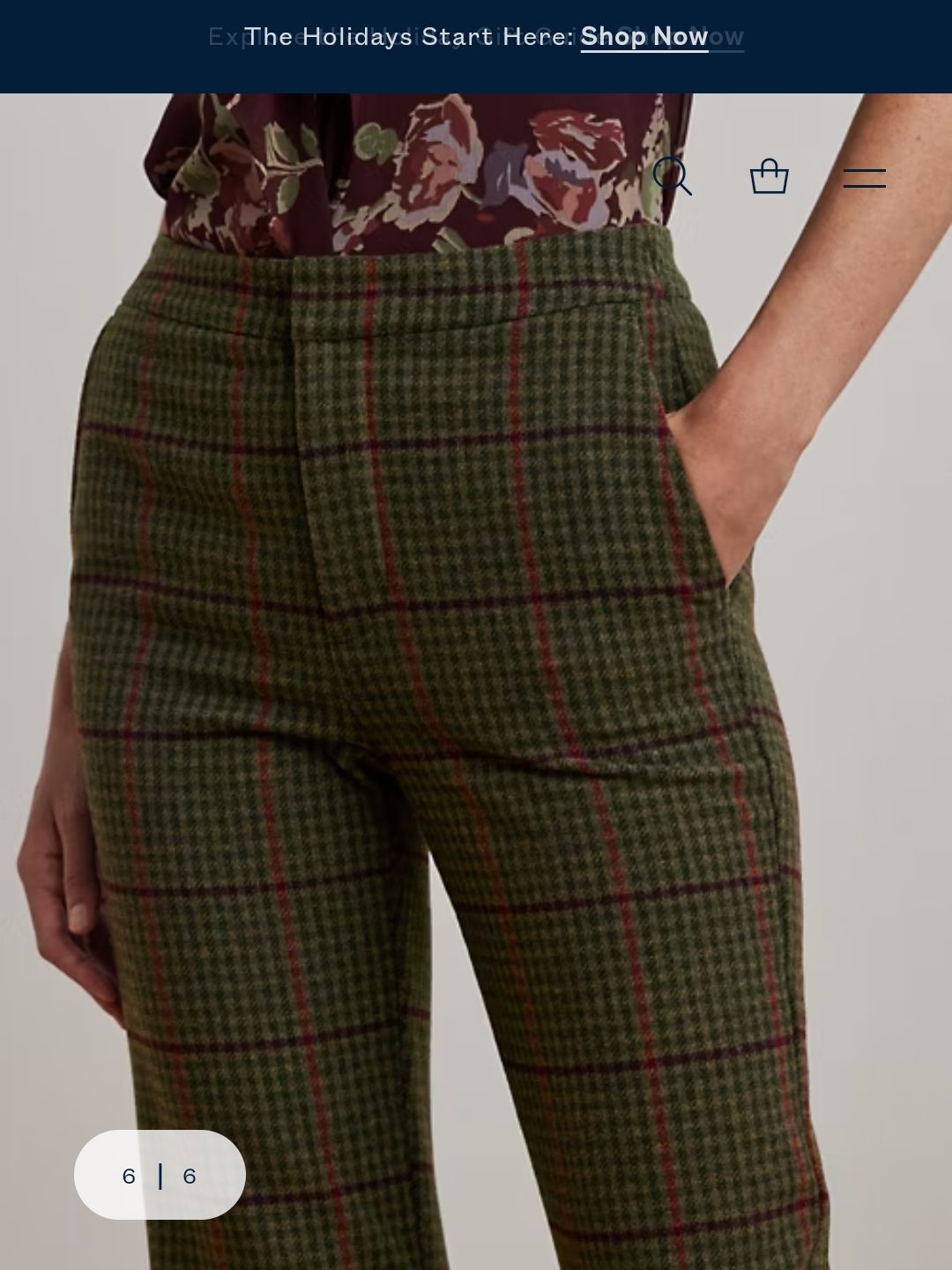
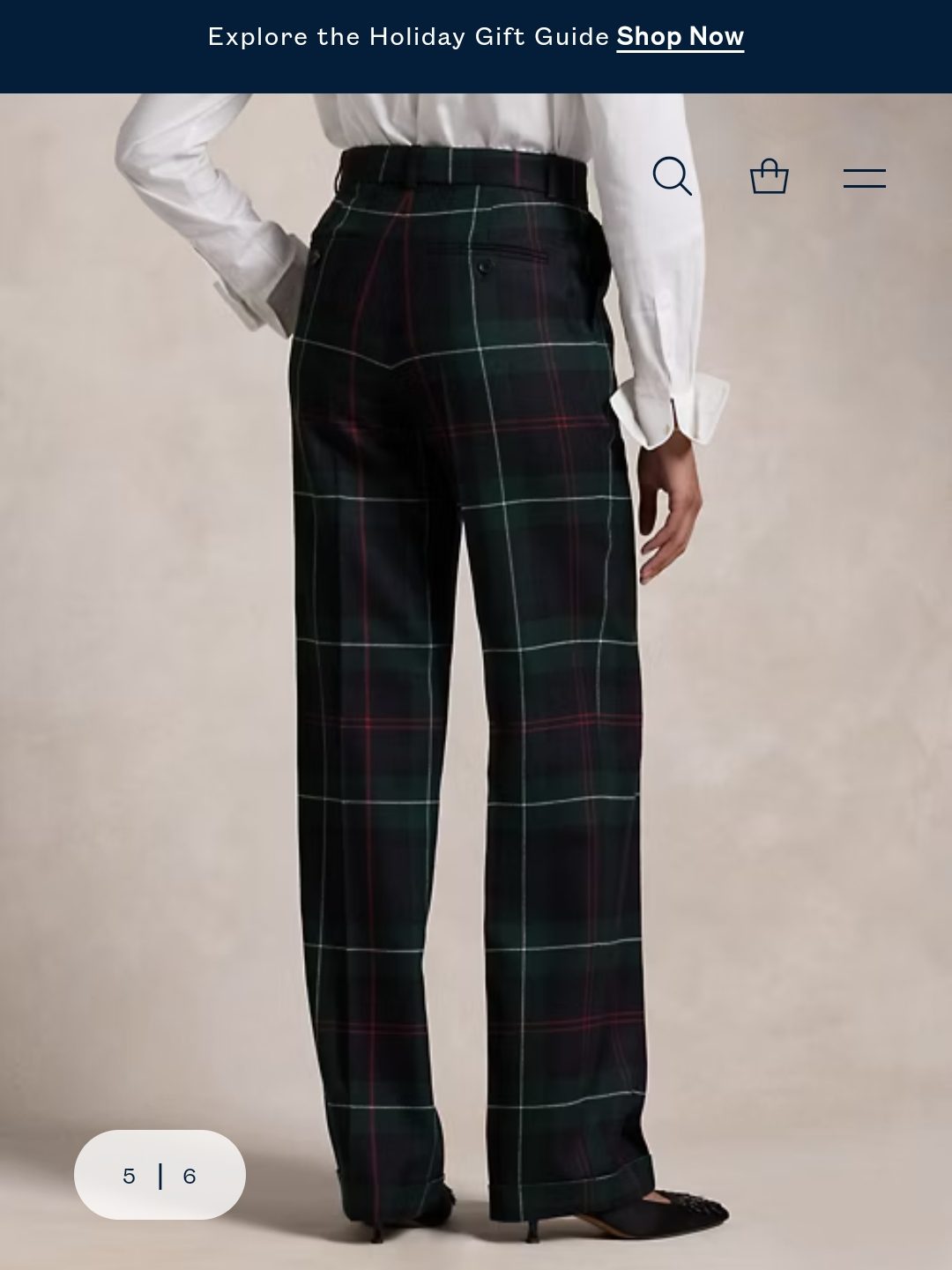
These trousers are comparable to both the Old Navy and American Eagle options for style and silhouette. They have the slight flare of the American Eagle pants and the slim trouser style with insert rear pockets of the Old Navy option. What is different, and in my opinion is a better design choice for these Ralph Lauren pants is the lower contrast plaid style of the fabric and the weight of the fabric which adds structure, eliminating the need for stretch to create the shape. These pants are cut in a way that emphasizes the shape of the wearer in strategic places while also draping away from the body. The pattern cutting of this garment is doing the heavy lifting, not your physique being asked to have the ideal shape to give the pants life.

The plaid is a lower contrast allowing for those tricky seams to fade into the background instead of drawing attention to the problems. On the back seam, the designer chose to use sections of the plaid that were darker, cutting off the pink vertical stripe on both sides before the seam so that the pink appears to flank the seat and therefore draws attention away from the pattern matching of this seam. In the front they follow a similar format, seamlessly integrating the fly into the pattern. The side pockets are tapered again so that the pink vertical begins lower at the hip, drawing the eye to the hip and the waist in a way that enhances the form of the trousers. Again this does not rely on stretch to accomplish this. It takes longer to do, and because of this it has been relegated as a “luxury” feature when actually if you take a bit longer to design to initial pattern after that process it will be easy to grade and use over and over. It’s not a luxury, it’s thoughtful and what design is about.

You can see this attention to detail repeated again in these plaid wool trousers. The back seam was mitigated again by thoughtful lines and fabric structure. Because the wool is a heavier fabric and has structure, it can float across the body instead of stretching across it so the diagonal lines of the plaid do not detract from the design of the garment. It also keeps the vertical line of the trousers even though the lines change direction and the pattern is altered here from the standard perpendicular plaid fashion. This shouldn’t be considered a luxury feature either. Wool is a sustainable textile that is durable and creates much less water pollution than stretch fabrics that shed microplastics or denim which requires a vast amount of water to dye.

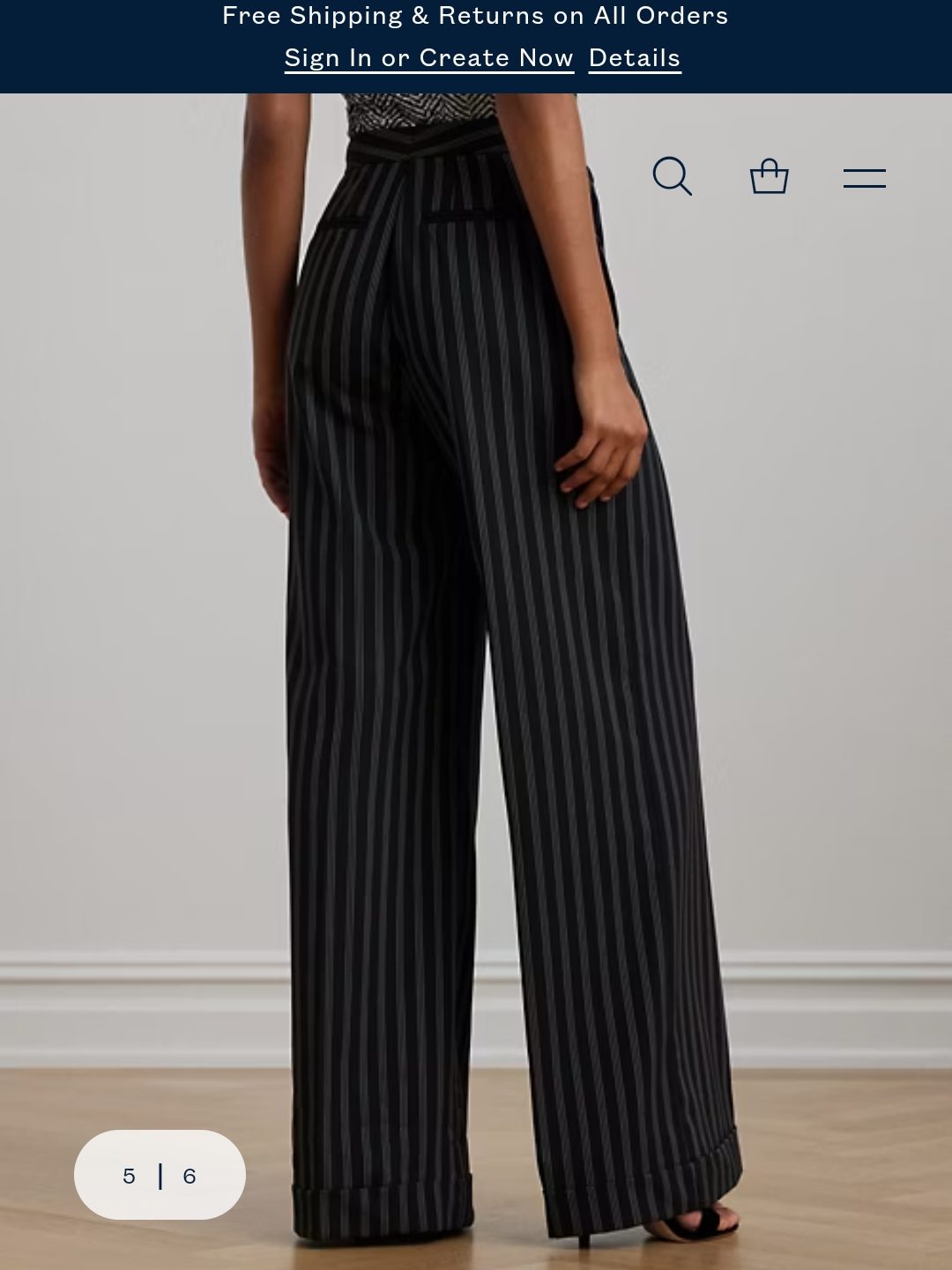
This last example is not plaid but striped, yet the lines of the garment I think still apply. This is another smart design that works with the pattern to create a garment that looks good from all angles. Part of that comes from the wider leg silhouette and the fact that the pant celebrates drape. If this was made from a stretch fabric and was a skinny leg design, a legging basically disguised as a pant, this would be an awkward-looking garment. But affordable should not mean crap design and as consumers we are letting companies determine this as a fact.

Let’s be more discerning in our consumption and look for good design, learn to sew, or support sewing people who can make a good trouser. These Ralph Lauren pants are almost 300 USD and they are not worth that price tag. The Old Navy and American Eagle pants are 50 USD and they aren’t worth that price either. Which leaves the customer with no good option while the brands cash in. We need better clothes made in ethical labor conditions and clothes with good designs that are made to last so that we don’t need to consume so much.

Sewist Reacts: What In the Vintage Inspiration Is This?!

Fast fashion is a problem for many reasons. The overconsumption. The exploitation of workers. The lack of quality in construction and fabric. Polluting water sources and landfills. Ruining thrift stores with Shein products. But one I hadn’t considered was how these fast fashion brands are watering down design to the point that they are misrepresenting fashion terms like corset, choosing the wrong fabrics for construction, and not even trying to pattern match. It’s becoming nonsensical!

Fall fashion trends and fall sales are in full swing here in the US. I’m seeing ads everywhere, in between Instagram stories, in my email inbox, on YouTube, on television advertisements, etc. It’s bonkers! You would think that we had empty closets and had never owned cold-weather clothing before! Each season you need to completely restock your wardrobe! Buy, buy, buy!

So I caved and I started to look at these websites. Looked, not purchased. That is the key here because I found some wacky things masquerading as vintage and historical-inspired pieces of fashion. These fashion brands are two that are quite popular in my neck of the woods.

The Gap does Medieval Plate Armor

A brand I get a lot of ads from, which amuses me because I don’t like this brand, is the Gap. I probably see ads because I do buy occasionally from Old Navy and they are owned by the same company. If only the Gap knew how I feel about them, they would realize it is a lost cause. I think that the Gap cuts its patterns weirdly, is expensive for the quality, and is dry toast in terms of its aesthetic. So I wasn’t surprised to see a rather vanilla dress. What surprised me were the style lines of this dress and the fabric they chose.

This dress looks inspired by 16th-century plate armor, a breastplate specifically, but it is made out of what I would guess is a stretch jersey because there is no structure or fastenings in the photos. So a rigid garment, being made out of a stretch shapeless fabric, just isn’t right. There is something off about the shape of the bodice and how it hangs on the body. This is a missed opportunity. I think they could have added boning channels or made this out of a stiff woven fabric. Maybe a coordinating vest? Vests have come back in popularity. It’s a misrepresentation of the historical garment they were inspired by and as a dress historian, it bugs me. This dress is already an attempt at thinking outside the box, so why not do it properly and celebrate the design? 🙂

There is an exhibit at the Met, linked above showing a historical example of what I am talking about, featuring an exhibit of 16th-century armor with beautifully sculpted lines.

A Corset That is Not a Corset

This dress is not a corset. Maybe it is a Victoria’s Secret definition of a corset with the stretch smocking on the back, but this is not in form or function, what a corset is or was. The corset was a supportive undergarment, a foundation garment as they were called that shaped the body and supported the bust according to the specific standard of beauty at the time. The first iteration of the corset appeared in the 16th century, called a pair of bodies. This was followed by stays in the 17th and 18th centuries and the transition to the corset in the 19th century which held popularity until the 1920s when the corset began to fall out of fashion for other types of garments. This is a very quick overview and I probably oversimplified this so I would recommend checking out historical costuming YouTube for a better reference, also the V&A has an online exhibit featuring Victorian corsetry.

Because of the lack of familiarity, we have with the corset in our 21st-century mind, we tend to slap the word corset on any shape that looks like a formed bodice, which is what this is a bodice cut to accentuate the waist but will fall flat because it is not made with any structure to give the garment a shape. There is no lacing, cording, fake baleen, or steel to give this any shape beyond the body that will wear it. It is all smoke and mirrors. But that bugs me, because American Eagle, the maker of this dress, is a popular teenage and young adult brand that can shape the minds of the future by their experience with clothing!

So why not ride this wave of aesthetic TikTok dressing and go full-on corsetry? Tight lacing is not required, nor was it popular for most women historically, except for the Kim Kardashians of antiquity who did it for the spectacle, people of the past needed to move and breathe just like us so it could be a corseted bodice, and not be controversial! It’s just a thought. I do appreciate the trim on the skirt, it is very 1890s, and I like it.

This dress has the same problem, this is not a corset and this is barely a puff sleeve. This is bad marketing and bad fashion education. You could never corset an open-back dress and to puff a sleeve you need quite a lot of volume and possibly some Tarleton to help keep the sleeves voluminous. The Fashion Institute of Technology has an online exhibit featuring the Gigot sleeve, a beautifully puffed historical design.

When it comes to historical dress there are so many cool designs from the past, and with the amount of research that exists and abilities to connect through technology, there are endless ways to be inspired from the past but not screw it up. I think we should embrace the gift we have of historical dress knowledge and technology like sewing machines, the internet, etc to make something beautiful. These companies have so many resources at their disposal, that I wish they would try a bit harder to make good clothing. But alas, they are fast fashion, and this is one of the worst fast fashion blunders I have seen from these two brands, the Gap and American Eagle until I found this one pair of plaid pants, but that is another story!

Thank you, reader, for going on this adventure into historical dress with me. If you are as tired as I am of the current state of fashion, I encourage you to learn how to sew! It’s the best hack I’ve found.

My Experience with PDF Sewing Patterns

Earlier this year, when I was planning what I wanted to make as additions to my wardrobe I found a brown, I believe it is taffeta fabric, in my stash. I’ve been at a loss of what to do with it since I got it because it’s so different than what I usually sew with, but that’s a good thing! I know it will push me out of my comfort zone with its hue and shiny finish, so I want that garment to be special when I finally make something out of it. I do not want a repeat of the pink scuba pants!

I’ve pondered using it as a lining fabric for my pirate coat, I’ve also considered using it as an underlayer for a sheer fabric I have in my stash, etc. So far nothing felt right, aside from an idea I saw while watching one of my favorite sewing channels on YouTube. She makes fabulous dresses from self-drafted, big four paper patterns, and buys indie PDF sewing patterns that all turn out so lovely, I want to try them all.

So on a whim, I went first to Mood Fabrics’ Sewciety page to see what they had to offer in their free selection and eventually found myself on Etsy, looking at the exact dress pattern she made on a video I was watching. Spontaneously, I clicked purchase on a dress pattern and clicked instant download. A dress, I thought, that would be perfect! I can style it up and down, in heat and in snow, it will be my go-to piece! To quote Lee Corso, not so fast!

It was mighty easy, but also mighty paper-hungry. This was something I was not expecting. You see, as far as PDF patterns go, I knew they required printing, but I always thought it was like 10 pages max. It seemed like something that would be straightforward. You know what I mean? To my surprise, it was 29 pages of just the pattern plus 5 more pages for the instruction and sizing. Um, holy lots of ink!

Yeah, I was not expecting that from my first one. So I looked more closely at the Mood patterns I was browsing to see if those would be any better and I saw another flaw in my plan, the patterns specifically from Mood use a ridiculous amount of yardage. Like a mini dress was calling for 5 yards of 57″ across the fabric. I can make a mini dress in 3 yards or less. Is this just a ploy to sell fabric? Mood Fabrics’ average price is USD 14-18 per yard, multiplied by 5 and it is beginning to be a very expensive project if you follow the fabric suggestions. I have a lot of questions now.

But anyway, I went back to the Etsy PDF pattern and decided to throw caution to the wind and begin printing. And print we did! The gentle hum of the printer slider traveling to and through filled the room, with the chorus of the squeaky paper roller delivering page upon page of freshly printed pattern sections to be cut out and taped, onto the desk. As I sat, staring at the screen, I began to get fidgety. I began to look around the room and stare at my computer screen, eventually perusing the listing again, and I noticed one small potential problem in this plan. As the pattern maker was an American, I thought for sure the sizing would be in US sizes, but alas the numbers on the chart were slightly askew from the standard. And I realized two things I would have to face, comparing the yardage to the pattern and taking my measurements to determine my size.

It was a slip dress, so the 3.5 yards I had available on the opaque fabric seemed like an obvious choice. There certainly would be enough, surely there would be enough, but oh no, there wasn’t. The pattern wanted more. I also grabbed the measuring tape and prepared for battle because no matter how badly I didn’t want to care what those numbers said. Those numbers always intimidate me. So with butterflies in my stomach, I grabbed the tape measure and learned that it wasn’t going to be my weight that would keep me from being able to make this but my literal body proportions. My frame. My long torso. My straight up-and-down waist.

I didn’t fit into any size proportions, none. Going up or going down a size was all off. As the freshly-inked paper kept rolling off the presses I felt stress, uncertainty, and frustration at myself for being such a novice thinking this would be easy!

But why isn’t it simple? When I buy paper patterns from the big four it is simple! When I’ve looked at vintage patterns, yes there is a little bit of knowledge needed to understand the sizing – your measurements – but other than that simple! Was I really going to have to pattern hack or pattern grade specific pieces on this paid-for, already drafted pattern? Was it basically going to be as complicated as making my own from scratch?

In that moment, I was incredibly humbled. Here I was learning to sew, designing my own clothes, I want to turn it into a business with the most logical option seeming to be PDF sewing patterns, but my word, this is a tough product to produce! This is incredibly more difficult than I imagined and I don’t think this is how I want to contribute to fashion space. Because not only do you have to make the pattern, the instructions, and go through testing, but I think on a PDF format, if you don’t have a vast size range or even a curvy or athletic build variation, I don’t think the pattern is being done properly.

I could not make the slip dress pattern work because it was cut for an hourglass shape and I have a straight up and down waist, no matter how skinny I get, it’s never going to fit me properly without alterations to the lines of the dress. That discouraged me. I stopped the printing and chose to call it a mulligan. The same issues with standard sizing hit me like a wall in a place I never expected.

What the answer is, I don’t know. But I do know I think the PDF pattern market may be the same ship different day repackaged in a way that creates more work and potentially less waste? On that, I’m not convinced because it is so much ink and paper. I don’t know. It still felt like a lot of consumption was happening. It’s a shame. I feel like I accomplished nothing in the long run. I believe I’ve found a problem I’d like to address if/when I ever figure out how to make my own patterns. Thankfully there are a lot of creative people in this world who may be developing the solution already. I hope so.

What about you? Have you purchased an indie PDF sewing pattern? Were you pleased? Did you feel like it was easier than buying paper patterns or self-drafting? Thanks again for spending time with me today, dear reader. I hope you have a lovely day. ❤

Aespa’s Supernova MV is an Explosion of Imagination

I wanted to be quick and write this post before their full album release on Monday because the Supernova release has been one of the most fun comebacks they have had I think since Next Level in 2021, which was how I found Aespa initially. This song has dethroned “Supernova Girl” from Zenon: Girl of the 21st Century as my favorite futuristic, y2k, outer-space-themed song. That is no small compliment, I’ve loved that song and the styling of the movie since 1999. That being said, Aespa blew me away with their ‘that tick, tick, bomb’ bridge and funky mix of Portal 2 sounds, reminiscent of the lasers and aerial faith plates, layered over the signature production of Dem Jointz. I wasn’t expecting that signature “Incoming!” line that I find on most NCT albums. This was the fun noise music style I was missing from the current comebacks of Stray Kids, NCT’s solo work, and the releases of girl groups so far in 2024.

Four Distinct Looks

I love a music video with a good costume change, and this one gave me four! The stylist for Aespa hit it out of the park with these experimental yet familiar pieces giving the eye a tasting menu of throwback futuristic pieces yet styled in a way that felt now and new at the same time.

In one short story, we move from streetwear with mesh and bright colors, to light pastel pleather for that space-age feel, to vibrant, shocking, and furry accessories that look like the star exploding, to a y2k jeans look in gray tones as the supernova is complete. The girls are blown into the wind.

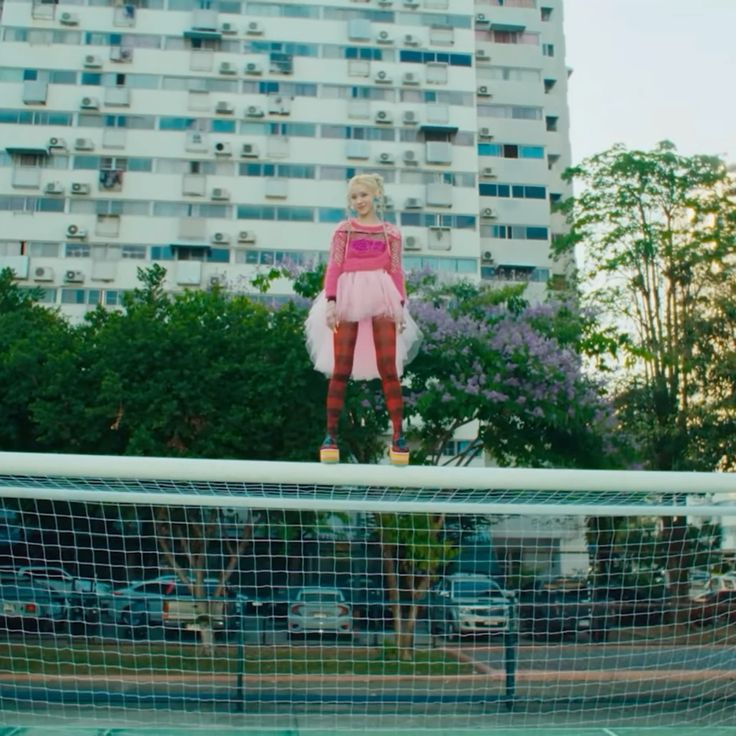
My favorite look of them all happens to be Winter’s pink tutu look with platform shoes. She resembles a magical faerie or modern-day superhero without the cringy Hollywood painted-on catsuit. Other details I appreciate are the vampire fangs, pointy nails, intricate braids, colorful eyeliner, bubble hems, dual eye colors, chunky jewelry that looks DIY in a good way, and Gisele’s bedazzled cast.

Imagery of Supernova

Each member seems to have special powers in this music video. Winter can fly, Ningning can fire bend, Gisele can change time, and Karina has superhuman strength. They have the power of the “Supernova” and are a unified force to be reckoned with. I love that Karina falls to earth like an asteroid to open the scene. There is imagery of heat and destruction, darkness and light, brokenness like the dying star, and birthdays like a star reborn through the explosion. They are like a storm but are also a source of power.

Aespa Lore – Returning to Concept

This comeback feels like Aespa’s lore and concept coming full circle where other bands have drifted off into randomness, Aespa is keeping the story of Kwangya, Black Mamba, Naevis, and the real world all in its premise. Some were disappointed with the shift to being in the real world with Spicy (2023) and Drama (2023) as falling prey to the 2000s nostalgia bug sweeping the 2020s.

But I see their comebacks as chapters in one story like Ateez does so well. For Savage and Girls they were in Kwangya, Kosmo, and the Flat. They have fought Black Mamba then coming into the real world with Naevis in My World, continuing the fight in Drama. For now, it seems like Supernova and Armageddon are returning the girls to the other dimension but reborn with powers instead of being consumed by the destruction. I am very excited for May 27th to behold what is in store for their first full album!

A Stunning Green Loewe Shirt

Seungmin in the building! I am beyond excited that Loewe chose Seungmin of Stray Kids to be an ambassador because he flies under the radar but has fantastic potential in this role from his personality to his visuals, this is going to be a great combination.

Loewe was another brand that I learned about in 2024 that is quickly becoming a favorite. I first heard of the brand in a discussion on Fashion Roadman’s channel and didn’t believe it would be for me, but I was sorely wrong! This is next-level art.

I truly enjoy the textures of Jonathan Anderson’s designs. Like the texture on the collar of the leather blazer, the texture of the rolling garden behind the dog, or the fluffy cloud-like texture effervescently emerging from the bottom of his knitwear. Not to forget the carpet-like floor of the black sweater vest with a brown collar. There is fun, there is whimsy, how is it this sophisticated and fun at the same time? I like the way the clothing is draped from the pants to the layers of lightness on his blouses and coats. The stunner is the plaid dress that melts into a stripe and then a solid like Willy Wonka’s Three Course Gum. Have I found a new designer whose work inspires me to want to learn more and create more? Yes.

Create a website or blog at WordPress.com

Up ↑