
Fashion Feels So Off in 2025

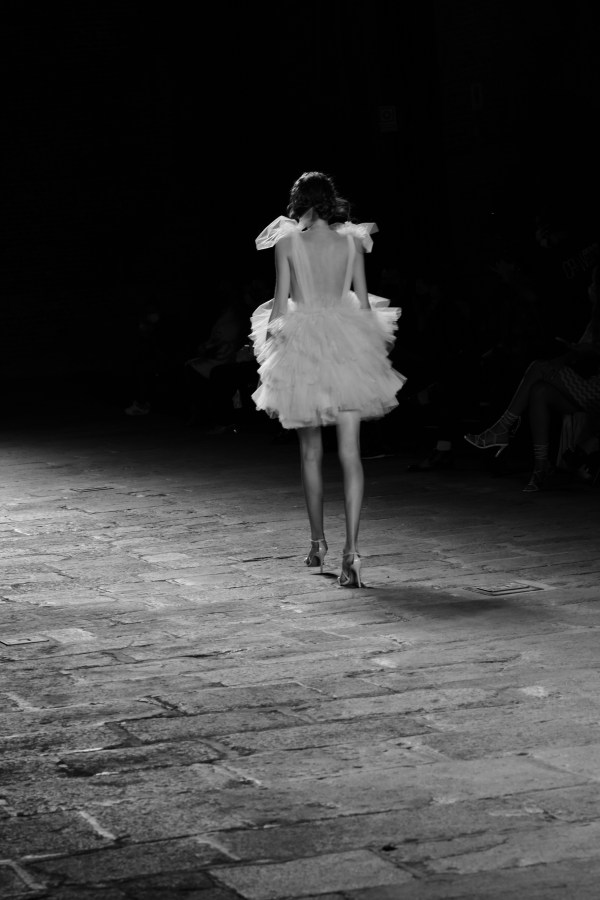
I was talking to my friend recently about fashion week, we bounced between NYFW and PFW in our discussions, primarily NYFW and we both remarked how the spark is gone. Growing up we both lived for those massive February and September issues of American Vogue, but as adults, neither of us read the fashion magazines nor are we swept up in watching a runway show stream on Youtube. In college I remember watching runway shows between classes, soaking up the atmosphere of the music, the makeup, the silhouettes strutting down the long walk away. Now, I hardly care about fashion week. My favorite moments of fashion week are no longer the collections and focus on Hyunjin’s interactions with Donatella at the Versace show and Felix’s runway passes for Nicholas Ghesquiere’s Louis Vuitton Women’s collection.

Out of the two of these collections – Versace and Louis Vuitton, I guess I pay attention to and prefer Donatella’s work, but I’m not looking at the collection, I’m focused on the spectacle anymore with these fashion shows. Versace shows at Milan Fashion Week, not Paris for clarification. I watched a highlight of PFW from Fashion Roadman and was underwhelmed. Even Alexander McQueen cannot get me hyped for the runway anymore. I saw there was a Carhartt collaboration with the brand Sacai which was quite frustrating to me. I’ve worn Carhartt before and it is not my vibe. Some shows reused old items, sorry they presented from the archive, from previous collections for “sustainability” and there was a collection addressing war, which feels a bit like that infamous scene in The Devil Wears Prada.

I know it sounds harsh, but I wish brands would do more for countries around the world than present a “statement” against war with military-inspired pieces when these brands are part of huge conglomerates that have the resources and influence to make a difference and instead, they use fashion to make money from exploited workers. And maybe that is why fashion in 2025 feels so off – fashion is not fun anymore. We know too much, the fashion machine has destroyed so much and is the capitalist monster filled with egos and performative greenwashing.

I’ve mentioned before that I find more inspiration from K-Pop than fashion magazines and that holds true for me in 2025. I’m more interested in customizing my wardrobe and making things personalized to my tastes than following the trend cycle because the trend cycle is regurgitating things from my lifetime that I’m already interested in, such as ballet flats, but assigning them an expiration date and I disagree. By the mid-2010s I was tired of ballet flats, but I had worn them for 10 years at that point and was interested in something new to replace my worn, falling-apart flats. I’d rather pick a reference and get inspired, like watching Seinfeld and writing notes for an outfit I’d like to emulate. But that doesn’t fit with the fashion cycles and seasons, so it’s making the fashion shows seem pointless to me.

But the most off-putting thing I’ve seen this year is the discussion – ‘The Death of Personal Style’ which I have seen explored by Drew Joiner, Mina Le, and Nicky Reardon. This topic has been debated across the internet in spaces I don’t visit like X or TikTok, but I think people are bored and claiming personal style is dying because we need some fresh inspiration. I’ve been in a creative slump so far in 2025 with writing because the internet spaces I hang out in have been so negative this year. Like a communal ennui has rolled in, shrouding creative people in a fog. It’s been hard to not buy into the mindset and I’ve been a member of the club after seeing how worried my loved ones are that are facing being cut from their job or their career sector being gutted. Fiber artists and sewists are definitely in a delicate place right now, finding a new normal after Joann’s.

Yeah, it’s weird. I hate change, and I fear the past being repeated, but something struck me last night after watching two videos that have nothing to do with fashion but humor me. The YouTube creator Suibhne (Swee-nee) makes historical content about countries around the world, I in particular chose The History of Korea and The History of Japan to watch, and it’s heavy. What happened between Korea and Japan in the Sino-Japanese War has had lasting consequences, but so has European colonialism in Asia and America’s forced opening of Japan through Commodore Matthew Perry.

Watching these videos that recount the atrocities of WWII in the Pacific reminds me that the overall concern of what is happening politically in the world and in my home country is coming from a noble place. I think overreaction or potentially appropriate reaction is important to keep any bit of the past from being repeated. It’s staying vigilant, like the servants in Luke 12 who were waiting at the door for the master of the house to return. Complacency is never a good thing.

Stay dressed for action and keep your lamps burning, and be like men who are waiting for their master to come home from the wedding feast, so that they may open the door to him at once when he comes and knocks. 

Luke 12:35-36 ESV

So instead of being concerned by the social worry of WWII attitudes re-emerging, I should see it as a positive that people are taking things seriously and are unwilling to let evil take root again for the good of all. Even when I consider how fashion seems so dark because of unethical labor practices, sometimes I wish I didn’t know about the darkness, and instead I should consider how knowledge is not the enemy, the unethical practices are the enemy. Shopping is not as fun, but why is my pleasure more important than the rights of garment workers? It’s not all about me. Knowing this information is not the end point either, we put the awareness into action for change. So fashion feels off, but I think we’re tilling up ground for something new, not destroying something joyful for us fashion lovers.

I wish you hope, joy, and peace wherever you are. Thank you for taking the time to spend it with me today, dear reader. Until next time ❤
Sewist Reacts: What In the Vintage Inspiration Is This?!

Fast fashion is a problem for many reasons. The overconsumption. The exploitation of workers. The lack of quality in construction and fabric. Polluting water sources and landfills. Ruining thrift stores with Shein products. But one I hadn’t considered was how these fast fashion brands are watering down design to the point that they are misrepresenting fashion terms like corset, choosing the wrong fabrics for construction, and not even trying to pattern match. It’s becoming nonsensical!

Fall fashion trends and fall sales are in full swing here in the US. I’m seeing ads everywhere, in between Instagram stories, in my email inbox, on YouTube, on television advertisements, etc. It’s bonkers! You would think that we had empty closets and had never owned cold-weather clothing before! Each season you need to completely restock your wardrobe! Buy, buy, buy!

So I caved and I started to look at these websites. Looked, not purchased. That is the key here because I found some wacky things masquerading as vintage and historical-inspired pieces of fashion. These fashion brands are two that are quite popular in my neck of the woods.

The Gap does Medieval Plate Armor

A brand I get a lot of ads from, which amuses me because I don’t like this brand, is the Gap. I probably see ads because I do buy occasionally from Old Navy and they are owned by the same company. If only the Gap knew how I feel about them, they would realize it is a lost cause. I think that the Gap cuts its patterns weirdly, is expensive for the quality, and is dry toast in terms of its aesthetic. So I wasn’t surprised to see a rather vanilla dress. What surprised me were the style lines of this dress and the fabric they chose.

This dress looks inspired by 16th-century plate armor, a breastplate specifically, but it is made out of what I would guess is a stretch jersey because there is no structure or fastenings in the photos. So a rigid garment, being made out of a stretch shapeless fabric, just isn’t right. There is something off about the shape of the bodice and how it hangs on the body. This is a missed opportunity. I think they could have added boning channels or made this out of a stiff woven fabric. Maybe a coordinating vest? Vests have come back in popularity. It’s a misrepresentation of the historical garment they were inspired by and as a dress historian, it bugs me. This dress is already an attempt at thinking outside the box, so why not do it properly and celebrate the design? 🙂

There is an exhibit at the Met, linked above showing a historical example of what I am talking about, featuring an exhibit of 16th-century armor with beautifully sculpted lines.

A Corset That is Not a Corset

This dress is not a corset. Maybe it is a Victoria’s Secret definition of a corset with the stretch smocking on the back, but this is not in form or function, what a corset is or was. The corset was a supportive undergarment, a foundation garment as they were called that shaped the body and supported the bust according to the specific standard of beauty at the time. The first iteration of the corset appeared in the 16th century, called a pair of bodies. This was followed by stays in the 17th and 18th centuries and the transition to the corset in the 19th century which held popularity until the 1920s when the corset began to fall out of fashion for other types of garments. This is a very quick overview and I probably oversimplified this so I would recommend checking out historical costuming YouTube for a better reference, also the V&A has an online exhibit featuring Victorian corsetry.

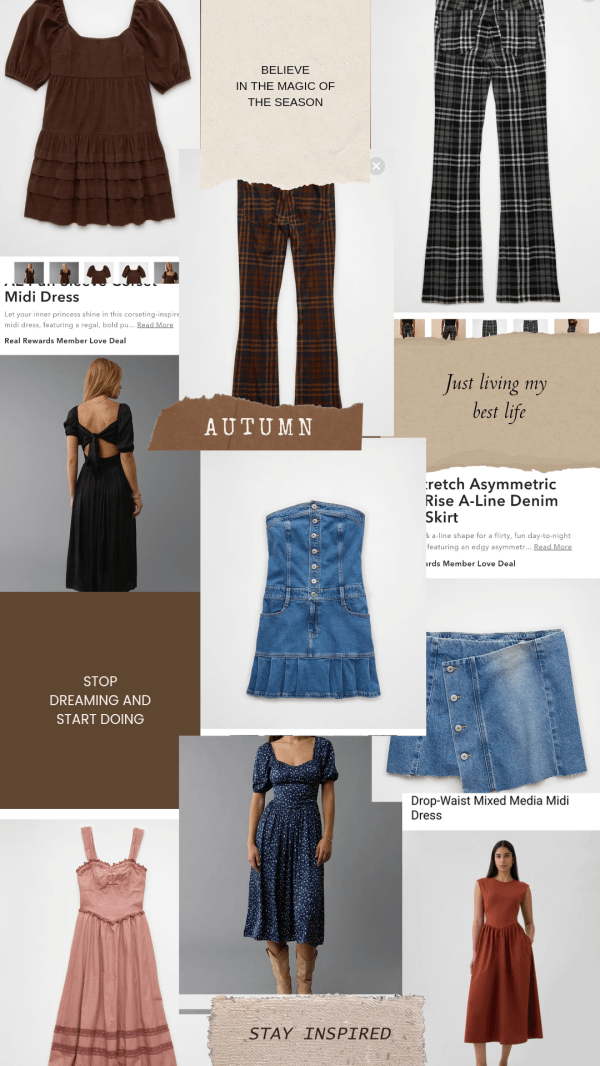
Because of the lack of familiarity, we have with the corset in our 21st-century mind, we tend to slap the word corset on any shape that looks like a formed bodice, which is what this is a bodice cut to accentuate the waist but will fall flat because it is not made with any structure to give the garment a shape. There is no lacing, cording, fake baleen, or steel to give this any shape beyond the body that will wear it. It is all smoke and mirrors. But that bugs me, because American Eagle, the maker of this dress, is a popular teenage and young adult brand that can shape the minds of the future by their experience with clothing!

So why not ride this wave of aesthetic TikTok dressing and go full-on corsetry? Tight lacing is not required, nor was it popular for most women historically, except for the Kim Kardashians of antiquity who did it for the spectacle, people of the past needed to move and breathe just like us so it could be a corseted bodice, and not be controversial! It’s just a thought. I do appreciate the trim on the skirt, it is very 1890s, and I like it.

This dress has the same problem, this is not a corset and this is barely a puff sleeve. This is bad marketing and bad fashion education. You could never corset an open-back dress and to puff a sleeve you need quite a lot of volume and possibly some Tarleton to help keep the sleeves voluminous. The Fashion Institute of Technology has an online exhibit featuring the Gigot sleeve, a beautifully puffed historical design.

When it comes to historical dress there are so many cool designs from the past, and with the amount of research that exists and abilities to connect through technology, there are endless ways to be inspired from the past but not screw it up. I think we should embrace the gift we have of historical dress knowledge and technology like sewing machines, the internet, etc to make something beautiful. These companies have so many resources at their disposal, that I wish they would try a bit harder to make good clothing. But alas, they are fast fashion, and this is one of the worst fast fashion blunders I have seen from these two brands, the Gap and American Eagle until I found this one pair of plaid pants, but that is another story!

Thank you, reader, for going on this adventure into historical dress with me. If you are as tired as I am of the current state of fashion, I encourage you to learn how to sew! It’s the best hack I’ve found.

Create a website or blog at WordPress.com

Up ↑