Unrelatabilty and 2025 Holiday Campaigns

I had plans originally to write about Ralph Lauren Christmas on its own, but then I saw two advertisements, one from local brand Steel City and another from Banana Republic, so bizarre that I knew I would be here. Hopefully not ranting too much, for the goal of this discussion for me is to think more deeply about the subtle oddities in my culture, I see weaving themselves in, like they are normal. Overconsumption, cultural appropriation, and the cosplay of wealth.

Banana Republic’s Holiday Edit

So what does fippery have to do with it? Fippery is another word for ostentatious; it’s showy. Frivility in dress or style. I also find the attitudes of these two brands, and I do want to write about exactly that. Banana Republic has always been in my mind, a bit ridiculous. But with every re-watch of Seinfeld, I see J. Peterman in Banana Republic’s threads, but their recent holiday commercial pushed me over the edge. They are that nonsense.

The holiday commercial is set in Ireland, County Cork, and I know I haven’t been to Ireland in 20 years, but dang, nothing about this commercial felt authentic. They play a cover of “Linger” from the Cranberries over the holiday scene in a pub, wandering around the town, finding a telephone booth with Irish Gaelic on the sign. They are all wearing vaguely Irish clothing, but really it looks like cast walked through a Premium Outlets on their way to Castletownshend, Cork. There are lovely Irish Christmas songs and many other songs by Irish bands that would have captured the spirit of the season better than a breakup song. No shade to the Cranberries, I love them. There were better Cranberries songs to pick. Personally, I would have looked at Dreams, Ode to My Family, and I Can’t Be With You to capture the nostalgia of the season with a non-traditional song.

Moving beyond the music, there was nothing really Irish about this ad. We barely see the town, we barely see the people, or the ancient beauty of Ireland. Think about movies such a Waking Ned Devine or Banshees of Inisherin – the landscape is a character, so is the music, and community. Ireland felt warm, not in temperature, but in the warmth of the people. The land feels like there is magic just under the surface, an imagination unbreakable, and a spirit that carries the culmination of all those who came before in an essence that makes you want to know more. The sweaters are intricate, made with the intention of preserving heritage crafts. Just take a look at Banana Republic’s holiday page compared to Blarney Woolen Mills, which is based in County Cork! The source material was right there. I guess what I am trying to say is obvious: Banana Republic’s collection is the fast fashion version of Irish style, don’t fall for it, no matter how they try to sell you on the “luxury” of it all. Now, what really bugged me about this ad was, in my opinion, the cultural appropriation of it all.

There is a fairisle sweater in this Irish collection, which is actually a Scottish heritage craft from the Shetlands. This sweater contains wool from Italy, being sold as an Irish-inspired sweater. You couldn’t even use Irish wool? Or include iconic Aran sweaters? Fisherman sweaters like the iconic one from When Harry Met Sally? The Donegal Wool sweater and sweater vest, straight up annoy me because these are again Italian wool. There is a wonderful mill in Donegal called McNutt that could have supplied true, authentic craftsmanship. We still have our clothing pieces from this store and Blarney Woolen Mills, 20 years later. I don’t like Ireland, which has been used for centuries, been the butt of the joke for centuries, being used again to peddle some lackluster clothes.

Gap, Inc. is a huge brand; they should have invested in sustainable Irish materials and supported the local Irish economy by using Irish craftspeople to create this collection. But just like J. Peterman, they come and see, then they steal other cultures’ designs to make a quick buck from subpar clothing. Look at the prices! The Banana Republic sweaters, made in Italy with Italian wool, versus the Blarney Woolen Mills sweaters made in Ireland from Irish wool, both made from merino wool, too. Local is better. Also, look at the craftsmanship of the Blarney sweaters; those cables are stunning and also affordable. Shame on you, Gap!

Steel City, What Are You Doing?

Actually, to quote the Big Fat Quiz Show, “You slag!” Steel City is a brand no one outside of the Pittsburgh area will know about, and that’s okay. Small businesses are great, and when this brand first started, they were cool. Their claim to fame was hyper-local graphic tees of beloved cultural things such as Turners Tea, the Stillers (aka the Steelers), Kennywood, Mr. Rogers, the Pens (Pittsburgh Penguins), and nostalgia. Over time, though they have expanded, which is great, creeping out to the suburbs of Cranberry and Ross Park Mall, and that is where things have taken a bizarre turn. In 2022, I went to their location in Cranberry Township and was appalled by how tissue-paper-thin the new items were. We had bought pierogi and Potato Patch shirts, which were of great quality, but the new stuff was off. The prices, quite higher than before, and I was no longer interested in their stuff.

But as targeted ads go, I keep seeing their stuff everywhere, and it has gone in some random places. There was a motorcycle and a desert aesthetic to their pieces now? Okay, odd. Neither of these things has anything to do with Pittsburgh. I guess the name is the only connection? Next, I got ads for quiet luxury workwear pieces, the local graphic tees, now behind a t-shirt club paywall. It felt soulless, and I was incredibly disappointed. I thought in the beginning maybe they were going to make the items in Pittsburgh, but they are made overseas. This morning, though, I got an ad that straight up felt out of touch.

Seriously? In this economy? With the amount of destruction the fashion industry creates on our planet? Honestly, Steel City, what the flipping heck are you doing? This brand is neither relatable nor cool anymore. Wasteful consumption is not in style, no matter what the internet says.

Ralph Lauren Christmas

Now, Ralph Lauren isn’t promoting this; this is just a TikTok trend, and I just wanted to drop my two cents. I’ve spent the last five years chasing the nostalgia of old Christmas, Christmas before everything hurt. Before people died. When I was a kid, things were simple. No matter how much you spend, decorate, chase – this aesthetic is not going to fix what is broken in your heart. I encourage you to seek out authenticity this Christmas. Volunteer time at shelters, donate supplies, check on neighbors. Call those friends or those family members you haven’t seen in so long and connect once again. The Home Alone house is stunning, but remember, what brings the true Christmas spirit is the relationships reconciled for the Old Man and Kevin on Christmas morning. People over things, always.

What If Game of Wool Celebrated Design and Craftsmanship?

If you missed it, I made a Game of Wool Bingo card for episodes 1-3, because in my opinion, this show should not be taken seriously. I’ve given up watching, interacting with recaps, etc. I’m not going to watch beyond episode 3, and that is because hate-watching is validation in the attention economy of 2025. That got me thinking, what do I wish Game of Wool was instead of what it is? Game of Wool, just like Project Runway, I have notes!

No Kits or Internet Dressing Projects

I don’t want any themed-making kits sold per episode. They have been doing this for the episodes I have watched, each week partnering with a big yarn company, honestly making kits that serve no purpose other than a cash grab. I also don’t want to watch weekly episodes with challenges that create useless items. Useless from a practical and technical standpoint.

  • Crochet and knit swimwear is dumb. You can’t wear it other than for a photo shoot, which places it in the “internet dressing” category. It’s for a photo. It’s not even practical for a music festival. But it does resemble a “Coachella” look.
  • A crochet deck chair had potential, but it was not used within the materials provided or the time frame.
  • A dog sweater with a required hat is not kind or practical for dogs. The sweater is comfortable, but the hat is not comfortable for the dog. Again, it is for a photo. Washability was not discussed either.
  • The mohair sweater was the only challenge that was the closest to being a useful challenge, for design teamwork and wearability, but they ruined it with the ridiculous time frame.
  • A couch cover is useless, because I have thought about constructing one for my own couch to stash bust, but it’s just not practical for anything other than a showpiece. Which is how they judged it, so a lot of wool was wasted to make a big, useless swath of fabric.
  • The fair isle vest misrepresented a heritage craft of the region they were filming in. Why not just film a historical film set in the Renaissance, and put the actresses in Victorian corsets without a chemise, tight-laced? Same level of idiocy to be flashy!

This Game of Wool presents everything that late-stage capitalism is in relation to crafting and hobbies, thanks to greed, social media, and the attention economy. The British farmers could use the income; how about sourcing locally? What about sustainability and slow fashion? Yeah, 12-hour challenges do not represent anything but hustle culture. Girl boss, slay!

How Would I Fix It?

  • Real experts, not these two ladies.
  • Either all amateurs or all expert contestants. Pick a lane. Either be the Bake-Off or be Project Runway and offer a CFDA mentorship kind of prize.
  • Bring in a real mentor to help in the wool barn.
  • Take them on field trips to see wool being processed, dyed, and spun. Same with flax for linen.
  • Tell the story of why textiles matter and why fair trade for the animals, farmers, and ethical standards matter.
  • Explain why local matters for the economy and the ecology of the region.
  • Teach the history of cottage industries.
  • Teach the history of how knitting has changed the world, such as the development of textile machinery and the creation of the binary code. Essentially, fill in the gap of what Sci Show failed to do.
  • Set real challenges that teach, showcase the skill of the fiber artists, and show innovation.
  • Do a challenge that involves unravelling sweaters for yarn and teach the world about this amazing, sustainable possibility.
  • Task the fiber artists to design patterns, and explore what goes into design and proper pattern writing, because it is a technical skill.
  • Make things that will be auctioned off for charity.
  • Bring in people as guest judges who will bring professional connections and opportunities for the fiber artists.
  • Set realistic deadlines, and slow down the pace of the show. Follow a timeline like Mind of a Chef that explores moments of cooking over an entire season.
  • Let the makers make, unencumbered by the pace of the internet. Take note from Bernadette Banner and other makers out there that celebrate true craftsmanship and sustainability in the heyday of microplastics.

I’m tired of this show discounting a skill that has been tossed aside as a Grandma hobby since the Industrial Revolution. In these weird and wacky times, slow fashion and an appreciation of craftsmanship are in short supply in the media. This show had such potential! But they are truly chasing the money over integrity.

Game of Wool Bingo Card

As a knitter, a crocheter, and a fan of shows such as Bake Off and Project Runway, I am hate watching Game of Wool. Yes, it is that mediocre. It’s frankly, shocking how unlikeable the judges are portrayed, and how blatantly the production is profiting off the design kits, while not openly compensating the designers. It’s been a disappointment for sure. So here’s a bingo card to make your  watch through a bit more fun!

Socks Are Madness

This is a story of a winding road. It is not just passion that makes us try new and difficult things, but also the desire to fit in. Sometimes the road is bumpy, and bumpier still than we expected.

Last winter, I began a journey; at the time, I did not realize how technical this would be, and oh, how I miss the naive wonder of that time. I started my quest to make socks. The sock does not appear technical from the outside. It is a tube of knit fabric which we slip on our feet, most every day. Due to the Industrial Revolution, socks can be knit by machine with ease and speed. This has suspended our connection to the technology that first developed the sock—hand knitting.

In our modern day, socks are affordable and accessible. They are for sale everywhere in a myriad of textures, weights, and styles. We have socks for athleticism, socks for leisure, socks for style. They are boring, mundane Christmas gifts of childhood, and puppets with googly eyes. But what does it take to make a sock by hand?

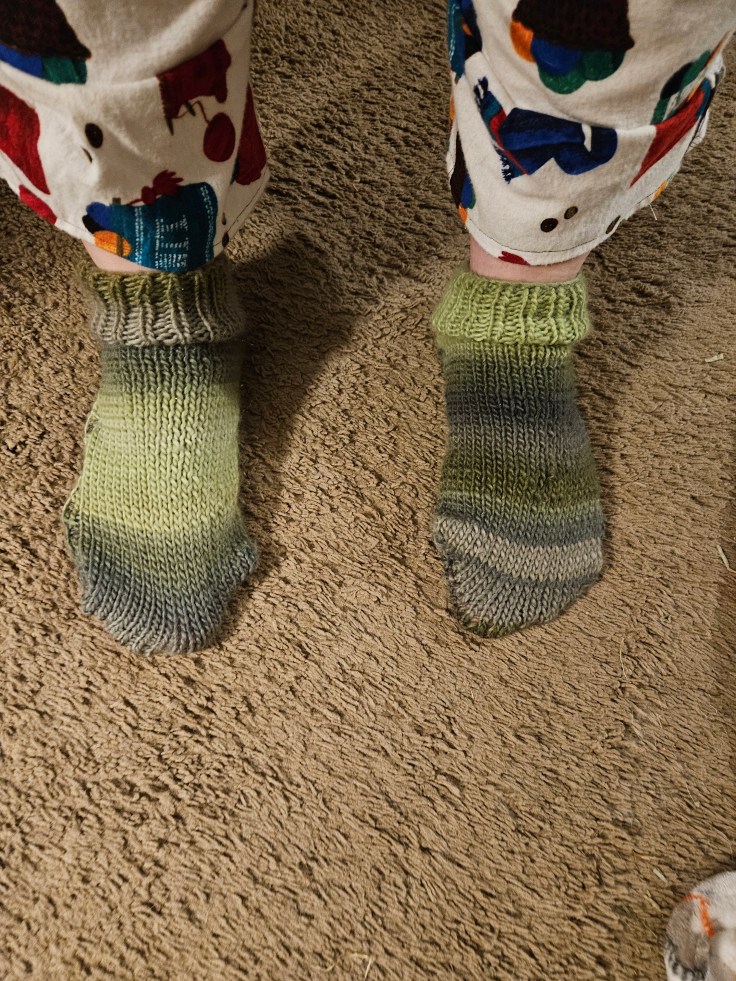
I gave this a shot last year, and it challenged me! I cataloged my experience in Socks, A Journey, and Socks: An Update, where I began knitting socks flat on straight needles and three months later gave circular knitting a try. My first flat knit socks were made top down, in a tube style that negates the heel flap and requires sewing the sock into a tube. They are loose in fit but warm and great socks to wear around the house. My advanced tries, knitting in the round and turning the heel, were more of an adventure. My tension was tight, and my heel flap a nightmare, unable to be duplicated into a second sock, for how off script my technique became. I didn’t grasp the why of what I was doing and therefore messed up the pattern.

This summer, I went to a local yarn shop where I began my journey to sock more traditionally. I picked up a pair of small-gauge double-pointed needles and sock sock-making kit with proper sock yarn of wool and nylon, to do it “properly” and oh my, did this bomb. The toe-up pattern, new to me from my previous projects that were cuff down, pushed me far out of my depth. I sank instead of swimming. The four double-pointed needles and my uncoordinated hands created tension and laddering in the knit, which looks exactly as it sounds. I tried three times to knit a few centimeters before the stitches fell off the needles, the sock falling off with the stitches. In desperation, as the needles were 29 USD and the sock kit 29 USD, I was feeling very silly and wasteful purchasing new needles and new yarn that I couldn’t do anything with.

So I pivoted to my trusty straight needles until I saw my mom later that weekend, and she lent me a pair of small-gauge, small-circumference needles to finish the sock. Still baffled by the heel flap and the vague instructions on the pattern, I tried German short rows for shaping the heel. In a fortnight, I completed the first of the two socks. I cast off and handed it to Kyle to try on, and the size was all wrong. I tried to frog it back into a skein of yarn, but the splitty yarn tangled, ripped, and became a ball of knots. It was over, and I was furious with myself for wasting time, money, resources, and, honestly, hurting my eyes squinting to see my tiny stitches for almost two weeks to accomplish nothing.

Socks are madness. And maybe I should stop beating myself up about my failure when socks are one of the hardest things to make by hand. I am an overachiever and a perfectionist, so this type of failure cuts me deep. I obsess, I rage, and I fall apart in the madness of learning something that may take years to execute once, not even perfectly. But you know what? I have made good socks before! Comfortable, almost perfect for what I was looking to achieve, socks. But I rejected them as being good because I was embarrassed at how I made them. I didn’t follow the right techniques, I used the “wrong” yarn, and I didn’t turn the heel.

Sometimes I have major imposter syndrome as a knitter. I feel like a fraud because I don’t use the exact same patterns, same tools, same yarn as everyone else on the internet. But why is that a bad thing? I’ve listened to other knitters in podcasts discuss how the sameness of knitting is making it boring. Apparently, at Rhinebeck or other knitting events, it is easy to see the same sweater throughout the sea of people, and that is a new thing. Listening to knitters, who have been knitting long before 2020, when I really started knitting consistently, knitters used to do their own thing. Yarn suggestions in patterns were exactly that – a suggestion.

People were designing more and experimenting instead of knitting in the homogenized way we see today, which is one of the ways I feel like an outsider. I don’t want to knit the same things as everyone else, but I also want to be good at the craft, and it leaves me in this push-and-pull tension. It became clear to me, though, that my search to “fit in” with the proper sock kit and the expensive needles didn’t make me a better maker. It was honestly a bit of a handicap. So I guess my takeaway is to be yourself?

I don’t want to stagnate in my skills, but if I can find my own technique to make socks and other garments with the “non-standard” tools and yarn, then is it really stagnation or just getting creative with where my skill level is at? I’ve been pondering this a lot and have more thoughts on this from both the point of view of a knitter and a sewist. But that will have to wait for next time.

It’s Okay to Admit You Don’t Like It

A place I didn’t expect to reach this year, was the mental head space of dislike for a dream I’ve had for most of my life. Now could it be burnout and I just need a break? Probably. But I also think it might a healthy thing to acknowledge something you thought you would love, may not actually bring you joy as you wished.

What am I talking about? Sewing. I don’t like sewing as much as I want to. It is tedious, extremely complicated, and requires a level of patience I lack. I’ve been a sewist for 5 years now. I devoted a large amount of my time over the past five years to the study of garment construction, and I realized that it is not my medium, yarn is, and its not a failure to admit I don’t like sewing as much as knitting and crochet.

I think I have known this for about a year, yet refused to verbalize my feeling because it felt like I failed the one thing I always wanted to do. But why is that a failure?

Just because it’s not my passion, doesn’t mean I am going to stop sewing. I think having this space to put less pressure on it to be “my thing” could make me enjoy it more!

Because then I am free to create, to fail, to be a slow learner, to take breaks from sewing when I am ready to cry. I don’t have to feel pressured to get my skills up to par for selling my work. I don’t have to feel pressure to design my own patterns or build a business on sewing. I can go back to basics of what has always been at my core – art. I am an artist, I don’t set out to be, but I know its there inside me too afraid to commit to the bit.

I love what sewing brings me. It’s a fantastic skill to have. I can design my own clothing made to measure and that is luxurious even if my sewing skills are mid.

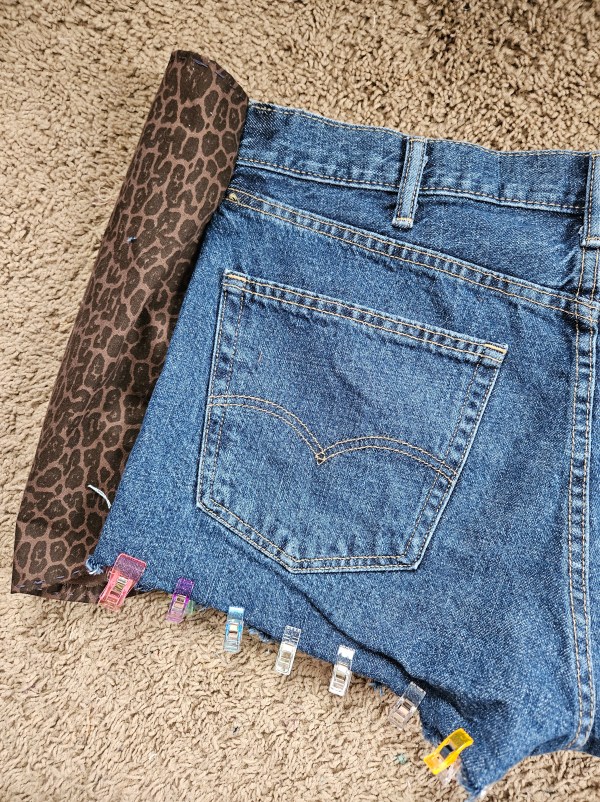
I can experiement with my style through upcycling. I love how I can recycle and repurpose fabric instead of donating. That is a important part of comsumption. We buy and buy but don’t think about the life cycle of the garment, but with needle and thread you can leave the buy and declutter cycle.

Sewing has taught me to be a wiser comsumer as well. I buy garments that I can’t sew. Complex garments. I also price compare fabric against pieces in store to figure out what is more cost effective to sew. Such as buying a 6.99/yard, one yard cut of cotton jersey to make one long sleeve basic tee. You can buy these from retailers for 35 USD compared to sewing one for 7 USD.

It’s not always cheaper, but sometimes it is and that is a huge win!

Finally, by allowing myself to feel these feelings, my hope is that I will be free to explore and create unencombered by goals of monetizing my hobby, instead that I enjoy the creative process again.

Have you ever tried sewing? Did you find it challenging?

Project Runway, I Have Notes

In August, Project Runway returned under a new network and reshuffled the format, hosts, and challenges to make a show I think was actually okay. Compared to where the show was left on Bravo in 2023, I think bringing back Heidi Klum was a good choice compared to the choice of Karlie Kloss, whom I didn’t see as an appropriate casting choice for a role that requires personality and colorfulness. It was boring. So were the new judges. The only new casting decision I was excited about at the time was Christian Siriano, my ult bias from the original show. So what was the good and the not-so-good, in my opinion, of season 21? And how has the show changed, for the better, yet in some ways, become less about fashion? These are my thoughts on my beloved Project Runway in 2025.

The Evolution of Project Runway

The original show premiered on Bravo in 2004 with host Heidi Klum, mentor Tim Gunn, and judges Nina Garcia and Michael Kors. It was filmed in NYC, at Parsons The New School for Design, where Tim was on staff, and the competition culminated in three finalists showing their work at NYFW Bryant Park. This format remained for the first five seasons, season four featuring Christian Siriano, who won his season.

After season 5, the show switched networks to Lifetime, where it remained until season 17. This change for season 6 also changed the location, with the show being filmed in Los Angeles at the FIDM campus until the finale, which was held at NYFW. Season 7 returned to Parsons and NYC, where the show stayed the course until season 11, when Zac Posen replaced Michael Kors. Zac Posen, Nina Garcia, Tim Gunn, and Heidi Klum remained through season 16.

Because of Harvey Swinestein being a producer of the show, and #Metoo movement addressing his depravity, Project Runway changed hands and returned to Bravo for season 17, sans the original cast. Karlie Kloss was the new Heidi, Christian Siriano the new Tim, and the judges were swapped for Elaine Welteroth and Brandon Maxwell.

The show remained this way through season 20, until the show changed again, switching to Freeform as its network, returning Heidi Klum to the host position, retaining Christian Siriano as mentor, and returning Nina Garcia to judge, with a new addition of Law Roach as the second judge. It’s a lot of change.

The Three Fashion Musketeers

When Project Runway moved back to Bravo in 2019, it was not the only fashion competition show in the American market; Netflix launched Next in Fashion for two seasons. Finally, Tim Gunn and Heidi Klum launched their own show on Amazon Prime, called Making the Cut, which was the equivalent of the original trio of Top Gear UK launching The Grand Tour on Amazon.

In my memory, from watching these three shows, Project Runway felt like a shell, undercut by Making the Cut, but losing the carefree fun of what Next in Fashion captured with hosts Alexa Chung and Tan France. All this change made me question what was the purpose of these shows anymore? With the rise of fast fashion and social media, it seemed like a relic. I could watch fashion design content on YouTube with varying points of view, to decide for myself what I thought was good fashion. Why would I care about the judges or the magazines anymore?

Project Runway in 2025

So now, six years later, what did the new Project Runway feel like? To be honest, it doesn’t have its own identity anymore, in my opinion. This could easily be RuPaul’s Drag Race with the amount of drama they packed into these episodes. The original format of challenge, runway, judging, and elimination was gone. Now you find out who goes home next week, which was unnecessary for me. I am tuning in each week, don’t make me have to, I want to, so just tell me who goes home so that the point of the show doesn’t seem like it’s an MTV reality show. It was hard to remember what challenge they were judging from last week. In some ways, I didn’t care; I just wanted the new challenge to be presented.

The contestants fought a lot, with Jesus and Veejay being a near constant. It was too much, and that leads me into one of my biggest gripes with the new season of the show. The editing was off. When Veejay was announced as the season 21 winner, I was confused. The final two eliminations before the finale were also edited strangely, because each time it seemed as though they were not going to keep Veejay, the judges’ critiques reflected this, and so it created this uncomfortable tension for the final three episodes, where it seemed like they were keeping Veejay in the competition so that she would become the first trans winner because of all the fighting.

That frustrated me because Veejay was doing good work, but then why make it seem like she was at the bottom, if the judges saw her work in high regard? It was really awkward. So was the out-of-control arguing between Veejay and the Estrada brothers, which I think the producers wrongfully kept in for a toxic series of episodes that is problematic, and I thought was manipulative. I wish for everyone’s sake that they would have paused the competition in a Tim Gunn fashion to unify the contestants again, because I liked this group of people. I can see where Jesus was coming from, and I can understand how bullying from the past can bring up past hurt, like Veejay expressed.

This is where the show shifted for me into a trash television show, such as Teen Mom, The Challenge, Real Housewives, or Keeping up with the Kardashians. Finally, the omission of NYFW for a quick 6-piece collection immediately after filming the bulk of the show felt lame. Every collection for me was a letdown, and this was the production’s fault once again. 8 out of 9 challenges were one-day challenges, so every other day, they were creating a brand new garment; it’s a recipe for burnout and mediocrity. The final runway show was like a fart instead of a spectacle of creativity, and it was underwhelming.

I hope they get a bigger budget for season 22 because the show has captured its thing again, but the finale and shift to the focus on drama over scenes from the workroom was a poor choice in my opinion. When I think of good reality competitions that have carried on throughout the decades, Survivor and Great British Baking Show are great examples that I may dive into in a part two.

Have you ever watched Project Runway? Did you think it was about planes? That’s what I first thought when I heard about the show in the mid-2000s.

I Am My Own Crafting Worst Enemy

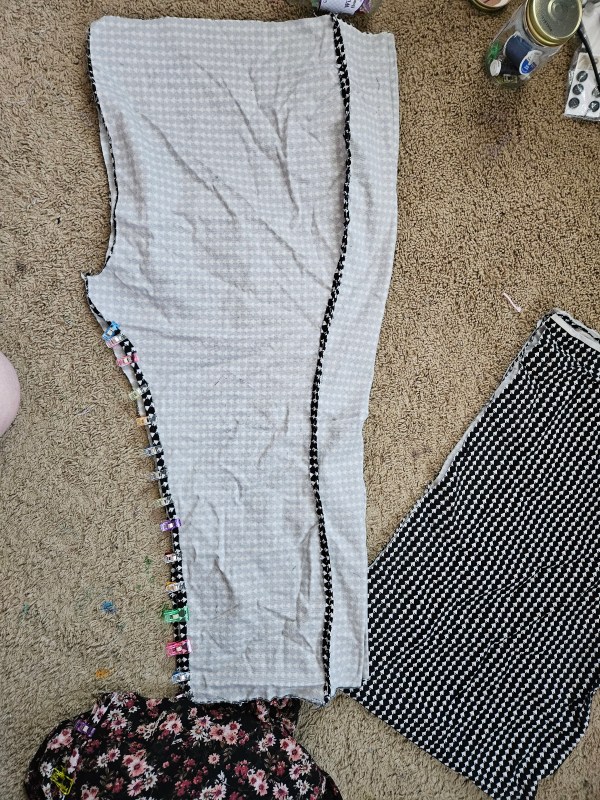
This is an unplanned part three of my “Drafting Shortalls From Scratch” because I did not succeed in making my overalls for winter. Although I have made shortalls twice this summer, a few silly, but very human mistakes, led to the project going awry. This is what I think went wrong:

  • Flew too close to the sun when tailoring
  • Planning < No Plan
  • Lack of Focus
  • Measure Once, Cuss Twice
  • I kinda hate sewing when it feels this hard
  • Putting too much pressure on myself
  • Not Buying Enough Fabric
  • Not Mocking Up
  • Not using my Patterns when I’m stuck
  • Research the Basics

It’s so easy to think we’ve got this and be too confident when going into a project. With knitting, this approach of fearlessness had led to some great projects, but with sewing, this artistic type of approach crashes and burns. Sewing is fabrication, as weird as that sounds. I think I was prepared to sew such complex tailoring projects, such as my shortalls, this summer, because I spent the spring building a screened-in porch with Kyle. Woodworking is very similar to sewing, I learned! It is about measuring, planning, creating things in a specific order, and constructing something that is built to last. When we started working on the porch, I never imagined how much it would teach me about garment construction. But it gave me a template to focus on. Who knew that woodworking would be such an inspirational experience for me?

So why am I sharing this? I am really struggling to accept that sewing is not coming easily to me; no matter how much I practice, it continues to challenge me. I’d like to invite you to join me in not giving up on those things in our lives that are hard.

#76 – Boredom in 2025

The biggest trend I think I’ve seen this year is the sentiment that everything feels boring right now. Whether it is fashion, film, or books, the art of storytelling is supposedly dead. This phenomenon has even crept into my unpredictable and exciting world of K-pop, and up until yesterday, I’d say I agreed. But as I sit here, I would like to put forth a different thesis.

Escapism from the Super Massive Blackhole

What if everything feels boring because you are running on empty? This year was the first time since discovering K-pop in 2022 that I felt bored and indifferent to my favorite bands. Some of this was due to outside forces beyond my control, like controversies, military service, and straight-up evil in the case of Taeil. Yet, some of this boredom, I believe, was caused by how much I was leaning on these safe spaces to find joy when nothing felt joyful or safe. There has been a constant pulse of uncertainty, like tectonic tremors, making us all question the point of it all. There is such a dreary air. A hopelessness, especially in people my age and younger, who are not able to reach milestones due to broken systems. Since I discovered the band Stray Kids, I run to their music for a safe place. But in 2025, I had stretches of time where even SKZ had no appeal. I had listened to every release over and over again until even their most addictive tracks had no appeal. I couldn’t believe how much I was craving a new album until a week before Karma released. As the week progressed, I could feel a hunger for a happy distraction. This year has been the first time my usual pick-me-ups have felt numb, and I wonder if one prong of this boredom we seem to be feeling isn’t coming from this exact situation.

To be honest, I think this could be why K-pop Demon Hunters exploded in popularity; it was new and fun when things seemed darker than ever. Same thing with Twice and their Lollapalooza performance, it was a night where everything felt normal for a second.

Have I Entertained You?

This attention economy is reminding me of that iconic line from Gladiator, and I don’t like what it is doing to art, music, storytelling, fashion, all of it. There is no room to reflect and craft something beautiful. We are pushing things too fast. I’ve been reflecting on this for a while. I see commentary on trends, relating to fashion, which usually goes something like – there is nothing new, everything and nothing is trending, yada, yada, yada. Sprinkle in a bit about clothing quality from the past, and the brain rot of the algorithm, which is killing creativity and subcultures because of a curated vitality. Like it’s a beast unleashed upon modernity, instead of stopping to think critically about it.

It’s obvious after some consideration that making things for vitality is not the same as making something to stand the test of time. Modern romance novels are being created for TikTok vitality first, and quickly, to keep up with the lazy decision of publishing houses to invest in AI over true writers. We blame the current author pool for a lack of creativity instead of holding publishing houses accountable for ruining their reputation through unethical practices. Because, truly, as an author, why would you feel inspired to create a story like Jane Austen when this is the current state of publishing? You could make a true work of art, and be rejected because they would rather steal work to create the same story through AI, or the publisher doesn’t want to take a chance on a good story when the algorithm is fickle and shallow.

Boring People Are Bored

AI is doing exactly what I expected; lazy people are becoming lazier, except that it is currently being rewarded. We used to know how to entertain ourselves. We used to know how to create, enjoy, and take pleasure in things, but I think AI is a snare that is making people boring, and it doesn’t have to. AI is an easy way out of daily life. It can be a friend, a relationship you don’t have to nurture, but is hollow. It can create art, but you will have no artistic skill of your own as a result. It can write you a book, without telling a story. It can create a music video, like JUMP for Blackpink, without any effort from the actual talent, and create a nightmare image of Rose with Jungkook’s facial structure. Do you see the pattern? It’s like cheating your way through school; it produces nothing and wastes precious resources, like time, or in the case of AI, drinking water and electricity.

Cringe > Innovation

What I have seen as the most flagrant accusation of boredom has been the dissonance of innovation and cringe. Let’s take, for example, Ceremony. It’s a song that has no chorus until the end of the song. It’s layered, has high production value, and features something new for Stray Kids and boy band offerings. But what do I see online? It’s awful. Stray Kids are braggy and loud, no talent. K-pop is boring; everything sounds the same. Except, Stray Kids, it’s too experimental. No wait, it sounds like all their other songs, yawn….etc. How can we have the audacity to complain about being bored while we punish bands for taking risks? It’s not just Stray Kids, I have seen similar criticism being launched at Nmixx, NCT, Ateez, Twice, Aespa…the list goes on.

It’s no different when it comes to the world of fiber arts. People complain about how crochet and knitting are getting boring and want new things to make, because everyone is knitting the same things, yet don’t branch out from a few massive pattern makers, like Sari Noorland, Petite Knit, and Andrea Mowry, to name a few. There are so many smaller creators crafting joyful patterns that would disrupt the slump, but no one wants to stand out these days.

I think as this year enters its final act, we should decide what we value more: being entertained? Or being authentic? Do you want to truly discover something new? Do you want to dig deeper for something fresh? It requires us to act, to search, and to participate, because we are allowing ourselves to become boring people, and it is spreading across culture, where it will stay unless we choose to be interesting again. I get it. This year has been demoralizing, and it’s made me feel like giving up many times, but there is always a reason to keep going. What if your big idea is the thing that makes this dull and dreary world sparkle again? You could be the change we need, so stop scrolling and find something that ignites passion in your heart once again!

Designing Clothing That Fluctuates With You

This is inspired by a discussion from Maybe Bre, which made me reflect on something I hadn’t discussed before. As well as my own experience wearing clothing, as a garden-variety human who loves fashion but doesn’t always enjoy how our clothing is made.

By this, I mean the patterns and fastening of our modern times. The zipper is a wonderful thing, and so is the structured waistband. I love them in jeans because denim that isn’t compromised by stretch is a rugged and sturdy garment that isn’t a piece that conforms to you; your body is housed within the trousers. I feel the same way about a structured coat. In doing so, I buy these pieces oversized for comfort, which leaves me with a garment that most of the time doesn’t technically fit me. If I did buy it to fit me right now, there is no guarantee that over many decades it would continue to fit me – I’ve been burned before by this problem. Hence, all my “staple, investment pieces” from college no longer live in my closet because they are no longer my size. If I had planned ahead and bought them a bit oversized, they might still be with me, but they wouldn’t have “fit” me at the time.

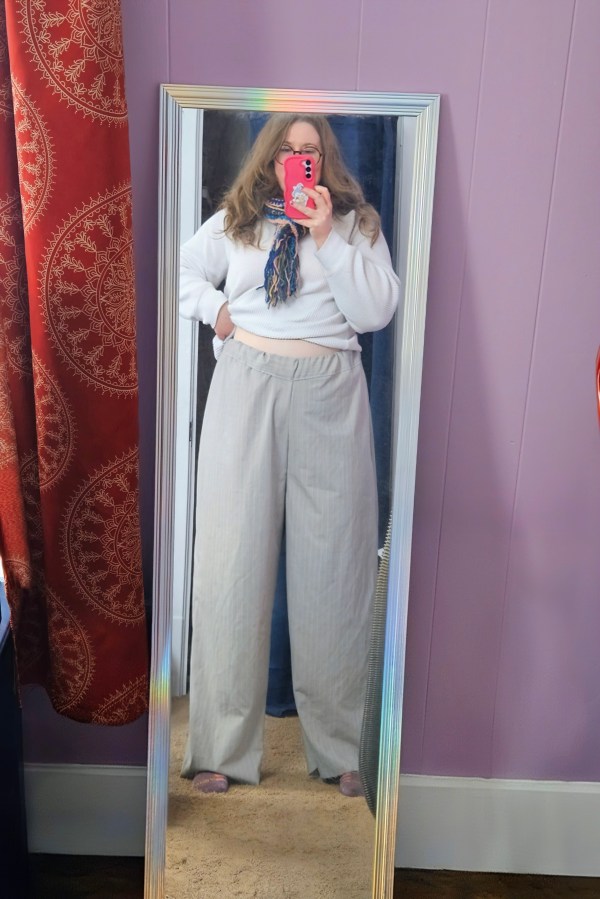
My problem with clothing is becoming clear, isn’t it? I desire longevity and wearability from clothing, in a way that is not offered off the rack. I desire my clothes to grow and shrink with me, depending on how my body changes over time. This has been my design focus in the last few years as I have placed myself in the driver’s seat of my wardrobe through the process of sewing and knitting.

My idea is not innovative; it is historical. Clothing, because it was so expensive and hard to make, was more adaptable in the past. Fastenings such as tie waist, lacing, and buttons with multiple sizes of tightness were common because clothing was not as easy or cheap, and they were not seen as disposable or replaceable. Changing fashions came with garment reworks, ye olde upcycling as it were. This is what I desire: the ability to change the fit of my garment.

I recently figured out how to sew with elastic, which is a game-changer for shorts and gathered sleeve hems! Before this, though, I was making most of my bottomweight garments with tie waists or several options of buttons to let the garment adjust to the needs of the day, I’ve also sewed with intentional relaxed fit, initially due to a lack of tailoring skill but over time it has been to allow wiggle room in pieces I have spent days or weeks of my life crafting.

Being present in the making process has taught me to treat my clothing with more respect, even when it is time to discard the current version of it for something more useful. I’ve stopped donating as much, decluttering, and rebuying, to be honest, to be more intentional with the garment and its life cycle. I am the one who brought it to life, I can’t simply consume and discard it like it is nothing. I am deprogramming my brain from decades of fast fashion insanity.

I believe if clothing were made with this design philosophy, that clothing would fluctuate with you over time, I believe we would enjoy wearing our clothing more because instead of buying stretch fabric everything, we could still wear good natural fibers, maybe a bit bulkier than spandex and less figure hugging and lurex denim, but would be better for the humans and the planet. Style and substance, as they say on the Great British Baking Show!

Will I Wear a Knit T-Shirt?

I asked myself this question last summer with genuine uncertainty. Knitting is such a cold-weather medium that a knit made to be breathable and light for warm weather seemed, well, a bit like an impractical fashion piece. I think this is an important question to ask of ourselves before we jump on a trend. Whether it is to buy a knit t-shirt or to handknit (which means you are dedicating weeks of work to a project), having the right expectation matters. Trying on a knit t-shirt beforehand helped me visualize what I was in for. Knitwear for all seasons is currently having a moment even in ready-to-wear, which makes this a great time to go try on a piece before committing to a big project.

Wearing my Grandma’s cotton knit t-shirts, although they were two sizes too small, helped me visualize knit as a process to make a fabric instead of a woolly winter garment. That’s what makes knitting and crochet extraordinary skills; they are versatile. The fiber maketh the project. The stitch maketh the airflow. Lacey, open weave? Fantastic for hot and humid days. Not so much for a pair of mittens. 

To remedy this, I think fiber acquaintance is a fantastic way to learn whether a knit t-shirt is right for you. When I began knitting in 2012, I knew there was wool yarn and acrylic yarn. That was it. However, there is actually a rainbow of fiber waiting to be discovered, and the lineup sure has expanded in the last 13 years!

Cotton

Linen

Bamboo

Hemp

Pineapple

Lyocell

Rayon

Yak

Alpaca

Camel

Mohair

Cashmere

Silk

Did you know that wool has two unique properties? It helps you regulate temperature and is naturally antibacterial/antimicrobial; therefore, it inhibits bacterial growth naturally on the fiber and prevents odors, which is why it is such a great sock material! Although I wouldn’t recommend wool for summer tops, it is a remarkable fiber. There are two fibers, though, that are breathable and naturally don’t let bacteria and microbes hang around – it’s linen and silk! For fiber education and the chance to feel these materials, I recommend finding a friendly local yarn shop and talking to the experts.

Finally, I do have one possible hiccup with my current selection of hand-knit t-shirts. I can’t wear them in 85 degrees Fahrenheit weather and above with humidity, but I do believe a knit tank would fix this problem, and a lacey stitch technique in future projects will solve this. I don’t like sweating a lot in my handknits, and because I was learning with my first few tees, the knitted cotton fabric is a bit bulky. That’s my error. You know what is so cool about knitting, though? You can unravel the finished garments and try again, so I can rework these finished garments in the future. Anyway, I hope you will consider the knit t-shirt as a warm weather staple in your wardrobe, it’s a lovely way to use crochet and knitting all year round!

Create a website or blog at WordPress.com

Up ↑