#77 – Giant’s Causeway

I’m currently watching the newest season of The Great British Bake Off, and it is bringing back wonderful memories from my childhood, thanks to one special contestant – Iain Ross. Iain is from Belfast, Northern Ireland, and his Irish charm reminds me of my trip to Ireland as a kid. He reminds me of the people I met, including my family members who live in County Antrim. He reminds me of my grandma, Florence, and my Gormley family tree. But I also remember the wonder of exploring this place called Ireland (and Northern Ireland) as an 8-year-old kid, who heard the legends of the places we saw, and found the stories truly magical.

Now, for political reasons, I wasn’t able to see Belfast due to some tensions around Orangemen’s Day. But there were lots of other cities and sites were got to see. There were stories of Dunluce Castle’s kitchen falling into the sea during a party. That was probably true. There are the ruins of tall towers, made to hide in safety from Viking raids, and also historical. But then there were the stories that lean into the fantastical, like the story of Finn MacCool and the Giant’s Causeway.

I had forgotten about the magical origin story of Giant’s Causeway until Iain turned the story into a pastry sculpture for the showstopper round. Finn MacCool, also known as Fionn ma Cumhaill in Gaelic, led a band of mythical warriors called the Fianna. Now, a giant Finn was in a rivalry with another giant in Scotland called Benandonner. To reach him, Finn created the causeway on the coast of County Antrim, which faces Scotland’s coast across the Irish Sea. When Finn saw how big Benandonner, standing in the distance across the sea, Finn decided this might not be a wise idea. Instead, Finn fled to his house, where he hatched a clever plan. He asked his wife Oonagh, to help him hide himself under a blanket, to disguise himself as a baby. Benandonner passed across the sea on the causeway, determined to settle the fight with Finn. He knocked on the door, but instead of Finn, he was greeted by Oonagh and a rather large sleeping baby, which Oonagh introduced as her son, Oisin. This terrified Benandonner. What could his father look like if this were the size of the baby? Benandonner fled back to Scotland, thwarted by the cleverness of Finn MacCool. In his haste, Benandonner ripped up the Causeway so that remnants only remain on the coast of Antrim, at the Giant’s Causeway site, and on the Scottish island of Staffa at the Fingal’s Cave site.

We know now that the hexagonal basalt rocks are evidence of volcanic eruptions that formed the Causeway in Ireland, but isn’t the creativity of my ancestors better? This story is one of my favorites. I may have been able to see through Santa Claus, but this filled me with the possibilities of a land where giants and magic roamed, and it filled me with a sense of wonder to exist in this place of extraordinary things. That’s what I began to explore in Udal Cuain and what continues to bring me back to Halloween every year – Samhain. The original celebration from Ireland.

Have you ever been to Giant’s Causeway? Did you know about the myth, and what do you think of it?

Sources:

https://giantscauseway.ccght.org/history-and-folklore/

https://giantscauseway.ccght.org/geology/

CCGHT’s Mythological Landscape of the Glens of Antrim publication

To Write, You Must Read

To write, you must read. Simple right? Like any skill, it requires building those muscles, learning from example, immersion in a new concept, but as I started to brainstorm a new novel project, my tank was empty. I had concepts, settings, character types, but the world building through dialogue and metaphor…it was pretty bland. Not what I expected!

When I began work on Udal Cuain in the summer of 2016, the story poured out of my mind. I had to carry a notebook around, for the small pieces of plot, personality, and setting I found welling up throughout my day. Names were easy to determine, as well as the dramatic conflicts. Why does it feel so different? Well, I remembered something when I picked up Six Crimson Cranes by Elizabeth Lim – to be a good writer, you must read other stories. In 2016, I wasn’t sewing, knitting, or gardening; I was reading in my spare time. I was still watching movies and TV shows regularly, instead of how I spend my time now watching far too many YouTube videos.

Although I have read a lot of books, it’s past tense. I have not been a consistent reader for years now. Honestly, since 2021, my reading has dropped off. We moved from a town with an incredible library to a borough with a library that is so underwhelming, and on the verge of losing its funding, that I have not been reading new things, nor have I discovered new authors. I have a few books on my TBR list, books that I have bought with the intention of reading, but instead have become bookshelf decor. It’s disappointing.

I used to have a Kindle, where I would buy books on sale for $2.99, sometimes splurging on a full-price one if it was intriguing enough. I would borrow a book a month, and browse the free section for something fun to pass the time. A book I remember finding on a sale that became an absolute favorite of mine was ‘The Shadowy Horses’ by Susanna Kearsley. I found this book initially in high school, reading it before work and during breaks at my summer job. I found Susanna Kearsley again, books upon books of her work at my local library in Meadville. They had a fantastic selection, with a monthly rotation of featured books and new authors. This is how I found Elizabeth Lim – her debut novel, ‘Spin the Dawn’, was a featured YA selection with a stunning cover that drew me in.

I miss the rotation of books and the lack of consumerism. The books were picked by the librarians, books that I could borrow and return with the option of buying. Now, if I want to find something new, the best affordable option is Thrift Books, but it lacks the in-person ambience of a library. Kindle helped me find some great twisty thrillers during the time that the mid-2010s. Remember when Gone Girl, Girl on the Train, The Wife Between Us, and An Anonymous Girl? I used to love these twisty books. There was a fantastic emergence of fantasy around this time, too. I remember finding endless YA fantasy series on my library shelves – I miss that time in my life, diving from adventure to the next. A good story connects us, inspires us. I forgot how important it is to be immersed in stories to be a good storyteller.

So I have picked up reading again. I am forcing myself to put down my projects, and the Animal Crossing, which I didn’t play before when I was reading often, and to read again. It’s going okay. The moments I give myself to sit and read are magical, like I remember, and I think I’ve already had better ideas since reading again. I wish I had kept a list of the books I read in the 2010s; it’s a bit of a blur. Maybe, with a little research, I can find them again and share my favorites with you?

I hope you are enjoying your summer (or winter if you live in the southern hemisphere) and that you have a good story to escape into today. Thanks for checking out my corner of the internet today. I hope to see you again. ❤

Individuals Without Individuality

What does it mean to be an individual? Are you a person? A sum among parts? An island? A unique person, maybe? What does it mean to do things individually? What does individuality mean to an individual? I really wish this word, and its forms, weren’t so tricky to spell with my slightly dyslexic mind (not formally diagnosed, but it runs in the family). It’s a lot to digest, but this has probably been stewing in my mind for the past year, waiting for me to plate it up.

My culture is incredibly individualistic, and this is expressed in good ways and bad. One good way is that my country is a land of immigrants and indigenous people, meaning there are voices, ideas, and ways of doing things. But when there are people, there are forces of wanting to fit in, wanting to control and suppress, and prescribed ideas of the “best” way. I think this has been at the forefront of my mind because I see a vast amount of content being shared online saying originality is dead, or personal style has been killed by the algorithm. We are all core-ified or aesthetically boxed in, and social media has commodified subcultures. But it’s the internet, critiquing the internet, so we’re of course using broad, and extreme brushstrokes here.

Where my mind has drifted to is the sameness. I see people online discussing the boringness of everything from movies to the same cosmetic procedures, the bland landscape of interior design, and starter pack cliches for “types” of women. There is a sea of Petite Knit patterns, a galaxy of Marvel media that repeat the same formula, reboot television, and romantic tropes pushed by publishers and BookTok to make everything fit nicely in the digital marketing ecosystem. Then we fall into nostalgia, like recession pop, which I found myself listening to the other day, reminiscing about my first summer as a member of Geneva’s painting crew in 2010. Thinking about how different life was before I even had a Facebook.

What we talked about and the memories I made with the women and men of my team were tangible, not digital. We discovered what we liked based on environmental forces, like books assigned in school, books suggested by a friend, etc. Music was discovered and shared by radio play, recommendations from others, and shared playlists that your friend curated, not the music streaming platform or the algorithm. I thought a bit less about my appearance, I mean, in adolescence, you are quite aware, but not as much as the smartphone era has brought attention to the physical image of ourselves. I had fewer pictures, grainier pictures, but more memories. Strong memories are tied to tangible things, like songs, food, books, buildings, and movies. We were all very different from each other, yet we could find commonality, and this is where the gears in my mind started turning.

We were part of a group, but had individuality. Yet, nowadays I feel more like I’m in a void, of no commonality, except for how everyone is into the same things, and wears the same clothes, yet we are not connected, communicating, nor would I even consider that despite our shared things we are on a team or part of a community. It’s hollow.

I think we are missing the point of life. We are not working towards something together. We are not part of communities. We are part of aesthetics. We have become fans not of art or sport but of corporations like Target, Lululemon, Sephora, Stanley, and Tesla. Well, probably not Tesla anymore. Target is also being boycotted, so…anyways. Apple, Alo, Rhode, Kate Spade, Trader Joe’s, Labubu. That’s more 2025, phew. Why are we stanning companies? Why are we considering shopping for a hobby? This is not a way to connect; it is a way to consume and drown in stuff instead of substance. Our roots are becoming so shallow, and our debt is vast; we are plants choked out by the weeds of hyper-individualism. We have let originality become a thing achieved not by character formation and real-life community, but by the path of purchase. Purchases for ourselves. It snuck in so fast, I didn’t realize how the art of gift giving has become a self-care checklist. Yikes! It wasn’t until playing Stardew Valley and Animal Crossing: New Horizons that I was struck by how topsy-turvy my own culture has become. Our priorities are whack, and I believe it has made us lonely, shells, devoid of individual thought, buying our way to “happiness” because all we think about is our individual needs above all. We have forgotten that humans are fulfilled by the relationships and communities we are rooted in. It’s time to break the spell.

Character Design: Mabel Mora and Her Sweaters

Going into the show, Only Murders in the Building, I knew the concept of the show was intriguing. It’s set in New York City, in a classic building, where whodunnit murders take place which the trio solve through their of the time true-crime podcast. The age difference between Selena Gomez and the other two leads Martin Short and Steve Martin gave the story layers from the trailer alone. I was pleasantly surprised by the character design and the costuming which layered depth to each character’s story, like a real person would express through the clothing items they choose.

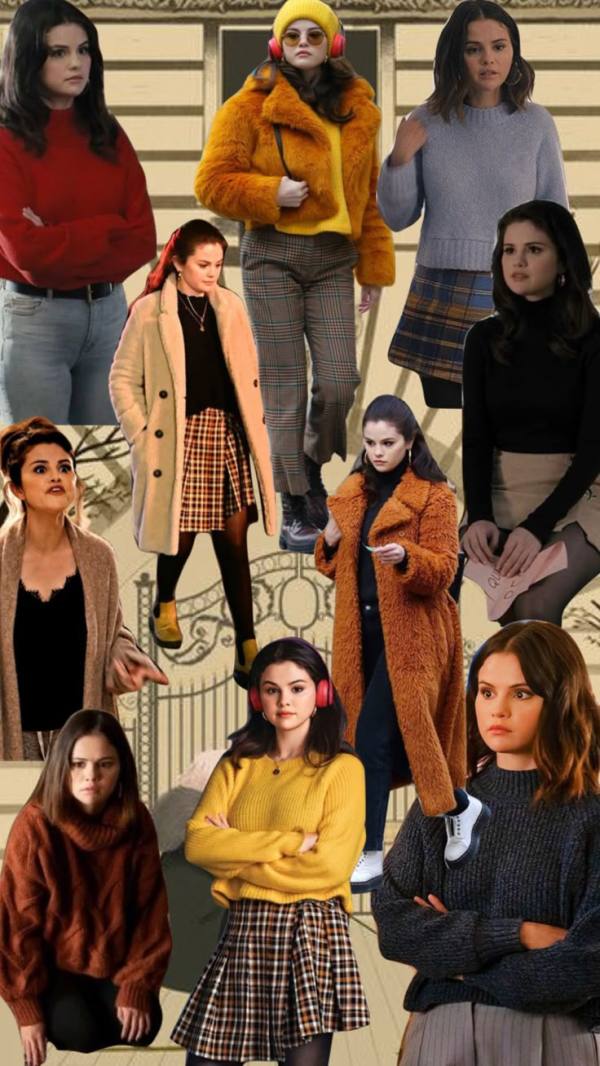
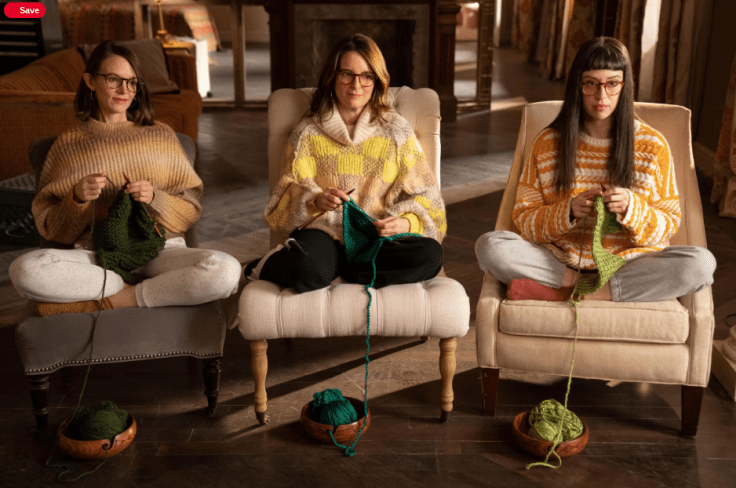
The most relatable to my taste is Mabel Mora because she not only “knits” as a plot device for “Bloody Mabel” but also wears clothing that looks like someone who knits. Her knitwear throughout season one looks like pieces made by someone who enjoys knitting. They are not your typical off-the-rack sweaters and appear to be knit by hand instead of machine. What makes it feel real to me is the weight of the yarn compared to the knitting needles shown in her apartment. The needle she says would be her self-defense weapon of choice is a thicker needle, for bulky weight yarn. My guess would be somewhere between a size 11 and size 13 needle which is appropriate for bulkier projects.

The wooden knitting bowls, the needles, and the unusual designs of the sweaters featured in this scene speak to the craftsmanship of a hand-knit sweater and place Mabel’s knitting needle in her world. They appear to be knitting which is not always the case in TV shows or movies that feature acts of knitting, the best example of this being Gromit from the Wallace and Gromit series.

Although we don’t see this craft as often in Mabel’s scenes as we see her paint or sketch, the evidence of this hobby is peppered throughout the show from her infamous dream, her carrying the needle in her bag when she jumps tie-dye guy or what lands her the moniker “Bloody Mabel” in season two. Movies and TV shows of the last five years have fallen into a telling not showing manner of character development. For example, in the 2022 remake of Persuasion, Anne Elliot breaks the fourth wall to tell views that she and Frederick Wentworth are “exes” instead of developing the story through interactions, long drawn-out glances as we see in Emma (2020), or Pride and Prejudice (2005 & 1995).

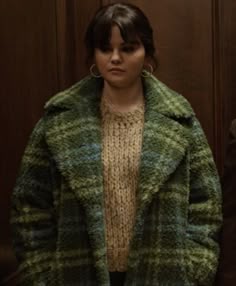
Only Murders in the Building did not take the bait, and instead showed what a 20-something knitter would wear in New York City winter – her handmade sweaters made with yarn colors that look like you could buy them from your local yarn shop. It was a clever character hobby to give Mabel as knitting was growing in popularity with people my age and beyond in the last decade, truly exploding in popularity with the rise of crochet in the 2020s. Every sweater she wears in seasons one and two looks like something you could find a pattern for on the site Ravelry.

It was such a great way to add nuance to Mabel’s character, because how many characters in TV shows knit that aren’t older? She’s a girl with a troubled and complex history, you would expect her to be a party girl or have a dark streak, like the characters of Effie Stonem, Serena Van Der Woodsen, or Jenny Humphrey, but instead, she paints, she knits, she is relatable in a plot that can be quite over the top compared to reality. Mabel is a character I can relate to, which pulled me in from the start to a show that doesn’t feel like it is a modern TV show because of how thoughtful the writing is. It never feels like a cash grab and that has given me hope that maybe this time of reboots and CGI reliance will go out of fashion for stories that once again feel handmade, like a good hand-knit sweater.

Have you watched Only Murders in the Building? Did you like it?

Editing My Manuscript from 2017

Yes, I finally did it. I found the manuscript and shifted through the 250+ pages to wrangle this story of years past down to a neat 187 single-spaced. It was a mental challenge to revive these characters I knew so well and remember who they were and why they were important to me. More important to me than I think I gave them credit in years past. Saoirse, Kinvara, and Biorn were characters I felt connected to because they were just as lost as I was. They had life toss them about, treading water for meaning in the dramatic family civil war they found themselves in. It mirrored life. It foreshadowed the losses I knew were to come and helped me sort out the mysteries of my own life in an imagined Viking Age Ireland full of shifting alliances and invaders.

After all this time, why now? I have two other novel ideas I want to explore yet I felt unable to write again until Udal Cuain was laid to rest. The leviathan of the past which helped me forward when I was stuck. I believe I needed creative closure. It was a manuscript without an ending. I revised and revised the story in 2018, taking it into darker waters. It became too dark for me to continue as my life was moving from darkness towards the light once again, there were things from history and Irish Celtic culture, as well as Norse culture I was unwilling to interact with anymore.

When I was first working on this project, I was steeped in historical research from my independent study about Early Medieval Ireland and fresh from watching the television show Vikings. It was a time when I was hiding behind a shell, numb from unresolved trauma that I was a shell of myself. Hidden away from my true self, masking and unhealthy. The violence of this show and the research on Irish pagan rituals were something I ignored, even though I cannot think of them without shuttering now. These were things, details I needed to remove from my own writing to find my own peace. Not to censor it but instead to be authentic to who I am. If you want to learn more, this novel will just be a stepping stone for more research because I cannot in good conscience tell a story with such evil and bring that evil to you the reader.

The bulk of my revisions were just that, removing things I no longer felt comfortable with to have the story reflect who I am now.

Being in the present, and seeing through the time how I have found peace in my personal life since writing Udal Cuain in 2017, allowed me to give it an ending. I didn’t know where to leave my characters when I was walking through a season of confusion. I see now that I had to read more of my own story before I could write their story.

Why am I sharing this novel on my blog instead of shopping it around to publish or publishing it as an E-book? I don’t know if this novel is something at this time that I am pleased with as a representation of who I am as a writer. It was a story that I needed to write for myself but not something I felt like it was a story I wanted to have out there for people to rip apart. I don’t feel ready to put it to market so I am sharing it on this blog for you the reader to read if you would like to do so.

Analyzing how I wrote the story and talking through the novel planning process has been more rewarding than seeing it as a published book. It was a process that gave me meaning then and still rewards me now for the things I learned through trying something new. When I started jotting down ideas for Udal Cuain I was a non-fiction writer, preferring essays and historical research as a medium to write, as well as a creative expression like poetry. World building? Not a thing I thought I could do, nor did I think that creating characters and crafting dialogue would be as fun as I thought. If you have an idea, go for it! You will surprise yourself by what the discipline of writing and creating will do for your mind. It’s challenging, confidence-building, and relaxing to escape into a world of your imagination. I believe you can do it!

Thank you, reader, for supporting me and viewing those Udal Cuain novel writing posts. It gave me the encouragement to go back and finish what I started many years ago.

My Friday Night Dinner Outfit

The start of September feels like the start of the Gilmore Girls season. Probably because it used to start airing around this time of the year, but also the show follows a seasonal structure. Usually beginning before or during the school year as Rory embarks on her next academic chapter. A key aspect of Lorelai and Rory’s life is the Friday Night Dinners at Richard and Emily’s house, every week. Emily and Richard, being rather formal people, expect a dress code for their family dinners being formal. It reminds me a bit of dressing up for church as a kid.

There is also a silhouette to the outfits each of the Gilmore Girls wear. They wear a lot of dresses with small cardigans over top, but they also pair fitted blouses with a knee length skirt, usually flared for Rory or a pencil skirt for Lorelai. Rory dresses with a more demure style, that reflects her academic personality where as Lorelai is a bit bold with her patterns, textiles, and colors. It matches her personality of being independent and need to separate her life from her parents’ world.

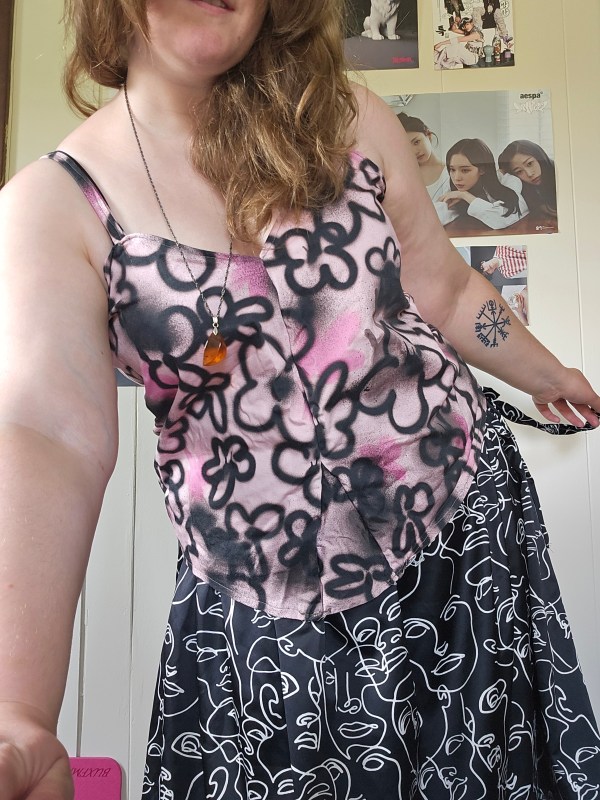
I thought this combination married both the silhouette of Rory’s style with the bold and playful textiles of Lorelai’s personal style. The blazer is not a Potato Technology piece, I ordered it from YesStyle, but the bustier top and skirt are my own designs. The Floral Print Grafitti Bustier Tank, I designed in 2023 from 1/2 a yard of fabric. This piece was draped and cut on the form. I wish I had known about making craft paper patterns at the time because it’s going to be a challenge to reproduce. The Expressions and Lines Skirt is a new design from this summer. It is a satin graphic print that for the first time, I was able to cut out the pattern directionally without any mishaps! I’m so pleased. 😀

I think the combination of pieces look a bit 2000s, mid 2000s for sure, and capture the essence of the time period. The blend of Lorelai and Rory’s style is a reflection of how I consume the show now. Which character I relate to is a blend as I get closer to Lorelai’s age when the show begins instead of Rory’s age, which is so weird to realize. I’ve truly grown up with this story, being just 12 when I first watched it. Lorelai’s story finds me more each time I watch it.

A Cup of Wisdom Warms the Heart

“Whoever ignores instruction despises himself, but he who listens to reproof gains intelligence. The fear of the LORD is instruction in wisdom, and humility comes before honor.”

Proverbs 15:32-33 ESV

Doesn’t that sound like something Uncle Iroh would tell Prince Zuko in their quest to catch the Avatar? That’s what I thought of when I read it. A lot of my reading through Proverbs so far has similarly struck me. I will be reading a chapter, line after line of little tidbits of wisdom in the style of literature Solomon seemed to favor, that at times feels sing-songy like a bit of Shakespeare, and then “BAM!” I’m caught in my tracks by the profoundness of what the line of poetry just said. In those moments, I think of Uncle Iroh. I think anyone who is a fan of Avatar the Last Airbender, wishes they had an Uncle Iroh in their life because people like Uncle Iroh seem few and far between.

I think that’s why the loss of my grandparents feels like such a hole in my life, a vacuum of wisdom. I love my mom but it isn’t the same kind of relationship, there isn’t that well of wisdom that flows into our conversations because there is a different approach to life she follows. It’s a well-developed, rich, sort of wisdom that can only come with hard work and deep study of wisdom itself. They had that and they shared it willingly, sometimes to my chagrin as like young Zuko, I didn’t want to hear it.

And like Zuko of season two learns, the echo chamber of losing the voice of reason in your life is way more frustrating than hearing hard truths that mirror your own folly. It is irreplaceable. I miss their wisdom. I miss the surrounding of elders and wise people who seemed to be around me in childhood but seem harder to find with age. I think there is a passing of the torch so to speak whereby aging you are supposed to grow, change, and dwell with the wisdom of life to pass on to others and that transition can sometimes feel like you are treading water.

“If you look for the light you can often find it. If you look for the dark it is all you will ever see.”

Uncle Iroh

Growing older is odd. I never thought I would miss reproof and instruction but I do.

In the spirit of both the verses from Proverbs and the quote from Avatar the Last Airbender, the only way to fix this void is to look deeper and further to continue to seek out good influences in my life, and ways to be challenged to never settle who and where I am now, but to push further to find the well of wisdom and in turn be a well of wisdom to others.

Where do you go to find wisdom? Is it a person? A belief system? A text? Have you continued to seek after it, even crave it as you have gotten older? Have you been able to be an Uncle Iroh to someone in your life?

Conn’s Journal – Bringing a Dead Character to Life

Something I knew I wanted to capture in my novel Udal Cuain, was the deep world of lore that literary classics such as Lord of The Rings, the Hobbit, and Harry Potter present by creating books within books. Such as There and Back Again by Bilbo Baggins, Quidditch Through the Ages by Kennilworthy Whisp, or Fantastic Beasts and Where to Find Them by Newt Scamander. But it had to fit the world I had created in Udal Cuain with the type of literacy and availability of books, according to the time period.

I settled on a private journal that would make sense in the world of a Cheiftain living in Viking Age Ireland, that although Ancient Irish had a spoken language mostly, a brief written language of Ogham based on trees, they did have the influence of monasteries and with it written language and booking making availability. Especially if that Chieftain had studied with monks and was interested in cultures other than his own, a wanderlust and curious man, a recorder of history, both good and bad that could lead to secrets being recorded, that others did not want. A cause for his death? Perhaps! This was my jumping-off point for creating an active character in a story, where this character had already died.

In Media Res

Because I was a novel writing novice I wanted to be as slick and tricky as possible, at times writing myself into a corner by joining the story in media res, jumping into a story in the middle of the narrative without context. This left me with a problem, how do I tell the stories I need to tell without lengthy flashback scenes that may confuse the reader and muddy the plot?

Insert a lost journal. Found by a key character, with similarities to Conn. This character, who is one of the main characters, is named Kinvara. Kinvara is a misfit turned hero, through her pure spirit, she is chosen by the faeries to be their advocate and right the wrongs of her fellow clan. It is she who finds the journal after Conn’s death when she is in exile on Searbh for treason against the reigning Tearlag, widow of Conn. Kinvara desires to understand why her family and their allies were driven from home to this island, and why her parents would align themselves with Riordan and Saoirse, the ones accused of treason by Tearlag when they seem to be such bad people.

Kinvara like Conn, observes people, and so by choosing her as the character to find the journal, it is like we get to experience Conn in these situations and resolved a problem I did not anticipate – How do I make Conn a relatable character when he’s dead? How do I make the reader see his side? By making Kinvara a foil of Conn, her experience with the secrets she discovers inside Conn’s Journal allows the reader to understand who he was. How Kinvara reacts to the information both shows her value system and Conn’s and allows Kinvara to be a fly on the wall of events that apply to her but gives her the knowledge of such information that would not be available to her character otherwise.

It eliminated for me, the need to create an omniscient narrator. Something I wasn’t interested in.

Sowing Seeds of Story

Now came the task of integrating the two. How should this book, Conn’s Journal be presented in the story of Udal Cuain?

I pondered if it should be in reference only, or maybe a separate book? But that felt like I was putting a burden on the reader to seek this out when I didn’t know if anyone would care enough to do so. I don’t have a writing pedigree to fall back on, I’m an unknown writer that may not be engaging or worthy of devoting so much time to, so I thought about how to make the journal part of the chapters.

Integrating the pieces of Conn’s Journal into the chapters seemed like the most efficient option for the reader, if it exists in the story without requiring the reader to look up an additional source, I believed the reader would be more engaged, and more likely to read Conn’s Journal. This was a great strategy, I believe because this opened a new framework to chapters. If I wanted to reveal something from the past, instead of having the characters talk about it, I could paint a whole scene with action and foreshadowing, so that it was like the reader was reading Conn’s Journal like Kinvara and experiencing the story from her perspective, but also Conn’s perspective.

This plan provided a great opportunity to reveal more about the secretive O’Connors and fact-check what son Riordan, daughter-in-law Saoirse, and wife Tearlag were presenting to the characters in the story and telling the reader. It allowed me the chance to experiment with unreliable narrators, which was a lot of fun, and use the tool of dramatic irony.

Because of the seasonal framework, I discussed before in Ancient Irish Calendar, I had a concise way to show the reader when Conn’s Journal took place. His entries could be dated and set in a specific season or month that could be referenced before or later on, like a hyperlink. But, this could be more layered, Conn may have written about an event in his early life that was set in the calendar framework, and I could demonstrate when Conn did this writing later in life with an entry dated so that the reader could feel like Conn was a three-dimensional character. Just as in life, I wanted my characters to feel human and humans have memories triggered by events that are extremely personal in nature. We connect the dots in our own way, and I wanted Conn’s character to have the chance to tell his own story.

Thank you reader for allowing me to muse and reflect on this work with you. I truly miss the story within the story I created with Conn. What do you think about this writing technique? Would you apply it to your own work? Do you enjoy when authors employ in media res, dramatic irony, or books written by their characters? Should dead characters stay dead? It’s a lot to ponder.

Create a website or blog at WordPress.com

Up ↑