
It may still be winter with snow on the ground here in Pennsylvania, but the garden is just around the corner. What has been a harsh and frigid winter, with the temperature not getting above freezing for nearly two consecutive months and two feet of snow on the ground, is starting to break. When I started this blog post, it was bright and sunny outside, and the daily high has remained above freezing for nearly two weeks. For us, that means garden preparations, which have snuck up on me. One day, we were beginning to receive our catalogs in late November, and what felt like the next, we realized we needed to place our orders before things sold out.
Links to Other Seeds:
- Corn
- Cucumbers, Flax, and Leeks
- Melons, Molokhia, and Peas
- Peppers & Potatoes
- Pumpkins & Squash
- Tomatoes
In early February, we placed our orders, and the seeds have all arrived. So, now is as good of a time as ever to go over everything we ordered and what starts we’re going to purchase from our local greenhouse.
Starts We’re Buying From the Greenhouse
Before diving into the seeds we purchased, I want to go over the vegetables we’re going to buy starts for instead of seeds. There are a couple of reasons for this. One is that we’ve never grown the vegetable before and want to begin with an established start that only needs to be transplanted rather than attempting to start our own seeds. My preference is to start my own seeds, but beginning with a start that only needs to be transplanted increases the chance of success. A couple of vegetables that fall into this category are broccoli and cauliflower. Technically, we tried growing broccoli last year, but they barely reached the transplanting stage and quickly failed. We’ve never tried growing cauliflower.
Check Out Our Other Seed Posts:
The second reason is that we like the options our greenhouse offers for a specific vegetable. Ground cherries and eggplant fall into this category. We bought starts for these last year and had success and will buy the same ones this year. Eventually, we’d like to buy additional eggplant varieties to grow, but we’re content with the Asian-style eggplant we got from the greenhouse last year. Finally, there are some vegetables that we will likely buy extra plants for. These will mostly be tomatoes and peppers. We bought seeds for both, but we would like to have an abundance of fruit from both, so adding extra plants is never a bad thing.
Seed Picks
Now, we move to the seeds we ordered.
Beans
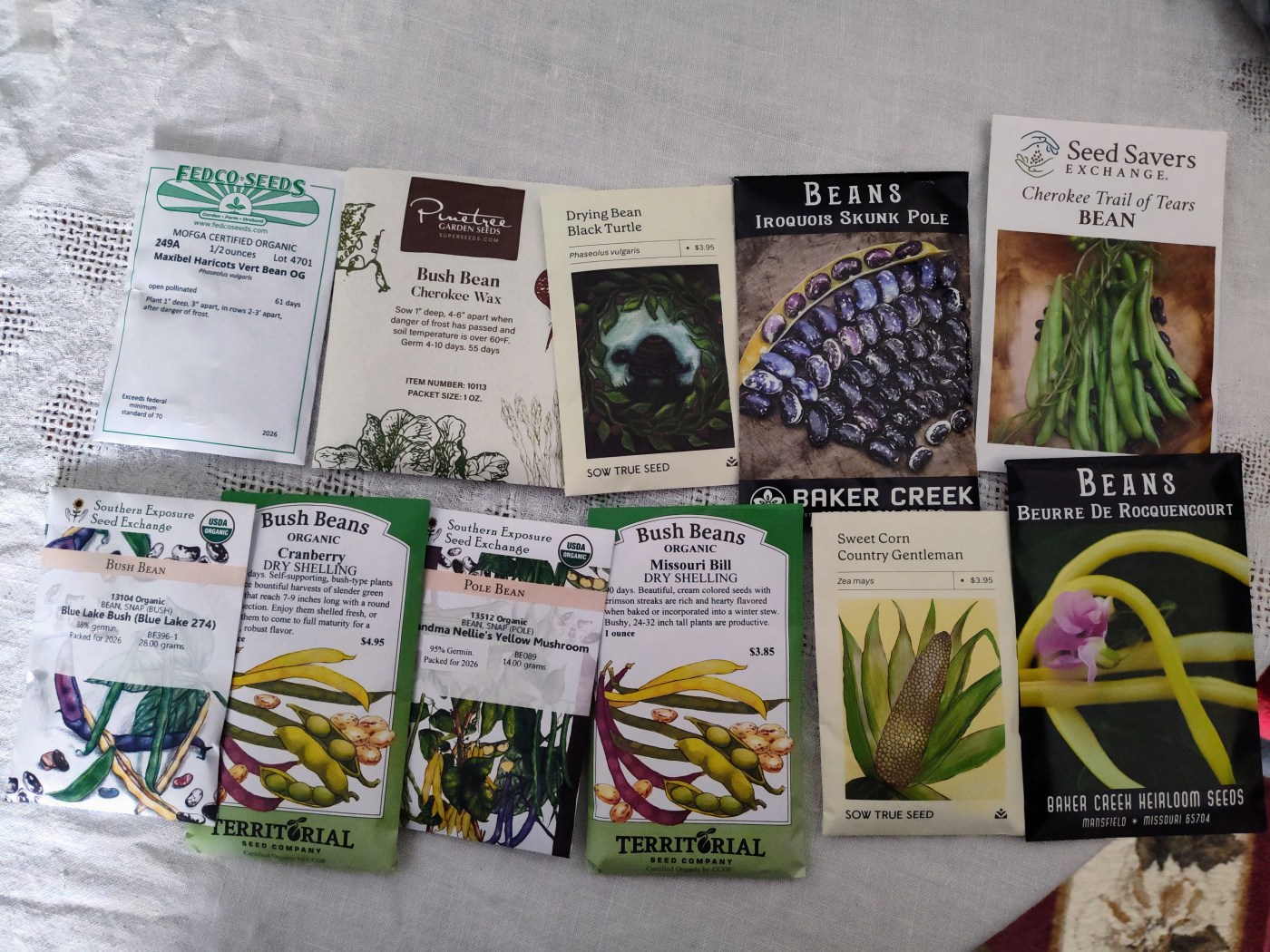
Our bean seed choices are reflective of our larger approach to seed selection for this year’s garden. We wanted a variety of styles (wax, green, dry, and French), growing habits (bush and pole), and colors (green, yellow, red, black, and brown). You’ll soon see just how much we love beans.
Beurre de Rocquen
A wax-style bean from France that descended from the first wax beans to be introduced to the country from Algeria in the mid-19th century. A bush-growing habit that should flower and produce early in the season. Supposed to be a delicious bean. It’s our first time growing it. Purchased from Baker Creek.
Black Turtle
We grew these beans last year and had moderate success. The plants generally grew well and produced pods. We were able to harvest a 1/4 cup of beans that dried on the plant. I greatly underestimated how many plants you need to have an abundant harvest. We’re growing more this year. These are the traditional black beans that are popular in Latin American cuisine. They’re intended to dry on the plant and in the pod, and the plants will stay relatively compact in a bush habit. Last year, we bought the variety from Baker Creek. This year, they came from Sow True Seeds, and the seed packet is gorgeous.
Blue Lake 274
One of the most popular bush beans grown in the United States, Blue Lake 274 has been grown since the 1940s. It’s a versatile and productive bean that is great for fresh eating, freezing, and canning. We’ve never grown this variety. Our seeds came from Southern Exposure Seed Exchange.
Cherokee Trail of Tears
I’ve been curious about this variety since we started gardening and finally bought them for 2026. It’s an heirloom variety that dates back to at least the 1830s when members of the Cherokee Nation were forcefully relocated from the Smoky Mountains to Oklahoma by the U.S. government. That became known as the Trail of Tears, which is where the bean gets its name from. As for the bean, it grows on a pole habit with beautiful pinkish-purple flowers and develops green pods, but the bean is black. It can be eaten fresh or dried. We bought our seeds from Seed Savers Exchange.
Cherokee Wax
Not quite an heirloom, the Cherokee Wax bean was introduced by Clemson University in the 1940s and has been a favorite for gardeners ever since. Has a bush-growing habit and produces lots of yellow bean pods that are great for fresh eating and preserving. I love pickling wax beans into dilly beans. This is our first time growing this variety. Our seeds came from Pinetree Gardens.
Cranberry
An heirloom bean that can be tracked back to 1825 from England, the Cranberry bean is a horticultural style. I’ve since learned that horticultural beans have flatter pods than snap beans. The Cranberry bean produces beautiful scarlet-colored beans with lighter swirls. I’m a little unclear on what color the pods are, but some descriptions list them as green, while others list them as having pink highlights, so we’ll see. It’s very exciting. These have a bush habit. As you can probably tell, it’s our first year growing these. The seeds come from Territorial.
Grandma Nellie’s Yellow Mushroom
This is a unique heirloom variety that we’re really excited about. It’s a pole bean that requires trellising and produces yellow pods with beans that have an umami element similar to mushrooms. This variety originated in Russia and arrived in the United States via Saskatchewan. This is our first year growing these. The seeds come from Southern Exposure.
Iroquois Skunk Pole
Magz got me these as a Valentine’s Day gift this year, and they’re a fascinating bean variety. They’re an heirloom variety that has been grown by members of the Iroquois nation in the Great Lakes region for centuries. These grow on 6-foot vines with green pods. The beans can be eaten fresh as a snap bean or left to dry when the beans become beautifully speckled in black and white. These seeds come from Baker Creek.
Maxibel Haricot Vert
This is the classic French filet green bean. The pod may be green, but the bean is a speckled brown. Grows in a bush habit and is supposed to be delicious. This is our first time growing these, and we bought them from Fedco.
Missouri Bill
Missouri Bill is a shelling bean that is supposed to be great in stews or when baked. These have a compact, bush habit that develops rosy white flowers. The beans are buff-colored with scarlet-brown streaks on them and are stunning. Why they’re called Missouri Bill is a bit confusing, with one source I found claiming that the seeds were saved by a guy from Missouri named Bill. We bought ours from Territorial, and they state that their seeds originally came from the San Juan Islands off the coast of Washington. It’s our first year growing them.
Have you grown any of these varieties before? Let me know in the comments. In the next post, I’ll look at the corn seeds we picked.
 One Rabbit Riot