Successfully Growing Melons

Last week, we harvested three melons out of the garden, one each of our Kajari, Tigger, and Noir des Carmes. Harvesting them instantly became the proudest I’ve been of the garden this year. Growing melons in Pennsylvania isn’t easy. My dad tried it when I was a kid and never had success. Magz and I tried it with our container garden. We had some success, but only harvested one fruit from each plant.
We knew the struggles of growing melons here when we bought the seeds, but the potential of growing unique varieties that we’ll never find in stores was too enticing. We bought the seeds, prepped the ground as best we could, and watched as the plants quickly germinated, and the vines took over our garden bed. We quickly had blossoms, and the fruit soon followed. The melons continued to grow and approached their full size, but I still didn’t believe that they would ripen. That’s where I’ve seen melons fail.

It’s also where our Ali Baba watermelon stopped growing this year. The lone fruit that we had was no longer growing in size and had the yellow ground spot that is typically an indicator of a watermelon’s ripeness. We harvested it, thinking it was fully mature, but unfortunately, the flesh was still white instead of pink.

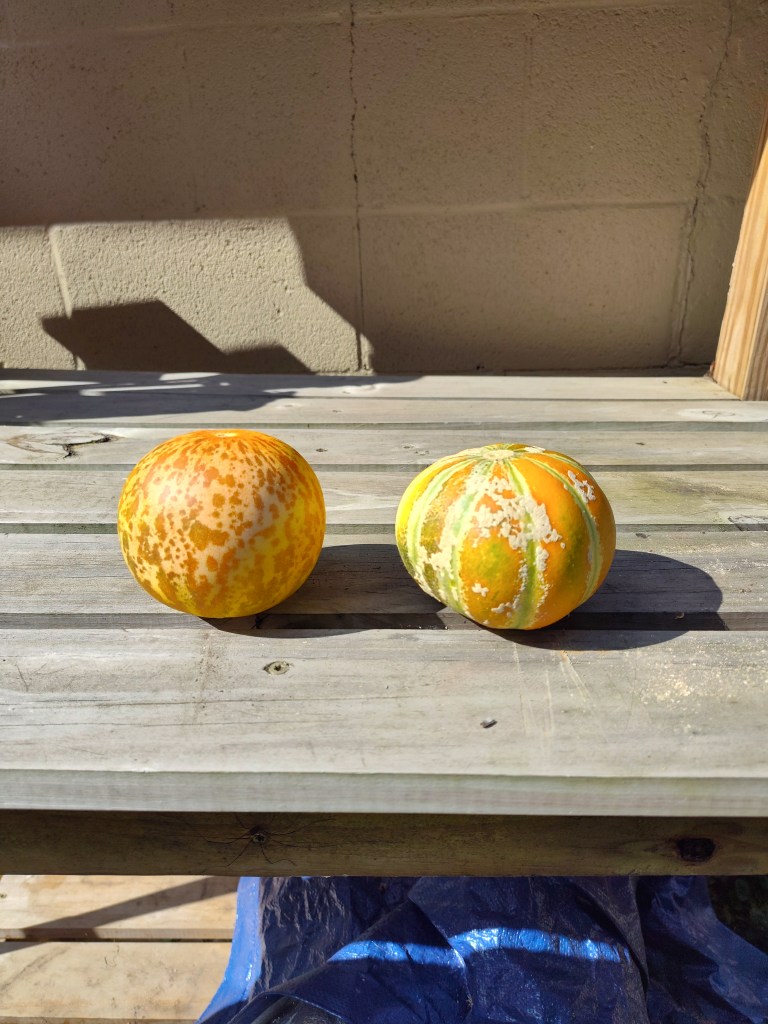
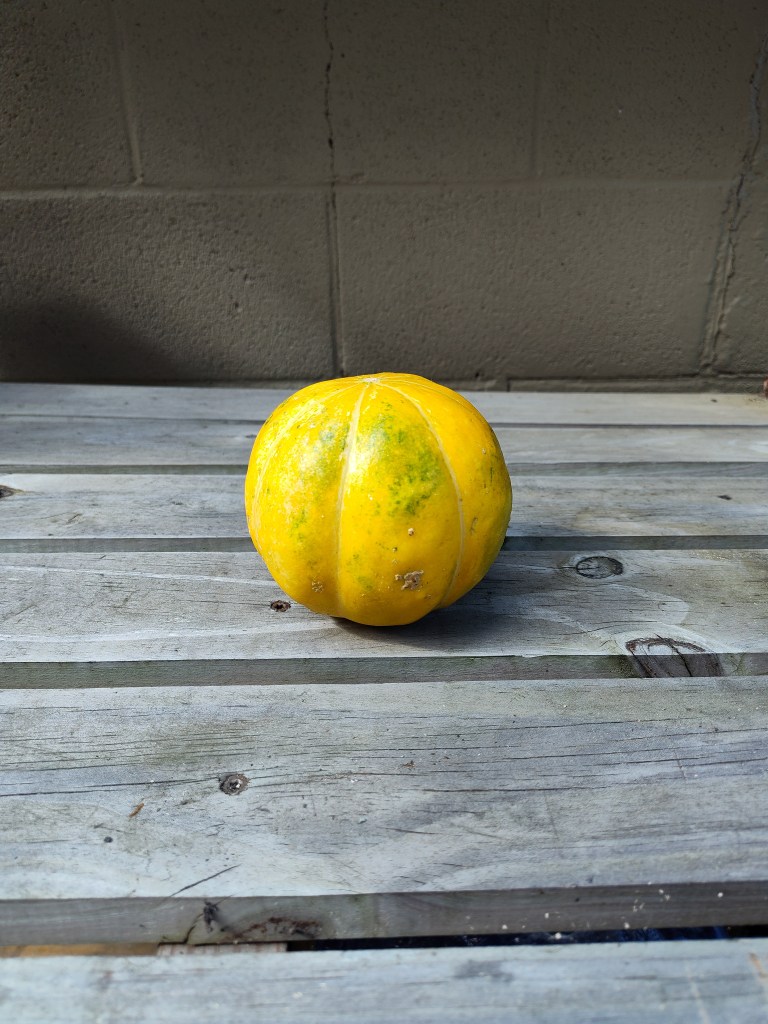
So, even as our other melons showed signs of ripening, I struggled to believe it. However, just as the seed descriptions said, our melons ripened out of the blue and seemingly overnight. The Noir des Carmes went from dark green to orange, the Tigger melon’s green and orange stripes became more vivid, and the Kajari’s green speckles turned into a fiery orange. The garden bed also became fragrant like the sweetest muskmelons you’ve ever smelled.

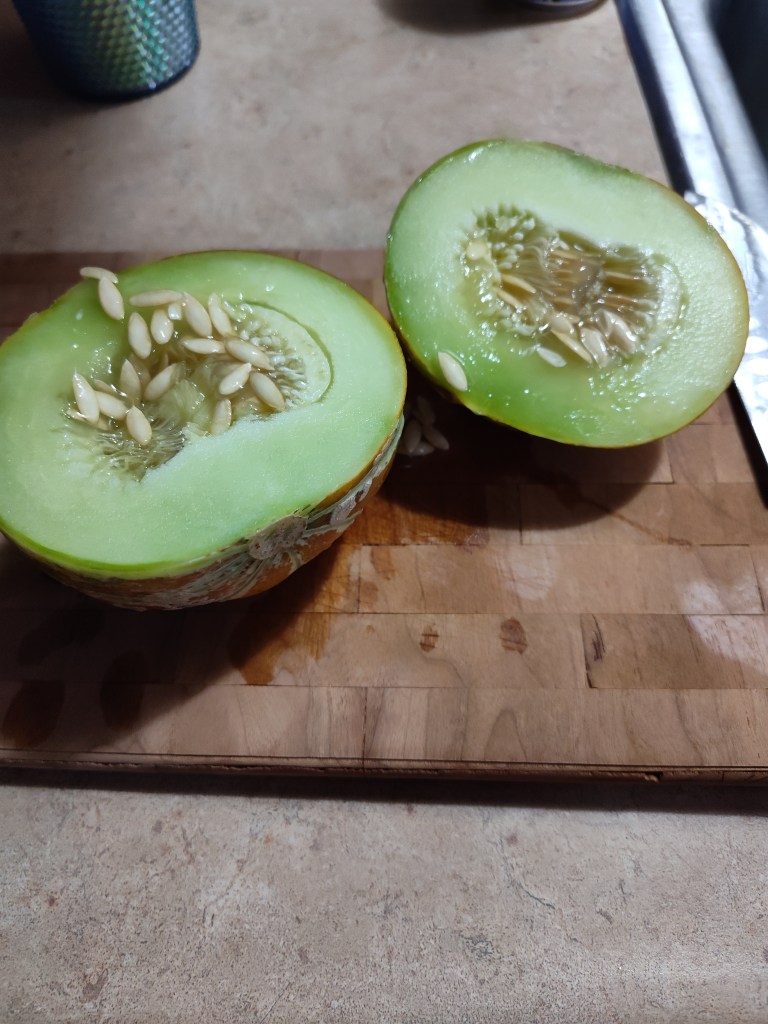
We harvested them on Wednesday, eating the Kajari melon that evening. You can’t imagine our relief when its interior was the vibrant green it was supposed to be. It was also juicy, and the smell was intoxicating. Magz scooped out the seeds and cut it into sections, and we immediately ate it. Its flavor was similar to a honeydew you find in grocery stores; however, it had a slightly creamy texture and was much sweeter. I think it may be the best melon I’ve ever eaten.
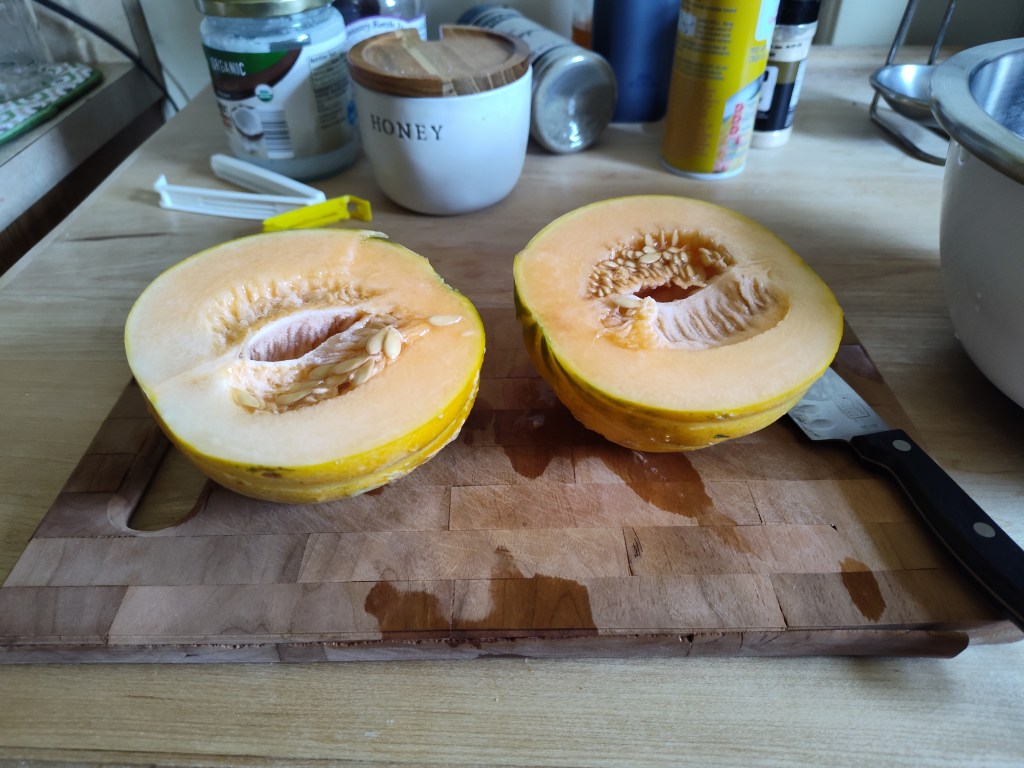
We then ate the Noir des Carmes at lunch on Friday. It too was ripe inside and looked like a “cantaloupe” that you buy in the store. It also smelled and tasted like one, but it wasn’t as sweet. I actually didn’t mind this, though, because sometimes store-bought “cantaloupes” are too sweet, as though they are overripe. Those “cantaloupes” also tend to be either too soft or too hard. It’s made me not the biggest fan of them. Instead, the Noir des Carmes had the perfect texture.

At the time of this writing, we only have the Tigger left to try, which I’m really excited for. It’s an Armenian variety that Baker Creek describes as “the most fragrant melon we have tried, with a rich, sweet, intoxicating aroma that will fill a room. The mild-tasting white flesh gets sweeter in dry climates. Small in size, the fruit weighs up to 1 lb.”

The success of our melons in this year’s garden means we will certainly grow them again next year. They’re great fun to watch grow, and it’s especially fun to see how the different varieties display their unique qualities. There are a few things we’ll do differently, though. One is keeping track of what each plant is. The second is giving more space to each plant. Our vines got intertwined, making it difficult to know what each vine was. Finally, we have to kill the grass. The grass made it really difficult to see the vines and also meant that the fruits were lying in wet grass at different points. Regardless of those areas of improvement, though, I’m incredibly proud of our melon plants. I loved growing corn and tomatoes, but seeing these fruits that are native to the Middle East thrive in Pennsylvania made me feel connected to a culture and population on the other side of the world.

Drafting Shortalls from Scratch

Did you know, that through simple measurements,  reference photos, and a few tools, you can draft your own clothes? Not just a t-shirt or a circle skirt, but big projects!

That’s how I have made some of my most ambitious projects, no patterns required!

What is Pattern Drafting?

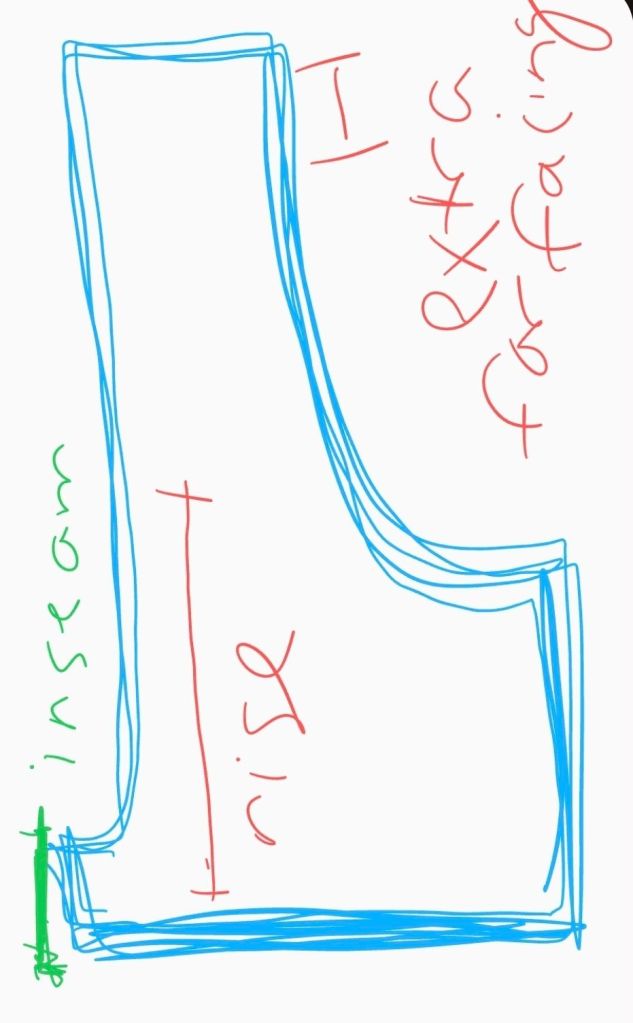
A pattern can be easily made with a tape measure, pencil, and the key places to measure. For my overalls, I was most concerned with the width of the bib, the length of the rise from the top of the bib to the crotch curve, the width of the hip from the center of your body to the end of your hip. You can also measure the circumference of your hips but I think having separate measurments for the front of the pants compared to the back of the pants. The back is usually wider.

For the overalls, I worked in four pieces. Front left, front right, back right, and back left. To do this I marked out the front left and front right on the fabric, accounting for the crotch seam which is part of the leg. I added a 2-3 inches to the width of the hip measurement of each of the four pieces to make the curve with my french curve.

When planning pants, keep in mind that you don’t need as much inseam as you think to make shorts. What you will need is a long rise because you can always cut more, so be cautious and double check the measurments of your rise.

Now for the bib, the top portion of the overalls, I plotted the width of the bib above the pants portion and with pencil I carefully drew a tapered curve upward. I cut this extra long to have excess fabric to fold over to make the facing. This fabric is like a lining for the top of the bib, the part you are most likely to see.

Always use pencil or a tailors chalk and take your time. Using a mock up fabric is a great idea to get the cut right. After repeating this for both front pieces, remember to adjust the width of the hip for the seat of your pants, all while remembering to account for the french curve line of the inseam.

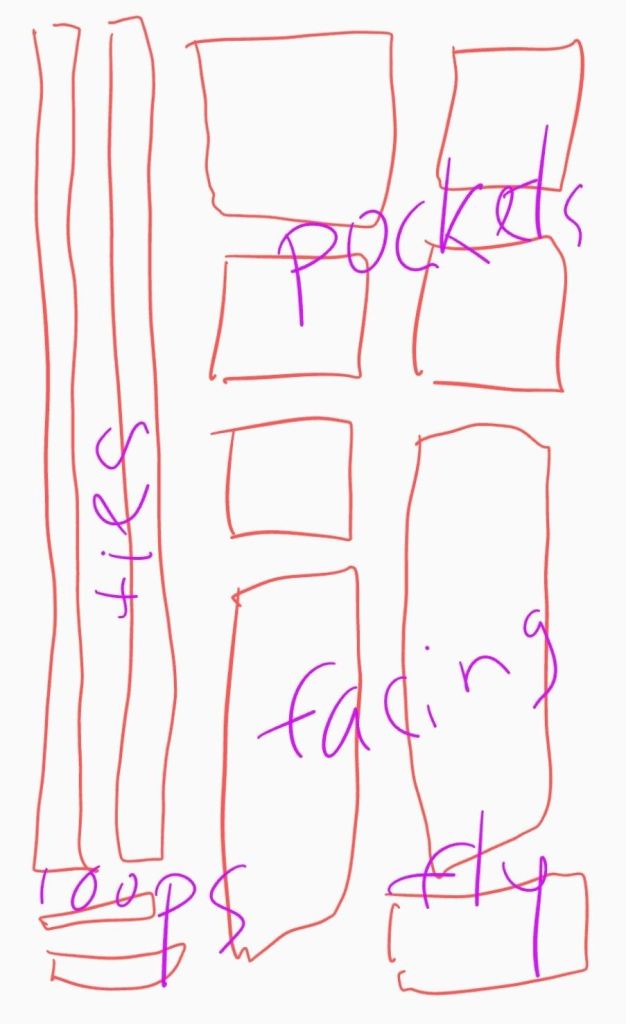
After cutting all for pieces you will need to set aside fabric for pockets, I added 5 to mine. A bib pocket, two side-front pockets, and two back pockets. You will need fabric for the straps, measure accordingly based on the height of the bib, over your shoulder and to the back bib, remembering to add more length to tie.

Next is scrap scavenging! You will need small pieces for the loops to tie the straps around on the front bib. This will call for two loops. You will also need bias tape sized pieces to finish the edges of the overalls on the bib. Finally, save some fabric for the button flies on either side of the overall legs to help you get in and out of the garment.

It’s a lot of information to sift through but I hope this small tutorial will help you sew overalls if you wish with free instructions. I will be following up with a second post that explains the order of operation, to make sense of all these pieces, to help these fabric pieces transform into a wearable garment you can enjoy!

Reflections From the Garden: Lessons Learned

With the garden wrapping up for the year and little happening on a weekly basis, I’ve decided to pause the weekly updates. There isn’t enough to write about without being redundant. I’ll continue to provide updates as vegetables ripen and grow, but in the meantime, I want to alter my weekly segment to be a Reflections From the Garden column. I want to use this column to go over things I learned or thought about while in the garden. Sometimes, it will be directly related to gardening, while other times, it may be focused on personal things. The first edition will be dedicated to some of the lessons I learned since spring.

Accepting When Things Don’t Work Perfectly

I was originally going to have a section called “Letting Go of Control,” but it felt too similar to this section. This year, I learned that gardening is something I found myself wanting to control at every level. I wanted to control the amount of rain and sun we got, the temperature, when plants germinated, when they should be transplanted, when to restart seeds, and how quickly we should start seeing fruit. I had everything organized and included on one of my spreadsheets. But the reality is that for all the work I put into the organizing and planning, it didn’t matter all that much. I can’t control the weather or temperature. Sometimes, seeds take longer than the packet says to germinate, which means giving them more time to sprout. I also can’t force starts outside just because the calendar says they should be in the ground by a certain date. Likewise, plants can take longer than expected to produce fruit and fully ripen.

In a garden, things are bound to not go to plan at times. There are more things out of our control than in our control. Plants will fail at every stage – germination, transplanting, fruiting, and ripening. Sometimes, it’s because we did something wrong, but other times, we can do everything right and it will still fail. And that’s okay. Letting go of outrageously high expectations and control leads to a more enjoyable experience. I wasn’t there at first, but I began to grasp it as the garden went on.

Have Fun

Gardening is a lot of work. I also set high expectations for things and find it easy to create endless to-do lists. In the garden, those lists included, tilling, seed starting, transplanting, weeding, watering, fertilizing, and on and on. Pretty soon, the garden was only work and no play. I stopped seeing it as a hobby I enjoyed and only viewed it as this thing that needed all my time and attention. I quit woodworking or doing my other hobbies. Eventually, I had to say “enough is enough.” Magz got me to refocus on all the fun that can be had in a garden. It’s a lot of fun seeing the growth of a plant as the days, weeks, and months progress. It’s also fun to see the different varieties of a vegetable present their unique qualities. Finally, it’s the most fun when it’s time to harvest ripe vegetables. It’s easy to get caught up in the work, to forever add new items to your to-do list. But hitting the “pause” button and focusing on why you wanted to garden in the first place is important. Gardening is a hobby for most of us, and hobbies are supposed to be fun.

Don’t Let it Drive You Mad

If you get focused on the success of your garden rather than the process, you will go crazy. Plants will look healthy for a couple of months, and out of nowhere, they’ll die. Fruits will develop on the plant, making you think that they’re going to reach maturity, only to wither and die off. We had that happen with numerous plants this year, including our ground cherries, spaghetti squash, and multiple tomato plants. We had a plant die off, while its neighbor of the same variety reached its full height and produced lots of fruit. They were in the same soil and experienced the same growing conditions. If you think about it too much, you’ll drive yourself mad. Instead, focus on the plants that do make it and continue to give them the best opportunity to succeed. That mindset change will lead to better results now and also help you have a better mindset.

Enjoying the Peace

In my first blog post, I wrote about how a garden provides a sense of home to me, and a home is supposed to be a peaceful place. It can be easy to forget how peaceful the garden is when we’re focused on the work required to make it happen. The sun and heat can feel oppressive, weeding can be back-breaking, and neighborhood noises can drown out the silence. Yet, if I make an effort to do less when it’s hot and sunny, listen to music or talk to God while weeding, and focus on the sounds of the garden instead of my surroundings, I can become lost in the tranquility. There are a lot of sounds in the garden. You’ll hear bees buzzing as they pollinate your plants, crickets chirping in the grass, and the plants rustling in the breeze. All of those sounds are sources of peace.

Hard Work Is Worth It

Prior to starting our garden, I wrote a lot about how much hard work is required to garden. That is very true. I also said that the hard work is worth it because you get to grow your own food for the summer, and potentially longer if you preserve it. But before you actually see it pay off, you don’t actually know that the hard work will be worth it. Now, with the garden wrapping up for the year, I can say for certain that the hard work was worth it. Being able to eat veggies out of the garden this summer made the hard work pay off. This wasn’t so much of a new lesson learned but more confirmation of what I thought would happen.

Create a website or blog at WordPress.com

Up ↑