
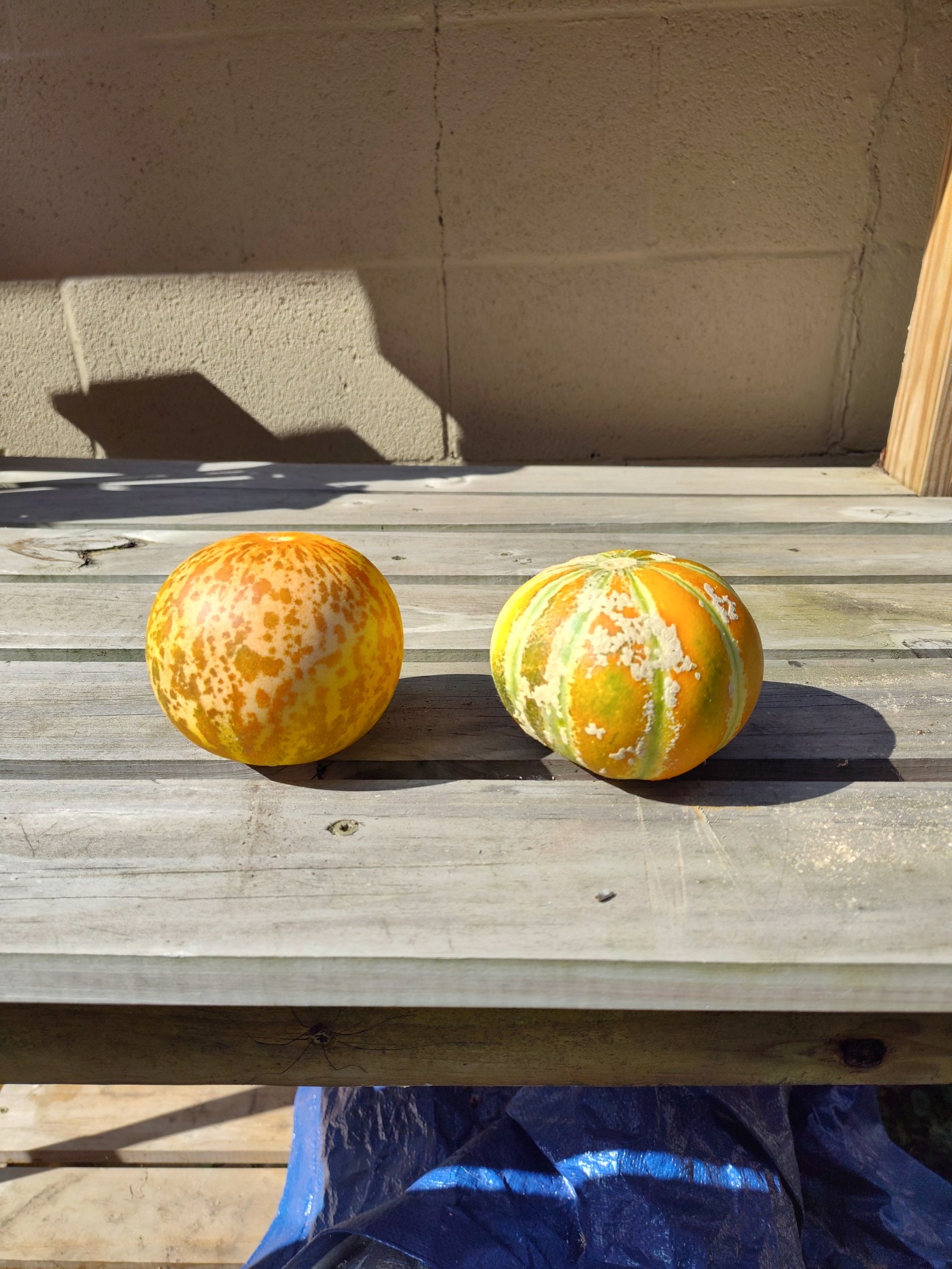
Last week, we harvested three melons out of the garden, one each of our Kajari, Tigger, and Noir des Carmes. Harvesting them instantly became the proudest I’ve been of the garden this year. Growing melons in Pennsylvania isn’t easy. My dad tried it when I was a kid and never had success. Magz and I tried it with our container garden. We had some success, but only harvested one fruit from each plant.
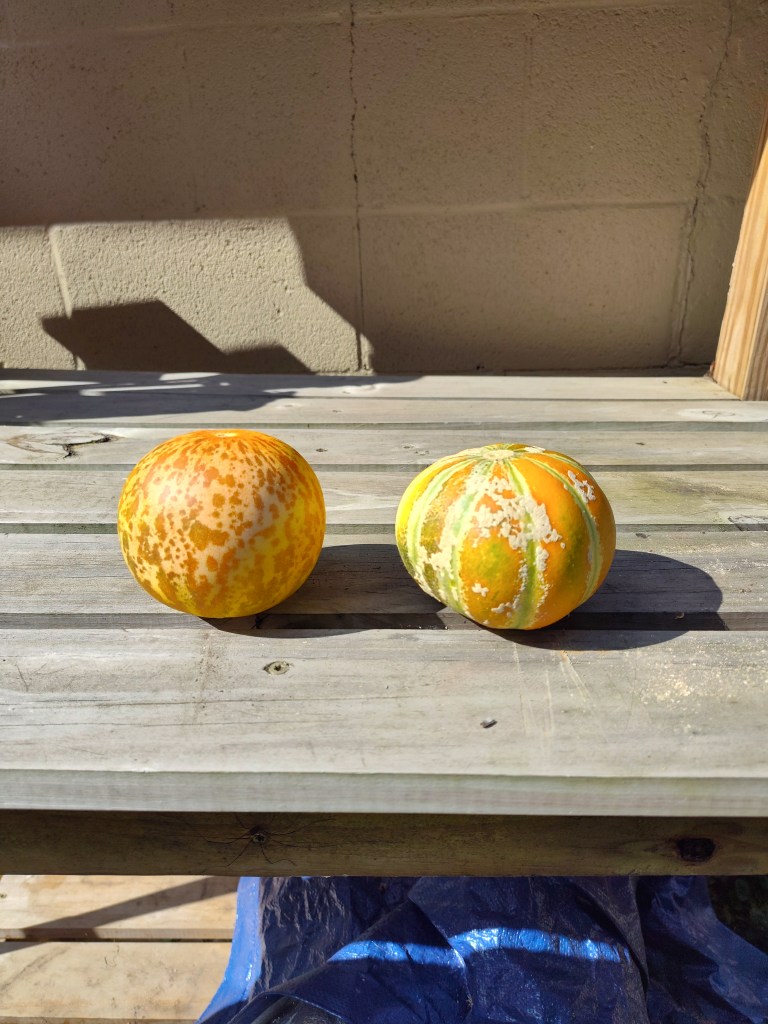
We knew the struggles of growing melons here when we bought the seeds, but the potential of growing unique varieties that we’ll never find in stores was too enticing. We bought the seeds, prepped the ground as best we could, and watched as the plants quickly germinated, and the vines took over our garden bed. We quickly had blossoms, and the fruit soon followed. The melons continued to grow and approached their full size, but I still didn’t believe that they would ripen. That’s where I’ve seen melons fail.
It’s also where our Ali Baba watermelon stopped growing this year. The lone fruit that we had was no longer growing in size and had the yellow ground spot that is typically an indicator of a watermelon’s ripeness. We harvested it, thinking it was fully mature, but unfortunately, the flesh was still white instead of pink.
So, even as our other melons showed signs of ripening, I struggled to believe it. However, just as the seed descriptions said, our melons ripened out of the blue and seemingly overnight. The Noir des Carmes went from dark green to orange, the Tigger melon’s green and orange stripes became more vivid, and the Kajari’s green speckles turned into a fiery orange. The garden bed also became fragrant like the sweetest muskmelons you’ve ever smelled.
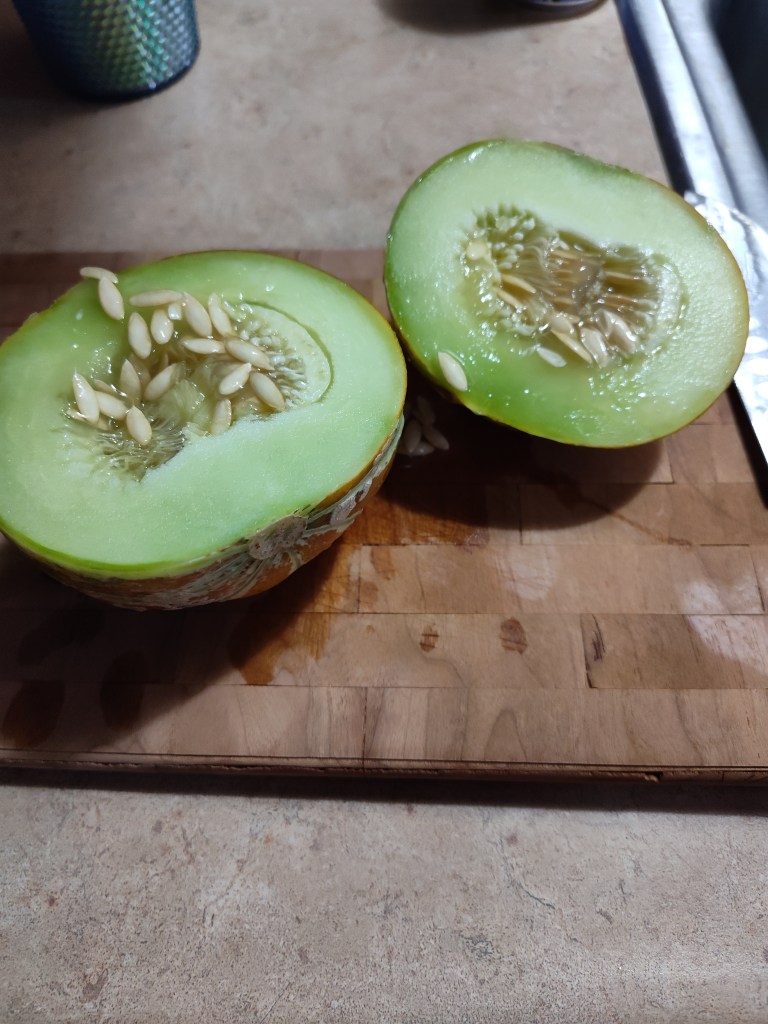
We harvested them on Wednesday, eating the Kajari melon that evening. You can’t imagine our relief when its interior was the vibrant green it was supposed to be. It was also juicy, and the smell was intoxicating. Magz scooped out the seeds and cut it into sections, and we immediately ate it. Its flavor was similar to a honeydew you find in grocery stores; however, it had a slightly creamy texture and was much sweeter. I think it may be the best melon I’ve ever eaten.
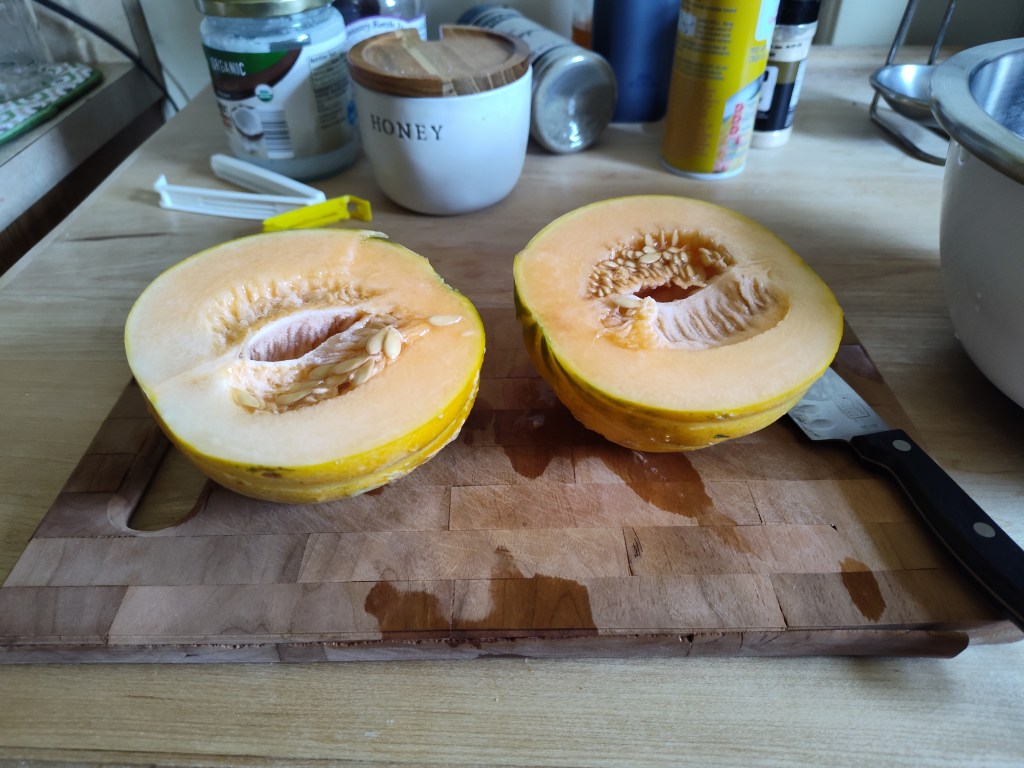
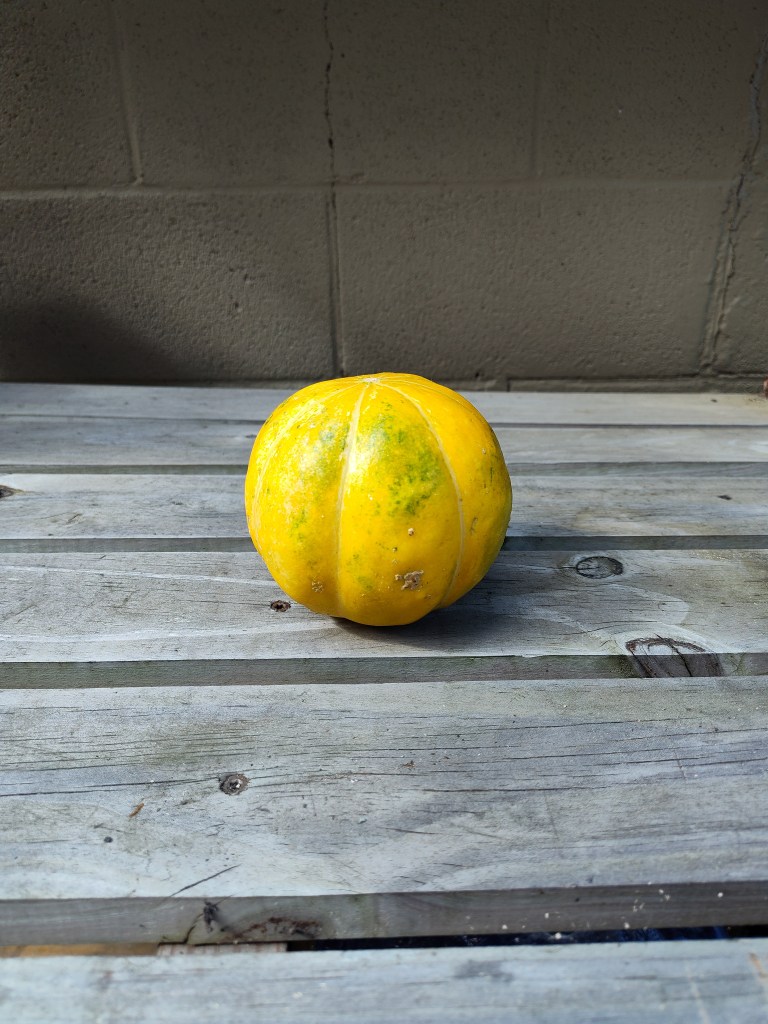
We then ate the Noir des Carmes at lunch on Friday. It too was ripe inside and looked like a “cantaloupe” that you buy in the store. It also smelled and tasted like one, but it wasn’t as sweet. I actually didn’t mind this, though, because sometimes store-bought “cantaloupes” are too sweet, as though they are overripe. Those “cantaloupes” also tend to be either too soft or too hard. It’s made me not the biggest fan of them. Instead, the Noir des Carmes had the perfect texture.
At the time of this writing, we only have the Tigger left to try, which I’m really excited for. It’s an Armenian variety that Baker Creek describes as “the most fragrant melon we have tried, with a rich, sweet, intoxicating aroma that will fill a room. The mild-tasting white flesh gets sweeter in dry climates. Small in size, the fruit weighs up to 1 lb.”
The success of our melons in this year’s garden means we will certainly grow them again next year. They’re great fun to watch grow, and it’s especially fun to see how the different varieties display their unique qualities. There are a few things we’ll do differently, though. One is keeping track of what each plant is. The second is giving more space to each plant. Our vines got intertwined, making it difficult to know what each vine was. Finally, we have to kill the grass. The grass made it really difficult to see the vines and also meant that the fruits were lying in wet grass at different points. Regardless of those areas of improvement, though, I’m incredibly proud of our melon plants. I loved growing corn and tomatoes, but seeing these fruits that are native to the Middle East thrive in Pennsylvania made me feel connected to a culture and population on the other side of the world.
 One Rabbit Riot
Leave a comment