It drifts in, like a high pressure system. Clouds stratify, and all seems well. We don’t know that the pallid tone maybe the one that may drain the life from us, until we are as pale as a corpse.
Apathy. The silent assassin that numbs the senses to right and wrong. A comfortable sweater of indifference to our worries, we check out. But it doesn’t just numb us to what hurts us, it numbs us to all things, even joy. Disassociating will not make what is weighing on you better. Choosing to be a part of the background, to escape the foreground and its perils, is not going to rescue your mind from the monsters waging war. Because that is what apathy does, it makes you forget that you are making a choice not to care, and makes you feel like the world is victimizing you, when instead, this path you chose, yourself.
Fear. It’s powerful. It motivates us like nothing else, because no matter what is going right in our life, the looming fear of our mortality and of the inescapable henchman named pain will get us in the end. There is nothing that can change that. It eats at us, not knowing when the bad will come. Fear isolates. Fear keeps us closed off in suburbs. Fear drives a big SUV, that is 6 feet off the ground, in a tank that blocks from view the child you are about to run over. Fear, closes off communities from connection, to protect us from the unknown devil living next door. Paranoia holds us at arms length. The faces we see everyday, can’t be trusted. Fear will keep us safe. Fear is gerrymandering a map to neutralize the unknown, to grasp at the concept of control, before the phantom slips through our fingers. Fear censors history, because it is too weak to look at the failings of our ancestors.
I’ve seen fear and apathy take good people and turn them into feckless sycophants to the current guard. I’ve seen money and security divide us, when connection would save us. And now, I’ve witnessed first hand how easy people are swayed, and it sickens me, even a trusted friend can fall to its charisma. I’ve now seen first hand, the cleverness of fear and apathy to destroy compassion, moral truth, and justice for the chance to be saved. For the sake of the job. Comfort, instead of doing what is right. I always wondered why people in the past let dictators and evil groups turn their necks to ignore genocide and racism, but heck, even those you think are good, will trade it all for a coin. We are fallen, flawed humans, with a penchant for destruction, war, and hate. I don’t want to see another good one fall prey to the evil of the shadows, because they are in pain.
It’s ironic how we have been too arrogant in my culture to believe we could not fall as far as those of the past. We have progressed past those silly people of yore. Too long have ignored the power of an individualistic culture and problematic policies which seek to isolate, and haughtily believed would not get us one day.
Apathy and Fear. Don’t drink from their cup. We must cling to empathy, even on the days the weight of the world feels like it is going to break us in half. It wants to but it can’t because love conquers all things. Fear is a liar. It spends its time creating shadows that loom above, but will always disappear in the light. It’s not easy to care. But it is important that we stay the course in love, in empathy, and refuse let go of ethics. For without those, what do we have other than a mortal bag of bones and a never ending hamster wheel?
The biggest trend I think I’ve seen this year is the sentiment that everything feels boring right now. Whether it is fashion, film, or books, the art of storytelling is supposedly dead. This phenomenon has even crept into my unpredictable and exciting world of K-pop, and up until yesterday, I’d say I agreed. But as I sit here, I would like to put forth a different thesis.
Escapism from the Super Massive Blackhole
What if everything feels boring because you are running on empty? This year was the first time since discovering K-pop in 2022 that I felt bored and indifferent to my favorite bands. Some of this was due to outside forces beyond my control, like controversies, military service, and straight-up evil in the case of Taeil. Yet, some of this boredom, I believe, was caused by how much I was leaning on these safe spaces to find joy when nothing felt joyful or safe. There has been a constant pulse of uncertainty, like tectonic tremors, making us all question the point of it all. There is such a dreary air. A hopelessness, especially in people my age and younger, who are not able to reach milestones due to broken systems. Since I discovered the band Stray Kids, I run to their music for a safe place. But in 2025, I had stretches of time where even SKZ had no appeal. I had listened to every release over and over again until even their most addictive tracks had no appeal. I couldn’t believe how much I was craving a new album until a week before Karma released. As the week progressed, I could feel a hunger for a happy distraction. This year has been the first time my usual pick-me-ups have felt numb, and I wonder if one prong of this boredom we seem to be feeling isn’t coming from this exact situation.
To be honest, I think this could be why K-pop Demon Hunters exploded in popularity; it was new and fun when things seemed darker than ever. Same thing with Twice and their Lollapalooza performance, it was a night where everything felt normal for a second.
Have I Entertained You?
This attention economy is reminding me of that iconic line from Gladiator, and I don’t like what it is doing to art, music, storytelling, fashion, all of it. There is no room to reflect and craft something beautiful. We are pushing things too fast. I’ve been reflecting on this for a while. I see commentary on trends, relating to fashion, which usually goes something like – there is nothing new, everything and nothing is trending, yada, yada, yada. Sprinkle in a bit about clothing quality from the past, and the brain rot of the algorithm, which is killing creativity and subcultures because of a curated vitality. Like it’s a beast unleashed upon modernity, instead of stopping to think critically about it.
It’s obvious after some consideration that making things for vitality is not the same as making something to stand the test of time. Modern romance novels are being created for TikTok vitality first, and quickly, to keep up with the lazy decision of publishing houses to invest in AI over true writers. We blame the current author pool for a lack of creativity instead of holding publishing houses accountable for ruining their reputation through unethical practices. Because, truly, as an author, why would you feel inspired to create a story like Jane Austen when this is the current state of publishing? You could make a true work of art, and be rejected because they would rather steal work to create the same story through AI, or the publisher doesn’t want to take a chance on a good story when the algorithm is fickle and shallow.
Boring People Are Bored
AI is doing exactly what I expected; lazy people are becoming lazier, except that it is currently being rewarded. We used to know how to entertain ourselves. We used to know how to create, enjoy, and take pleasure in things, but I think AI is a snare that is making people boring, and it doesn’t have to. AI is an easy way out of daily life. It can be a friend, a relationship you don’t have to nurture, but is hollow. It can create art, but you will have no artistic skill of your own as a result. It can write you a book, without telling a story. It can create a music video, like JUMP for Blackpink, without any effort from the actual talent, and create a nightmare image of Rose with Jungkook’s facial structure. Do you see the pattern? It’s like cheating your way through school; it produces nothing and wastes precious resources, like time, or in the case of AI, drinking water and electricity.
Cringe > Innovation
What I have seen as the most flagrant accusation of boredom has been the dissonance of innovation and cringe. Let’s take, for example, Ceremony. It’s a song that has no chorus until the end of the song. It’s layered, has high production value, and features something new for Stray Kids and boy band offerings. But what do I see online? It’s awful. Stray Kids are braggy and loud, no talent. K-pop is boring; everything sounds the same. Except, Stray Kids, it’s too experimental. No wait, it sounds like all their other songs, yawn….etc. How can we have the audacity to complain about being bored while we punish bands for taking risks? It’s not just Stray Kids, I have seen similar criticism being launched at Nmixx, NCT, Ateez, Twice, Aespa…the list goes on.
It’s no different when it comes to the world of fiber arts. People complain about how crochet and knitting are getting boring and want new things to make, because everyone is knitting the same things, yet don’t branch out from a few massive pattern makers, like Sari Noorland, Petite Knit, and Andrea Mowry, to name a few. There are so many smaller creators crafting joyful patterns that would disrupt the slump, but no one wants to stand out these days.
I think as this year enters its final act, we should decide what we value more: being entertained? Or being authentic? Do you want to truly discover something new? Do you want to dig deeper for something fresh? It requires us to act, to search, and to participate, because we are allowing ourselves to become boring people, and it is spreading across culture, where it will stay unless we choose to be interesting again. I get it. This year has been demoralizing, and it’s made me feel like giving up many times, but there is always a reason to keep going. What if your big idea is the thing that makes this dull and dreary world sparkle again? You could be the change we need, so stop scrolling and find something that ignites passion in your heart once again!
In this week’s update, we’ve had a meal made entirely from vegetables out of the garden. We’re also starting to notice that summer is coming to an end and fall is on the horizon. This week also gave us multiple opportunities to share produce from our garden with family and friends, which is really what it’s all about. Finally, what is this edition’s Seed of the Week? Let’s dive in.
Eating a Full Meal From the Garden
I had several under-the-surface goals for our garden this year, and any future gardens for that matter. One was to preserve food for winter. That hasn’t happened yet but still could happen with our squash and pumpkins. Another was to share food with our neighbors and family members. More on that in the next section. A third goal was to have meals that were entirely sourced from our garden. Throughout the summer, we’ve had meals that were mostly from the garden with the exception of a protein. In these meals, the vegetables were often the side dish or used to complement the protein rather than serving as the star. We changed that this past week when we made homemade pasta sauce on the fly and ate it on spaghetti.
We used whatever tomatoes we had inside, so there were multiple varieties, including San Marzano paste tomatoes, Mushroom Basket tomatoes, and Queen Aliquippa tomatoes. With those tomatoes, some jarred garlic, sugar, oil, salt, pepper, and dried oregano, we had a great start. When it cooked down, we used an immersion blender to get it smooth, added a can of tomato paste to thicken it, and added some fresh basil from the garden. It resulted in a delicious sauce that was well-balanced. It wasn’t too acidic or sweet. It was savory and had me craving it the rest of the night and the next morning until we had the leftovers for lunch. Homemade sauce on perfectly al dente pasta is a real treat. It is wild how much better homemade sauce is compared to the jarred version. Granted, it wasn’t 100 percent from the garden. We didn’t grow garlic or oregano, and we had to use a can of store-bought tomato paste, but it was almost entirely all garden ingredients.
I had hoped that we would have enough ripe paste tomatoes to make and can pasta sauce for the winter, but that didn’t happen, which is okay. It’s a goal to have for next year’s garden, and we now have an excellent flavor profile to target when we do.
Sharing Food With Those Around Us
Living in community means helping those around us when an opportunity arises. That can mean lending someone a hand with shoveling snow, letting them have a cup of flour that they don’t have, or sharing the blessings we have. We were able to do that last week, and it touched our hearts. We shared some beans, eggplants, squash, and cucumbers with our elderly neighbor across the street. She is the same neighbor who gave us plants early in the season. We also gave our next-door neighbors some zucchini the next day. They are the neighbors whom we’ve regularly shared food with when we’ve had excess and were outside at the same time. These neighbors are also retired, and ever since we in America (in our infinite wisdom) have cut funding to social welfare programs that give food to the needy, Magz and I’ve felt led to help those around us even more than we did before. So, being able to bless those around us with the blessings that God has granted us is what it’s all about. We got a little taste of that this year and only want to do that more with next year’s garden.
This weekend, Magz’ parents and a family friend who was in town from Florida visited, and we were able to send them home with tomatoes, jarred applesauce, and baby bananas that we bought. The family friend hadn’t seen our house or garden yet and really wanted to visit before the garden was done for the season.
Fall Is on the Horizon
After a hot, sunny, and long summer, the weather and environment are starting to change. The 7-day forecast has nighttime lows in the 40s, the humidity has started to dissipate, and we’re beginning to have a fall sky. If you don’t have autumn where you are, the sky looks different in autumn than it does at any other time of the year. I’m not entirely sure why, but the sky has a slightly warmer tone than it has in spring and summer. It’s often a bit cloudy, and if there’s a high-pressure system in the atmosphere, you can see the cirrus and cirrocumulus clouds far off in the distance. While that cloud system happens in summer too, it’s most common in autumn. It’s something I’ve always looked forward to after a long summer in the same way we yearn for the first warm spring day after winter. An autumn sky is associated with chilly mornings and evenings, flannels, jackets, jeans, football (American), college, falling leaves, walks, pumpkins, apples, cider, and hot chocolate. It’s the best time of the year.
For the garden, it means that the end is approaching, which is bittersweet. It’s sad that we’ll no longer have fresh vegetables in the garden or be able to see new fruits ripening on a daily basis. At the same time, though, it will be nice to let the ground and our bodies rest. Our garden was a lot of work this year, and I’m incredibly proud of all that we’ve accomplished. It will be nice to rest, prepare the soil for next year, reflect, and plan next year’s garden. We’re seeing that the end of the garden is approaching. Our cucumber plants died off two weeks ago, and our summer squashes are no longer producing fruit or growing as quickly as they once did. The corn stalks are beginning to dry out, and the tomato plants don’t have the same vibrant green leaves they once did. And yet, other plants are thriving. Our winter squash and pumpkins continue to expand their vines, and we see new fruits or measurable growth each day.
As I wrote in this week’s post, A Parade of Pumpkins, it’s fun to see the different varieties show their different shapes, sizes, and colors. That will continue to be the case as summer winds down and autumn arrives. I was unsure how I’d feel at the end of summer this year, but I’m surprised that I’m feeling a little melancholy and sad. The garden has been a large presence in our lives since April, and this garden will never exist again. Each garden has unique characteristics that define it. We could grow the same plants in the same beds next year (we won’t) and have completely different results. So, we’ll be saying goodbye to something that we’ll never have again, but at the same time, we’ll be saying hello to our favorite season (autumn) and the early phases of next year’s garden. These are emotions I never thought I’d feel or explore.
Notes From the Garden
There aren’t a lot of notes from the garden at this stage, but here are a few updates:
We got a big harvest from the late planting of bush beans that I sowed in June. These were sown after the first batch of bush beans failed. True to their name, these Provider beans came through, and we were able to harvest pods from each plant for a total of a quart. We ate them on Saturday night by steaming them and serving them with butter, salt, and pepper. They were delicious.
We continue to harvest tomatillos as they ripen.
Our paste tomatoes also continue to ripen, but they aren’t ripening all at the same time, which is sad. However, we’ll still be able to make at least one more meal of homemade sauce, which I’ll be looking forward to.
We pulled some of our corn earlier than we wanted to because deer got through our fence, damaged some of the stalks, and ate a bunch of the ears. We’ll learn from this experience and mistake next year.
We’ve harvested what shelling beans we’ve had ripen and dry on the plant. It’s been a struggle with these beans because of the grass, but we’ve pulled about 10 pods that have dried beans in them. The beans are stunning and look identical to the bags of dry beans you can buy in stores.
Dried Jamapa black beans
Seed of the Week
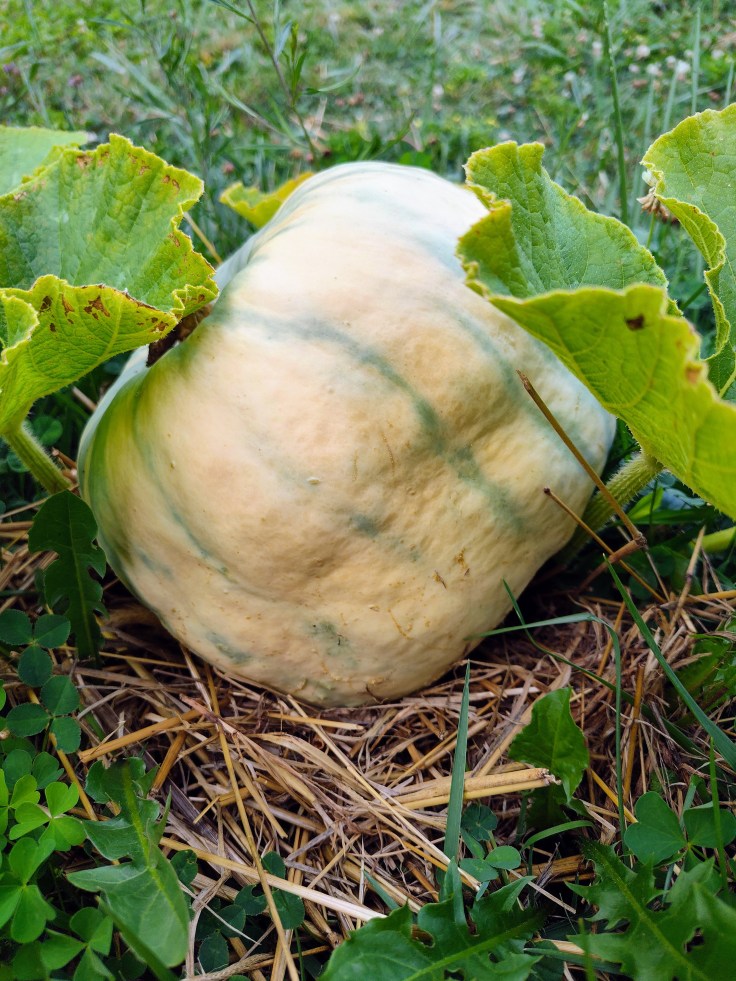
This week, I’m talking about the New England Sugar Pie Pumpkin. This pumpkin variety is the quintessential pie-making pumpkin. It produces many 4-5-pound fruits with sweet flesh that isn’t stringy. Our seeds came from Baker Creek. It’s an heirloom that dates back to the American Civil War and, according to Fedco Seeds, was likely developed out of the Connecticut Field Pumpkin strain. Our plants are growing very well. We didn’t sow them until early July, and they have taken off, with vines sprawling all over the bed and multiple fruits on each vine. We’re so excited about the possibility of using them to make pumpkin treats or to carve.
New England Sugar Pie Pumpkin
If you’re in the Northern Hemisphere, is your garden wrapping up for the season? Or, if you’re in the Southern Hemisphere, have you started to plan your garden?
Just a brief Friday post to end the week and show all the different shapes, sizes, and colors that pumpkins, squashes, and melons come in.
New England Sugar Pie Pumpkin
A classic pumpkin that is commonly used in baked goods due to its sweetness. These pumpkins stay relatively small (less than 5 pounds), and the one shown in the picture below likely won’t grow much bigger. These will ripen to the classic orange color that we all know.
New England Sugar Pie Pumpkin
Seminole Pumpkin
This is the most recent of our pumpkins/squash to produce identifiable fruits. The Seminole pumpkin is green throughout much of its growing process before ripening to a tan/buff color. These won’t get much bigger than they are now – about 6 inches in diameter.
Seminole Pumpkin
Candy Roaster Melon Winter Squash
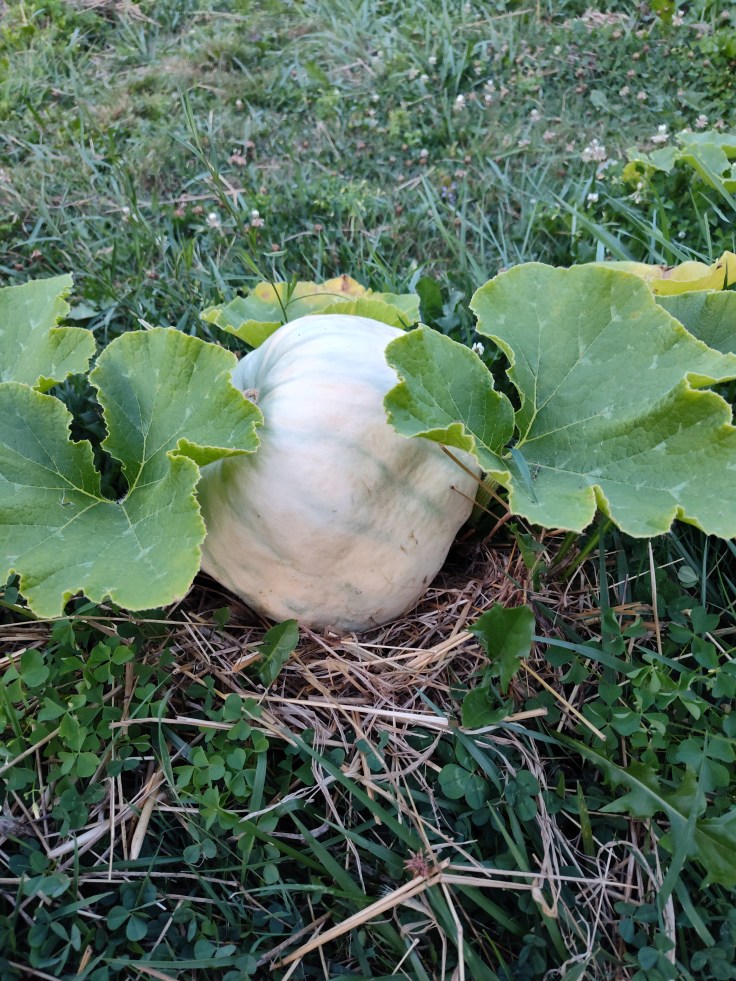
This Candy Roaster Melon is easily the largest of our fruits to this point. It’s currently about the size of a basketball. This variety can range from 6 to 30 pounds. Ours is probably somewhere in the middle of that range. When fully ripe, it will be a vibrant orange color with green stripes.
Candy Roaster Melon
Ali Baba Watermelon
We have several watermelons on the vine, but this one is the largest. It’s about the size of a college-size football and could reach 30 pounds. Unlike other varieties that have a dark green color, the Ali Baba maintains a light green rind the entire time.
Ali Baba Watermelon
Noir des Carmes Cantaloupe
I’ve shared pictures of this exact fruit multiple times on the blog, but it’s beginning to change its appearance, an indication that it’s ripening. This won’t have the light tan “webbed” rind that the fruit we call cantaloupe in North America has. Instead, this will ripen to a yellow and green color. It has likely reached full size.
Noir Des Carmes
Tigger Melon
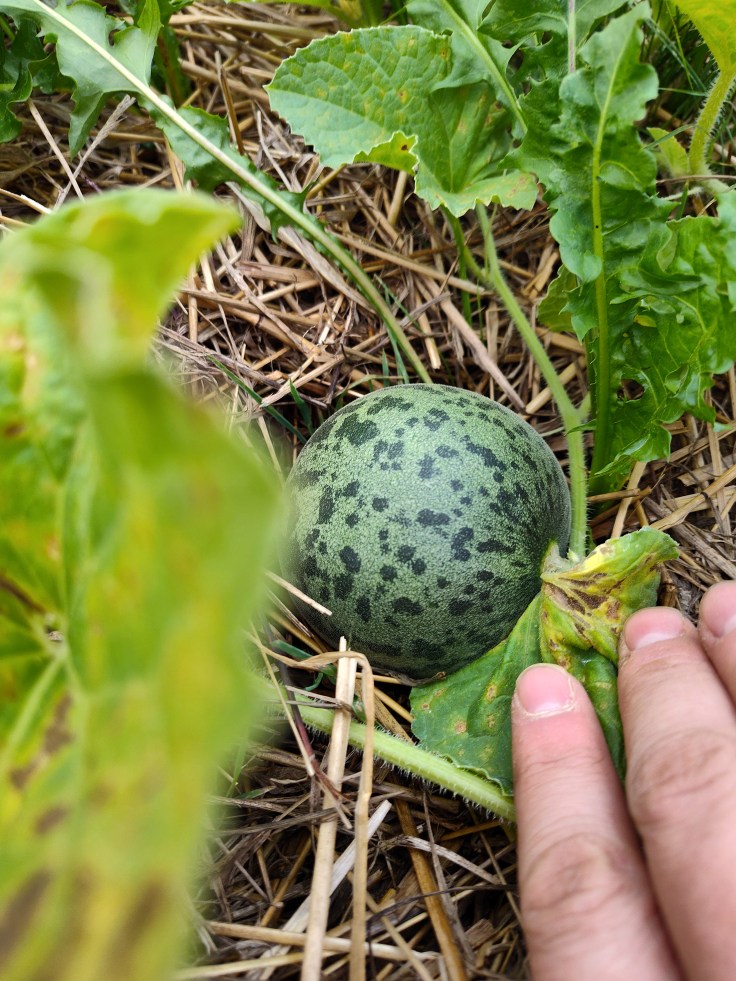
This is another melon I’ve shown a lot on the blog. This Tigger melon will become a beautiful orange color with white speckles or zig-zag stripes when it’s ripe. These small fruits only weigh about a pound when fully grown, but the plants produce plenty of fruit.
Tigger Melon
Red Kuri (Hokkaido) Winter Squash
Part of our late batch of squash, the Red Kuri is a winter squash but will become vibrant orange like a pumpkin when it’s ripe. This squash is on the smaller side at 3-4 pounds, but grows well in cool climates.
Red Kuri (Hokkaido) Squash
There you have it. These are almost all of the pumpkin/squash/melon varieties we have growing. It’s so fun to see all the different shapes and colors that they take, not to mention the sizes they can be when fully ripe. Do you have a favorite pumpkin or squash to grow and eat?
A very silly but confounding thing happened yesterday as I was in the homestretch of my current crochet project. It is something that has never happened to me before. I was stumped. What happened you ask?
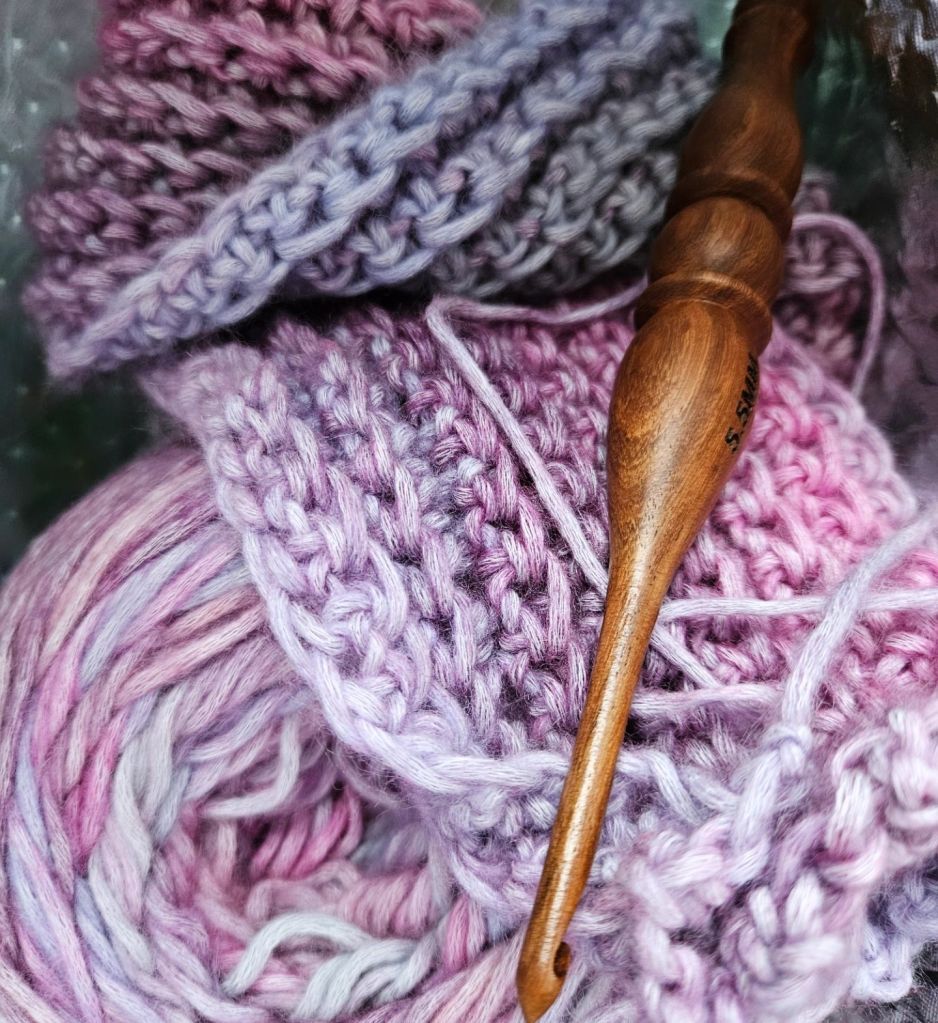
Well, I’m crocheting my first cardigan and to do this I decided to use Caron Blossom Cakes, specifically three cakes in the colorway Blossom. It’s a lovely tonal yarn with hints of sakura, periwinkle, and hydrangea blooms.
This fiber is one of the first affordable yarns to bring me joy in this confusing time of losing Joann. (Thankfully, Big Twist has been saved!) The Caron Cakes were the the buzz of Michael’s, drawing me in for a hope that I’d find a new favorite, and truly I have. This yarn is stunning. Soft to the touch, a half and half blend of cotton and acrylic. It never splits due to its structure which has made my first big project with a crochet hook a delightful experience.
When I first bought the yarn I was being cautious, purchasing the yarn on a bogo sale. I bought 3 cakes containing 481 yards of worsted weight yarn – enough for a sweater. Honestly this was far too scant of a amount, as time will prove. My intial plan was to make a skirt, but as it usually goes will my projects, I call an audible and make something new.
This should have been enough yarn, but I made the decision to oversize this cardigan and pick up more yarn if neccessary – and it was! Yesterday, I finished the body of the cardigan and began my final steps – the sleeves. To my shock I realized, the body panels had consumed 1 2/3 of the cakes. Leaving 1 1/3 cakes left for the sleeves, and these sleeves were going to be long. Much longer than I planned!
I usually knit my sweaters with a drop shoulder to shorten the sleeve length I have to knit because sleeves are so boring to knit! And they eat up yarn beyond my expectation everytime. To my horror, the sleeves were inset, not off the shoulder!
Not only would I have to knit the whole length, oversized, but I would need to using my new crochet skills to employ shoulder shaping – something I still get stuck on knitting. I quickly pulled up the yarn on my phone and was hit with a one-two-three punch – Blossom was out of stock, it was a Michael’s exclusive, and it is discontinued!
I was stunned! Like how do all those things happen right as I ran put of yarn?! 😲
I’ve been knitting since 2013, consistently since 2020 and I have never had a yarn disappear like this. On top of losing Sully last week, I was spiraling. I always have a plan for my knits, a yarn back up plan to piece in yarn if needed, but this project I wanted to be special. All in one color, like a “real” fiber artist. I was putting far too much pressure on this garment.
I’ve seen so many small businesses and artists this week, speak out about how the tariffs are effecting their businesses. Some are seeing 50% of their income being held hostage as the new rules are unclear. It’s left this dark, frustrating haze in my mind, like we’re in the final act of a Totally Spies episode and the evil genius might win.
I went to my stash and found that it was not what I thought it was either. I had a stash of final Joann yarn that I bought almost a year ago, left in my closet after the news with colors I didn’t remember and with less skeins than I recalled. Yeah it was, another pothole in the road. But dang, what is the point of creativity if you give up?
Some of the most beautiful garments were made with limitations. Why can’t I am for such success? I create on a budget, and I enjoy being a scrappy fiber artist – why change my approach now just because August has been heavy? Never give up!
In this week’s update, we have been harvesting a ton of vegetables from the garden and have started having meals comprised entirely of things we grew. And, because it’s mid-August, some of our less heat-tolerant plants have started to die off for the year, relieving some of my concerns. However, just because those plants are dying off doesn’t mean the garden is done for the year. Quite the contrary, as we are officially pumpkin (and melon and squash) growers. Let’s dive in!
Meals Entirely From the Garden
A goal I had for this year’s garden was to have enough healthy and productive plants that we would be able to have meals entirely from the garden. Thankfully, we’ve achieved that goal. For a few weeks, we’ve been eating meals where only the meat and carb portions of meals have been store-bought. However, on Saturday, we had a meal that consisted of vegetables we grew.
A one-day vegetable harvest
The meal was a deliciously simple combination of White Scallop summer squash, which we started from seed, tomatoes, and fresh basil. These were sautéed in a pan with oil and seasoning. The result was tender veggies that sat in a broth (it was thinner than a sauce) that tasted great with butter bread dipped in it. Another unique way we used our veggies was in burritos. We cooked chicken, but instead of having rice, we roasted summer squash and beans and boiled a few ears of corn. They were some of the freshest and complex burritos I’ve ever eaten. In the future, after the growing season is done, I’m going to write a post detailing some of the ways we ate out of the garden.
Plants Are Starting to Die Off
I’ve been noticing that our cucumber and early-season squash plants have been yellowing and looking wilted in recent weeks. Concerned, I speculated that the cause was a lack of nutrients, underwatering, or a pest/disease issue. Unfortunately, nothing I did led to any improvement. Finally, on the r/gardening Subreddit, another gardener was having the same issues and looking for help. The consensus is that it’s mid-August, which means that the cucumber plants are reaching the end of their life cycle. Evidently, cucumber plants can handle some heat but not prolonged periods of it, which we’ve been getting. This was a simple yet informative lesson to learn.
Realizing that there are times when a plant is nearing the end and that no amount of water, fertilizer, or insecticide will fix it was a relief. I know that I can drive myself nuts trying to find a solution or fix for things that appear to be going wrong. In this case, nothing was going wrong. The cycle was simply coming to an end for these plants. Learning this was also a lesson in how different plants like different weather and temperatures. While our cucumbers have been dying off, our tomatillos, melons, squash, pumpkins, and corn have been thriving.
So Many Pumpkins, Melons, and Squash
Picture a cool fall day with overcast skies. The leaves are changing and have started to fall. On the ground, you are surrounded by colorful pumpkins and their vivid green vines. Think Hagrid’s hut in the Harry Potter series. This would be Magz’ ideal scenario, and somehow, we’re close to achieving that this year. When we ordered our initial batch of seeds, we bought many pumpkin and winter squash varieties. We doubled down on that when we bought more varieties in June, and the bulk of them are thriving.
Candy Roaster Melon
Our first “pumpkin,” a Candy Roaster Melon, is the size of a basketball and is starting to turn a buff color. We have a bunch of other pumpkins and melons that are between a baseball and softball size, including the “late-season” pumpkins we planted: New England Sugar Pie, Dark Green Yuxi Jiang Bing Gua, and Red Kuri. Elsewhere, our Noir Des Carmes cantaloupe, Ali Baba watermelon, Tigger melon, and Kajari melon plants are all doing well. All have sizable fruit on their vines, with the Noir Des Carmes, Kajari, and Tigger melons approaching their full size. All that’s left will be for them to ripen to their final colors.
Realizing how fun (and easy) it is to grow these vegetables, I think a long-term goal for our garden will be to expand our pumpkin patch so that we can grow as many varieties as possible. Living in the Northeast, people love fall and all the aesthetics that come with it, including pumpkins. It would be wonderful to be at a place in the future where we can sell our pumpkins to fall lovers who want to carve them, eat them, or just decorate with them. Most people only think of pumpkins as orange, but it would be great to have the opportunity to teach people about all the different varieties and the importance they’ve had in cultures throughout history.
Notes From the Garden
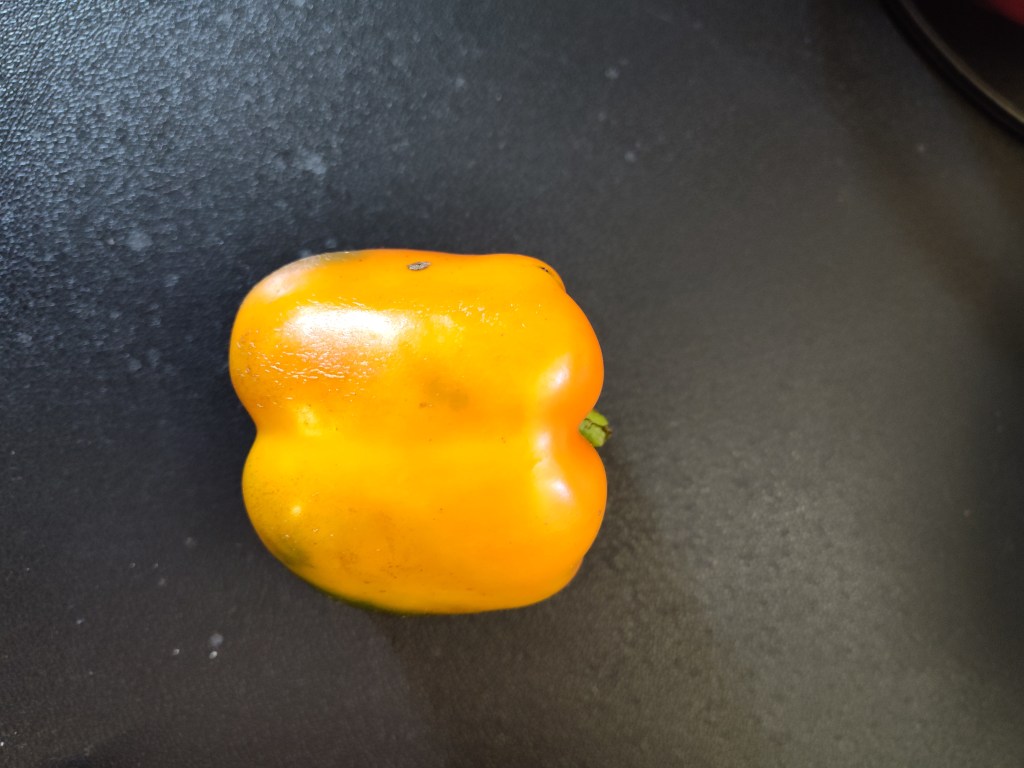
This week, we ate our first and only pepper from this year’s garden. It was a fully ripe Cal Wonder sweet pepper, and it was delicious and aromatic.
I continue to make pickles with any cucumbers we harvest.
Our eggplant and zucchini plants continue to produce, with our largest zucchini over a foot long.
The second batch of beans that I planted (Provider bush beans) is doing well, with pods on every plant that are approaching full size.
We continue to harvest tomatillos as the fruit breaks out of the husks.
We ate the first ears of our Sweet Mexican/Black Iroquois corn, and the kernels were a dark purple color. It was the first time I had eaten corn that wasn’t white or yellow, and it was very tasty. We have limited ourselves by focusing on yellow, white, or bicolor corn for commercial growing purposes. The colorful varieties are stunningly beautiful and taste as good, if not better.
PumpkinPumpkinOur only pepper from this year’s garden
Seed of the Week
We go to Mexico for this edition’s seed of the week, and it’s actually a seed I failed to start and transplant and turned to greenhouse starts – the tomatillo. Specifically, it’s the Rio Grande Verde tomatillo. We bought our seeds from Baker Creek, but the starts went leggy before they failed during the transplanting phase. Instead, we turned to our local greenhouse, where we bought four plants, and we’ve had great success with them. The tomatillo is native to Mexico, where it was cultivated long before Europeans arrived. In fact, in Central America, tomatillos are grown as perennials due to the perfect climate and growing conditions. Our tomatillos have taken off, with three plants growing bushy and developing plenty of fruit. The fourth plant hasn’t done quite as well, but that’s likely because it’s far from the other three and these plants need to be planted in pairs for pollination purposes. We’re planning to use our tomatillos in green salsa by roasting and blending them. If you have been curious about growing tomatillos but haven’t tried it yet, you should give it a go. By a pair of plants, plants them in a sunny location, and watch them thrive. Our hot summer has been perfect for growing them.
When planning an upcycle, one thing that I consider with care is how to use the entire garment in the most innovative way possible. Maybe it’s all those episodes of Project Runway guiding me?
When I began my flannel upcycling project, and planned to transform them into vests, they needed a real purpose.
I began this project last year, as the summer was winding down, with fall whispering in the trees. Fall is an unmistakable inspiration for me. I love the color palette, traditional fabrics, and the academic style that returns to fashion every autumn season.
Sleeves Find New Life
Knowing how much yardage there is hidden in those sleeves, I had an idea – a plaid skirt with alternating colored plaid skirt panels connected by a waistband.
To do this, I cut the sleeves carefully from the shoulder seam to retain as much width and length as possible. This would become the bottom of the skirt. Next, I cut the cuffs from the sleeve; this tapered end was perfectly shaped for the waistline of the skirt for a flared effect.
For the waistband, I had yet to understand elastic, and was growing tired of waist ties, so I got a bit creative! I decided to use buttons, four of them to start, and created an adjustable button closure skirt, like the hook and eye of a bra band. The buttons were actually repurposed from the buttons of the shirt. For ease of getting dressed, I sewed the skirt on all the side seams, leaving a 2.5-3 inch opening to adjust the waistband, in a way that the fabric would cross over for security.
If you are looking for an easy and cute fall upcycle for the new season, I would highly recommend this project! You can even pair the vest and skirt together for a complete outfit!
So this week started off amazing. My mom and I began finding a healthy way forward, for real this time. Nothing shoved under the rug to deal with later. No festering. No harsh talk, instead patience, love, realness. It was truly an answer to prayer that I learned, required me to put into action what I was feeling.
I journaled all my raw feelings, and sat with what these words on paper showed me – I wanted more. I wanted realness, and nothing less. We each reaches this point at the same time, and it got better. Over last week, it got much better. Kinder. I even spent time with her on Sunday.
Monday morning though, life decided things were too good. Our family dog, Sully, became extremely sick. He had been dealing with some health issues over the past year, but it fell apart over night. He died on Tuesday. I am heartbroken, but crying together with my mom instead of on own like we did for other big losses.
I think the most challenging part of losing a pet is that sense of home you associate with them. He was my safe place for 14 years, all of my adulthood so far, and his steady love will always be missed.
Have you lost a pet? What helped you heal? I’m going to try to get back on track with writing next week, but yeah, life just keeps getting weirder, everyday.
Let me start by saying that I’ve not always been a fan of bugs, with one exception: the firefly. My dislike for them has never reached Blathers from Animal Crossing level, but I’ve always wanted them in their space, which is separate from mine. This has been the case despite my love for the outdoors. I spent countless hours hiking, mountain biking, fishing, hunting, and camping growing up, but bugs were one of my least favorite parts of it. Meanwhile, bugs have always loved me. They will bite me every chance they can, and in a group of people, I’ll be covered in bites when others have none. So, it’s safe to say that it’s been a one-sided relationship.
That has changed with our garden this year. Before our garden, I knew how important pollinators were to a garden’s success. I was also aware of the declining bee and butterfly populations. As a result, Magz and I were focused on planting flowers that would attract pollinators. But little did I know just how many pollinators there are. Nor did I know how beneficial non-pollinating bugs can be to our garden and the environment at large.
Research Changed My Mind
When we were planning our garden and researching seeds, we came across a lot of vegetable seeds that rely on pollinators to reach their peak. Many plants, such as tomatoes, peppers, and other members of the nightshade family, self-pollinate but need help from pollinators to reach their fullest potential. Meanwhile, squash, melons, cucumbers, and many fruit plants or trees can’t self-pollinate and need a helping hand. Humans can make this happen by removing the male flower and touching it to the female flower. However, it’s much easier to let our pollinator friends do the work for us. Letting pollinators, such as bees and butterflies, do this work is mutually beneficial. Our plants grow and produce ample fruit, while the pollinators get the food they need to survive.
For the longest time, the extent of my pollination knowledge ended with what I described above and the two types of insects: bees and butterflies. And, if I’m being honest, I was under the impression that the most important bee species was the honey bee. For years, the honey bee was the poster insect for environmental destruction and the collapse of native insect populations. This focus resulted in people buying local honey and establishing bee colonies to rebuild the population. However, I recently learned that the problem and the ways we can address it go much deeper.
Earlier this summer, I learned about Buzzkill, which was a podcast series produced by the Food & Environment Reporting Network (FERN) focused on the declining pollinator population. I learned so much, but what stood out the most was that the number of bees and beehives isn’t the problem. We have plenty of apiaries and beekeepers. The larger issue is a lack of food for the pollinators. Because we have destroyed a large portion of the natural habitat in the United States and many people choose not to grow native plants, we have reduced the amount of food for these insects and animals. Buzzkill also taught me that there are a lot more bee species than I ever realized, and honey bees aren’t necessarily the most important. After learning all of this and discussing it with Magz, it changed our approach to planting and gardening this year.
The Benefits of Bugs
Like most people, I was aware of pollinators and the benefits they bring, but that was largely the extent of my knowledge until I began doing more research and learned about all the ways that bugs help us. The World Wildlife Federation estimates that only 0.5% of all insects damage crops. That doesn’t mean that 99.5% of all insects are good, but it does mean that well over half of the insects are beneficial.
Tackling Problematic Insects
This was the benefit that surprised me the most. I didn’t know that some bugs help to manage the pest population. I ignorantly thought that the only way to handle these pests was with insecticides. As I typed that last sentence, I forgot that I had watched an episode of Ask This Old House, where Roger the landscaping expert traveled to Florida to help answer questions about pest control. Instead of recommending a potentially harmful spray, he brought in an entomology professor from the University of South Florida to educate the homeowner (and the audience) about beneficial insects and how they can destroy the population of invasive species. Now remembering that episode, the information I learned through my research makes a ton of sense.
Not having to solely rely on insecticide sprays or dust is a big deal. Our Creator has provided us with a natural remedy for problematic insects that can destroy our garden. When that’s the case, why would we want to only use chemicals? The majority of these insects are predators (ladybugs, lacewings, praying mantises) that kill and feed on individual pests, such as aphids. However, some of them are called parasitizers that lay eggs on other insects. The resulting larvae then feed on the insect. An example of this is the parasitic wasp.
Decomposition
Insects also operate as the garbage collectors and recyclers of our ecosystem. They eat and break down what we don’t want to touch or do anything with: animal matter, dead plants, food that we didn’t or can’t eat, etc. If you have a composter, you will have witnessed this. Anytime I open the lid to our composters when it’s warm, I see insects flying around or crawling on the rotting food and grass. As the insects consume these items, they produce nutrient-rich organic matter that improves your soil.
Soil Improvement
Soil improvement is slightly different from decomposition. This category applies to the insects (earthworms, ants, and termites) that tunnel through the soil. This aerates compacted soil, improving drainage and leading to better soil. So, the next time you’re digging in the garden and come across an earthworm, remember that it’s doing yeoman’s work to provide you with better soil.
Why it Matters & Applying the Knowledge
Why it matters is pretty obvious. Humanity has severely damaged the environment through selfish acts committed in the name of progress. The commercial farming industry has used chemicals that have killed all insects, including beneficial ones, stripped the ground of its nutrients, and run off into our water sources. We plant non-native or non-pollinating species of flowers that don’t provide food to pollinators, and international shipping has led to invasive species being transported throughout the world, so the native insects can no longer control the population. And to top it all off, we aren’t doing anything on a large scale to put nutrients back in the soil or restrict the importing of ornamental flowers that serve no purpose beyond looking pretty.
Focusing on beneficial bugs, growing plants that attract pollinators, and creating an environment where native, productive insects can thrive has many benefits. As mentioned above, predator and parisitizer insects reduce our dependency on chemicals to control the bad insects. Even organic insecticides can kill the beneficial bugs that we want to thrive. Relying on insects to do the job lets nature take its course.
Providing pollinators with a food source helps your plants to reach their full potential while also letting some of the most beautiful and productive insects (honeybees and butterflies) succeed. Furthermore, flowers that attract pollinators not only feed insects; They also serve as a food source for hummingbirds and bats. Both species eat a lot of insects, with brown bats capable of consuming up to 1,000 mosquitoes per hour, according to the U.S. Forest Service. Meanwhile, hummingbirds feed on aphids, weevils, and spiders, all of which can be detrimental to your garden. In fact, hummingbirds eat far more insects than the nectar they get from feeders or flowers.
Finally, we arrive at my last point. As gardeners, we should all be motivated to create native habitats on our property. That means growing native species, creating safe spaces for prey animals, and providing food and water sources for birds, insects, and herbivores. The benefits of doing this are innumerable, but include serving as the foundation of the entire food system, hosting native insects, and often having deeper root systems that address water runoff problems. Not to mention, there’s also the benefit of fitting into your area’s history and culture.
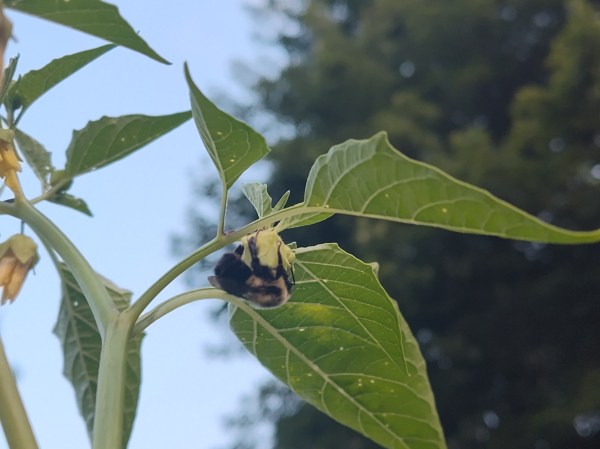
Magz and I applied this knowledge as soon as we started to plan our garden. We only bought flowers that attract pollinators, and when possible, we planted them close to our vegetables that need to be pollinated. We also started researching insects found in the garden to learn if they are beneficial or detrimental. Previously, I would have killed them without a second thought. I have also started to sincerely appreciate bees and not fear them when I’m in the garden. Of course, I still hate hornets, wasps, and yellow jackets, but being around bumblebees in the garden is a wonderful experience. I recently watched a bumblebee crawling over the flowers of a tomatillo plant as it collected pollen on its legs. It was such a peaceful environment to be in, and I recommend doing it unless you’re allergic to bee stings. Even then, though, you have to bother bumblebees to get them to sting.
Where We Want to Be
I’m at a place where I would say I’m borderline obsessed with pollinators, saving native habitats, and treating the earth with respect. Like I said, I’ve always loved being outside and have been committed to preserving nature. But my motivation has been intensified this year. The attempt to sell off protected lands pushed me over the edge and pissed me off. As an individual, I can’t change the nation’s direction on my own (although I did contact our representatives), but I can make a difference in my backyard.
Bee Pollinating Tomatillo Blossom
We’re going to dive deeper into native plants next year and continue our commitment to only growing flowers that attract pollinators. We are also going to continue converting our yard into gardens, both flower and vegetable. Ultimately, we’d love to have the bulk of our current yard be a wildflower meadow in the future. We’re also going to continue to provide animals with safe spaces with brush piles.
We recently learned that you can have your property certified by the National Wildlife Federation as an official Wildlife Habitat. The requirements aren’t outrageous and are pretty easy to meet. We’re going to pursue this in the coming years, and when combining it with our conscious gardening practices, we’re hoping to make a real difference. It may be difficult to fix commercial farming practices, but if we all focus on our own property, it will add up.
Future Preservation Content
I know that this post wasn’t as focused on our garden as my content typically is, but I think it’s important to think about. I also hope you enjoyed it, because I’m planning to write more posts in this area. I have plans to write about how we’ve blended flower and vegetable gardening, the frustration I have with lawn obsession, and more environmental content in general.
What if the clothing we wear is more than just a garment, but connects us to the fibers of our being?
What if a pillowcase, from a loved one no longer here with you, could be more than just an item cluttering your closet? How could you repurpose it so the memories can walk with you in the new days ahead. All while the smell of their laundry detergent, and their home, so distinct to your senses, that being near it makes you feel comfort.
That is what this project is to me. More than an upcycle, or a thrifty hack, but a way to process feelings. Find a way forward. So the things left behind, that remind of what is missing, can do more than drown us in memory and stuff, but become a tangible way of healing.
















 One Rabbit Riot