In this week’s update, it is late July in Pennsylvania, which means the humidity level has been ratcheted up to 10. You sweat if you’re outside for more than five minutes, regardless of how active you are. We’ve also been dealing with some of our fence sections sagging. How have we addressed that problem? We’re beginning to harvest vegetables from the garden on a daily basis, so we’re seeing the hard work pay off in a big way. Finally, what will the seed of the week be? Let’s dive in.
Always Drenched in Sweat
Depending on where you live, your view of July’s weather will vary greatly. If you live in the Southern Hemisphere, it’s winter and one of the coldest months of the year. However, if you live in the Northern Hemisphere, it’s peak summer. In the United States, we have multiple versions of summer. West of the Rockies, it’s a searing dry heat where temperatures regularly surpass 100 degrees Fahrenheit, but with little humidity. Along the Pacific Coast, there’s humidity, but the temperature remains comfortable due to the proximity to the ocean. East of the Rockies, especially in states that have a coast (Atlantic Ocean, Gulf of Mexico, or the Great Lakes), it is often hot and humid. In Western Pennsylvania, where we live, the air temperature may only be in the mid-80s, but when you factor in the humidity and UV Index, the real feel is often in the 90s. High-pressure systems occasionally come through to knock down the humidity, but at this point in summer, we are usually stuck with it until mid-August.
I’m someone who tolerates the heat pretty well, but humidity is rough. Regardless of what time you get outside, you will sweat, and that’s where I’ve found myself over the past week or so. Apart from a couple of days early last week, the temperatures have consistently been in the mid-to-upper-80s with high humidity. Despite the uncomfortable conditions, the garden still needed to be tended to. The plants needed to be watered after we went several days without rain, the weeds needed to be addressed, and the ripe vegetables needed to be harvested. It wasn’t always fun, but it does serve as a reminder of how hard farmers work to grow/produce our food. When we’re able to harvest a ripe vegetable, it makes all the hot and humid days worth it. When you are working outside in the middle of summer, the importance of staying hydrated, wearing sunscreen, and taking breaks can’t be overstated.
Mending Fences
Okay, so I didn’t really mend the problematic fence sections since they weren’t technically broken, but I wanted to use the phrase nonetheless. If you remember, we bought deer fencing for our garden. It’s extruded plastic that is seven feet tall and comes in rolls. It’s been nearly flawless to this point, with any issues being my fault. Recently, though, some of the longer sections have started to sag in the middle. I think this is the result of less tension, since the sections are longer than normal, as well as grass growing at the bottom, which pulls the fence down a bit. In some places, it was so bad that I could have stepped over the fence if I wanted to, and if I can do that, a deer can jump it.
The fix was pretty easy: I cut some fence posts from leftover pressure-treated lumber. If you’re interested in doing this yourself, I started by cutting the pieces to length. For us, this was six feet. I wanted them to be long enough to sink into the ground at least a foot. After that, I ripped the pieces to width (one inch) on the table saw. With that done, I went back to the miter saw and cut a point on one end at a 30-degree angle. This helps them go into the ground more easily. With the pieces cut, I hammered them into the ground and attached the fence with a few staples and twist ties. It ended up being a quick and easy fix. If you have a workshop and some tools, you can make your own fence posts rather than pay for the finished product.
Hard Work Is Paying Off
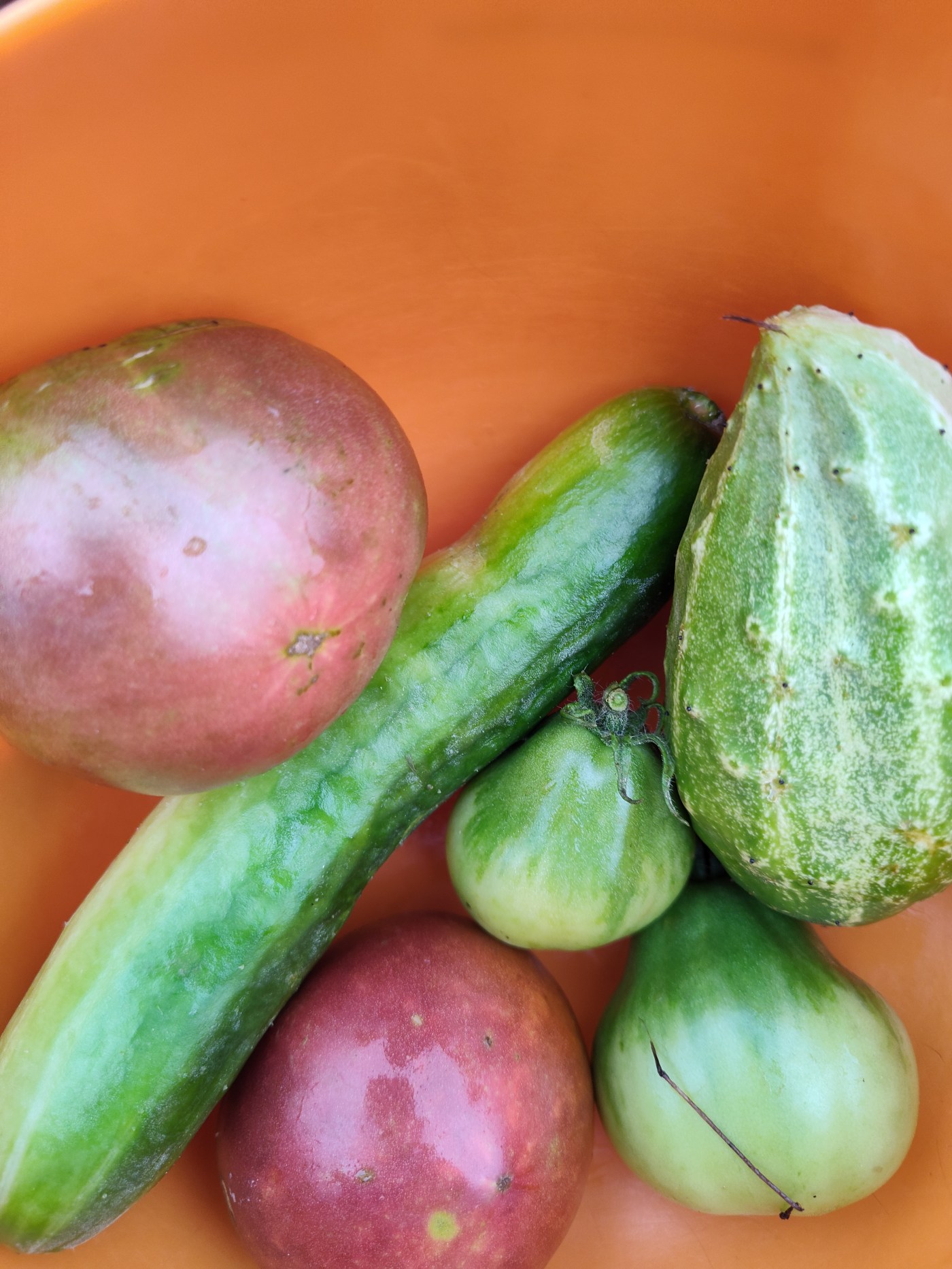
There were different points in the gardening process where I was unsure if all our hard work was going to be worth it. Struggles with germination, inconsistent weather, and other things out of our control led me to question if we were going to harvest anything from the garden this year. Thankfully, that is no longer a question, and we’re regularly harvesting vegetables with plenty more on the way. We have more cucumbers than we know what to do with, and there are probably more than 100 tomatoes on the vine. Plus, the corn is growing nicely, and we’re going to have lots of melons, squash, pumpkins, and tomatillos. I’ve said it before, but if you’re curious about gardening but have yet to pull the trigger, you should. You can start small with one or two containers of your favorite vegetables. It’s not a ton of work with only a few plants, but the payoff is well worth it.

Notes From the Garden
- We harvested our first full-size tomatoes this week. Two were Cherokee Purples (or maybe Black Krims?) and two were Queen Aliquippas. We haven’t eaten them yet, since we only pulled them on Saturday night, but it’s definitely a big step.
- We continue to have a problem with grass growing in our beds, largely the beets and carrots bed, so I’m trying something new. I took some black garbage bags and laid them on the problem areas, using ground staples to hold them down. The goal is to suffocate the weeds by preventing sun and water from reaching them.
- The first cantaloupes and watermelons have started growing. They’re quite small right now, but they look like tiny versions of the fruit, which is cute.
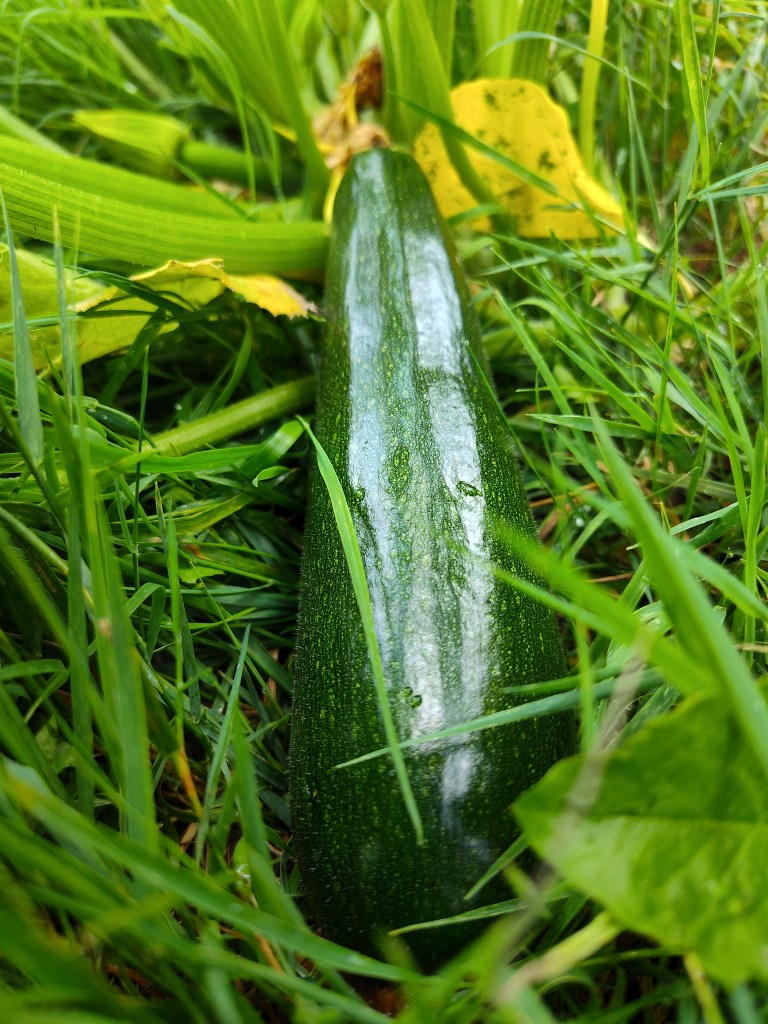
- Our third spaghetti squash is bigger than the first two now, and our first squashes have turned from light green to a creamy yellow, so they are ripening.
- Our first Tendergreen cucumbers were harvested on Sunday, marking the first time that we’ve harvested this type of cucumber.



Seed of the Week
The seed of the week this time takes us to France for the Noir des Carmes melon. This muskmelon is a true cantaloupe, whereas most cantaloupes that we find in stores are simply muskmelons. From what I understand, true cantaloupes tend to be grown in Europe. The Noir des Carmes melon dates back to the 18th century and is named for Carmelite monks who grew it. These melons don’t have the tan colored “webbed” skin that we often find in the United States. Instead, this melon stays greenish black for most of the growing process until it transitions to yellow and green, indicating that it’s ripe. It also has a smooth rind. We got our seeds from Southern Exposure.
 One Rabbit Riot
Great harvest.
LikeLiked by 1 person
Thanks, Michael.
LikeLiked by 1 person
You’re welcome.
LikeLike