

In this week’s update, we were able to finally get our vegetable starts in the beds, spent a lot of time in the garden watering and weeding, and got a start on the last two garden beds. Plus, I share a few mistakes I’ve made with our garden and my plans to remedy them.
Transplanting Starts
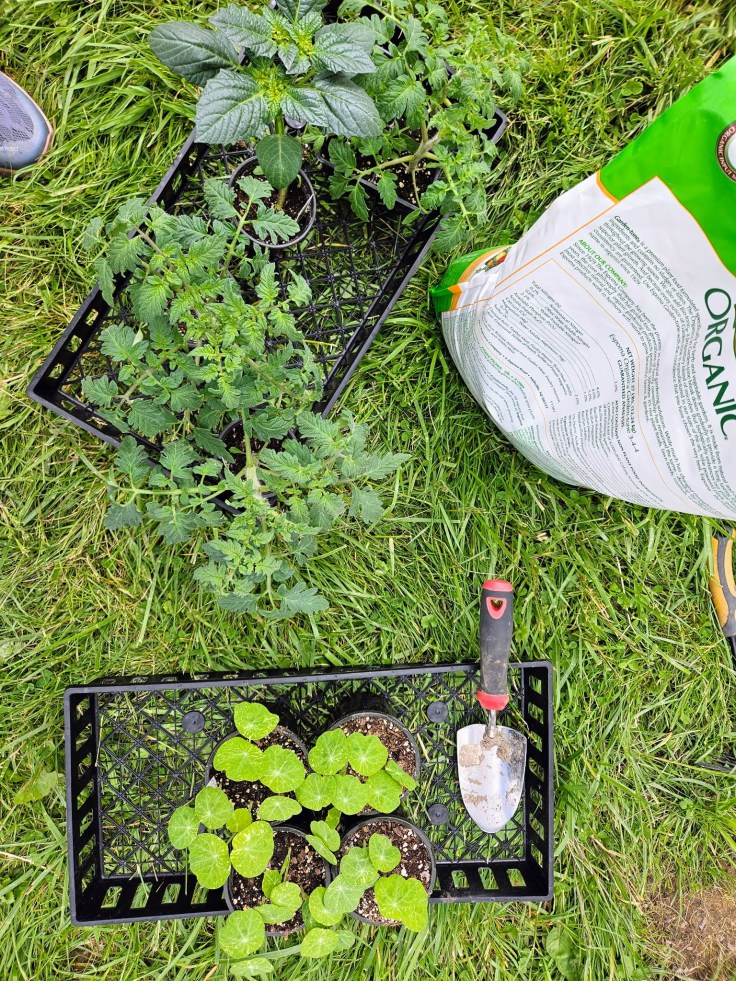
In last week’s update, I mentioned that we had transplanted a bunch of flowers we bought last weekend. Those were planted in various places throughout our yard; however, due to cool overnight temperatures (high 30s) and a ton of rain (over 3 inches in a 24-hour period), we were uncomfortable with transplanting our vegetable starts. This past weekend, we were able to get them all in the ground. That included all the plants I started from seeds as well as a few starts we bought from the greenhouse. These were Black Krim tomatoes, tomatillos, ground cherries, and spaghetti squash. These were plants that we either didn’t have seeds for or wanted more security in transplanting larger starts.

Transplanting these was straightforward but time-consuming. Fitting the starts into beds that already have seeds takes some planning. We want our plants to complement each other by pulling and supplying nutrients in a mutually beneficial relationship. We also want to make sure we’re giving them enough space while also planning for more starts to be transplanted in the future. This process appears to have been successful.
We were very intentional in adding the appropriate soil amendment for each plant and also tried to keep the soil loose around the plant. If you remember back to the beginning of my writing about our garden, our soil is compact clay. We don’t think it’s ever been grown in, so the grass was pretty thick with well-developed roots.
Spending Time in the Garden & Watering
With seeds and plants in the ground, we’ve been able to spend a lot of time in our garden. We’ve largely transitioned from the planning phase to the establishing phase. We’re in the garden on a daily basis, checking for progress and assessing the need for natural pesticides or weeding. We also water on a daily basis at this stage while the seeds are still germinating or the transplants are taking root, and it takes a lot of water! We really enjoy watering with cans because it’s a more hands-on experience and bought a second watering can to help.
Regular watering also means we’re getting to put our rain barrel to use. Earlier in the spring, we bought a 55-gallon blue barrel and converted it into a rain barrel with water coming from our garage’s downspout. It’s difficult to believe how quickly it fills. A steady rain over a few hours will fill it from empty. It’s been nice not having to pay for the water we’re using. At the time of writing this, we have only had to fill one watering can with city water. Everything else has come from the rain barrel. I’m sure that will change throughout summer when it’s hotter and we may go a week or two without rain, but it’s still a wonderful blessing. We also plan to buy a second barrel for the other side of the garage. It’d be nice to eventually have three or four barrels around our house so we only have to use city water on rare occasions.
Starting the Final Beds
On Sunday and Monday, we got the final two beds started. On Sunday, Magz mowed down a large portion of grass and did the first pass with the tiller. On Monday, I followed up by tilling it a second time and also going back to a bed I started a few weeks ago and giving that one its first pass. With those beds started, we can see the finish line. We’re only a few tiller passes away from being done with that step in the gardening process, which feels like a huge accomplishment. It will also mean that the hardest work is done. When they’re done, the work will mostly consist of what I call maintenance: watering, weeding, and amending the soil. That will eventually lead to harvesting time.
What’s Next? Recognizing Seed Starting Mistakes
Between now and next week’s update, the plan is to continue tilling the last two beds, build a raised planter box for our long beans, and restart some seeds. The plan was always to start additional seeds once the first batch of seedlings was transplanted. We want to take advantage of the beds we have and grow as much as possible. What I didn’t plan for was the mistakes I made when starting our initial batch of seeds.
I have experience starting seeds and have had success doing so. However, before this year, it had been three years since we gardened, and I felt rusty. I turned to YouTube and blogs to refresh my memory, and I think they led me a bit astray. When putting the seed starting mix in the cells, I kept the soil loose rather than pressing it a bit, which resulted in the roots struggling to develop. I noticed a big difference between our starts and the ones we bought at the greenhouses. The greenhouse starts had roots that wrapped around the soil and allowed everything to come out in one cube. Meanwhile, our starts were loose with shallow roots. I think the soil composition had something to do with this. Other things I’m confident I messed up are how I watered the seedlings and the way I thinned them.
Moving forward, I’m going to make the following changes:
- Tamping down the soil a bit before adding the seeds and also pressing down the soil that is added on top. In recent days, I’ve read about the importance of having contact between the soil and seed, which makes sense.
- Pre-moistening the soil rather than relying on watering after the seeds are sown.
- Watering from below rather than above. I went back and forth between using a spray bottle and a cup to water the seeds/starts. It became difficult to not flood the cells or potentially damage the young starts. This time, I’m going to fill the trays and allow the cells to dry out a bit in between waterings.
- I will be thinning the starts by cutting them at the soil surface rather than plucking. I’ve learned that pulling the starts disturbs the roots of the plants you want to keep, which I saw evidence of.
I will follow up with how successful these changes are. Have you made mistakes in your garden that forced you to make changes? If so, I’d love to hear about it. I hope the mistakes I learned can help you in your garden. Happy Gardening!
 One Rabbit Riot
Leave a comment