This week’s update will be a bit shorter than usual, largely because there wasn’t a lot that happened with our garden. We didn’t start any new seeds, but we did transplant one of our starts, saw more seeds germinate, and bought materials for an upcoming project that sort of has to do with our garden.
Transplanting a Pepper Start
The first start you transplant into a larger pot is a momentous occasion each year. It signifies that the seeds have successfully germinated and your plants are growing closer to being ready to be moved outside and into the ground. For us, the first start that needed to be transplanted is the first Cal Wonder bell pepper seed that germinated. Since it germinated on March 22, the plant has grown to about 4 inches tall and has developed its third set of leaves. That’s the point when most recommend transplanting pepper plants. Luke from the MI Gardener YouTube channel published a video where he talked about the importance of not crowding a pepper plant’s roots, and if that means transplanting a plant to a larger pot multiple times, that’s okay. We decided to go with the 5-inch tall peat pots so that the plants only have to be transplanted once between germination and going in the ground. It also happened to be the size we had on hand.

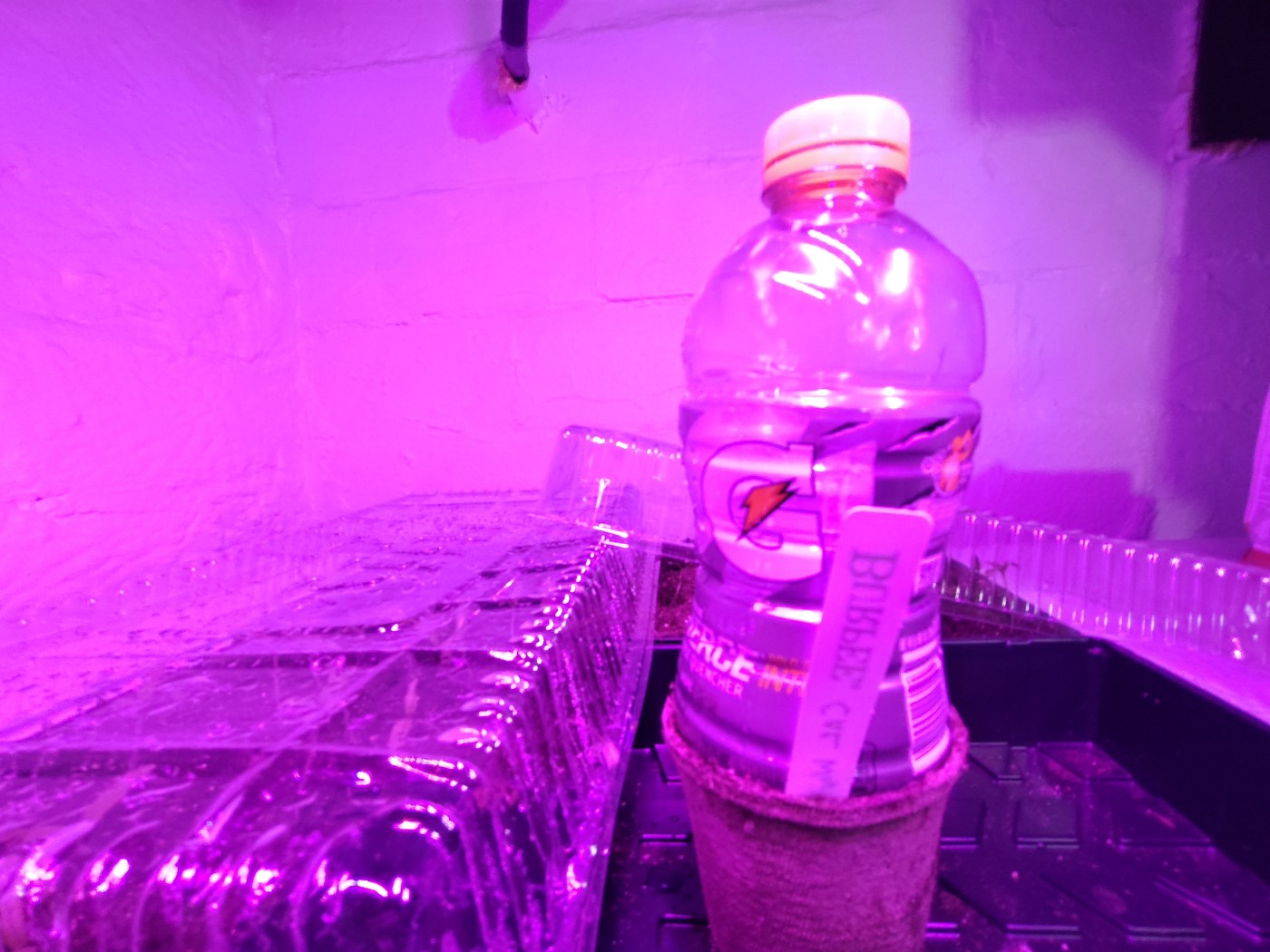
When I transplanted the start, I mixed in some Garden-Tone, which is an organic well-balanced fertilizer that promotes root development and leaf growth. After wetting the soil, I was extra careful to not disturb the root system when removing the start from its cell. The day after transplanting, I cut the bottom off a Gatorade bottle so that it could be placed over the plant and act as a greenhouse since the start no longer fit under the dome of the seed-starting trays. We’ll keep you posted on the plant’s progress after being transplanted.
More Germination
Last week, I wrote that we started a lot of seeds, including all our tomatoes, husk tomatoes, and cantaloupes. In the week since we started them, every variety of seed has successfully germinated. This doesn’t mean that every cell has germinated, but that at least 1 cell of every seed has germinated. This is a huge step because these vegetables are going to be a large section of our garden. Some of the tomatoes and the cantaloupes have even had to be thinned already.
Buying Materials for Our Screened-In Porch Project
Over the next two weeks, we’re going to be taking on screening in our back porch. We have a nice-sized back porch that we love sitting on. It’s also where we have our grill. The downside to it is that wasps, yellow jackets, and other bugs love it as well and can make sitting out there kind of miserable. It is also open on all 3 sides, so rain gets blown in. We’re addressing all that by screening it in with a set of French doors. The back will have screens that run from the ceiling to the floor, while the sides will have screens that run from the ceiling to the railing, which is waist high. Below the screens, the sides will be closed so that rain can’t be blown in. You may be wondering what this has to do with gardening. Great question.
When we bought the lumber for this project, we bought extra to use as a trellis for our long beans to climb and to build some planter boxes. In the end, we hope to see the trellis incorporated into the porch. We’ll share pictures of the project when it’s done.
Up Next
This week, we’re planning to pick up the rest of the materials we need for the screened-in porch project and to start our beans and cucumbers inside. Outside, the soil is finally starting to warm up, and it’s dried out nicely. That means we should be able to direct sow some of our seeds. We’ve been very patient with them because the soil hasn’t been warm enough to this point. How are your seeds going? We’d love to hear from you. Happy gardening!
 One Rabbit Riot
Leave a comment