In this week’s garden update, we have a lot to go over. We have updates regarding our seedlings, began creating our garden beds, realized what our soil is like, and began addressing a water runoff problem. Finally, which seed did we start? Let’s dive in.
Houston, We Have Liftoff! (Or Germination)
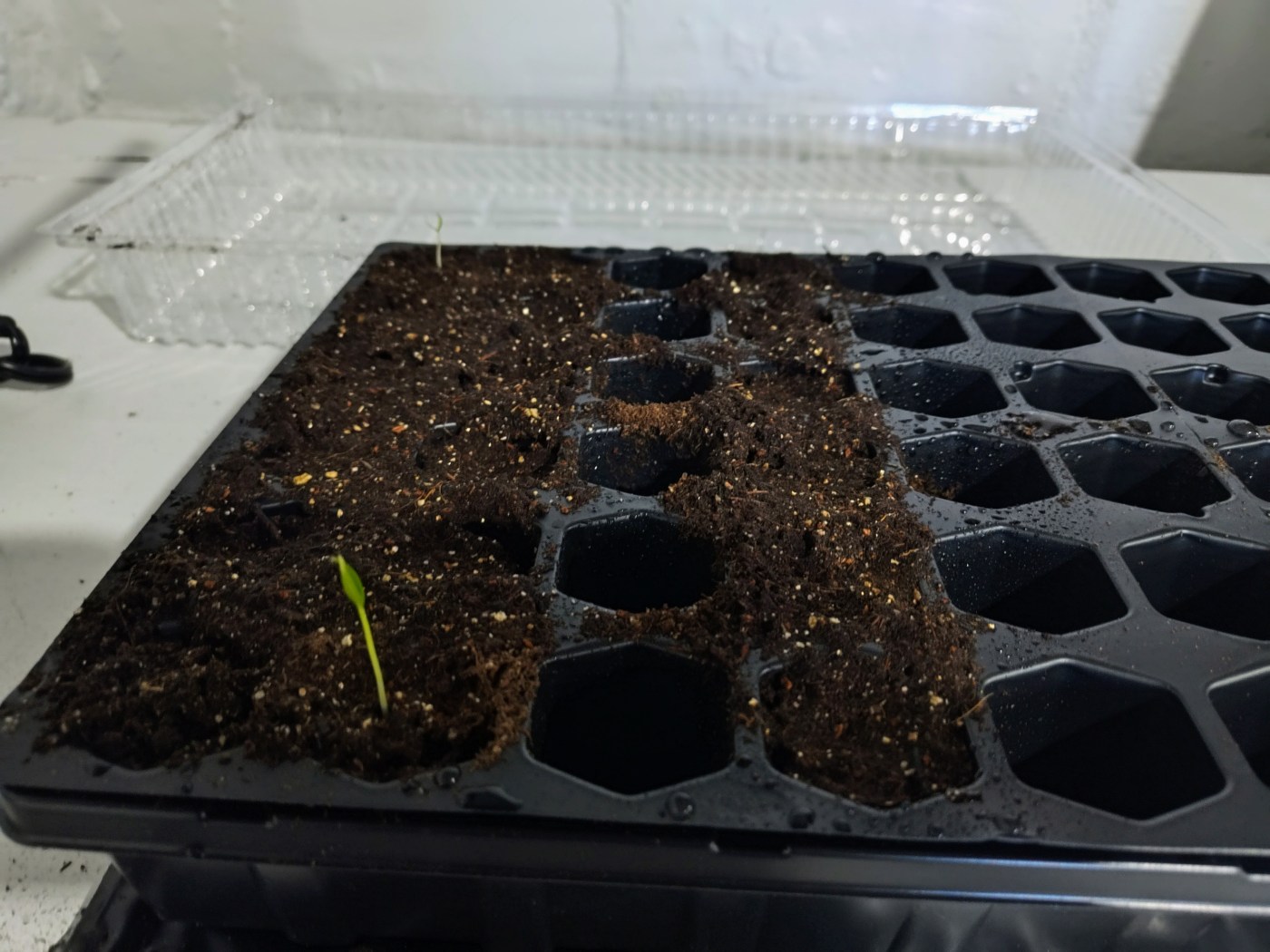
It was touch-and-go for a bit, but our first seeds have started to germinate. On March 8, we started 12 cells of pepper seeds – 6 sweet peppers, 3 Scotch Bonnets, and 3 Hungarian Wax. The seeds were supposed to take 10-15 days to germinate, so as we got to the 2-week mark, we started getting a bit nervous that they weren’t going to germinate. However, when I checked the starting tray on Saturday (March 22) morning, one of the sweet peppers seeds had germinated. Wonderful!
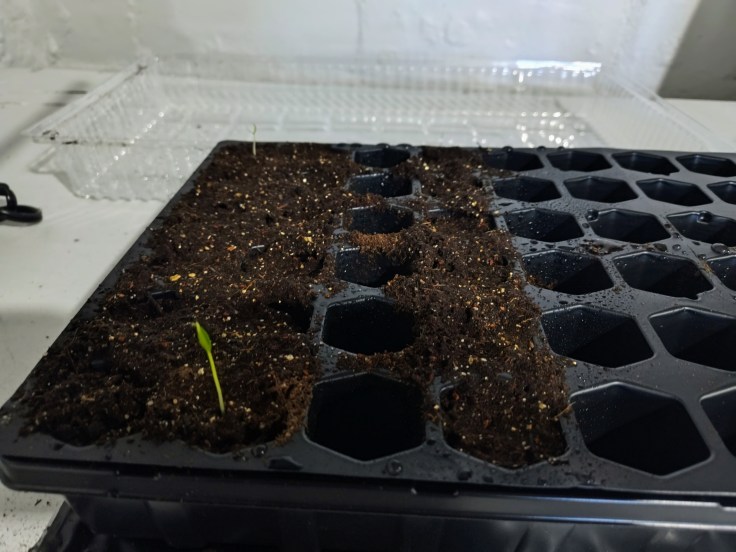
Then, later that day, I went down to check the tray again and one of the hot peppers had sprouted! The next morning, I set up our grow light and configured the settings so the light stays on for 12 hours, so the plants should begin to take off. The first seeds to germinate each year is such a monumental occasion. It feels like it takes the concept of a garden and turns it into a reality.
Starting to Till the Garden Beds
In last week’s update, I shared that we received our rototiller and were waiting to begin the tilling process. Last Wednesday afternoon, we got it in the ground, and it was more difficult than I anticipated. I believe I have used a tiller before but can’t remember with 100% certainty, and if I have used one, it was only to turn over soil that had already been used for gardening. I’ve never established a garden from scratch. And if you haven’t used one, lugging a 30-pound machine around and preventing it from bouncing is a workout.
Our lawn has very thick grass and the ground below it is soft, almost like a peat bog with compacted soil. There is basically no top soil, so if there’s any moisture in the ground, it’s essentially soft, muddy clay. Your feet sink into, and the soil sticks to your shoes. It was a bit disheartening to realize the soil’s composition, but not unexpected given that loamy clay soil is common in this part of Pennsylvania.

We began by roughly determining where we want our beds to be, and on the first pass, we focused on removing the grass. That was largely successful, and after raking, we could see the soil. The second pass was deeper and started to turn the soil over, which is when we noticed that we need to address the moisture/drainage issue of the soil. Clay soil is wonderful because it’s full of nutrients and minerals, but not so great because it doesn’t allow excess moisture to drain. Over time, this will be resolved through the addition of organic compost, natural soil breakup from plant roots, and cover crops in the fall and winter.
Immediately, though, we have to address the issue before planting this season, which we’re going to do with gypsum. Many of the Google search results I found pointed us in the direction of gypsum, which is a naturally occurring mineral that breaks up soil and improves drainage. Thankfully, it’s also cheap at $10 for a 40-pound bag. Our plan is to spread it on top of our garden beds and till it into the soil a few inches. In the meantime, though, we’re already starting to see the soil dry out. Within 15 minutes of removing the grass, the top layer of soil starts to dry out, which is a remarkable improvement.
Diverting Downspout Runoff
Compounding the issue of our loamy clay soil and thick lawn is that one of the downspouts on our garage directs water into the part of the yard where our garden is going. Our garage roof isn’t big, but the amount of water draining off it is enough to exacerbate an existing problem. One option is to divert the downspout to have the water exit in a different location, but it would still make our drainage problem worse. Instead, we decided to use a rain barrel as a catchment device. On Saturday, we bought a 55-gallon blue plastic barrel from Rural King that was previously used for food, so once we thoroughly clean it, it’ll be safe for watering our garden. We have discussed having a rain barrel, but the plan was expedited as a result of the downspout and drainage problems. We still need to buy a spigot and filter, plus we need to figure out a platform, but we’re on the right track. We’ll provide more updates once we install the rain barrel.
Starting Eggplant Seeds
Saturday was also the day we started our second type of seeds: eggplants. Like the sweet peppers, we started 6 cells of these with 3 seeds in each cell. These will take 10-14 days to germinate, similar to the peppers.
Up Next
We won’t be starting any more seeds indoors until April, but if we get our garden beds prepped in time, we will be planting mustard greens outside. On Friday, Magz also tilled a bed at the back of our property, which we’re going to use for wildflowers that will benefit pollinators like butterflies and honeybees. That area of our property doesn’t get the best sunlight (partial) and is close to a drainage ditch, so we don’t want to grow vegetables there. We’ll be ready to plant those flower seeds as soon as the weather is consistently warm enough and the soil is where want it.
We’ll also continue to prep our garden beds with the tiller and gypsum. In the meantime, do you have any experience with a rain barrel or other catchment system? How about poorly draining soil? We’d love to hear how you’ve navigated it and apply any tips you have. Happy Gardening!
 One Rabbit Riot