
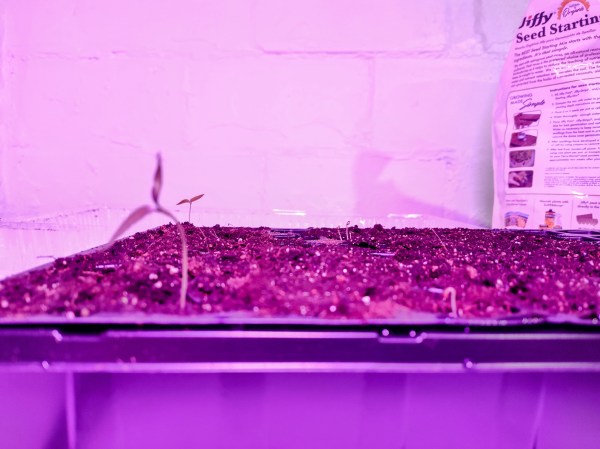
In this week’s garden update, we continued our journey of tilling all the garden beds we need. We admitted defeat with some of the pepper seeds and decided to re-sow a few of them. We also started two new seeds inside and celebrated that two of our eggplant cells have already germinated.
Continuing to Create Garden Beds
After a few discussions and planning sessions, we determined how many garden beds we need and where they are going. Essentially, we are turning about half of the second lot we have into a garden, which will be divided among six beds, plus one for wildflowers that will attract pollinators. Heading into this past week, we had three started, but none were completely ready to go. At the end of this week, we have four started and two ready to go with rows tilled.
Our process for tilling the beds looks like this:
- One initial till that removes the bulk of the grass followed by raking to scrape the grass away from the soil.
- A second perpendicular till that goes across the original one. This tilling is deeper than the first one and helps to clean up any strips of grass that were missed on the first pass. The bed gets raked after this pass as well.
- Apply a layer of gypsum.
- A third tilling that works the gypsum into the soil and establishes the rows we’ll plant in.
- We may do a light fourth tilling right before planting to work in any soil amendments we use.
It’s been interesting to see how the soil and bed change after each pass. The first two passes leave the bed moist and muddy. But within 30 minutes, the top layer of soil begins to dry. Then, after the third pass, it starts to look like a garden with loose, workable soil between walking paths.
We’ve developed a good system for creating the beds when we’re both available to work on them. I’ll go around and create the border for the new bed. Magz follows that up with the first pass, and I’ll rake behind her. She’ll also do the second pass that runs perpendicular to the first one. I’ll then rake it off again, add the gypsum, and handle establishing the rows. It’s been a very productive system.
Eggplant Germination
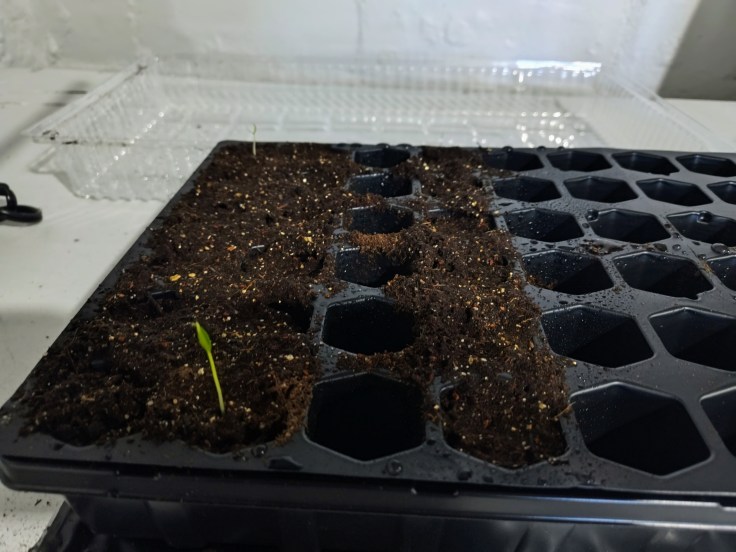
In last week’s update, I wrote that we started our eggplant seeds on Saturday, March 22. These were supposed to take 10-15 days to germinate but ultimately sprouted in seven days with the first seedlings breaking through the soil on the 29th. That is a big change from the experience we’ve had with our pepper seeds, but more on that in the next section.

The eggplant variety we’re growing is Ping Tung from Baker Creek. They are an Asian variety named for the location in Taiwan where they originate. They are a thinner eggplant than the bell-shaped varieties that most are familiar with and can grow up to 14 inches long.
Re-Sowing Seeds & Starting New Ones
I alluded to this in the previous section, but we’ve had some difficulty with our pepper seeds. Of the 12 cells we started, only two have germinated after three weeks: one sweet bell pepper and one Scotch Bonnet. We haven’t had any of the Hungarian wax peppers germinate. Yesterday, we made the decision to re-sow the cells that hadn’t germinated yet – five sweet peppers, two Scotch Bonnet seeds, and three Hungarian wax seeds. I’m not entirely sure what caused these seeds to fail, but I think it was inadequate moisture. I intended to pre-moisten the seed starting mix before starting the seeds but forgot to. I also used a spray bottle to water the seeds, but I don’t think I was giving them enough water at a time. That changed when I started the eggplant seeds. Instead of using the spray bottle, I started pouring water on the cells and letting it drain through the soil. It meant I only needed to water the seeds every few days rather than daily. We’ll see how the pepper seeds do with this change in the watering process.
That day, we also started two new seeds. One is the Ishikura bunching onion, which is a Japanese scallion-style onion that grows like a green onion rather than a long day onion. This onion doesn’t develop a bulb below the soil, but instead, the tops can be cut and will re-grow. We started 18 cells of these and will sow additional cells in the upcoming weeks. We love spring onions and want to have fresh ones all growing season.
The second seed we started is a dahlia. In addition to growing vegetables, we are growing quite a few flowers this year, mostly perennials that attract pollinators like butterflies and honeybees. We have very little experience growing flowers, especially from seed, but we’re excited to see how it goes.
Up Next
The goal this week will be to create rows in garden beds three and four. If we’re able to get started on the final two beds, that’d be great. It could also be overly optimistic, though. We also want to direct sow some seeds in our garden beds. Some of the greens and flowers can be started this early.
Happy gardening!











































 One Rabbit Riot