

At the beginning of this blog I was reading through sections of the Bible that I did not know as well as passages that are taught quite frequently and I was letting God lead me in the process. This was my goal in 2023, and in 2024 I’m still doing that albeit a bit more chaotically than last year. I blame the move, but honestly, my focus has been all over the place except on my devotions since we moved which I am not proud of. Because of this I have been hopping around the Bible I was in Proverbs and then I was in Mark and now I’m sporadically reading through the minor prophets. I read through Jonah and now I’m back in Micah.
There was something that stuck out to me again as I read Micah chapter four yesterday but for a different reason than my reading in 2023. In 2023, verse three stood out to me because of the promise of peace, this time it was the historical process that caused me to stop and ponder.
He shall judge between many peoples,
Micah 4:3 ESV
and shall decide disputes for strong nations far away;
and they shall beat their swords into plowshares,
and their spears into pruning hooks;
nation shall not lift up sword against nation,
neither shall they learn war anymore;
I was watching an I Like to Make Stuff video recently where Bob constructed a forge, followed by another video where he forges his own machete from a piece of steel. The process was fascinating! It is such a different medium from the fiber crafts I do because the material requires more persuading than scissors, stitches, or thread to be transformed. It requires heat to allow the material to be pliable, but you can’t form it unless you have a hammer to beat the metal into the form you desire. It can take many attempts of heating and hammering to get a crude shape. This doesn’t take into account the angle grinder or sanding to adjust the shape, plus the tempering of the metal through heating and dipping the blade to make it stronger. It’s a complicated process to make something.
This verse about ‘beating swords into plowshares’ and ‘spears into pruning hooks’ well depending on how expertly these weapons were made this is a lot of craftsmanship to be destroyed, and not reformed in one beat of the hammer. This would be a process. These would be precious resources that would need to be heated in the forge, hammered into shape, and reinforced with tempering. It would be a full transformation and would require work and commitment, so full submission to God’s will and full trust that you’re not going to need that carefully crafted weaponry or I think you would hold on to it. Because there was no Amazon 2-day to get more materials or a replacement sword or spear if you changed your mind. This was it.
Because we’ve lost this technology in our modern culture to other means, this picture of blacksmithing seems like an insignificant detail but I think it has a lot of weight to the meaning of the larger message in Micah 4 and the book in general. This was a full 180-degree shift from war to planting, something you only do if you have hope for the future and stability because you have to be there to tend to the crops and harvest at a later time. You are committed to the process.
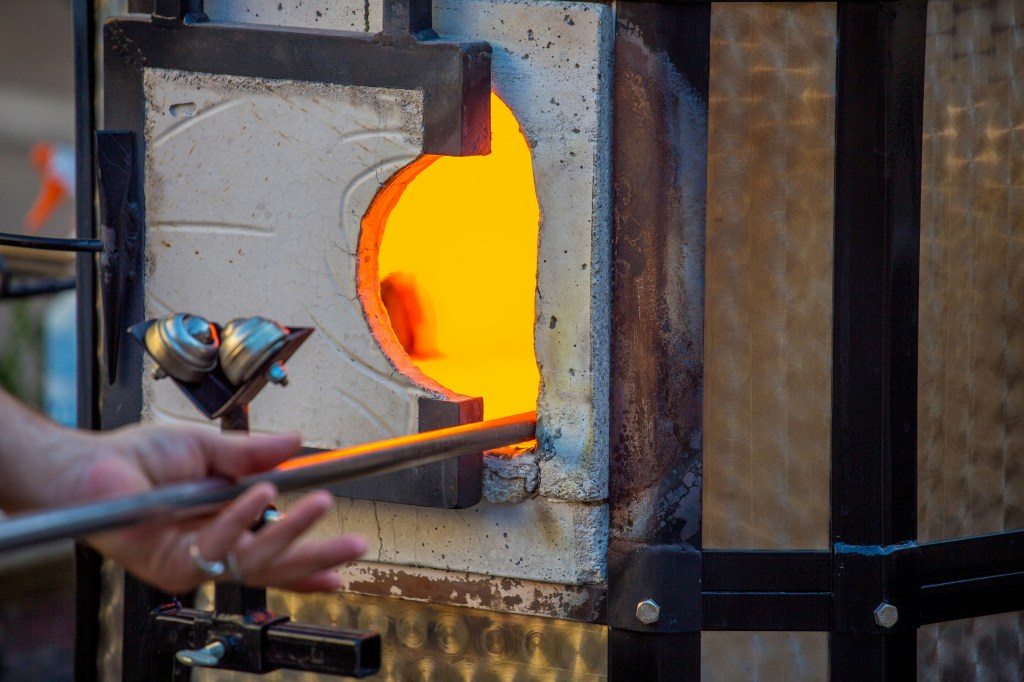
I think it is also important that the weapons are not just laid down and cast away, instead, they are reshaped and forged by fire to reveal their new life as necessary tools in the kingdom. They had a past of different goals, but are shaped by a refining fire to become a new thing and serve a new purpose. For being an Old Testament book this surely has New Testament significance, as this is what being a new creation in Christ through repentance and salvation looks like. You are not cast away for a new thing, you are transformed for a new form and a new function.
Like a blacksmith with a forge and a hammer, the Christian life transforms us from one thing to another for a new purpose. Even if our former life was filled with contradictions to the one we are living now, that forge of refining fire changes everything.































 One Rabbit Riot