Daniel 3

That’s right – I finished my read of Isaiah! I’m so pumped to be done because that was not light reading. But I’m excited to be in a new book of the Bible after 66 chapters of history and prophecy. It’s like finishing a Dostoyevsky novel and picking up a Jane Austen, the Austen looks like a breeze after 800 pages. Anyways, I prayed about where I should go next and I felt led to read the book of Daniel.

This book is pretty well known in pop culture, I’m sure if you haven’t read the Bible you are aware of the story of Daniel and the lions’ den. One of my favorite Bible stories comes from this book, from chapter three, the story of Shadrach, Meshach, and Abednego. For a little context, this story takes place in Babylon while the Kingdom of Judah is in captivity in the Babylonian Empire. They were conquered and taken from their home to serve a foreign oppressor, the people of Judah were not in a place of power and so to encounter such boldness in the hearts of Shadrach, Meshach, and Abednego in such an uncomfortable situation is astonishing to me. I want to be more like them, and if I’m being honest, I hope I never have to experience the persecution they go through in this story because it is downright terrifying. Let’s jump in!

King Nebuchadnezzar made an image of gold, whose height was sixty cubits and its breadth six cubits. He set it up on the plain of Dura, in the province of Babylon. Then King Nebuchadnezzar sent to gather the satraps, the prefects, and the governors, the counselors, the treasurers, the justices, the magistrates, and all the officials of the provinces to come to the dedication of the image that King Nebuchadnezzar had set up.  Then the satraps, the prefects, and the governors, the counselors, the treasurers, the justices, the magistrates, and all the officials of the provinces gathered for the dedication of the image that King Nebuchadnezzar had set up. And they stood before the image that Nebuchadnezzar had set up. And the herald proclaimed aloud, “You are commanded, O peoples, nations, and languages,  that when you hear the sound of the horn, pipe, lyre, trigon, harp, bagpipe, and every kind of music, you are to fall down and worship the golden image that King Nebuchadnezzar has set up.  And whoever does not fall down and worship shall immediately be cast into a burning fiery furnace.” Therefore, as soon as all the peoples heard the sound of the horn, pipe, lyre, trigon, harp, bagpipe, and every kind of music, all the peoples, nations, and languages fell down and worshiped the golden image that King Nebuchadnezzar had set up.
Therefore at that time certain Chaldeans came forward and maliciously accused the Jews. They declared to King Nebuchadnezzar, “O king, live forever!  You, O king, have made a decree, that every man who hears the sound of the horn, pipe, lyre, trigon, harp, bagpipe, and every kind of music, shall fall down and worship the golden image.  And whoever does not fall down and worship shall be cast into a burning fiery furnace.  There are certain Jews whom you have appointed over the affairs of the province of Babylon: Shadrach, Meshach, and Abednego. These men, O king, pay no attention to you; they do not serve your gods or worship the golden image that you have set up.”
 Then Nebuchadnezzar in furious rage commanded that Shadrach, Meshach, and Abednego be brought. So they brought these men before the king. Nebuchadnezzar answered and said to them, “Is it true, O Shadrach, Meshach, and Abednego, that you do not serve my gods or worship the golden image that I have set up?  Now if you are ready when you hear the sound of the horn, pipe, lyre, trigon, harp, bagpipe, and every kind of music, to fall down and worship the image that I have made, well and good. But if you do not worship, you shall immediately be cast into a burning fiery furnace. And who is the god who will deliver you out of my hands?”
Shadrach, Meshach, and Abednego answered and said to the king, “O Nebuchadnezzar, we have no need to answer you in this matter.  If this be so, our God whom we serve is able to deliver us from the burning fiery furnace, and he will deliver us out of your hand, O king. But if not, be it known to you, O king, that we will not serve your gods or worship the golden image that you have set up.”
Then Nebuchadnezzar was filled with fury, and the expression of his face was changed against Shadrach, Meshach, and Abednego. He ordered the furnace heated seven times more than it was usually heated.  And he ordered some of the mighty men of his army to bind Shadrach, Meshach, and Abednego, and to cast them into the burning fiery furnace.  Then these men were bound in their cloaks, their tunics,their hats, and their other garments, and they were thrown into the burning fiery furnace.  Because the king’s order was urgent and the furnace overheated, the flame of the fire killed those men who took up Shadrach, Meshach, and Abednego.  And these three men, Shadrach, Meshach, and Abednego, fell bound into the burning fiery furnace.
Then King Nebuchadnezzar was astonished and rose up in haste. He declared to his counselors, “Did we not cast three men bound into the fire?” They answered and said to the king, “True, O king.”  He answered and said, “But I see four men unbound, walking in the midst of the fire, and they are not hurt; and the appearance of the fourth is like a son of the gods.”
Then Nebuchadnezzar came near to the door of the burning fiery furnace; he declared, “Shadrach, Meshach, and Abednego, servants of the Most High God, come out, and come here!” Then Shadrach, Meshach, and Abednego came out from the fire.  And the satraps, the prefects, the governors, and the king’s counselors gathered together and saw that the fire had not had any power over the bodies of those men. The hair of their heads was not singed, their cloaks were not harmed, and no smell of fire had come upon them.  Nebuchadnezzar answered and said, “Blessed be the God of Shadrach, Meshach, and Abednego, who has sent his angel and delivered his servants, who trusted in him, and set aside the king’s command, and yielded up their bodies rather than serve and worship any god except their own God. Therefore I make a decree: Any people, nation, or language that speaks anything against the God of Shadrach, Meshach, and Abednego shall be torn limb from limb, and their houses laid in ruins, for there is no other god who is able to rescue in this way.”  Then the king promoted Shadrach, Meshach, and Abednego in the province of Babylon.

Daniel 3

The part of the story that stuck out to me in my reading this morning was Shadrach, Meshach, and Abednego’s response to the incredible peer pressure and martial law to comply by force with the decree to bow and worship. At first, it seems like they make a snap decision to not comply, yet as the text says they were brought to this statue, they actually had time to prepare for this moment, which is evident in how they respond. Being taught this story as a child I thought these guys were like superheroes, with incredible strength to stand up to this egotistical king. Still, actually, as an adult with more maturity and wisdom, I see it as the preparation that made them strong. It was not by their own might, but God’s power and provision leading them. They were submitting their ways to God’s law and His plan.

In the previous chapter, God creates the opportunity that leads to their promotion to this position where they would be invited to such an event, this was part of His plan. Now if Shadrach, Meshach, and Abednego had reacted out of emotion they would not be prepared for the task before them. If they had spent their time leading up to the statue’s dedication worrying, complaining, or simply ignoring it they would not have been indwelled with the Spirit who helped them through this unimaginable trial. But it is obvious that they put on the armor of God before this moment, they went to God for His help and wisdom so that they would know what to say and how to respond.

Their response is too bold to have come from their human wisdom, because who as a mortal being would challenge such a king as Nebuchadnezzar who literally wants to throw people who disagree with him into a fire? We would call him a despot or heinous dictator now who is violating human rights, not a king. Imagine what it must have been like standing up to someone like that. Could you do it on your power? Would your voice be strong? Would you push his buttons like Shadrach, Meshach, and Abednego’s reply did?

Now with our modern understanding of how hot this fire must have been, hot enough that the servants who put the three into the fire died, it is mind-bogglingly fascinating what happens! Like even with the faith of knowing that the God who created fire has the knowledge of how to protect Shadrach, Meshach, and Abednego, it is still wild how they survive without any damage. I think that is another reason why this story is such a favorite of mine because it is such a bold display of God’s power. As I go through my day and the distractions of modern life cloud my mind, I never forget that God is powerful but it isn’t in the forefront of my mind. This story pulls me out of the noise and brings me back to what is important, God being on your side is all that matters. That’s the difference maker.

Finally, the part of the story that fills me with hope and comfort is when Nebuchadnezzar realizes there are four men in the fire, and they are unbound, alive, and honestly thriving. Why? Because Jesus came. He was standing next to them in the fire. He protected them, freed them, and nothing can separate them from Him who rescues us.

It’s pretty awesome. So when life gets out of hand, I need to remember this. Thank you reader for letting me share my favorite story with you.


You Are Loved

List 10 things you know to be absolutely certain.

1. You are special.

2. There is no one like you.

3. You were created for a purpose.

4. You are seen.

5. You are known.

6. You are not forgotten.

7. You are beautiful.

8. Your story is not over.

9. You are worthy.

10. You are wanted.

Learning Japanese: 6-Month Update

A goal I’ve had in mind, well really, a dream I’ve had since I was a teenager was to be able to speak, read and write the Japanese language with fluency. This is a big goal, I know. But my desire to do so has grown and grown, even though I know this will be one of the most difficult things I have attempted. Six months in, I am seeing why it is a daunting task. Has my passion diminished?

Why Do I Want to Learn Japanese?

My interest was first piqued watching season three of America’s Next Top Model, as the top six were flown to Tokyo and were given tasks like shopping in the Harajuku and Shibuya neighborhoods, ad reading commercials in Japanese, and going on go-sees within the city. I was amazed by the beautiful land and culture that was so different from my own, yet felt incredibly intriguing. I guess I felt fernweh for the first time in my life.

My next crossroads with Japanese culture was G4’s broadcasting of the original Japanese Ninja Warrior. This is where my desire to learn the language of Japanese hit full throttle. Although there were cut scenes at the end of segments with a narrator speaking in English, the rest was completely in Japanese from the commentators to the contestant interviews. I fell in love with the cadence of it, in awe of the way it rose and fell. I wanted to understand what they were saying and how they were saying the words. I wanted to be able to read the syllables written in beautiful calligraphy.

Moving forward to high school, my best friend introduced me to Naruto, my first anime. I dove deeper into Japanese aesthetics as my love for fashion design blossomed. Another friend went on a missions trip to Japan, she brought back pocky and fascinating pictures of the city she lived in during her time in Japan, including the kei cars which made me smile just looking at them. Fast forward to college where I watched Departures’ travels through Japan, watched more anime like Fruits Basket and Vash the Stampede, and researched Japanese aesthetics for fashion history projects.

In my twenties, I discovered Studio Ghibli, James May Our Man in Japan, Ivan Orkin’s episode of Chefs Table, the fashion of Nana, and the ability to dip my toes into the language through Duolingo. Duolingo wasn’t cutting it though. Hiragana and Katakana were hard to grasp because I was not learning to write them out. The gamification nature of the app distracted me from learning and retaining the language, instead, I just focused on not losing hearts. So I needed a real shot at this.

Going Back to Books (and Some Technology)

In January 2023, I made a big purchase. I went on Thriftbooks and bought Japanese Language textbooks, Hiragana instructional books, a dictionary, and a grammar book. All of these resources were cheaper than paying for language learning subscriptions from Duolingo, Babbel, Rosetta Stone, and Lingodeer by the way! I grabbed a notebook and a pen. It was time to sit down with my lesson book.

This is when the real challenge began – motivating myself to be a good student without a teacher there to keep me on track. Yes, I realize I probably should have signed up for a class, but I made the investment in the books and had a burning passion to accomplish my new goal – to visit Japan with fluency in Japanese so that I could be fully immersed in the culture. That was the goal.

How is it going so far? Well, the books have been a fantastic resource. I retain far more information by doing than by just visual or auditory resources. The lessons have enabled me to take notes and begin committing the things I am learning to memory such as basic greetings, sentence structure, pronunciation, and speech patterns. I have also begun memorizing Hiragana and Katakana.

This has single-handedly been the most difficult part of learning for me. I have been the tortoise, not the hare when it comes to writing and reading Katakana and Hiragana. I’ve been memorizing them for months now and I still have yet to remember each one perfectly. One of the reasons my lesson progress has slowed down is because I switched my focus purely to acquiring the written form of the language, and once I grasp this I still have Kanji to learn – yikes!

It’s overwhelming but not impossible! To set myself up for success, I downloaded a calligraphy app that instructs users on how to properly draw each syllable. The way I approached my Hiragana attempts before using the app is dramatically different from how I should be drawing them. I am so grateful for the ability to learn the correct form through something as accessible as an app. You can literally practice anywhere. I spent a solid two months solely focusing on how to correctly draw the syllables, remembering their meaning, and pronunciation.

My friend also sent me a video from “The Joy of Kanji” series on Youtube and Instagram, in which the teacher draws the word, the historical Kanji form, and modern Kanji to illustrate the word’s meaning. This has helped me tremendously grasp what Kanji is first of all, and how to begin thinking in Japanese. As someone with an artistic background, I actually prefer the way the Japanese language uses pictures in its communication compared to English. My brain is beginning to click with it and with proper understanding, I feel less overwhelmed and more encouraged to keep learning.

There were some concepts I was still not grasping – like the pronunciation of the “R” sounds. This really confused me. To help me grasp pronunciation and work on my listening comprehension, I turned to a Youtube channel called “Learn Japanese with Tanaka-san” which is a fantastic resource. She creates such thoughtful lessons that have boosted my learning and comprehension within a few videos. There are listening practice videos, conversation crafting videos, and videos that feature a listening and speaking style of a batch of phrases. Tanaka-san, otsukaresama deshita!

Goals for the Next 6 Months

  • Do more lessons in the book! I have only completed four in the first unit and I am not pleased with my slow progress because I have been procrastinating with the lesson book specifically.
  • Have a solid foundation with Hiragana and Katakana that allows me to read without looking at my notes
  • To begin committing phrases to memory
  • Correctly pronounce “R” sounds

Isaiah: A Challenge of Perseverance

It’s a long journey, reading through the 66 chapters of Isaiah. They are long, well-thought-out prophecies of what did happen to Israel historically and what will come to pass in the future. There’s a lot to make sense of in these chapters.

As of this morning, I’ve read through 52 chapters. It’s like the summit of the mountain is starting to come into view and I know the challenge is almost done. It’s a good feeling!

Second Time Through Isaiah

This is not my first time through the book of Isaiah, as mentioned before in Reading the Bible With God I looked for God’s direction in my Bible Study this year because of reading through the entire Bible in 2020-2021. I felt led by God to dig deeper into passages of God’s word that I don’t know as well. As I discussed in Matthew 27 & Isaiah 25 the book of Isaiah has application and significant references during Jesus’ ministry.

To understand the gospels and the bigger picture of what this story is pointing to. And for a deeper understanding of those hyperlinks back to Isaiah for a historical and cultural understanding of what Jesus is teaching, Isaiah is like one of the threads weaving the warp and weft together.

That being said, it is a long, tough to keep going reading journey through the book of Isaiah!

The pages overflow with imagery of the impending destruction of Israel and its enemies. This is not the parables of the Gospels or the instructional letters of the New Testament. It’s not even like the adventures in history that Old Testament books like Exodus, Ruth, or 1&2 Samuel contain. Isaiah is a book of action that has come and will come, where sometimes it is unclear where the distinction lies. Because it is a book of prophecy.

Prophecy Can Be Tricky

Some prophetic passages are quite clear in their message. Isaiah was a prophet directed by God to prophesy about the coming Messiah, Jesus. Each time the book of Isaiah mentions the Messiah or Son of Man it is easy to understand that this a prophecy we have record of coming to pass in the New Testament.

The prophecies about Israel’s capture and exile to the world powers of their day – Assyria and Babylon, we have a record of this happening in the Old Testament. Just go to 2 Kings, 2 Chronicles, Jeremiah, Esther, and Jeremiah.

There are also prophecies about Israel’s enemies and their impending destruction at the hands of other nations Edom, Egypt, Assyria, and Babylon to name a few. There is a historical record of this that we can reference. We see the aftermath of this in the Persian empire referenced in books such as Esther, Ezra, Nehemiah, and Daniel.

But some prophecies are less clear for their time and place. Particularly the passages discussing the city of Zion and the Earth passing away. It can be difficult to stay focused in reading chapter after chapter when the subject matter is so lofty.

What I mean by that is, we as humans have a limited understanding of our world. We explore, we study, but we do not know the time and place things are going to happen. And when things become abstract, I get bored. My mind either wanders away from the subject at hand or I started to develop my own conclusions. Neither is profitable for understanding the book of Isaiah because I don’t know the future.

Keep Going, Keep Reading

This is the stage where I put off my reading, like we do as humans. Around halfway through the Book of Isaiah, you’re 30 chapters in and the subject matter begins to drag. For myself, when I am starting a new book of the Bible, there is motivation to dive and to make progress. In studying Isaiah for the second time, there was a sense of accomplishment – I read the entire 66 chapters before, you can do it again. The first 20 or so chapters were read quickly, I made miles like a thru-hiker.

But then 30 and 40 hit, and my mind at least begin to question my progress. The remaining second half of the book looms in front of me like an impossible task. I began to procrastinate reading only one chapter. I would look for another book of the Bible to read, and I began wandering over to the poetry of the Psalms because it is easier to understand.

Or I just skipped my Bible Study entirely. Yep, I hit a slump and I gave into the easy way out. Neither of these was going to help my goal of familiarizing myself with Isaiah or growing closer to God in the way He was calling me to Him and His word. But as believers, I think we are too proud or too insecure to admit we struggle with reading the Bible consistently. But I think we should be more honest with our human struggles. It would certainly be more relatable than the perfect facade we chose to display. How dumb is that? We act like we are doing this all on our own like we did the saving.

We didn’t save ourselves, we can’t transform our hearts by our own will, so why are we so hesitant to go to the source and ask for encouragement? I’m guilty of this, we all our. I think if we had a safe space of being honest with our Bible Study struggles, instead of fearing rebuke or shame that we are not perfect it would be better. I think if we as a collective body of Christ would be honest it would foster a healthier community that could encourage us to keep going, even when it is hard and we don’t want to.

So don’t give up! I’m struggling too, forcing myself to keep reading and failing regularly. The important part is trying and doing, little by little. As God for His help and His motivation. I hope this encourages you today.

I Wanted To Learn More About Kpop

What is your favorite genre of music?

K-Pop. Boy bands, girl bands, flashy music videos, and complex choreography. BTS. Blackpink. PSY. It’s a genre growing in popularity in the West and you’ve probably heard of it. From the outside, it might not make a lot of sense. So where did this cultural wave of music and fashion originate? Well, we gotta go back a few decades. (Note: I became a fan in early 2022 so I am limited in my knowledge – I’m sorry if I don’t mention a band you stan <3)

Brief History of K-Pop

Western musical influences entered Korean culture in 1885 and continued throughout the 20th century after Korea’s liberation from Japanese occupation in 1945, due to the US military presence and the Korean War. USO tours brought artists such as Nat King Cole and Louis Armstrong to Korea, sparking interest in Western culture and music. This continued into the 1990s as Korean artists experimented with musical styles from other cultures and developed their own sounds. These included folk and rock ballads, with Korean musical groups, like the Kim Sisters performing in Las Vegas and on American television shows in the mid-20th century. J-Rock had an influence in the later 20th century.

The modern K-pop era began on April 11, 1992, when the band Teo Saiji and Boys debuted their first song “I Know” on Munhwa Broadcasting Corporation’s talent show. Their song showcased new jack swing inspirations from R&B and hip-hop which kicked off a wave of Korean hip-hop artists of the 1990s, such as Drunken Tiger. In June 2023, Stray Kids released the song Topline with Tiger JK of Drunken Tiger. Until 2012, K-pop was a success in Asia but hadn’t reached worldwide reach until PSY’s “Gangnam Style” followed by EXO’s debut in 2012, the debut of BTS in 2013, and finally, the debut of Blackpink in 2016. Blackpink would become the first K-pop group to headline at Coachella.

Record Labels, Trainees & Survival Shows

So where do all these bands come from? After the success of Teo Saiji and Boys, first album, and a new appetite for the hip-hop and R&B musical style of these emerging 1990s K-Pop artists, three labels were started that continue to be some of the biggest labels today – SM Entertainment in 1995, YG Entertainment in 1996 (formed by a member of Teo Saiji and Boys), and JYP Entertainment in 1997. This shifted the K-pop industry’s focus to teen-centered music and idol bands that would capture the attention of teen boys and girls – the structure we still see today of boy groups and girl groups. The business was modeled after J-pop in Japan.

Trainees who want to debut as idols undergo rigorous auditions and training to learn singing and dancing skills, but also how to navigate the media by their etiquette and attitude, as well as knowledge, of the Korean language because not all K-pop idols are native Korean speakers. Current examples of this are Lisa of Blackpink, Johnny of NCT 127, and Felix of Stray Kids, who all became fluent in Korean through their idol training.

Another element of the debut process for some groups can involve reality tv style survival shows. The Mnet Survival Show became very popular in the 2010s and led to the formation of many groups including TWICE, Seventeen, ENYPHEN, Kep1er, Momoland, and Stray Kids. The trainees compete against each other while gradually being eliminated. The top seven of Twice’s survival show “Sixteen” were selected to debut along with an audience favorite and J.Y.P.’s selection for eight in total with members added later. The contestants went on to other projects, some debuting with other groups.

Maknaes, Leaders, and Visuals

Something that I found hard to follow at first was the term “maknae” meaning the youngest person in a group, but I’ve learned through time and research that it is a part of Korean culture to recognize who is oldest and youngest within a group. Each group has a recognized maknae, Jong-ho in Ateez, Yuna in ITZY, NingNing in Aespa, and our Maknae on Top – I.N. of Stray Kids.

The oldest or an older member of a group is usually the leader usually each group has a leader, except for some groups like Blackpink, K.A.R.D., New Jeans, etc. The leaders write music and contribute to the group’s concept alongside the producers but they are also the spokesperson for the group and keep the group in order. Some current K-pop group leaders are Taeyong of NCT 127, Mark Lee of NCT Dream, Hongjoong of Ateez, Chaewon of Le Sserafim, and Jihyo of Twice.

Another thing that threw me off was the designation of the visual in a group. There are many roles within these groups – leader, maknae, lead vocals, lead rapper, main vocalist, main rapper, main dancer, sub-vocalist, and the visual. Basically, the visual is the member who best represents Korean beauty standards within the group and has been a part of K-pop from the beginning. Jisoo is the visual of Blackpink, Hyunjin is the visual of Stray Kids, Yeosang is the visual of Ateez, and Miyeon is the visual of (G)-IDLE. There can be a lot of debate between fans on who is the visual and being the visual doesn’t keep you from serving in other roles.

Fandom Names, Lightsticks, Sub-units & Bias

Each group has a fan name with BTS’ fandom name probably being the most famous – ARMY. Blackpink fans call themselves Blinks. Stray Kids have STAY, Ateez stans are Atiny, and NCT fans call themselves NCTzens or NCTizens (pronounced N-citizens) as they are citizens of NCT City (Neo Culture Technology). Twice fans are called Once which I think is cute. EXO fans as a group are called EXO-L and fans individually are referred to as Stars. Itzy has MIDZY and TXT has MOA which stands for moments of alwaysness. Moments of Alwaysness as a name is quite poetic and dreamy. Fans are also referred to as stans, as you stan the group you are a fan of.

I thought lightsticks were pretty gimmicky until I saw videos of them at concerts and close-up videos of the lightstick designs – they are actually pretty cool and unique. I personally love Ateez’s lightstick concept the most, both version one and version two because they feature pirate motifs. I also love the cute and slightly menacing Blackpink double-sided heart hammer light stick as well as Cherry Bullet’s squirt gun light stick.

Some groups have sub-units with the actual K-pop group concept and they will release albums within these sub-units while still being a part of the original group. These albums have different concepts than the original group. Notable Sub-units are NCT U, NCT 127, and NCT Dream all within the group NCT. The fandom name NCTzen or NCTizen can be applied to all. Girls Generation has a sub-unit called TTS or TaeTiSeo, Seventeen has BBS or BooSeokSoon, along with many, many other sub-units across K-pop.

Your bias, or selecting a bias is just selecting your favorite member for each group. Your bias wrecker is a member within that group that makes you want to switch your favorite member. At the moment, in Stray Kids, I’d say Felix is my bias and Changbin is my current bias wrecker. In Ateez, Hongjoong is my bias but Wooyoung is turning into a bias wrecker.

Comebacks, Music Videos, and Discography

I first got into the music by watching music videos while I rode my exercise bike, through this I learned to not sleep on K-pop music videos – they are integral to the concept as K-pop is quite visual from dancing to fashion, it is a part of the experience. My early favorites were Kick It by NCT 127, Kill This Love by Blackpink, Don’t Stop by Ateez, Maniac by Stray Kids, and That That by PSY & Suga. I love the aesthetics at play and how the members are styled for these videos. It is in my opinion more inspiring than reading Vogue or watching fashion week anymore.

Comebacks and discography were the most confusing to navigate, to be honest. Comebacks refer to the new release by a band, that includes the promotional material for the concept, photo cards, choreography sneak peeks and dance challenges, performances, the music video, and the single/ep/album being released. There is a lot involved! And to make it more confusing bands release full Japanese albums, compilation albums, and mixtapes that are all different. If you are going to buy a K-pop album I highly recommend doing research first.

I made that mistake with my first album purchase – I bought a BTS album second-hand and bought the wrong version. The store had three different versions of the Love Yourself album. I wanted the version that contained the track DNA, and out of the three versions I purchased the only version not to have DNA. Yep, I bought ‘Tear’ but it was a great learning experience and helped me explore their discography more.

Wrap Up

I hope this little guide is helpful to you if you have been curious about K-pop or have a loved one or friend who is a K-pop fan. It’s a fun world to escape into. There is so much more I could dive into but this post would just be endless so thanks for coming along on this journey with me.

#31 – Painting for a Future Story

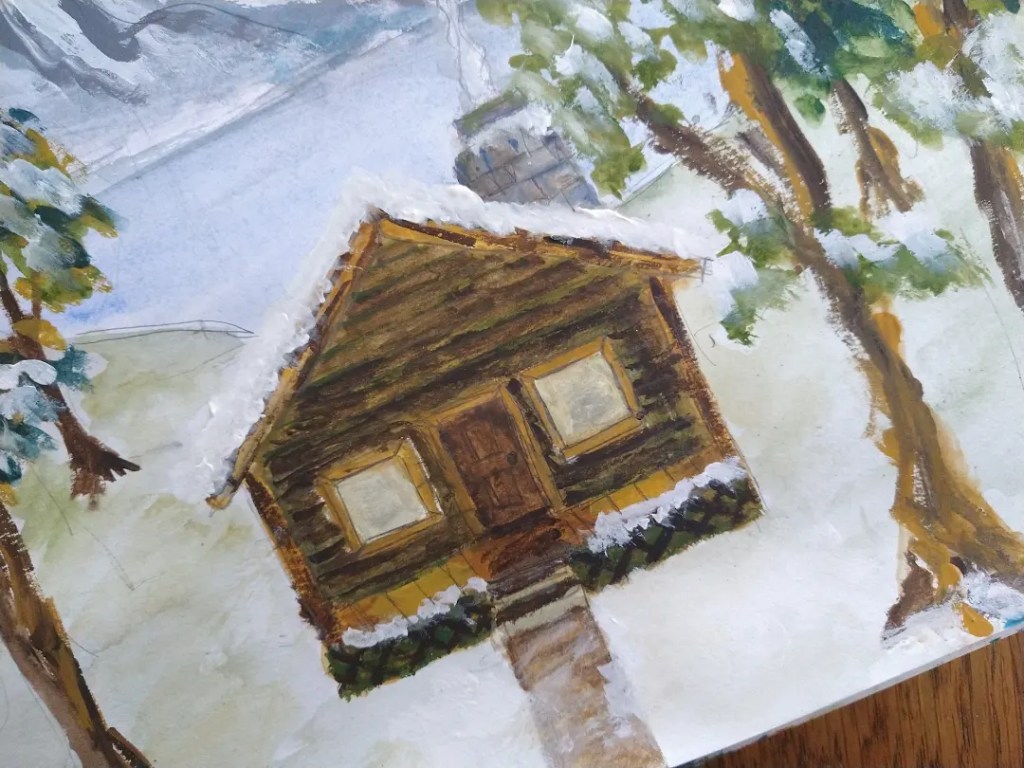
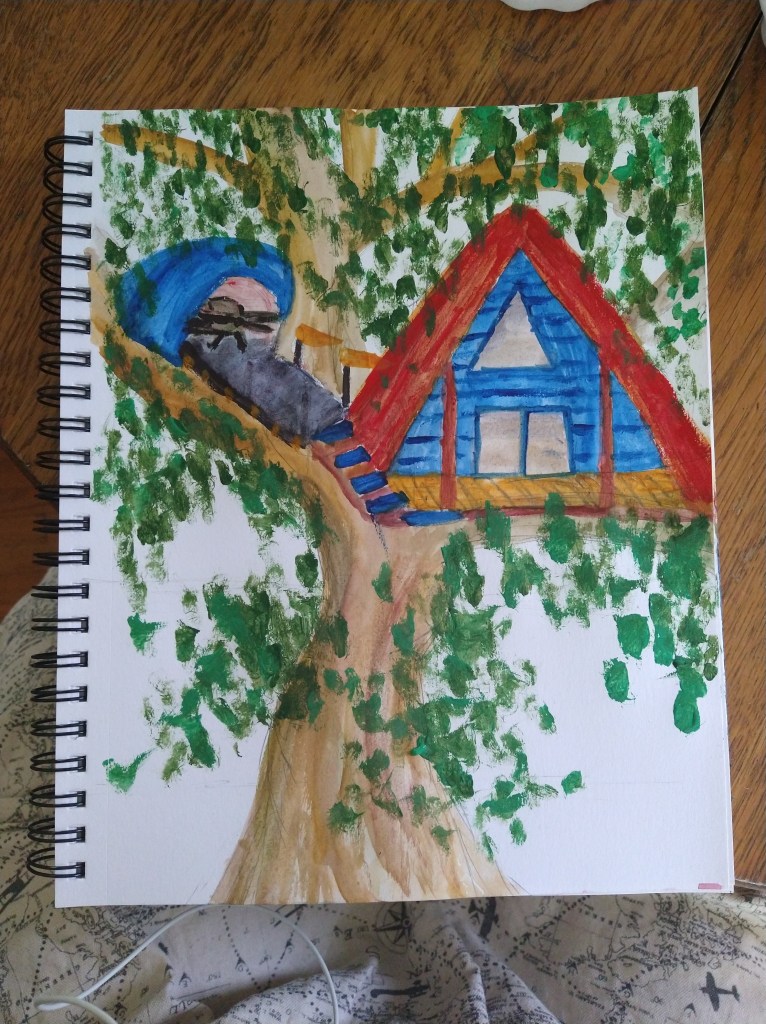
I am a visual person. When I begin drafting a setting or character it helps me to build a story around a tangible place. While I enjoy going to Pinterest for ideas, I like to sketch out original artwork to dive into a place of imagination. This week, I dove into my notebook of ideas and began painting places for potential settings for a story. Here are some of the places I came up with.

Cabin on a Glacier Lake with Mountains

A-Frame Treehouse with Airplane Hanger

Living Roof Yurt on a Beach

Udal Cuain Best and Worst Storytelling Devices

I’ve been thinking, to be honest since I put the Udal Cuain project on a permanent hiatus in 2019, should I attempt to finish it or revise it in some way that would be less dark and depressing? It’s the truth, the story went off the rails into a very dark place that I no longer enjoyed working on. But could I potentially unweave the threads of plots that took the story in an unsatisfying direction? That is something I’d like to ponder. And hopefully, this project is not doomed by its subject material! I think this is applicable to all creative processes because as you make something there is that tightrope feeling that you are balancing between success and utter crap. At least that’s been my experience.

Well, I think the only way to sort through this is to look at the things I think the story should keep and what was an utter disaster. I’m going to give each storytelling technique a grade for a bit of structure. Let’s jump in!

Religion

Udal Cuain is set in the Early Medieval period aka the Viking Age aka the dark ages, which is not as well known as other historical periods. Especially when it comes to Irish history as it was known as Hibernia at the time to the Western world. The Romans were tired of dealing with the Celts and so they built Hadrian’s Wall and left them be. The only group to venture closer were Christian missionaries, including St Patrick, St Brendan, and St Brigid in the 5th century AD. As Udal Cuain was set in the west of Ireland in the 8th century AD, with most of Ireland converting to Christianity and leaving Druidism, the choice to include a druid-influenced calendar and have open belief in the Druid Irish gods was a wise decision. It feels like a plot hole to the historical evidence we do have available. For this reason, I give this religious storytelling choice an F for disregarding history.

I wasn’t as committed to my faith at the time of writing and so I was not interested in bringing Christianity into this world, although I chose the setting to be in the era of a well-established church for the sake of being in the Viking raiding age. That was a bit of a faff and something I would definitely change today if I was re-writing this story. I would either set the story back before the 5th century and nix the Viking Age plot in order to explore the Druid era for continuity’s sake or would remove the Druid part and have a more nuanced approach to these cultural legends in the framework of the 8th century where the High Kings were part of the church and monasteries were a key part of the societal structure. I would probably choose the second option because the Druid world is so incredibly dark and evil – not exaggerating, human sacrifice was prominent – so I would prefer to research something a bit more light-hearted.

Villains

A goal I had for this story was to make a cunning and diabolical villain out of Tearlag, I wanted her to be so good at being bad that the reader could almost respect her but also be waiting for her demise. When we meet her in the story she is a widow who exiled her son and grandkids by force out of her kingdom. She is hypercritical of her children and conniving in her marriages. Her husband Conn was beloved by all but Tearlag has a Machiavellian streak to her. I wanted her to be untrustworthy and truly good at executing evil plans against her enemies, including her family members. As the Dowager Chieftainness I wanted her to have a legacy that she couldn’t quite nail down, but she would use to exact every last drop from her allies.

Tearlag became one of my favorite characters to write, she had so much sass and pure nerve to accomplish what she wanted without giving a hoot what people thought. In the end, it made me sad to know she would have to be defeated. I would say for Tearlag’s character I would give her a B+ because she accomplished all I wanted her to, but now I think I could make her character even more polished. I would develop her character even more to see the layers of how she became this way and search to find if there is any good in her or if she was always born to the villain of her life.

My secondary villain was Tearlag’s son Riordan, who was a chaotic character and a bit of a brat. I didn’t want him to be likable, I wanted his character to wear his misguided decisions like a badge as the selfish person I created his character to be. His flaws drove the plot, and his mistakes bred characterization for other key players in the story. His depression for a lost love that should have never been, all while being married to another woman displayed his inability to handle responsibility that would inevitably inspire his exile. I would give Riordan’s character a solid A because his character did not waiver into plot holes, it was a disagreeable anchor to the story. I would let his story sit in the plot and flush out his failings a bit more so that his exile is more clear to the reader. I may consider if he is redeemable or if a story arc would add anything to his character.

Protagonist

I’m going to start off by being brutally honest that I don’t care for either of my protagonists anymore and would have to re-write them. Both Kinvara and Saoirse fall into the trope of “not like other girls” and I don’t like that. It was such a common storytelling trope at the time of writing that I didn’t see I was falling into it when actually I was trying to make them outsiders in their respective worlds. For this reason, I give them each the grade of D because they’re not hopeless characters but they need some revisions.

Kinvara was the opening protagonist of the book, she is shy yet observant and doesn’t like the current place she finds herself, as an exile on Searbh because of her parents’ loyalty to Riordan and his wife Saoirse. Kinvara is intelligent but a bit judgmental, and has great dislike for her sister Aoibheann as being a frivolous girl for chasing after boys, yet Kinvara effortlessly gets along with the boys, making her a bit of a pick me girl too. Not what I intended! My revisions for Kinvara would be to eliminate with tension with her and her sister, making Kinvara more likeable. I’d also like to make her a bit braver and more willing to seek after the connection to the faeries, in doing so going on her quest without a guy to help her. I’d love to see her face down with Tearlag in a David and Goliath kind of scenario, completely humbling Riordan in the process for fighting this battle for him.

Saoirse was just too dang whiny. Like, if Riordan made her life that miserable I’m not sure why I kept them together? Through the process of the handfastening marriage they had a year to figure out if they wanted to be married, Saoirse could have left after a year since Riordan never stopped his relationship with Caoimhe. I’d like to keep Saoirse’s inner struggle with managing her emotions and feelings of rejection. Her addiction I think brought a depth to her character as self-hatred was a demon she was wrestling with. A relatable thing. Her mentorship with Cheiftain Conn was a plot line I didn’t explore enough, as well as the friendship with Brigid. Saoirse fell into the trap of being defined by her relationship which was not the kind of female lead I intended to create. Defintely a lack of experience in character development on my part.

Faeries

I absolutely loved developing out the idea of faeries in the story based on Ireland’s legendary origin story of a mythical people who founded Ireland called the Tuatha de Danaan and the Formorians. It’s where the legend of the banshee, Finn McCool, and the Children of Lir come from. The imagination of Irish storytelling is incredible and I wanted to incorporate that possibility back into the land of Ireland itself through the character of the faeries who communicated with the sensitive in society – Kinvara and Chieftainn Conn.

This provided a space to dabble into fantasy with magical portals to another dimension and unexplainable powers that would be channeled through the land itself, particularly the sea. Sometimes it would be channeled through specific characters in the story like Caoimhe being endowed with the powers of the raven, essentially a morrigan or banshee. Kinvara could sense would the faeries wanted and could feel the lack of peace within the land itself for the evils being carried out by the Viking raids and Tearlag. For how much imagination and possibility this storyline gave to the story of Udal Cuain, truly a driving force for the adventures and conflicts that awaited the characters I would give it an A+ grade. This was the best part of the story and made it feel unique.

Combat

As a sensitive person I didn’t expect to enjoy writing fight scenes but it was a lot of fun to write moments of struggle and strategic movements. It was something that grew in scope as the story evolved to a point where the characters were sometimes even fighting the environment around them. This added a spooky element to the battle scenes as the enemy was not clear. Would it be a human opponent? A human opponent with a pull over nature itself because of their connection to the faeries? Would the enemy be almost supernatural in strength like the Raven? Or would they just be a dang good fighter? These were ingredients for the pacing and intrigue for the story as it was a battle of kingdoms and ideas. I would give the combat scenes a B for their solid plot movement, but I’m holding back from giving it an A because I could have created more dimension in the story if I had been willing to lean into these battles more and move the story forward instead of being wishy-washy on characters dying.

Final Thoughts

I recommend taking a look at your writing in this rating type of analysis because as I wrote this I felt such clarity on what I liked and didn’t like. I think if I had done this while I was still working on the project I may have been able to revise and carry on instead of getting overwhelmed and burn out from the stress of my day job. Thanks, dear reader, for going on this little retrospective journey with me.

#30 – Watercolor, My Old Friend

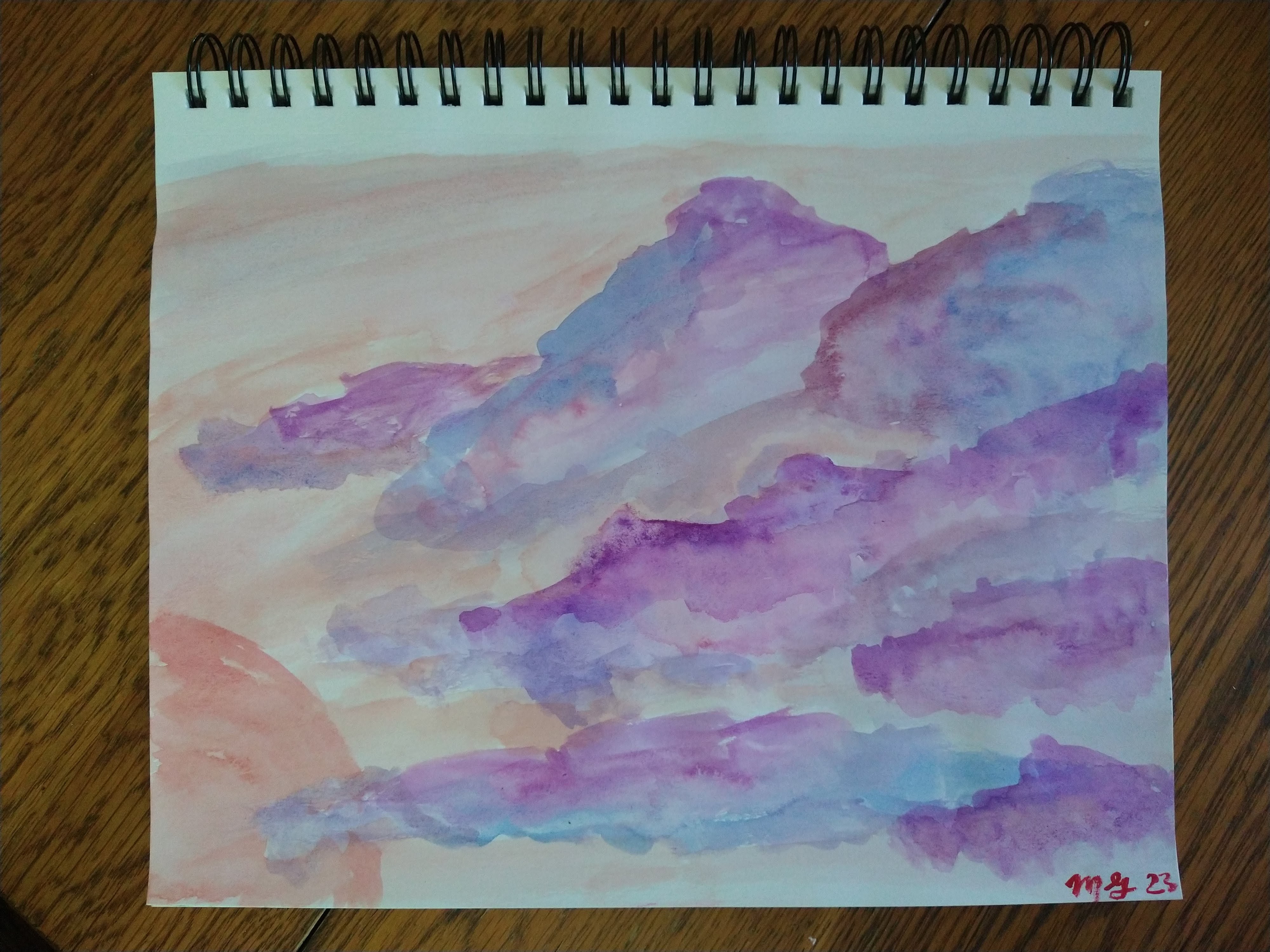
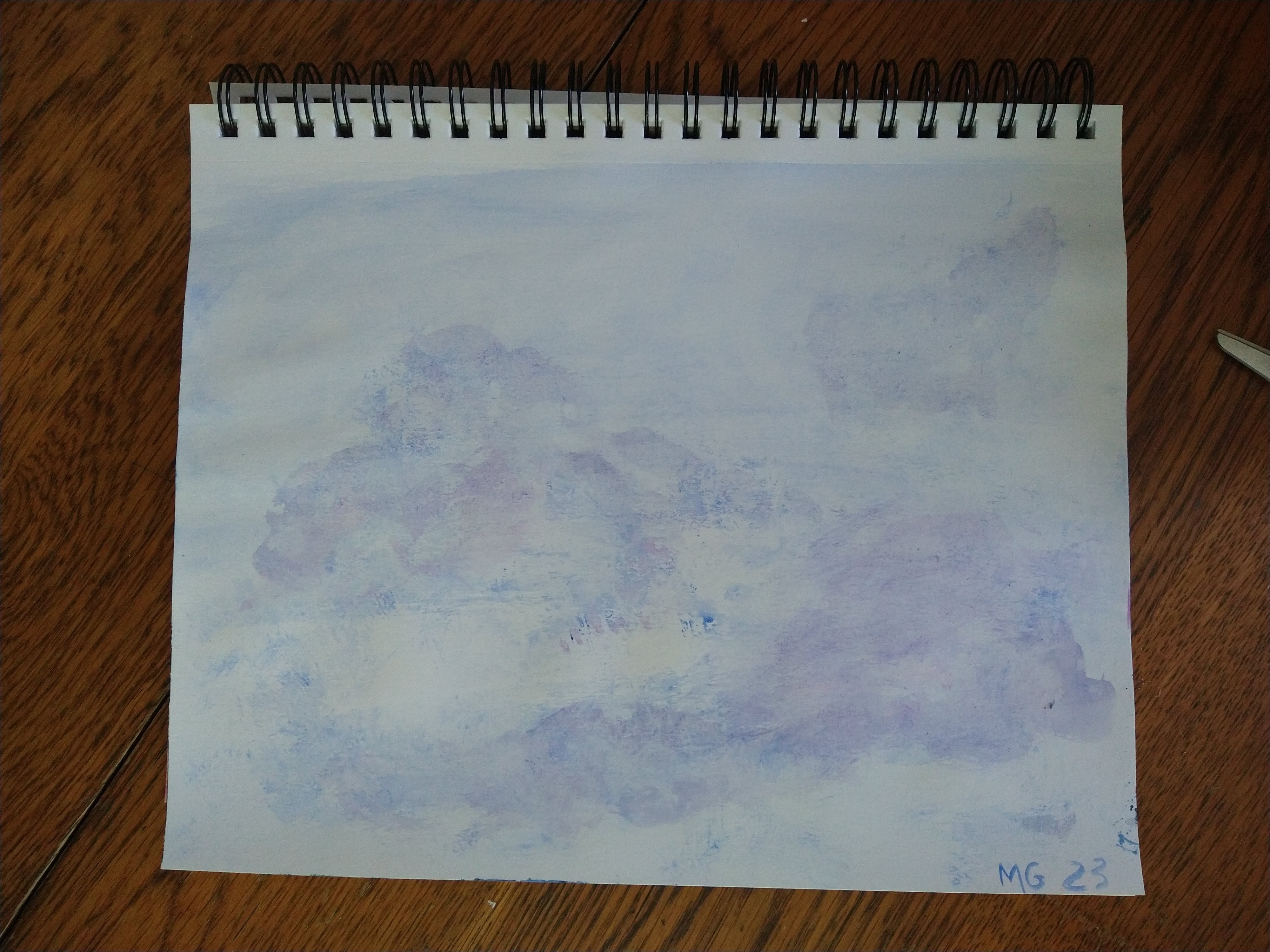
Over the weekend, I felt a sudden urge to paint again. I’d shunned my art supplies for two years, collecting dust on a shelf. Art was such a connection to my dad and is family, when that connection became strained my love to create with paper and paint became complex, a time of dark contemplation instead of creative freedom over what was and what could have been. As we drove home on Monday night, passing through a frantic rainstorm to the breath of fresh air that is sunshine, I was struck by how beautiful the summer sky is in the evening. The tall clouds of a thunderhead, whispering clouds on the other side, a pink and orange fantasy against purple and gray misty sky, all grounded by the rolling green hills below. It was a blast to soak in the sights of these big sky moments as we drove north back home on a interstate.

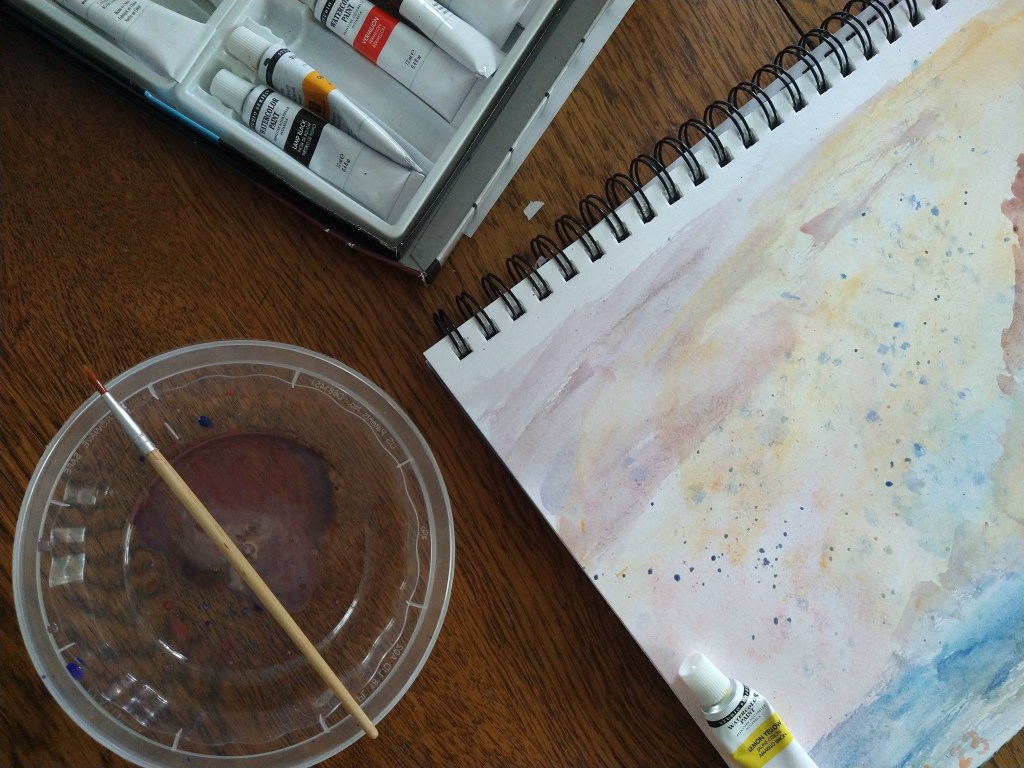
The next morning, in bright sunshine I decided to give it a go and try to capture what I saw that evening – this is what I came up with. It was a joy to create with this medium again after so many years without picking up a brush, but with a clearer head. I guess time really does heal everything. Do you like watercolor painting or sketching? Have you left a hobby for years only to realize it is something you really love?

Sunset After the Storm

Rain in a Fading Light

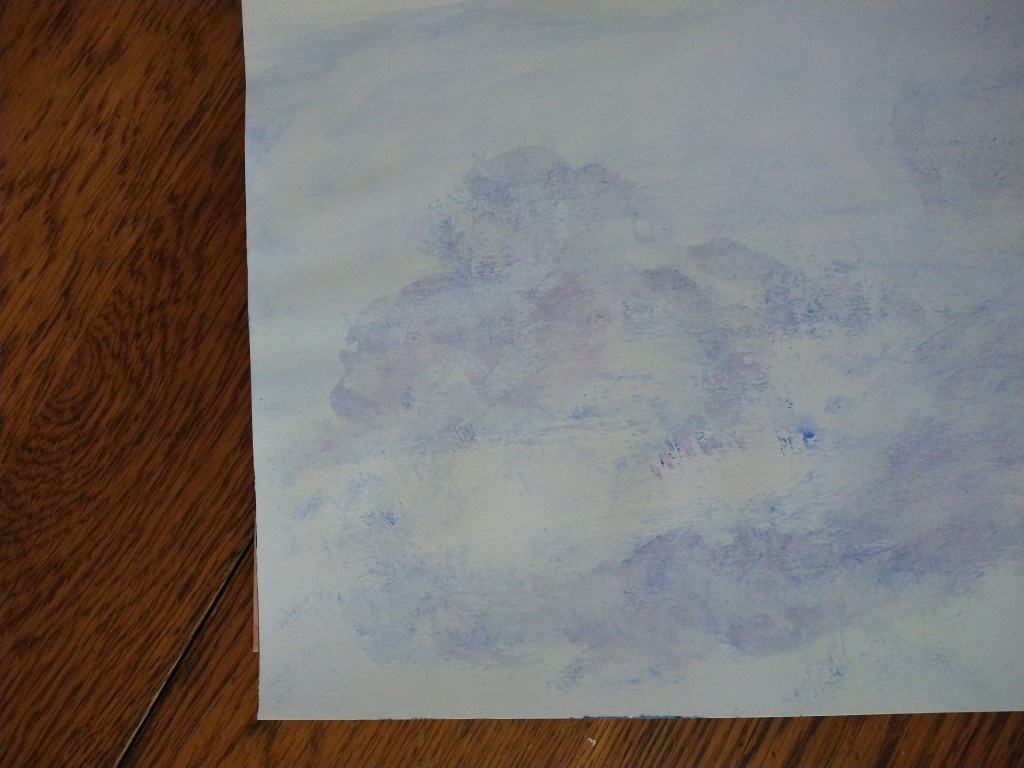
Clouds in a Misty Sky

Create a website or blog at WordPress.com

Up ↑